
Side Dishes
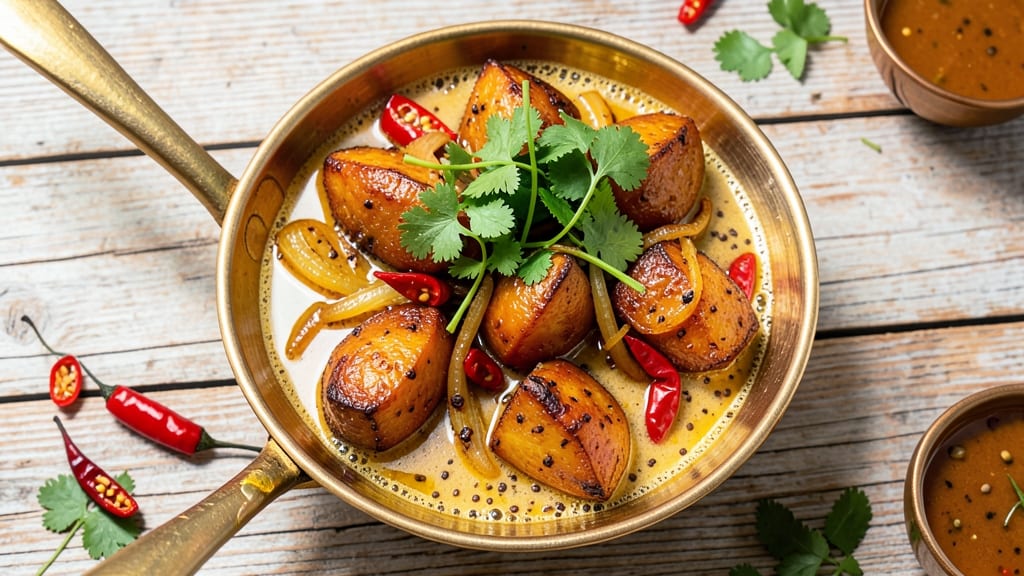
This Andhra potato curry delivers the bold, tangy-spiced profile that makes South Indian cuisine unforgettable. The secret lies in tamarind's sharp tang and coconut's creamy richness, balanced by fiery red chilies and aromatic spices.
I've perfected this dish through years of Andhra home kitchen traditions, where every spice tempering transforms simple potatoes into a flavor symphony.
The recipe begins with a dry roast of whole spices—cumin, coriander, and mustard seeds—that infuse the oil with deep, earthy aromas. Tamarind paste provides that signature Andhra tang, while coconut milk creates a velvety texture that clings to each potato.
The dish cooks just 20 minutes but develops complex flavors through careful layering of spices and slow simmering.
What you'll end up with is a vibrant curry where potatoes absorb the spice-infused gravy, creating tender yet firm bites. The aroma alone will transport you to Andhra's coastal regions, where this dish pairs perfectly with steamed rice or flaky roti.
Each spoonful delivers a perfect balance of heat, tang, and coconut creaminess that's both comforting and exciting.
This version maintains authenticity while adapting to modern kitchens—using raw rice flour as a thickener instead of traditional tamarind pulp if needed. The recipe scales beautifully for family meals or gatherings, always delivering that restaurant-quality experience at home. Let's get cooking!
Ingredients for andhra potato curry
Spice-packed and tangy, these ingredients transform simple potatoes into Andhra's signature flavor symphony.
| Ingredient | Amount | Notes |
|---|---|---|
| Yellow Onions 🧅 | 1 ½ cups | Finely chopped, vibrant color |
| Coconut Milk 🥥 | 1 can | Full-fat, 13.5 oz can |
| Russet Potatoes 🥔 | 1 ½ lb | Waxy variety, cut into chunks |
| Tamarind Paste 🍯 | ¼ cup | Adjust for tang preference |
| Red Chilies 🌶️ | 4 whole | Dried, whole, not powdered |
| Cumin Seeds 🌿 | 1 tbsp | Whole, toasted for aroma |
| Coriander Seeds 🌿 | 1 tbsp | Whole, lightly toasted |
| Mustard Seeds 🌱 | ½ tbsp | Whole, for tempering |
| Fresh Curry Leaves 🌿 | ¼ cup | Dried works at half amount |
| Fresh Ginger 🧄 | ½ cup | Grated, aromatic variety |
| Garlic Cloves 🧄 | 6 cloves | Peeled, minced finely |
| Tomatoes 🍅 | 2 whole | Medium, ripe, chopped |
| Green Chilies 🌶️ | 2 whole | Fresh, slit lengthwise |
| Asafoetida 🌿 | ¼ tsp | Pinch for umami depth |
| Turmeric Powder 🧂 | ½ tsp | Freshly ground preferred |
| Coriander Powder 🌿 | 1 tsp | Freshly ground ideal |
| Garam Masala 🌶️ | ½ tsp | Freshly ground preferred |
| Vegetable Oil 🫒 | ½ cup | High smoke point preferred |
| Raw Rice Flour 🌾 | 1 tbsp | For authentic thickening |
| Salt 🧂 | 1 ½ tsp | Adjust to taste |
The coconut milk is non-negotiable here—full-fat canned coconut milk from Thai Kitchen or Native Forest gives the best creaminess. For tamarind, Koyo or organic brands work best, but if you can't find paste, tamarind pulp in pods from Indian markets is ideal. The red chilies? Dried Kashmiri or bird's eye chilies add the right heat—adjust based on your spice tolerance. Fresh curry leaves are magic, but dried works at half the amount if you're in a pinch. Whole spices like cumin and coriander should be toasted until fragrant—this releases their full aroma. For ginger and garlic, organic varieties have more punch, but any fresh will do if you're careful with the amount.
No coconut milk? Cashew cream (soaked cashews blended with water) is a decent swap, though it lacks the same depth. Tamarind paste unavailable? Lemon juice plus a pinch of sugar mimics the tang, but you'll lose that complex Andhra flavor. The green chilies can be omitted if you're sensitive to heat, but Kashmiri green chilies add vibrant color without extreme heat. For the asafoetida, if you can't find it, garlic powder at half the amount adds some umami. The raw rice flour is key for that authentic Andhra texture—substitute cornstarch if needed, but it won't be quite the same. Andhra cooks often use mustard oil for tempering, but vegetable or coconut oil works just fine for a vegetarian version.
Store the tamarind paste in the fridge for up to 3 months, and the dried chilies keep for 6-12 months in a cool, dark place. Fresh ginger and garlic last 2 weeks in the fridge, but freezing them whole extends their life. The curry reheats beautifully—add a splash of water if it thickens too much. For meal prep, portion into containers with rice—it tastes even better the next day as the flavors meld. The spices in this dish develop more complexity over time, so make extra if you can—it's worth freezing for future lazy dinners.
Why You'll Love This Recipe
- One-Pot Magic: I swear by this recipe—just potatoes, onions, and coconut milk simmering together until they’re tender and golden. No extra pots, no fuss, and honestly? That’s my kind of cooking when I’m exhausted but still want something special.
- Tamarind Tang Kick: The tamarind paste gives it that signature sour punch that cuts through the richness of the coconut milk. It’s not too sweet, not too sharp—just that perfect balance that makes you want seconds (or thirds, no judgment).
- Leftover Hero: This curry actually tastes better the next day. I’ll make a big batch on Sunday, and by Wednesday, it’s still creamy, still flavorful—just waiting to be reheated with some steamed rice. Zero food waste, all satisfaction.
- Budget-Friendly Luxury: Russet potatoes and yellow onions are cheap staples, but the coconut milk and tamarind make it feel like a restaurant dish. I’ll be real: my grocery bill stays low, but my dinner guests think I slaved over it for hours. (Our little secret.)
Step-by-step instructions for Andhra potato curry
Here's how to build this bold, tamarind-forward curry with layers of heat and coconut richness.
Prepare the Tamarind Base
In a small bowl, dissolve the 0.25 cup tamarind paste in ½ cup hot water until completely smooth. Strain through a fine-mesh sieve to remove any fibers, pressing with a spoon to extract all the tangy liquid. This filtered tamarind mixture is the soul of the curry—its bright acidity balances the coconut's richness.
Set aside while you prepare the tempering spices. The tamarind should be completely dissolved with no graininess remaining. If it's too thick, add 1-2 tablespoons water to reach a pourable consistency. This step ensures your curry develops that signature Andhra tang without bitterness.
Temper the Spices
Heat the 0.5 cup vegetable oil in a heavy-bottomed pot over medium heat. Add the 0.5 tbsp mustard seeds and let them sizzle until they pop audibly—this should take about 30 seconds. Immediately add the 1 tbsp cumin seeds and 1 tbsp coriander seeds, stirring constantly for 1 minute until they release their deep, earthy aromas.
Next, add the 0.25 cup fresh curry leaves and 2 whole green chilies (slit lengthwise). The leaves should sizzle and darken slightly while the chilies infuse their heat. Finally, sprinkle in the 0.25 tsp asafoetida—this tiny pinch adds umami depth that's essential to Andhra cuisine. The spices should be fragrant but not burned.
Build the Curry Base
Add the 1.5 cups finely chopped yellow onions to the pot and sauté over medium heat for 8-10 minutes until they turn golden brown. This slow cooking develops their sweetness and forms the flavor foundation. Then add the 0.5 cup grated fresh ginger and 6 cloves minced garlic, cooking for another 2 minutes until fragrant.
Stir in the 2 whole tomatoes (chopped) along with 0.5 tsp turmeric powder, 1 tsp coriander powder, and 1.5 tsp salt. Cook for 5-6 minutes until the tomatoes break down into a thick paste. This step creates the curry's aromatic backbone before we introduce the potatoes.
Simmer the Potatoes
Add the 1.5 lb russet potatoes (cut into 1-inch chunks) and pour in the dissolved tamarind mixture. Stir gently to coat the potatoes evenly. Bring to a gentle boil, then reduce heat to low and simmer uncovered for 15 minutes, stirring occasionally, until the potatoes are 80% tender but still hold their shape.
Here's the thing—you want potatoes that soften but don't disintegrate. They'll finish cooking in the coconut milk later. If the curry looks too dry before the potatoes are done, add ¼ cup water to maintain moisture. The potatoes should be just firm enough to hold their form when pierced with a fork.
Finish with Coconut and Garam Masala
Pour in the 1 can coconut milk and stir well to combine. Increase heat to medium-low and simmer for 10-12 minutes until the curry thickens slightly. The coconut milk should create a velvety texture while enhancing the tamarind's tang.
Finally, sprinkle in the 0.5 tsp garam masala and stir gently. Taste and adjust seasoning—you might need a touch more salt to balance the coconut's richness. The curry should be vibrant, with a perfect harmony of spicy, tangy, and creamy flavors. Serve hot with steamed rice to soak up every last bit of that fiery tamarind-coconut goodness.
Pro Tips For Making Andhra Potato Curry
- COOL THE POTATOES FIRST: I learned this the hard way—tossing raw russets straight into hot oil makes them steam instead of crisp. Cut them into 1-inch chunks, soak in cold water for 10 minutes, then drain and pat very dry. The starch wash keeps them from turning mushy when they hit the pan.
- SAUTÉ ONIONS UNTIL GOLDEN: This isn’t the prettiest method, but it’s the tastiest: cook sliced yellow onions in 2 tablespoons oil on medium-low for 15–20 minutes until deep amber, not brown. The slow caramelization builds flavor that cuts through the tamarind’s sharpness—skip this, and you’ll taste raw onion in every bite.
- DILUTE TAMARIND PASTE: Tamarind paste is thick and clumpy, and if you stir it in dry, it’ll lump like glue. Mix 1 tablespoon paste with ¼ cup warm water first, then whisk into the curry. This guarantees a smooth, tangy base instead of a gloppy one—trust me, your mouth will notice.
- LOW AND SLOW WITH COCONUT: After adding coconut milk, resist the urge to crank the heat. Simmer uncovered on low for 15 minutes—this lets the liquid reduce slightly and the potatoes absorb flavor without falling apart. High heat turns the curry greasy; patience makes it creamy.
Flavor customization for this andhra potato curry
Spice Level Control
Adjust the heat by controlling the chilies—use 2 Kashmiri green chilies for mild warmth or 1 bird's eye chili for serious kick. For a smoky depth, add ½ tsp smoked paprika when tempering the spices.
I often toast 1 tsp black peppercorns with the mustard seeds to add complexity without extra heat. 🌶️
Tangy Variations
Swap tamarind for lemon juice + ½ tsp sugar if needed, but you'll lose authentic depth. For extra tang, add 1 tbsp vinegar (apple cider or white) at the end.
I've found 1 tsp amchur (dry mango powder) gives a similar fruity tang without bitterness. Adjust to taste—Andhra curries thrive on balance.
Creamy Alternatives
Need coconut-free? Blend ½ cup soaked cashews with ¼ cup water for a neutral creaminess. For richer texture, stir in 2 tbsp yogurt at the end.
I've also used ½ cup coconut cream (the thick part from a can) for a lighter but still velvety finish. Each option changes the mouthfeel slightly.
Herb Infusions
Add 2 tbsp fresh cilantro or 1 tbsp mint leaves at the very end for brightness. For earthiness, sauté 1 tsp fenugreek seeds with the tempering spices. I sometimes include ½ cup spinach when simmering—it wilts beautifully into the curry. These herbs add freshness that cuts through the richness.
Smoky Depth
For that signature Andhra smokiness, add ½ tsp ground fennel seeds to the tempering. Or, after cooking, place the curry under a broiler for 2-3 minutes with a lid on for gentle smoking. I've also used ½ tsp liquid smoke (sparingly!) for an instant smoky note when needed.
Texture Adjustments
Want chunkier potatoes? Cut them into 1.5-inch pieces and reduce simmering time to 10 minutes. For extra thickness, mix 1 tbsp raw rice flour with 2 tbsp water and stir in at the end.
I've found ½ cup pumpkin puree mixed in creates a luxurious, velvety consistency perfect for cold weather. 💫
Nutrition facts
Frequently asked questions
Why does this Andhra potato curry need tamarind?
Tamarind provides the signature tangy depth that defines Andhra cuisine. Without it, the curry would lack that bright, fruity acidity that balances the coconut's creaminess. The paste dissolves completely to create a smooth, vibrant base that keeps the flavors harmonious throughout cooking.
Can I make this curry without coconut milk?
Yes! For a similar texture, blend ½ cup soaked cashews with ¼ cup water until smooth. This creates a neutral, creamy base that won't overpower the other flavors. Alternatively, stir in 2 tablespoons yogurt at the end for richness without coconut's distinct taste.
How do I adjust the spice level?
For milder heat, use 2 Kashmiri green chilies instead of dried red chilies. For extra kick, add 1 bird's eye chili during tempering. You can also reduce the green chilies by half if you're sensitive to heat while keeping the dried chilies for aroma.
What's the best way to store leftovers?
Let the curry cool completely, then transfer to an airtight container with a layer of parchment paper between layers. It keeps well in the refrigerator for 4-5 days and freezes beautifully for up to 3 months. Reheat gently with a splash of water to restore creaminess.
Why do the potatoes need to be only 80% cooked before adding coconut?
This ensures the potatoes absorb the coconut milk's flavors without turning mushy. The final 10-12 minutes of simmering in coconut milk completes their cooking while creating that signature velvety texture. Overcooking before adding coconut would make them too soft and watery.