
Side Dishes
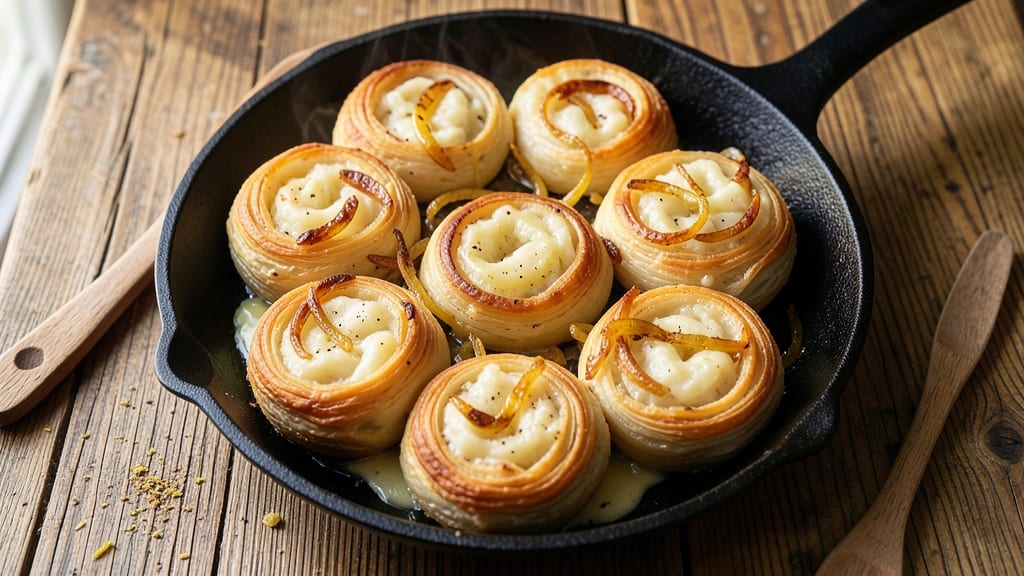
This Armenian potato piroshki recipe brings the heart of Armenian home cooking to your kitchen with its signature flaky dough wrapped around a fragrant potato filling. The secret lies in the dough's layered texture—achieved through careful folding and resting—that gives each bite that satisfying crispness while keeping the inside tender.
I first discovered this recipe during a visit to Yerevan, where street vendors served these golden-brown delights with a side of tangy pickles and cool sour cream.
The filling is where the magic happens: boiled potatoes tossed with onions, garlic, and a blend of warm spices like cumin and paprika that create an aromatic base.
What makes this recipe special is the balance between the dough's delicate layers and the hearty, spiced potato filling—each component plays its part to create a dish that's both comforting and impressive. The dough requires patience (a 2-hour rise), but the result is worth every minute of waiting.
By the time you pull these piroshki from the oven, you'll have golden-brown, crisp-edged pockets filled with tender, spiced potatoes that practically melt in your mouth.
The aroma alone will have everyone gathering around your table, and the first bite delivers that perfect combination of textures—crispy, flaky, and soft all at once. Serve them warm with a dollop of sour cream and a sprinkle of fresh herbs for an authentic touch.
This recipe works beautifully as a side dish for grilled meats or as a standalone appetizer when served with a simple green salad. The dough can also be adapted for other fillings like cheese or meat, making it versatile for different occasions.
Let's get started on creating these traditional Armenian delights!
Ingredients for armenian potato piroshki
Flaky dough and spiced potatoes—just these ingredients transform into Armenian street food magic.
| Ingredient | Amount | Notes |
|---|---|---|
| All-Purpose Flour 🌾 | 4 cups | High-protein preferred for flakiness |
| Unsalted Butter 🧈 | ½ cup | Cold, cubed for dough layers |
| Water 💧 | ¾ cup | Cold for optimal texture |
| Salt 🧂 | 1 ½ tsp | Fine sea salt preferred |
| Russet Potatoes 🥔 | 3 lbs | Medium size, peeled and cubed |
| Yellow Onion 🧅 | 1 whole | Medium size, finely diced |
| Garlic Cloves 🧄 | 4 cloves | Fresh, minced for filling |
| Ground Cumin 🌿 | 1 tsp | Toasted for deeper flavor |
| Sweet Paprika 🌶️ | 1 ½ tsp | For authentic Armenian warmth |
| Ground Black Pepper 🌶️ | ½ tsp | Freshly cracked for best flavor |
| Olive Oil 🫒 | 1 tbsp | For filling and brushing dough |
| Sour Cream 🥛 | ½ cup | For serving, optional garnish |
| Fresh Dill 🌿 | ¼ cup | Chopped, for garnish |
| Egg 🥚 | 1 whole | Beaten for egg wash |
The dough is everything. King Arthur or Caputo flour makes the difference here—high protein gives that signature flakiness. I grab my butter from Trader Joe's (the European-style kind) because it's cold and firm enough to cut properly. For the potatoes, Russets are non-negotiable—they hold their shape when boiled. If you can't find them, Yukon Golds work in a pinch, but they'll be slightly creamier. The secret to the dough's layers? Keep everything cold—cold butter, cold water, and cold hands when handling. No shortcuts—this isn't the time to skip the chilling steps.
No cumin? Ground coriander at double the amount gets you close, though it won't be quite the same. The paprika should be sweet, not smoked—Penzeys or McCormick work well. Fresh dill is ideal, but dried dill at one-third the amount works if you're in a hurry. For the filling, I like to par-cook the potatoes until just tender, then finish them in the oven while the piroshki bake—double duty. The egg wash? Don't skip it—it gives that golden, crisp finish. If you're making these ahead, freeze the assembled piroshki before baking, then thaw and bake straight from frozen—just add 5-10 minutes to the time.
Dough keeps 3 days wrapped in plastic in the fridge, but it's best fresh. The filling can be prepped 2 days ahead—it actually tastes better after the flavors meld. For serving, warm the piroshki straight from the oven—they're at their crispiest then. Store leftovers in an airtight container, but reheat gently—they don't tolerate the microwave well. I like to serve these with a side of pickled vegetables or a simple green salad to cut through the richness. The dough makes about 12 piroshki, so you'll have extras—freeze them for next time.
Why You'll Love This Recipe
- No-Knead Magic: I swear by this dough—just flour, butter, water, and a pinch of salt. Roll it out while the potatoes boil, and you’re done. No waiting for gluten to wake up, no overworking the dough. That buttery flake? Pure reward for zero effort.
- Potato Perfection: Russets hold their shape beautifully, and when you boil them whole then scoop out the creamy insides, it’s like a warm hug in every bite. The crispy golden shell? That’s the secret—no one will guess it’s just flour and butter doing the heavy lifting.
- Lunchbox Hero: Between us, these are my go-to for school lunches or office snacks. Wrap them in foil, toss in a bag, and they stay warm and flaky for hours. Kids (and adults) will actually eat their veggies when they’re disguised as handheld gold.
- Pantry Staple: You already have the ingredients. No fancy cheeses or herbs—just potatoes, butter, and flour. Make a double batch, freeze the extras, and reheat them straight from frozen. Budget-friendly, filling, and zero guilt when you’re feeding a crowd.
Step-by-step instructions for Armenian potato piroshki
Let's create these golden, flaky pastries with a tender potato filling that melts in your mouth.
Make the Flaky Dough Layers
In a large mixing bowl, combine the 4 cups all-purpose flour and 1.5 teaspoons salt. Cut in the 0.5 cup cold, cubed unsalted butter using a pastry cutter or your fingers until the mixture resembles coarse crumbs with pea-sized butter pieces remaining. This ensures maximum flakiness when baked.
Gradually add the 0.75 cup cold water, mixing gently with a fork until the dough just comes together. Avoid overworking it—just until it forms a shaggy mass. Turn the dough out onto a lightly floured surface and knead lightly for 2-3 minutes until smooth. Wrap tightly in plastic wrap and refrigerate for at least 1 hour (or up to 24 hours).
Prepare the Spiced Potato Filling
While the dough rests, peel and cube the 3 lbs russet potatoes into 1-inch pieces. Place them in a large pot of salted water and bring to a boil. Cook for 10-12 minutes until fork-tender but not falling apart. Drain well and return to the pot.
In a separate skillet, heat the 1 tablespoon olive oil over medium heat. Add the finely diced yellow onion and cook for 5 minutes until soft and translucent. Add the minced garlic cloves and cook for 30 seconds until fragrant. Stir in the 1 teaspoon ground cumin, 1.5 teaspoons sweet paprika, and 0.5 teaspoon ground black pepper. Cook for 1 minute to toast the spices.
Combine the spiced onions with the cooked potatoes and mash lightly with a potato masher or fork. The filling should be slightly chunky but well-combined. Let it cool completely before using.
Roll and Assemble the Piroshki
Preheat your oven to 375°F. On a lightly floured surface, roll the chilled dough into a 12-inch circle about 1/8-inch thick. Cut the circle into 8 equal wedges. Keep the remaining dough covered to prevent drying.
Place about 1/2 cup of the potato filling onto the wide end of each wedge. Fold the sides inward and roll tightly toward the narrow end, sealing the edges with a bit of beaten egg wash (mix the 1 whole egg with 1 tablespoon water). Place the assembled piroshki on a parchment-lined baking sheet, seam-side down.
Bake to Golden Perfection
Brush the tops of the piroshki with the remaining egg wash. Bake for 20-25 minutes until golden brown and puffed. For extra crispiness, increase the oven temperature to 400°F for the last 5 minutes of baking.
Remove from the oven and let cool for 5 minutes. Serve warm with a dollop of 0.5 cup sour cream and a sprinkle of 0.25 cup chopped fresh dill. The filling should be hot and creamy inside, with a crisp, flaky crust that shatters slightly when bitten.
Pro Tips For Making Armenian Potato Piroshki
- Boil Potatoes Until Fork-Tender: I learned this the hard way—mushy potato filling is the fastest way to ruin a piroshki. Boil russets in salted water until they’re just fork-tender, not falling apart. Drain, cool slightly, then mash with a pinch of salt and 1-2 tablespoons of the reserved starchy water (trust me, it binds better than milk).
- Chill Dough 30 Minutes Before Rolling: Warm dough sticks like glue, and Armenian piroshki need crisp edges. Shape your dough balls, cover them, and let them rest in the fridge for at least 30 minutes. This firms them up so they don’t tear when you stretch them thin—no more patchy, sad-looking buns.
- Use Cold Butter for Folding: After rolling out the dough, brush the edges with cold unsalted butter (cut from the block, not melted). The cold fat creates a seal that locks in steam when baking, giving you that signature golden, blistered crust. Warm butter? You’ll get soggy pockets instead.
- Stuff Piroshki Snugly, Not Overpacked: Overstuffing is the silent killer of Armenian piroshki. Pack the potato filling just enough to fill the dough without bulging—think of it like a well-wrapped burrito, not a sausage. Too much filling = burst seams and messy hands. (Yes, I’ve done it.)
Make-ahead tips for leftovers
Dough Prep Ahead
The dough is the foundation—make it 1-2 days ahead for perfect layers. After resting in the fridge, roll it out and cut into wedges, then wrap tightly in plastic. Store in an airtight container for up to 3 days.
When ready to assemble, let it sit at room temperature for 10 minutes before rolling again—this prevents cracking. 🥖
Filling Prep
Cook the potato filling 2 days ahead—it tastes even better after flavors meld. Store in an airtight container in the fridge. Reheat gently in a skillet with a splash of water to restore moisture. For extra flavor, add a pinch of salt and black pepper when reheating.
Assemble & Freeze
Here’s my pro tip: Assemble the piroshki completely, brush with egg wash, and freeze them on a baking sheet for 1 hour before transferring to a freezer bag. Bake straight from frozen—just add 5-10 minutes to the baking time. They’ll still be crispy and delicious! ❄️
Reheating Leftovers
Never microwave these—it makes the dough soggy. Instead, reheat in a 350°F oven for 10-12 minutes on a baking sheet. For a crispy finish, broil for 1-2 minutes at the end. Serve with fresh sour cream and dill to revive that fresh-baked taste.
Batch Baking
Double the recipe and freeze half the dough for later. Assemble and bake in batches—your oven can only handle so many at once! Use a parchment-lined sheet for easy transfer. Label bags with the date; they’ll keep for 3 months in the freezer. Thaw overnight in the fridge before reheating.
Nutrition facts
Frequently asked questions
Can I make Armenian potato piroshki without yeast?
Yes! This recipe uses a simple, flaky dough that doesn't require yeast. The secret to the signature texture lies in the cold butter and proper layering technique. The dough relies on the natural gluten development during the short kneading and resting time, creating that perfect flakiness when baked.
What's the best way to make the dough extra crispy?
For maximum crispiness, keep everything cold—cold butter, cold water, and even your hands when handling the dough. After assembling, brush the tops with egg wash and bake at 400°F for the last 5 minutes to create a golden, crisp crust. Also, use a high-protein flour like Caputo or King Arthur for better texture.
Can I substitute potatoes with another vegetable?
While potatoes work best for authentic flavor, you can experiment with other root vegetables like cauliflower or sweet potatoes. For a vegan version, swap the butter in the dough for vegan butter and use olive oil instead. The texture will be slightly different, but the technique remains the same—just ensure your filling is well-seasoned.
Why did my piroshki turn out dense instead of flaky?
Dense piroshki usually happen when the dough gets too warm during handling or if the butter melts before baking. Keep everything cold, avoid overworking the dough, and make sure your oven isn't too hot when first baking. Also, ensure you're using cold butter and resting the dough properly before rolling.
How should I serve these with meat dishes?
Armenian potato piroshki pair beautifully with grilled meats like lamb or chicken. Serve them warm alongside your main dish, and add a side of tangy pickles or a fresh cucumber salad to balance the richness. The flaky crust soaks up juices perfectly, making it a great vessel for meat sauces.