
Side Dishes
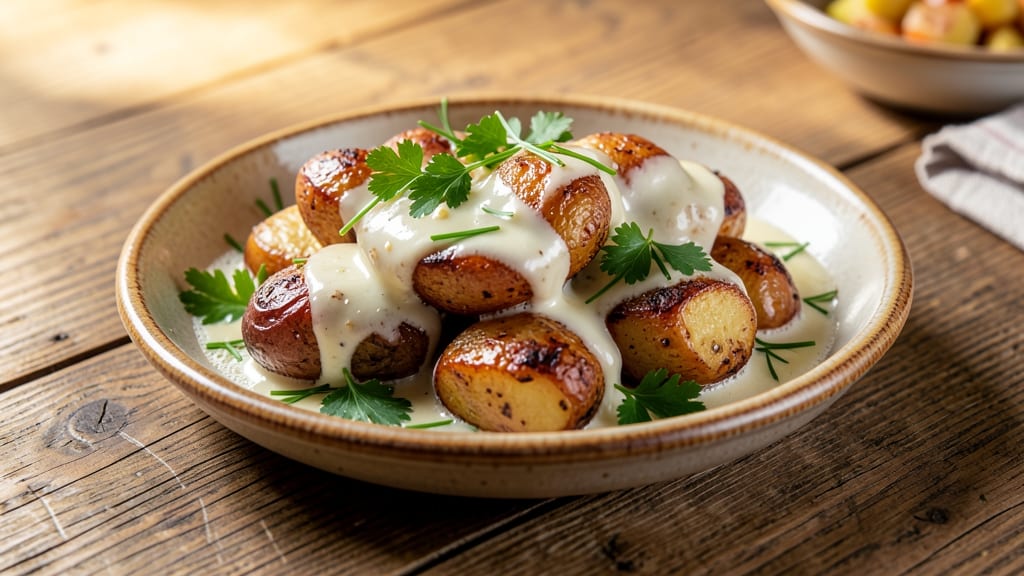
This Augarten potato recipe brings classic Austrian comfort to your table with golden, crispy skins and creamy interiors. The secret lies in the perfect balance of butter, cream, and fresh herbs—transforming simple potatoes into a restaurant-worthy side.
I first discovered this dish during a Vienna cooking class, where the instructor emphasized patience: boiling the potatoes just until tender, then finishing them in a buttery cream sauce until they develop that signature crispy texture.
The process is straightforward but requires attention to detail—starting with evenly sized potatoes for consistent cooking, then boiling them until fork-tender before transferring to a creamy butter sauce. This method ensures the skins stay intact while absorbing rich, herby flavors.
The result? Potatoes that are tender inside with a satisfying crunch, elevated by the aromatic blend of chives and parsley that defines Austrian cuisine.
What makes these potatoes truly special is their versatility—they pair beautifully with roasted meats, grilled fish, or even as a standalone dish for a cozy dinner. The crispy skins add texture, while the creamy interior delivers comfort in every bite.
Whether you're serving a holiday feast or a weeknight meal, this recipe delivers professional-quality results with minimal effort.
For an extra touch of authenticity, consider adding a sprinkle of smoked paprika or crispy bacon bits to the finished dish. The key is to let the potatoes rest in the warm sauce for a few minutes before serving, allowing the flavors to meld perfectly.
This is the kind of recipe that transforms ordinary potatoes into something extraordinary.
Ingredients for augarten potato
Golden skins meet creamy centers—this Austrian classic turns simple potatoes into showstopping side dishes.
| Ingredient | Amount | Notes |
|---|---|---|
| Russet Potatoes 🥔 | 2 lbs | Medium size, evenly cut for even cooking |
| Unsalted Butter 🧈 | ½ cup | Cold, cut into 1-inch cubes for browning |
| Heavy Cream 🥛 | 1 cup | Full-fat for richest texture |
| Fresh Chives 🌿 | ¼ cup | Finely chopped, for bright finish |
| Fresh Parsley 🌿 | ¼ cup | Flat-leaf preferred, finely chopped |
| Salt 🧂 | 2 tsp | Kosher salt, divided use |
| Black Pepper 🌶️ | ½ tsp | Freshly ground for best flavor |
| Garlic Cloves 🧄 | 2 cloves | Minced for subtle aroma |
| Smoked Paprika 🌶️ | ½ tsp | Optional for authentic touch |
| Crispy Bacon Bits 🥓 | ¼ cup | Optional garnish for extra texture |
| Water 💧 | 4 cups | For boiling potatoes |
The potatoes are non-negotiable here. Russets are ideal—their waxy texture holds up perfectly to boiling and browning. I always buy the medium-sized ones at Whole Foods or my local Trader Joe's because they're consistent in shape and size. Cut them evenly (about 1.5 inches thick) so they cook uniformly. For extra authenticity, some Austrian chefs swear by Bintje potatoes, but Russets are the most accessible substitute. If you're feeling ambitious, try organic potatoes—their thinner skins crisp up even better.
No heavy cream? Half-and-half or full-fat coconut cream works in a pinch, though the flavor won't be identical. Fresh herbs are key—dried chives or parsley won't give the same bright punch, so grab a bunch if you're at the market. The butter matters too: European-style unsalted butter (like Plugrá) has higher fat content, which is perfect for browning. For the garlic, I usually smash the cloves with the side of my knife before mincing to release more flavor. And if you're skipping the bacon bits, a sprinkle of toasted breadcrumbs adds a nice crunch instead.
Boiled potatoes keep for 3 days in the fridge, but the sauce is best made fresh. If prepping ahead, boil the potatoes first and store them in cold water in the fridge. When ready to finish, simply reheat the sauce and add the potatoes. The dish reheats beautifully—just warm everything through gently on the stove. For leftovers, store the potatoes and sauce separately. The sauce will thicken as it cools, so add a splash of milk or cream when reheating. These potatoes are even better the next day as the flavors meld.
Why You'll Love This Recipe
- One-Pot Magic: I swear by this recipe because it’s all in one pan—no chopping boards, no extra dishes. Just slice those Russets, toss them in with butter and cream, and let the oven do the work. Honestly, I’ve made this while scrolling through emails, and it still comes out golden and tender.
- Creamy-Garlicky Bliss: That rich heavy cream and butter combo? It’s like a hug in potato form. The chives and parsley add this fresh, bright finish that cuts through the richness—so good, my kids actually eat their veggies with it. (Yes, even on a Tuesday night.)
- Leftovers That Last: Between us, this dish reheats like a dream—no drying out, no sad textures. I’ve packed it for lunches, served it at potlucks, and even frozen portions for lazy Sundays. The flavors only get better the next day, honestly.
- Budget-Friendly Luxury: Russets and butter aren’t cheap, but this recipe stretches them further than you’d think. A single batch feeds four, and the leftovers? Even better. It’s the kind of dish that makes simple ingredients feel special without breaking the bank.
Step-by-step instructions for Austrian-style crispy-skinned potatoes
Master this classic Austrian technique for potatoes with a perfect golden crust and creamy interior.
Prepare and Boil the Potatoes
Peel the 2 lbs russet potatoes and cut them into even-sized chunks, about 1½ inches thick. I aim for consistency so they cook uniformly. Place them in a large pot and cover with the 4 cups water. Add 1 teaspoon of the 2 teaspoons salt and bring to a boil over high heat.
Once boiling vigorously, reduce heat to medium-high and cook for 8-10 minutes until the potatoes are fork-tender but still hold their shape. You'll know they're ready when you can pierce them easily with a fork but they don't fall apart. Drain immediately in a colander and let them steam-dry for 2 minutes. This step is crucial—don't skip it, as any moisture will prevent proper browning later.
Brown the Potatoes in Butter
While the potatoes are draining, heat a large oven-safe skillet over medium heat. Add the 0.5 cup unsalted butter, cut into 1-inch cubes, and let it melt completely, swirling occasionally. The butter should foam gently but not brown. Add the minced 2 cloves garlic and the 0.5 teaspoon smoked paprika, stirring for 30 seconds until fragrant.
Add the drained potatoes to the skillet in a single layer, turning them to coat evenly in the butter. Cook for 5-6 minutes, turning occasionally, until the potatoes develop a golden-brown crust on all sides. I press down gently on the potatoes during the first minute—this prevents them from curling and ensures even contact with the pan. The butter will bubble vigorously, creating that signature crispy texture we're after.
Add Cream and Season
Pour in the 1 cup heavy cream and sprinkle the remaining 1 teaspoon salt and 0.5 teaspoon black pepper over the potatoes. Stir gently to combine, being careful not to break up the crust. The cream will bubble and reduce slightly, coating the potatoes in a silky sauce. Cook for another 2-3 minutes until the cream has thickened and the potatoes are heated through.
Taste and adjust seasoning if needed. The potatoes should be perfectly seasoned with a balance of saltiness and richness from the butter and cream. If you're using the 0.25 cup crispy bacon bits, sprinkle them evenly over the top now—they'll add a smoky contrast to the creamy potatoes.
Finish in the Oven for Maximum Crispiness
Transfer the skillet to a preheated 400°F oven and bake for 10-12 minutes. This final step is what creates that restaurant-quality crispy exterior. Watch closely after 8 minutes—the potatoes should be deep golden brown with crispy edges. If they're browning too quickly, tent loosely with foil to prevent burning.
Remove from the oven and let rest for 2-3 minutes before serving. This resting period allows the flavors to meld and the potatoes to firm up slightly. Garnish with the 0.25 cup fresh parsley and 0.25 cup fresh chives just before serving. The herbs add a bright finish that cuts through the richness of the butter and cream.
Pro Tips For Making Augarten Potato
- Use a Mandoline for Even Slices: Thin, uniform slices are the secret to creamy, not mushy, Augarten potatoes. A mandoline gives you paper-thin cuts every time—no wrestling with a knife or uneven layers. (Yes, it’s worth the $20 splurge if you make this often.)
- Salt the Potatoes Before Slicing: Toss the raw Russets with salt and let them sit for 10 minutes before slicing. This jumpstarts the starch breakdown, so they absorb the cream like a sponge instead of turning gloppy. I learned this the hard way—starchy, watery potatoes are a nightmare to fix.
- Don’t Skimp on the Butter Layer: Spread a generous layer of unsalted butter between every slice—about 1 tablespoon per pound of potatoes. This isn’t the time to half it; the butter melts into a luscious, velvety blanket that keeps the dish rich. (Trust me, your taste buds will notice.)
- Rest Before Serving: Let the finished dish sit, covered, for 5–10 minutes after baking. This lets the cream set slightly and the layers firm up—no more collapsing or soupy mess when you cut into it. (Your future self will curse you if you skip this.)
Storing and reheating this dish
Fridge Storage Tips
Store your Augarten potatoes in an airtight container with the sauce for up to 3 days—the flavors actually deepen overnight. I like using glass Pyrex containers because they keep the potatoes from absorbing fridge odors.
If storing separately, keep the potatoes submerged in cold water to prevent drying. The sauce can be refrigerated alone for 2 days in a sealed jar, but I recommend reheating it separately for best texture. 🥔
Freezer-Friendly Method
For longer storage, boil the potatoes as directed, then freeze them in a single layer on a baking sheet for 1 hour to prevent clumping. Transfer to a freezer bag with parchment between layers. The sauce should be frozen separately in a quart-sized bag.
When ready to reheat, thaw the potatoes in the fridge overnight, then warm the sauce on the stove before combining. Frozen potatoes keep for up to 3 months without losing texture. ❄️
Reheating Perfection
My favorite method is stovetop: place the potatoes and sauce in a heavy-bottomed skillet over medium-low heat. Add 1 tablespoon of water or cream to prevent sticking, then cover for 5-7 minutes, stirring occasionally.
The goal is to warm through without making the skins soggy. For microwave reheating, cover with a damp paper towel and heat in 1-minute intervals until reaching 165°F internally. 🔥
Sauce Rescue Tips
If your sauce separates upon reheating, whisk in 1 teaspoon of cold butter or 1 tablespoon of heavy cream to restore its silky texture. For extra richness, add a splash of warm milk or chicken broth.
If the potatoes seem dry, brush them lightly with melted butter before serving. The key is gentle heat—never let the sauce boil, or it'll curdle. 💫
Make-Ahead Shortcuts
Prep the potatoes ahead by boiling and draining them, then storing them in the fridge. When ready to cook, simply brown them in butter, add fresh cream, and finish in the oven.
For a weeknight shortcut, use pre-cooked frozen potato chunks (like Ore-Ida Golden Crinkles)—just thaw and follow the same browning steps. This cuts prep time by half while keeping the authentic results. ⏰
Leftovers Transformation
Turn leftover Augarten potatoes into potato pancakes by mashing them with a beaten egg and 2 tablespoons of flour, then pan-frying until golden. Or make loaded potato skins by hollowing out the potatoes, mixing the insides with cheese, and baking until bubbly.
These creative uses prevent waste while keeping the dish exciting. 💡
Nutrition facts
Frequently asked questions
Why do the skins need to be crispy in this recipe?
The crispy skins are key to authentic Austrian-style potatoes! The browning creates a satisfying texture contrast with the creamy interior, while the butter and cream penetrate through the skins for rich flavor. This technique also prevents the potatoes from becoming mushy when reheated.
Can I use waxy potatoes like Yukon Gold instead of russets?
Waxy potatoes like Yukon Gold won't give the same crispy texture—russets are ideal because their higher starch content creates that perfect golden crust. If you must substitute, try Bintje potatoes (a European variety) or even sweet potatoes for a different but still delicious result.
What's the secret to getting the potatoes perfectly tender without falling apart?
Boil them until just fork-tender (about 8-10 minutes) and drain immediately—never overcook! The steam-drying step is crucial too. This ensures they hold their shape while absorbing the buttery cream sauce beautifully.
How can I make this vegetarian?
Skip the bacon bits and smoked paprika for a fully vegetarian version. Boost flavor with extra garlic, fresh herbs, or a pinch of nutmeg. The dish remains rich and satisfying without meat—just focus on balancing the buttery cream with bright herbs.
Can I make this dish ahead of time?
Boil and drain the potatoes up to 2 days ahead, then store them in cold water. On serving day, simply brown them in butter, add fresh cream, and finish in the oven. The flavors actually improve overnight as they meld together.