
Salads
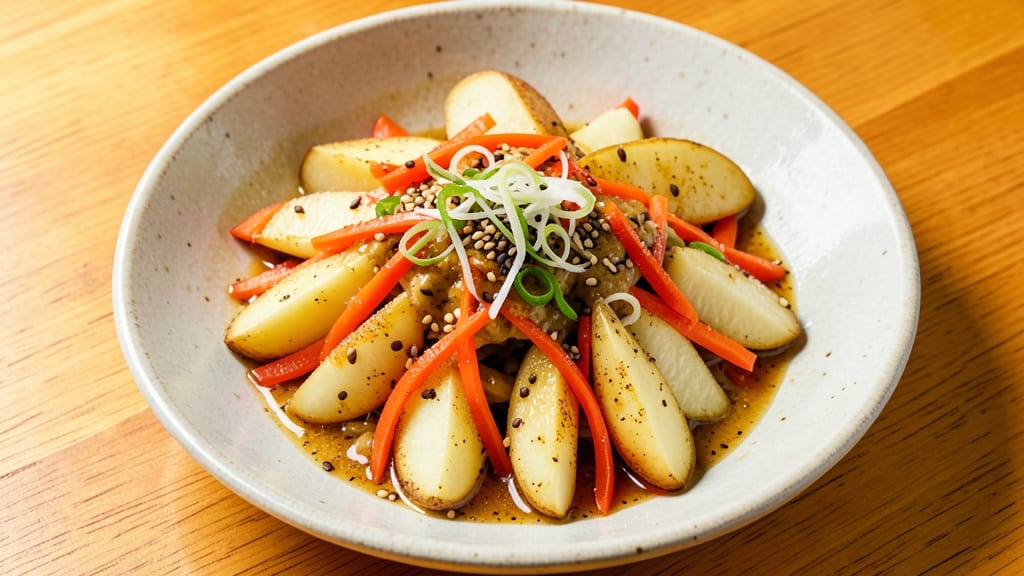
This authentic Japanese potato salad transforms humble ingredients into a vibrant, tangy side dish that's completely different from the creamy American version. My grandmother's recipe cards included this one, written in her looping script: "Potatoes, vinegar, mustard—no mayo needed."
The secret lies in the bright, vinegar-based dressing that cuts through the earthiness of the boiled potatoes and crunchy carrots, creating a salad that's equally at home at a summer picnic or a traditional Japanese festival spread.
What makes this recipe special is its balance of simplicity and tradition. You'll use hard-boiled potatoes and carrots cut into uniform cubes—no fancy techniques required—then coat them in a dressing made with rice vinegar, mirin, and a touch of mustard for depth.
The optional additions like pickled ginger or bonito flakes add layers of umami that elevate this dish from ordinary to extraordinary. Unlike many potato salads, this one stays fresh-tasting even after sitting in the fridge for a day, making it perfect for meal prep.
The result is a salad that's crisp, refreshing, and packed with authentic Japanese flavors—no heavy mayo in sight. The dressing clings to each potato and carrot piece, creating a harmonious blend of sweet, tangy, and slightly spicy notes.
It's the kind of dish that proves Japanese home cooking doesn't have to be complicated to be impressive. Serve it chilled alongside grilled fish, rice dishes, or even as a light lunch on its own.
Here's where it gets interesting—the plating. In Japan, this salad is often served in a wide, shallow dish to showcase its vibrant colors. Garnish with a sprinkle of sesame seeds or a few bonito flakes for that extra touch of authenticity.
Trust me on this: once you try this version, you'll never go back to the heavy, creamy potato salads of your childhood.
Ingredients for authentic japanese potato salad
Potatoes, vinegar, and a touch of mustard—no mayo needed for this authentic Japanese version.
| Ingredient | Amount | Notes |
|---|---|---|
| Russet Potatoes 🥔 | 2 lb | Medium size, peeled and cubed |
| Carrots 🥕 | 1 ½ lb | Medium size, peeled and cubed |
| Rice Vinegar 🍶 | ½ cup | Seasoned or unseasoned, to taste |
| Mirin 🍶 | ¼ cup | Sweet cooking wine, don't substitute |
| Dijon Mustard 🌶️ | 1 tbsp | For depth of flavor |
| Granulated Sugar 🍚 | 1 tbsp | Balances acidity |
| Salt 🧂 | 1 tsp | Kosher or sea salt |
| Black Pepper 🌶️ | ½ tsp | Freshly ground preferred |
| Sesame Seeds 🌰 | 1 tbsp | Toasted for garnish |
| Pickled Ginger 🍈 | ¼ cup | Thinly sliced, optional |
| Bonito Flakes 🐟 | 1 tbsp | Optional, for umami |
| Vegetable Oil 🫒 | 2 tbsp | For sautéing carrots |
The potatoes are the foundation, so pick firm, starchy russets—they hold their shape better when boiled. Japanese markets or well-stocked grocery stores often carry pre-peeled russets, but peeling them yourself ensures you get the freshest. For the carrots, orange or purple varieties add visual appeal, but standard carrots work fine. Boil them until tender but still slightly firm—they'll soften more as they cool. Pro tip: if you're short on time, microwave the cubed potatoes and carrots for 8-10 minutes before boiling to cut cooking time in half.
No mirin? Substitute with equal parts rice vinegar and sugar, but the flavor won't be identical—mirin's sweetness is key. The Dijon mustard is non-negotiable; regular mustard won't give the same depth. For the pickled ginger, any brand works, but look for the bright pink kind in the refrigerated section. Bonito flakes can be tricky to find—Asian grocery stores usually stock them, or you can use a pinch of dried bonito powder if you're desperate. The sesame seeds? Toast them in a dry pan for 30 seconds—it makes all the difference in flavor.
This salad tastes even better the next day, so make a double batch if you're prepping for the week. Store in an airtight container with a paper towel to absorb moisture—keeps for 4-5 days in the fridge. For extra crunch, add the carrots and sesame seeds just before serving. The dressing separates slightly over time? Just give it a quick stir before tossing with the potatoes—it'll come back together perfectly.
Why You'll Love This Recipe
- No Boil, No Fuss: I swear by this method—just roast the potatoes and carrots until tender, then toss with the dressing. That crispy outside, fluffy inside? Done in one pan with zero peeling or chopping stress.
- Umami Magic: The mirin and rice vinegar combo? It’s the secret weapon. Sweet, tangy, and just a little funky—like a Japanese bistro’s secret handshake. (Between us, it’s the Dijon mustard that ties it all together.)
- Lunchbox Legend: Honestly, this is my go-to for packed lunches. Keeps perfectly for days, stays crisp, and even my picky 10-year-old devours it cold. Bonus: it’s the only salad that doesn’t wilt by noon.
- Budget Bright Spot: Russets and carrots are cheap, and this recipe stretches for a crowd. I’ve fed six people for under $10, and the leftovers? Just as good reheated or cold. (Yes, even on a Tuesday night.)
Step-by-step instructions for authentic Japanese potato salad
This traditional Japanese potato salad delivers bright, tangy flavors without mayo—just follow these simple steps.
Parboil the Potatoes and Carrots
Place the 2 lb Russet Potatoes and 1.5 lb Carrots in a large pot and cover with cold water by about 2 inches. Add 1 tsp Salt and bring to a boil over medium-high heat. Once boiling, reduce heat to medium and cook for 10 minutes—this partial cooking ensures they finish tender when dressed.
Drain immediately and transfer the vegetables to an ice bath to stop cooking. Let them cool completely before handling. I like to shock them in ice water for 5 minutes—this prevents overcooking and makes peeling easier later. Don't skip this step; warm potatoes will turn mushy when dressed.
Sauté the Carrots for Sweetness
Heat 2 tbsp Vegetable Oil in a large skillet over medium heat. Add the cooled carrots and cook for 5-6 minutes, stirring occasionally, until they develop a light golden color and soften slightly. This step caramelizes their natural sugars, adding depth to the salad.
Remove the carrots and set aside. If you're using 1 tbsp Bonito Flakes for umami, sprinkle them into the hot oil while the carrots cook—they'll sizzle dramatically and infuse the oil with flavor. Strain the oil through a fine-mesh sieve to remove any flakes before using it in the dressing.
Make the Vinegar Dressing
In a large bowl, whisk together the 0.5 cup Rice Vinegar, 0.25 cup Mirin, 1 tbsp Dijon Mustard, 1 tbsp Granulated Sugar, and 0.5 tsp Black Pepper. Gradually whisk in the oil from the carrots (about 1-2 tbsp, depending on how much rendered). Taste and adjust seasoning—you want a balance of sweet, tangy, and slightly peppery.
The dressing should coat the back of a spoon but remain pourable. If it's too thick, add 1-2 teaspoons of water to loosen it. This vinegar-based dressing is what makes this salad authentically Japanese—bright, refreshing, and completely different from creamy Western versions.
Combine and Chill
Add the cooled potatoes and sautéed carrots to the dressing bowl. Gently toss everything together until the vegetables are evenly coated. Let the salad sit at room temperature for 5 minutes—this allows the flavors to meld slightly before chilling.
Transfer to an airtight container and refrigerate for at least 2 hours (overnight is even better). The longer it chills, the more the flavors develop. Before serving, sprinkle with 1 tbsp toasted Sesame Seeds and top with 0.25 cup thinly sliced Pickled Ginger for that authentic Japanese touch.
Serve with Confidence
This salad tastes best when served cold, so let it sit in the fridge until ready to eat. The potatoes should be tender but still hold their shape, and the dressing should cling beautifully to each piece. Serve as a side dish with grilled fish, sushi, or even as a light main course with steamed vegetables.
Here's the thing—this isn't your grandmother's potato salad. The vinegar dressing keeps it refreshing, the bonito flakes add umami depth, and the pickled ginger brings a bright contrast. Trust me, once you try this authentic version, you'll never go back to mayo-based salads again.
Pro Tips For Making Authentic Japanese Potato Salad
- BOIL THE POTATOES WHOLE: Russets break into mush when cubed first—drop them whole into boiling water, then halve after 10 minutes. The skin stays intact for that perfect bite, and the centers cook through evenly without turning gluey. (Yes, it looks weird in the pot, but the texture is worth it.)
- GRATE CARROTS FINE, THEN RINSE: Use a box grater for ultra-fine shreds—no food processor here. Toss the grated carrots in a colander and rinse with cold water to remove excess starch. This keeps them crisp instead of soggy, which is crucial for balancing the creamy dressing.
- DON’T SKIP THE MIRIN REDUCTION: Simmer the mirin and rice vinegar together for 2–3 minutes before mixing with mustard. This concentrates the sweetness and deepens the flavor—cutting the vinegar’s sharpness so the salad doesn’t taste like it’s dressed in a punch. (I learned this the hard way after a batch that tasted like pickled potatoes.)
- COOL THE POTATOES BEFORE MIXING: Drain the potatoes, spread them on a tray, and let them cool completely before tossing with the dressing. Warm potatoes absorb the vinegar and mustard like a sponge, turning the salad into a sad, watery mess. Patience here guarantees creamy, not clumpy, results.
Best sauces and condiments for this dish
Vinegar Dressing Magic
The heart of this salad lies in its vinegar-based dressing—a far cry from creamy mayo. The combination of 0.5 cup rice vinegar and 0.25 cup mirin creates a bright, tangy base that brightens the earthy potatoes.
I always add 1 tbsp Dijon mustard for depth, and a pinch of black pepper to keep things interesting. The key is balancing sweetness from the sugar and mirin with the sharpness of the vinegar. Trust me, this dressing is what transforms a simple potato salad into something special. 🍶
Umami Boosters
For that authentic Japanese touch, I recommend adding 1 tbsp bonito flakes to the hot oil when sautéing the carrots. The flakes sizzle dramatically and infuse the oil with an incredible umami depth. If you can't find bonito flakes, a pinch of dried bonito powder works in a pinch.
Another favorite addition is 0.25 cup pickled ginger, which adds a bright, slightly sweet contrast to the rich flavors. These ingredients elevate the salad from good to extraordinary. 🐟
Sesame Seed Garnish
Don't skip the 1 tbsp toasted sesame seeds—they add a nutty crunch and visual appeal. I like to toast them in a dry pan for just 30 seconds until golden, then sprinkle them over the finished salad. The seeds should be fresh and aromatic, not bitter.
For extra flair, add a few green onions or shiso leaves if you have them on hand. These garnishes aren't just decorative; they add layers of flavor that make the salad feel complete. 🌰
Dressing Variations
Want to experiment? Try swapping the rice vinegar for apple cider vinegar and adding 1 tsp honey to balance the acidity. For a spicier kick, include ½ tsp grated ginger or a dash of gochujang (Korean chili paste) in the dressing.
These tweaks keep the salad refreshing while adding new dimensions. The beauty of this recipe is its flexibility—it's easy to adapt to your taste. ✨
Storage Secrets
The dressing will separate slightly after chilling, but that's normal. Just give it a quick stir before serving, and it'll come back together perfectly. Store leftovers in an airtight container with a paper towel to absorb moisture.
This salad actually tastes better the next day as the flavors meld together. I often make a double batch so I have it ready for quick lunches or potlucks. The flavors develop beautifully over time. ❄️
Nutrition facts
Frequently asked questions
Why doesn't this Japanese potato salad use mayo like American versions?
Traditional Japanese potato salad relies on a bright, vinegar-based dressing instead of mayo to keep it light and refreshing. The combination of rice vinegar, mirin, and Dijon mustard creates a tangy, slightly sweet flavor that complements the potatoes perfectly without heaviness. This approach also makes it a great side for hot summer days!
Can I make this salad ahead of time?
This salad actually tastes better the next day as the flavors meld together. Store it in an airtight container with a paper towel to absorb moisture, and it'll keep well for 4-5 days in the fridge. The dressing may separate slightly—just stir before serving, and it'll come back together perfectly.
What if I can't find mirin or bonito flakes?
No problem! For mirin, use equal parts rice vinegar and sugar (though the flavor won't be identical). For bonito flakes, try dried bonito powder or even a pinch of soy sauce for umami. The salad will still be delicious—these ingredients just add that authentic Japanese touch.
How do I get the potatoes to stay firm instead of turning mushy?
Shocking the potatoes in ice water after boiling is key! After parboiling for 10 minutes, transfer them to an ice bath for 5 minutes to stop cooking. Also, cube them evenly (about 1-inch pieces) so they cook uniformly. Avoid over-boiling—they should be tender but still hold their shape.
What are the best ways to serve this potato salad?
This refreshing salad pairs beautifully with grilled fish, sushi, or even as a light lunch on its own. For extra flair, serve it in a wide, shallow dish with toasted sesame seeds and pickled ginger on top. It's also perfect for potlucks or picnic spreads—just keep it chilled until serving!