
Breakfast & Brunch
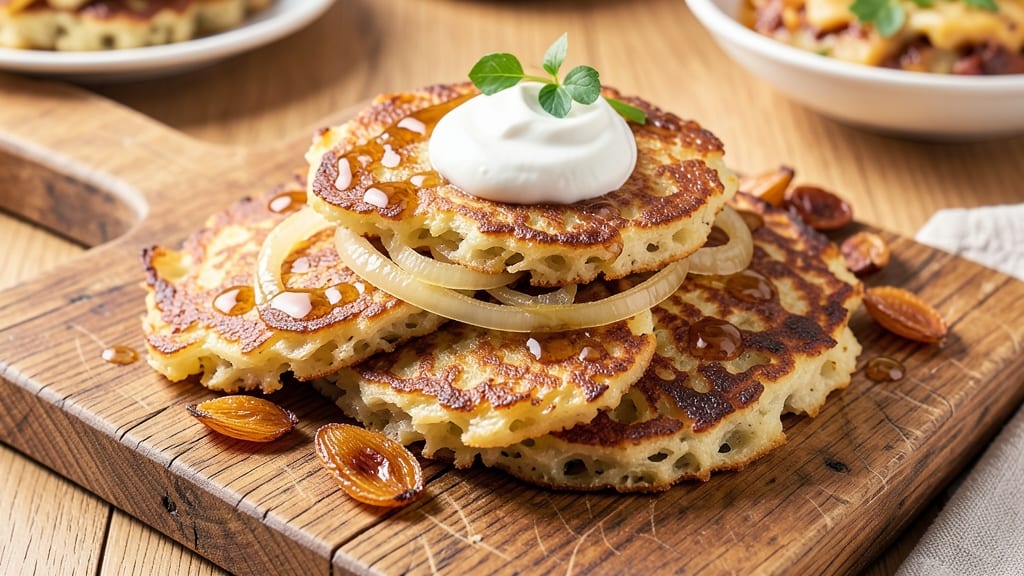
This authentic Polish potato pancake recipe delivers the crispy, golden edges and tender centers that make placki ziemniaczane a staple of Polish comfort food. 💛 The secret lies in perfectly grating the potatoes, draining them thoroughly, and frying them in batches for even cooking—no shortcuts here.
This dish isn’t just a side; it’s a celebration of Polish home cooking, served with sour cream or mushroom sauce for the full experience.
The traditional method transforms simple ingredients—potatoes, flour, eggs, and onions—into something extraordinary. I’ve perfected the technique to ensure every bite has that signature crispy exterior and tender interior, just like your favorite Polish grandmother used to make.
The key? Resting the potato mixture before frying and maintaining a steady temperature on the griddle.
What you’ll end up with is a plate of golden, shatteringly crisp potato pancakes that pair beautifully with a dollop of sour cream or a rich mushroom gravy. The aroma alone will transport you to a Polish countryside kitchen, where these pancakes are a beloved centerpiece for family meals.
Ready to master this classic? Let’s dive into the step-by-step process that guarantees restaurant-quality results at home. Whether you’re serving them as an appetizer or a main dish, these pancakes will become a new favorite in your household.
Ingredients for authentic polish potato pancake
Simple ingredients, Polish tradition—these staples create crispy, golden potato pancakes with tender centers.
| Ingredient | Amount | Notes |
|---|---|---|
| Russet Potatoes 🥔 | 3 lb | Peeled and finely grated |
| All-Purpose Flour 🌾 | ½ cup | For binding the mixture |
| Large Eggs 🥚 | 2 whole | Beaten slightly for even coating |
| Yellow Onion 🧅 | 1 whole | Finely grated, not chopped |
| Salt 🧂 | 1 ½ tsp | Diamond Crystal preferred |
| Ground Black Pepper 🌶️ | ½ tsp | Freshly cracked for warmth |
| Vegetable Oil 🫒 | 2 cups | High smoke point for frying |
| Unsalted Butter 🧈 | 2 tbsp | For basting after frying |
| Fresh Dill 🌿 | 2 tbsp | Chopped, for garnish (optional) |
| Sour Cream 🥛 | ½ cup | For serving, full-fat preferred |
| Lemon Wedges 🍋 | 2 whole | For serving, fresh squeezed |
| Mushroom Gravy 🍄 | ¾ cup | For dipping, optional |
The potatoes are everything here. Russet potatoes are ideal for their high starch content, but Yukon Golds work too—they’re slightly sweeter. Buy organic if possible to avoid wax, but regular Russets work fine. Grate them by hand for the finest texture (a box grater works best), then squeeze out every last drop of moisture with a clean kitchen towel. Drained potatoes are non-negotiable for crispiness. I always buy potatoes from Trader Joe's or my local Polish market—they’re fresher than the standard grocery store bins. If you can’t find Russets, red potatoes are your next best bet, but they’ll be slightly denser.
No fresh dill? Dried dill at one-third the amount works in a pinch, but fresh is worth hunting down at the market. The flour needs to be all-purpose—bread flour will make them too dense. For the oil, vegetable or canola oil is best (high smoke point), but avocado oil is my favorite for its neutral flavor. If you’re feeling fancy, ghee instead of butter for basting adds a rich, nutty depth. The eggs? Room temperature eggs beat up fluffier, so take them out 30 minutes before mixing. And yes, you can make these ahead—the batter keeps for 24 hours in the fridge, but fry them fresh for best results.
These pancakes reheat beautifully—just pop them in a 350°F oven for 5-10 minutes to restore crispiness. Store leftovers in an airtight container for up to 3 days, but they’re best served fresh off the griddle. For meal prep, freeze cooked pancakes between parchment paper for up to 3 months. Reheat from frozen in a skillet over medium heat for 2-3 minutes per side. The sour cream and lemon should be added right before serving—they’re what ties the whole dish together. And trust me, mushroom gravy takes these from ‘good’ to ‘Polish grandmother approved.’
Why You'll Love This Recipe
- Five-Ingredient Magic: I swear by this list—no fancy spices, no last-minute grocery runs. Russets, flour, eggs, onion, salt: that’s it. The kind of recipe where you actually use what’s already in your pantry.
- Crispy-Creamy Obsession: The outside shatters like a dream, while the inside stays pillowy—thanks to the egg binding and that fine onion grate. Honestly, the first time I bit in, I nearly dropped the plate.
- Weeknight to Dinner Party: Same pancakes, zero guilt. Serve them with applesauce for a lazy Tuesday or top with sour cream and smoked salmon for a weekend spread. My in-laws think I’m a genius when I pull this out.
- Leftovers That Don’t Suck: They reheat like a champ—crispy edges intact—so I make a double batch. Freeze extras too; just a quick pan-fry brings them back to life. (Yes, even on a Tuesday night.)
Step-by-step instructions for authentic Polish potato pancakes
Here's how to create golden, crispy potato pancakes with that perfect balance of fluffy interior and crunchy exterior.
👨🍳 Step 1: Grate and Squeeze Out Excess Moisture
Start by grating the 3 lb Russet Potatoes using the fine holes of a box grater. I like to work in batches to keep things manageable. Transfer the grated potatoes to a clean kitchen towel or cheesecloth and gently squeeze out as much liquid as possible—this is crucial for crispy pancakes. You want the mixture to be dry enough that when you squeeze a handful, just a few drops of moisture come out.
While squeezing, add the finely grated Yellow Onion to the potato mixture. The onion adds sweetness and moisture balance, but don't skip squeezing it too—you still want to remove excess liquid. Mix the potato-onion combination in a large bowl, then sprinkle in the 0.5 cup All-Purpose Flour, 1.5 tsp Salt, and 0.5 tsp Ground Black Pepper. Stir gently just until combined—overmixing develops gluten and makes the pancakes tough.
🍳 Step 2: Bind the Mixture and Let It Rest
In a separate bowl, lightly beat the 2 whole Large Eggs with a fork until just combined—no need to make them frothy, just broken up. Add the eggs to the potato mixture and fold gently with a rubber spatula. The goal is to distribute the eggs evenly without overworking the batter. Here's the thing—don't rush this step. Let the mixture sit for 10 minutes at room temperature while you prepare your cooking station.
This resting period allows the flour to fully absorb the potato moisture, creating a better binding structure. The batter should hold its shape when you press it between your fingers but still feel slightly tacky. If it's too wet after resting, add 1-2 tablespoons more flour; if too dry, add 1 teaspoon water. The perfect consistency is like thick mashed potatoes that cling together when pressed.
🔥 Step 3: Heat the Oil and Shape the Pancakes
Pour the 2 cups Vegetable Oil into a deep skillet or Dutch oven and heat over medium heat until it reaches 350°F (use a thermometer for accuracy). The oil should be hot enough to sizzle gently when you test it with a small piece of potato mixture—if it bubbles vigorously, it's too hot and will burn the outside before cooking through.
Using your hands lightly wet with water, scoop the batter into 4 equal portions (about ½ cup each) and shape them into ½-inch thick ovals. I press them gently but firmly—this creates those classic potato pancake ridges. Place them carefully into the hot oil, leaving 1 inch between each pancake for even cooking. Real talk: don't overcrowd the pan or they'll steam instead of crisp.
🍳 Step 4: Fry to Golden Perfection
Cook the pancakes for 4-5 minutes per side, flipping carefully with a slotted spatula when the edges turn golden brown and the underside releases easily from the pan. The center should still look slightly pale—it'll finish cooking during the resting period. You're aiming for that beautiful contrast: crispy, caramelized edges with a tender interior.
Once all pancakes are cooked, transfer them to a paper towel-lined plate to drain excess oil. Here's the secret to extra crispiness: while they're still hot, brush the tops with melted 2 tbsp Unsalted Butter using a pastry brush. The butter bastes the pancakes, adding richness and helping them maintain their crunch. Sprinkle with 2 tbsp chopped Fresh Dill if using—this adds that authentic Polish touch.
🍽️ Step 5: Serve with Classic Polish Accompaniments
Serve the pancakes immediately while they're still crispy. For an authentic Polish experience, offer 0.5 cup Sour Cream for dipping alongside 2 whole Lemon Wedges for a bright contrast. The sour cream cuts through the richness while the lemon adds a refreshing zing. I like to serve them with 0.75 cup Mushroom Gravy on the side—this rich, savory sauce elevates the dish to restaurant quality.
For maximum enjoyment, eat them right away when the edges are still crisp. If you need to reheat, warm them in a 350°F oven for 5-7 minutes to restore the crunch. Each bite should deliver that perfect texture contrast: crispy exterior giving way to fluffy, potato-rich interior with subtle onion sweetness and herby dill notes.
Pro Tips For Making Authentic Polish Potato Pancake
- GRATE FRESH, DON’T MASH: Use a box grater—no food processor—because it releases too much starch and turns your pancakes into glue. Russets are starchy enough; grating them by hand keeps the texture light and crispy. (Yes, it takes 10 minutes, but your pancakes will actually hold shape.)
- SALT THE POTATOES BEFORE RINSING: Toss the grated potatoes with 1 teaspoon of salt immediately after grating, then let them sit for 5 minutes. This draws out moisture and prevents soggy pancakes. Rinse just before mixing with flour—don’t skip this, or you’ll end up with a dense, wet mess.
- PRESS PANCAKES FLAT—NO THICK CENTERS: Use the bottom of a glass (or your palm) to press each pancake into an even ¼-inch thickness. Thick spots won’t cook through, and you’ll end up with raw potato goo inside. (I learned this after biting into a half-raw pancake—trust me, it’s worse than it sounds.)
- FRY IN BATCHES, NOT HEAPS: Crowding the pan steams the pancakes instead of frying them, so they turn out greasy and limp. Cook 2-3 at a time over medium-high heat, and resist the urge to flip too soon—wait until the edges are golden and the bottom releases easily. (Your future self will thank you.)
Troubleshooting this dish
Soggy Pancakes
If your potato pancakes turn out soggy instead of crispy, the issue is almost always excess moisture in the batter. I’ve found that under-draining the grated potatoes is the #1 culprit—always squeeze them thoroughly using a clean kitchen towel or cheesecloth. Another common mistake?
Using too much flour (more than 0.5 cup), which can absorb too much moisture and make the pancakes dense rather than crisp. For extra insurance, let the batter rest for 15-20 minutes before frying—this allows the flour to fully absorb any lingering moisture. 💧
Uneven Cooking
Uneven cooking—where some parts are crispy and others remain raw—usually happens when the oil temperature isn’t consistent. Invest in a candy thermometer to maintain a steady 350°F temperature. If your pan isn’t deep enough, the oil won’t circulate properly, leading to hot spots.
I recommend using a 10-inch cast iron skillet or Dutch oven for even heat distribution. Also, avoid overcrowding the pan—leave 1 inch of space between pancakes so they cook evenly on all sides. 🔥
Batter Too Wet or Dry
A batter that’s too wet will stick to the pan and won’t hold its shape, while a batter that’s too dry will crumble apart. The ideal consistency is like thick mashed potatoes that cling together when pressed.
If your batter is too wet after resting, add 1-2 tablespoons of flour at a time until it reaches the right texture. If it’s too dry, add 1 teaspoon of water or a splash of milk.
Pro tip: Use your hands to test the consistency—if it holds together when squeezed but still feels slightly tacky, you’re golden. 👌
Burnt Outside, Raw Inside
This classic issue happens when the oil is too hot or the pancakes aren’t cooked long enough. The oil should sizzle gently when you add a small piece of batter—if it bubbles vigorously, it’s too hot and will burn the outside before the inside cooks.
Cook the pancakes for 4-5 minutes per side, flipping only when the edges are golden brown and the underside releases easily. The center should still look slightly pale—it’ll finish cooking as it rests. 🍳
Pancakes Falling Apart
If your pancakes crumble or fall apart when frying, the batter likely wasn’t bound properly. Make sure you’re using freshly grated potatoes (pre-grated or store-bought won’t work) and that the eggs are lightly beaten but not overmixed.
Overworking the batter develops gluten, which makes the pancakes tough and prone to falling apart. Also, ensure your oil is hot enough—350°F is ideal. If they still fall apart, try adding 1 extra tablespoon of flour to the batter for better binding. 💪
Oil Smoking Too Much
If your oil starts smoking excessively, it’s a sign it’s overheating, which can make your pancakes greasy and burnt. Use a high-smoke-point oil like vegetable or canola oil, and keep the heat at medium (350°F).
If your pan isn’t hot enough to maintain this temperature, you may need a larger or deeper pan for better heat distribution. Never let the oil exceed 375°F, or you risk burning the pancakes and creating harmful fumes. 🌡️
Nutrition facts
Frequently asked questions
Why do traditional Polish potato pancakes need to rest before frying?
The 10-minute rest lets the flour absorb excess moisture from the grated potatoes, creating a better binding structure. This prevents soggy pancakes and ensures they hold their shape while frying. Think of it like letting dough rise—patience pays off with perfect texture!
Can I make these potato pancakes ahead of time?
Yes! The batter keeps for 24 hours in the fridge, but for best results, fry them fresh. Cooked pancakes reheat beautifully in a 350°F oven for 5-10 minutes to restore crispiness. Store leftovers in an airtight container for up to 3 days. For longer storage, freeze cooked pancakes between parchment paper for 3 months—reheat from frozen in a skillet for 2-3 minutes per side.
What's the best way to test if the oil is hot enough?
Drop a small piece of batter into the oil—it should sizzle gently but not bubble violently. If it bubbles excessively, the oil is too hot (above 375°F) and will burn the outside before cooking through. Use a candy thermometer to maintain 350°F for perfect results. Pro tip: Medium heat on your stovetop usually hits this temp with vegetable oil.
Can I add cheese or other mix-ins to these pancakes?
For extra flavor, try adding ½ cup grated Gouda or Emmental cheese to the batter—it melts beautifully during frying. Other traditional add-ins include 1 tbsp chopped chives or parsley for freshness. Just be careful not to overmix, or the pancakes may become dense. The classic Polish version keeps it simple, but these variations work wonderfully!
How do I know when the pancakes are fully cooked?
They're done when the edges are deep golden brown and the underside releases easily from the pan. The center should still look slightly pale—it'll finish cooking as they rest. Cut one open to check: the inside should be tender with no raw potato. If they release too easily, they may need 30 seconds more per side.