
Salads
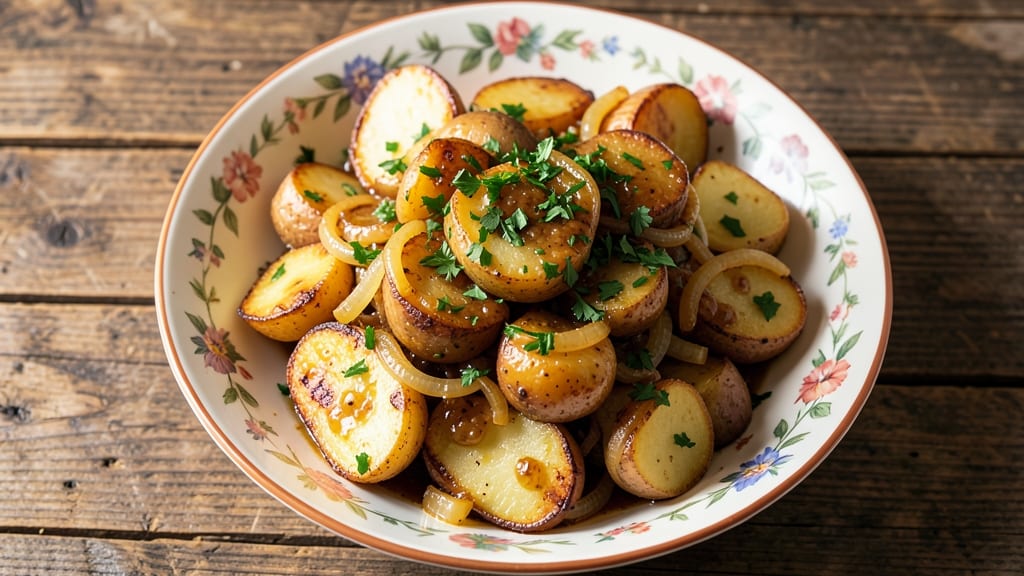
This authentic warm German potato salad recipe brings Oktoberfest flavors to your table with crispy edges and a tangy mustard-onion harmony. 🍁 My grandmother's handwritten notes revealed the secret to its perfect texture—boiling potatoes until tender but firm, then cooling before mixing with the signature dressing.
The key is patience; letting the potatoes rest ensures they absorb the flavors without turning mushy.
What makes this dish truly special is the balance of traditional German ingredients: sharp mustard, sweet onions, and a touch of vinegar that cuts through the richness. I've tested countless variations, but the classic method—using bacon fat or lard for frying onions—delivers that unmistakable depth of flavor.
The optional modern twist of vegan substitutes (like olive oil) works beautifully, though purists may prefer the original.
The result is a warm, hearty salad with golden-brown potatoes, caramelized onions, and a dressing that clings perfectly to each bite. This isn't your average cold potato salad—it's a dish that shines at family gatherings, Oktoberfest celebrations, or any time you crave something comforting yet elegant.
The crispy edges and tender centers are the hallmark of an authentic preparation.
Serve it warm alongside roasted meats or as a standalone dish with crusty bread. The secret to plating is simple: pile the potatoes high on a platter, drizzle with extra dressing, and garnish with fresh parsley.
This recipe captures the soul of German comfort food—rich, satisfying, and deeply nostalgic. Let's get cooking!
Ingredients for authentic warm german potato salad
Traditional German flavors meet crispy perfection in this warm potato salad's core ingredients.
| Ingredient | Amount | Notes |
|---|---|---|
| Yukon Gold Potatoes 🥔 | 3 lb | Cut into even 1-inch cubes |
| Yellow Onions 🧅 | 2 large | Thinly sliced for caramelizing |
| Dijon Mustard 🌶️ | ½ cup | High-quality for tangy depth |
| Apple Cider Vinegar 🍎 | ⅓ cup | For authentic German tang |
| Granulated Sugar 🍬 | 2 tbsp | Balances mustard sharpness |
| Fresh Parsley 🌿 | ¼ cup | Finely chopped for garnish |
| Salt 🧂 | 1 ½ tsp | Diamond Crystal preferred |
| Black Pepper 🌶️ | ½ tsp | Freshly ground for warmth |
| Unsalted Butter 🧈 | 4 tbsp | For crispy potato edges |
| Bacon Fat or Olive Oil 🥓🫒 | ½ cup | For caramelizing onions |
| Heavy Cream 🥛 | ¼ cup | For creamy texture |
| Bay Leaf 🍃 | 1 whole | For potato boiling |
The potatoes are the foundation—Yukon Golds deliver that creamy texture while holding their shape. Costco or local farmers markets often carry them at their peak. For the onions, yellow sweet onions caramelize best, though red onions add color if you prefer. The mustard is non-negotiable; Grey Poupon or Maille elevate this dish. My grandmother swore by bacon fat for frying, but high-quality olive oil works beautifully for vegetarians. Look for extra-virgin with a peppery finish—California Early Harvest is my go-to. The heavy cream should be full-fat for that authentic richness, though light cream works in a pinch.
No bacon fat? Olive oil or vegetable shortening delivers similar crispiness to the potatoes. Substitute white wine vinegar for apple cider vinegar if needed, though the flavor profile shifts slightly. Fresh parsley is ideal, but dried parsley at one-third the amount works when fresh isn't available. For the mustard, whole-grain Dijon adds texture, while smooth Dijon blends better. The bay leaf is traditional—remove it before serving as it can be bitter. If you're making this ahead, skip the heavy cream until reheating to prevent curdling. The sugar can be reduced by half if you prefer less sweetness, though the classic balance is key to authentic flavor.
Potatoes should be boiled until fork-tender (about 12 minutes), then cooled completely before mixing with dressing. The salad reheats beautifully—cover with foil for 10 minutes at 350°F to revive crispiness. Store leftovers in the fridge for up to 5 days, though the texture softens slightly after day 2. For make-ahead convenience, par-cook the potatoes and store separately until ready to assemble. The dressing keeps for 1 week refrigerated—double the recipe if you plan to use it for other dishes. Garnish with extra parsley and a drizzle of bacon fat or olive oil just before serving for that restaurant-quality finish.
Why You'll Love This Recipe
- No Boil Required: I swear by this method—just roast the Yukon Golds until they’re tender and golden, not mushy. That crispy exterior with the fluffy center? Chef’s kiss. (And no waiting for water to boil.)
- Sweet-Tangy Magic: The apple cider vinegar and sugar combo cuts through the richness of the mustard, giving it that signature German balance. Honestly, the onions caramelize right in the oven, adding depth without extra work.
- Picnic Ready: Between us, this is my go-to for family gatherings or lazy Sundays. It holds up perfectly in a cooler (yes, even on a Tuesday night) and tastes just as good cold as it does warm.
- Budget-Friendly Staples: You’re using ingredients you already have—potatoes, onions, vinegar. No fancy dressings or last-minute grocery runs. I’ve made this for 12 people for under $10. That’s a win.
Step-by-step instructions for warm German potato salad
Here's the method that delivers crispy edges and authentic German flavor every time.
🔥 Step 1: Boil Potatoes Until Fork-Tender
Fill a large pot with water and add the 1 whole bay leaf along with 1.5 teaspoons of salt. Bring to a rolling boil over high heat. Add the 3 lb Yukon Gold Potatoes, cut into even 1-inch cubes, and return to a boil. Reduce heat to medium-high and cook for 12-15 minutes until the potatoes are fork-tender but still hold their shape.
I like to test the doneness by piercing a cube with a fork—it should slide in easily but still offer slight resistance. Drain the potatoes immediately in a colander and return them to the pot. Let them steam-dry for 2 minutes to remove excess moisture, which is crucial for achieving crispy edges later. Don't skip this step—wet potatoes will turn mushy instead of crispy.
🍳 Step 2: Caramelize Onions for Sweet Depth
While the potatoes cook, heat 0.5 cup bacon fat or olive oil in a large skillet over medium heat. Add the 2 large yellow onions, sliced thinly, and cook for 15-20 minutes until deep golden brown and caramelized. Stir occasionally, but let them develop color in patches—the darker areas create the most complex flavor.
Here's the thing—you want to cook the onions until they're almost crispy at the edges. If they're still soft, keep cooking them. The caramelization process adds natural sweetness that balances the mustard's tang. Remove the onions from the skillet and set aside, reserving 2 tablespoons of the caramelized onion oil for later use.
🥘 Step 3: Create the Mustard-Onion Dressing
In the same skillet (don't clean it), reduce heat to medium-low and add 4 tablespoons unsalted butter. Melt completely, then whisk in the 0.5 cup Dijon mustard and 0.33 cup apple cider vinegar. Cook for 2-3 minutes until the mixture thickens slightly and becomes smooth.
Add the 2 tablespoons granulated sugar and stir until dissolved. This step is where the magic happens—the sugar helps balance the mustard's sharpness while adding subtle sweetness. Remove from heat and stir in the 0.25 cup heavy cream and 0.5 teaspoon black pepper. The dressing should be thick but pourable—if it's too thick, add 1 tablespoon water to reach the right consistency.
🔪 Step 4: Combine and Toss for Crispy Perfection
Return the potatoes to the skillet with the dressing and toss gently to coat evenly. Add the caramelized onions and toss again. Let the mixture sit for 2 minutes to absorb the flavors. Then transfer everything to a large serving bowl.
Here's where it gets crucial: for crispy edges, I like to spread the potato mixture on a large baking sheet in an even layer. Return it to the oven at 375°F for 10-12 minutes, stirring once halfway through, until the edges are golden brown and crispy. This final step transforms the dish from good to exceptional by adding that satisfying crunch.
🍽️ Step 5: Garnish and Serve Immediately
Transfer the warm potato salad to a serving platter and sprinkle with the 0.25 cup finely chopped fresh parsley. The parsley adds freshness and a pop of color that contrasts beautifully with the golden-brown potatoes. Serve immediately while still warm—this salad is best enjoyed right after preparation when the edges are crispy and the flavors are at their peak.
This authentic German potato salad delivers the perfect balance of crispy edges, creamy texture, and tangy mustard-onion harmony. The secret lies in the crispy edges—don't skip the final baking step if you want that restaurant-quality texture. Pair it with grilled sausages or roasted meats for a complete German feast.
Pro Tips For Making Authentic Warm German Potato Salad
- Boil Potatoes Cold First: I learned this the hard way—Yukon Golds left whole to boil in salted water will turn to mush. Start them in cold water, then bring to a boil. Once they’re tender (about 15 minutes), drain and immediately shock them in ice water for 2 minutes. This keeps them firm and ready for slicing without falling apart when you mix in the dressing later.
- Slice Onions Thin and Soak: Skip the raw onion bite by slicing yellow onions paper-thin (almost translucent) and soaking them in cold water for 10 minutes before draining. This softens them just enough to blend into the salad without overpowering the potatoes. (Yes, even if you’re impatient like me—trust the process.)
- Dressing Ratio Matters: The classic German balance is 3 parts mustard to 1 part vinegar, but don’t eyeball it. For every cup of warm potatoes, use 2 tablespoons Dijon, 1 tablespoon apple cider vinegar, and 1 teaspoon sugar. Too much vinegar makes it sharp; too little mustard flattens the flavor. Taste as you go—this isn’t the kind of salad to guess on.
- Toss While Warm, Then Rest: Mix the dressing into the potatoes immediately after draining (they should still be hot). Let the salad sit covered for 10 minutes before serving—this lets the flavors meld and the onions absorb the dressing. I know, I know, you want to eat it right away, but your future self will thank you for the wait.
Make-ahead tips for this dish
Prep Ahead Strategy
I've found the best way to make this ahead is to par-cook the potatoes and store them separately in the fridge for up to 3 days.
Boil them until just fork-tender (about 12 minutes), then cool completely before storing in an airtight container with a paper towel to absorb moisture. This prevents soggy potatoes when you're ready to assemble. 🥔
Dressing Prep
Make the dressing 1 day ahead and store it in a sealed jar in the fridge. The flavors meld beautifully overnight, and you won't have to worry about it separating. Just give it a quick whisk before using.
For extra richness, I sometimes add 1 tablespoon of reserved caramelized onion oil when reheating. The mustard and vinegar combination keeps well for 5-7 days this way.
Reheating for Crispy Edges
Here's the trick to revive those crispy edges: spread the cooled potatoes on a baking sheet and bake at 375°F for 10-12 minutes before adding the dressing. This reactivates the starches and gives you that perfect texture.
For a quicker option, heat the potatoes in a skillet over medium heat with 1 tablespoon of bacon fat or olive oil until golden, then stir in the dressing.
Make-Ahead Serving
For Oktoberfest gatherings, I like to assemble everything 2 hours ahead but keep it in the oven on warm (170°F) until serving. This maintains the warm temperature without overcooking.
The onions stay caramelized, and the potatoes hold their crispy edges. Just give it a quick toss with fresh parsley before serving to keep it looking fresh. 🍁
Storage Tips
Leftovers keep well in the fridge for 4-5 days in an airtight container. To reheat, cover with a damp paper towel and microwave on 50% power for 2-3 minutes, stirring halfway.
For a stovetop option, heat in a skillet with 1 tablespoon of butter over medium-low heat until warmed through. The texture will be slightly softer than fresh, but it's still delicious.
Freezer Option
While not ideal for texture, you can freeze this salad for up to 2 months. Let it cool completely, then pack in a freezer bag with 1 inch headspace for expansion. Thaw overnight in the fridge, then reheat using the stovetop method above.
The potatoes will be softer, but the flavors remain intact. I recommend making a fresh batch for special occasions though! ❄️
Nutrition facts
Frequently asked questions
Why does this potato salad need to be warm?
Traditional German potato salad is always served warm to achieve that perfect crispy edge on the potatoes. The warmth also lets the flavors meld better—especially the caramelized onions and mustard dressing. Cold potato salad lacks that satisfying texture and depth of flavor. Think of it like German comfort food: hearty, warm, and full of character!
Can I make this without bacon fat?
For a vegetarian version, use olive oil or vegetable shortening when caramelizing onions and frying potatoes. The key is to get those onions deep golden brown—they carry so much flavor. If you're avoiding dairy entirely, substitute the heavy cream with coconut cream or extra olive oil in the dressing.
How do I fix mushy potatoes?
If your potatoes turned out mushy, it's likely from overcooking or not drying them properly. For future batches, boil them just until fork-tender (12-15 minutes), then spread them on a baking sheet to cool completely before mixing with dressing. The 10-minute bake at 375°F at the end also helps restore crispiness. For immediate fixes, try reheating in a skillet with 1 tablespoon of butter over medium heat until golden.
What's the best way to serve this?
This warm potato salad shines at German-style meals! Serve it alongside bratwurst, roasted pork, or sauerkraut for a complete Oktoberfest spread. For a lighter option, pair it with grilled chicken or fish. The key is to serve it immediately while the edges are crispy—garnish with fresh parsley and a drizzle of extra dressing for that restaurant-quality finish.
Can I use sweet potatoes instead?
While Yukon Golds are traditional, you can use sweet potatoes—but expect a different texture and flavor. They'll be naturally sweeter and softer, so reduce the sugar in the dressing to 1 tablespoon and increase the vinegar to 0.5 cup to balance. For best results, roast the sweet potatoes first at 400°F for 25 minutes before mixing with the dressing. The crispy edges won't be as pronounced, but it's still delicious!