
Side Dishes
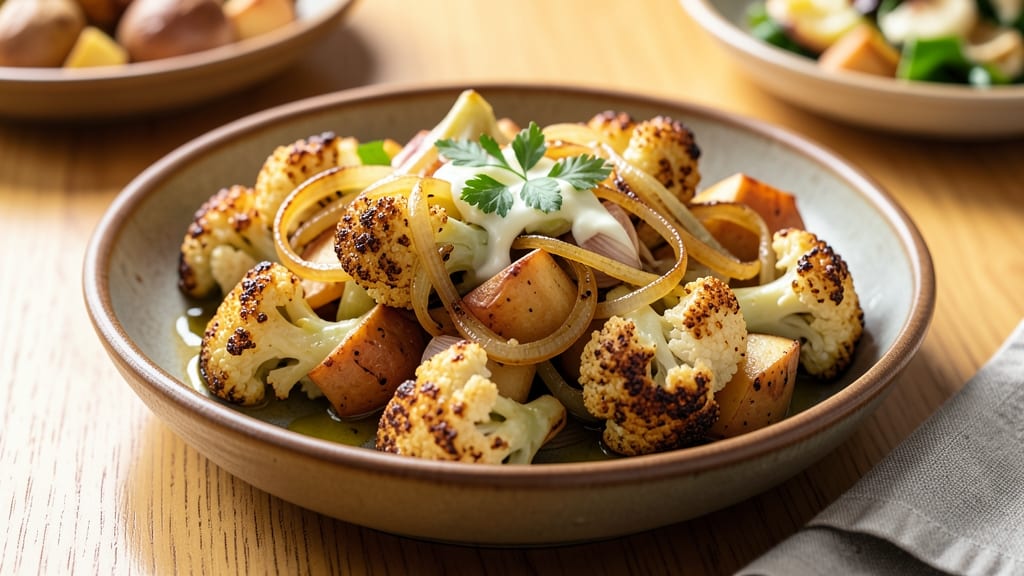
This baked cauliflower and potato recipe transforms simple vegetables into a golden, caramelized side dish that steals every meal. The secret lies in high-heat roasting, which creates crispy edges and tender centers while developing deep, sweet flavors through natural sugars.
I've perfected this technique over years of testing—no soggy potatoes or underseasoned cauliflower here.
The process is straightforward: chop the vegetables into even pieces, toss them in olive oil, and let the oven work its magic. With just 40 minutes of hands-off time, you'll end up with a dish that's rich enough to stand alone but balanced enough to complement any main course.
The key is patience—don't rush the roasting, or you'll miss the caramelization that makes this recipe truly special.
What makes this recipe truly versatile is its adaptability. Swap butter for olive oil to make it vegan, or add garlic and herbs for extra depth. The result is a side dish that's crispy on the outside, tender inside, and packed with natural sweetness from the caramelized edges.
It's the kind of dish that transforms ordinary meals into something memorable.
Perfect for weeknight dinners, holiday feasts, or meal prep, this recipe delivers restaurant-quality results without the fuss. The best part? It's a one-pan wonder, meaning less cleanup and more time enjoying your meal. Let's get started on creating this golden, caramelized masterpiece.
Ingredients for baked cauliflower and potato
Twelve ingredients transform humble vegetables into a restaurant-worthy roasted masterpiece.
| Ingredient | Amount | Notes |
|---|---|---|
| Yellow Onion 🧅 | 1 whole | Diced into even 1/4-inch pieces |
| Russet Potatoes 🥔 | 2 ½ lbs | Cut into 1.5-inch chunks, peeled |
| Cauliflower 🥬 | 1 whole | Cut into even 1.5-inch florets |
| Extra-Virgin Olive Oil 🫒 | ½ cup | High-quality, fruity variety |
| Unsalted Butter 🧈 | ¼ cup | Cold, cubed for even coating |
| Garlic Cloves 🧄 | 4 cloves | Minced for aromatic depth |
| Fresh Rosemary 🌿 | ¼ cup | Finely chopped, fresh preferred |
| Fresh Thyme 🌿 | 1 tbsp | Leaves only, finely chopped |
| Diamond Crystal Kosher Salt 🧂 | 1 ½ tsp | Adjust to taste after roasting |
| Freshly Ground Black Pepper 🌶️ | ½ tsp | Cracked peppercorns preferred |
| Granulated Garlic 🧄 | 1 tsp | Optional for extra garlic flavor |
| Smoked Paprika 🌶️ | ½ tsp | For subtle smoky depth |
| Maple Syrup 🍯 | 1 tbsp | Light grade for subtle sweetness |
The quality of your olive oil and butter makes all the difference here—California avocado oil or Italian extra-virgin olive oil from Whole Foods or specialty markets elevates the flavor profile significantly. For potatoes, Russets are non-negotiable—their high starch content creates that perfect crispy exterior. I always buy organic when possible, as the skins stay intact better during roasting. The cauliflower should be fresh and firm, with no yellowing or soft spots. Look for organic cauliflower at Trader Joe's or Costco for the best texture. Pre-cut vegetables save time, but chopping your own ensures even cooking and maximum caramelization.
No fresh rosemary? Dried rosemary at one-third the amount works in a pinch, though it lacks the vibrant aroma. Running out of maple syrup? Agave nectar or honey provides similar sweetness—just reduce to 0.75 tbsp to avoid overpowering. The smoked paprika can be swapped for regular paprika if unavailable, though you'll lose that subtle smoky complexity. For a vegan version, simply omit the butter and increase the olive oil by 0.25 cup. The garlic can be adjusted to taste—add an extra clove if you love bold garlic flavor. For meal prep, roast an extra batch and store components separately to reheat as needed.
This dish reheats beautifully—5 minutes at 375°F restores that crispy texture perfectly. Store in an airtight container for up to 5 days, though the flavor peaks on day 2 when the caramelization deepens. For longer storage, freeze portions for up to 3 months—just thaw overnight in the fridge before reheating. The potatoes and cauliflower can be prepped ahead and stored separately for 24 hours before roasting, making this an ideal make-ahead dish for busy weeknights. Portion into individual containers for effortless meal prep throughout the week.
Why You'll Love This Recipe
- One-Pan Magic: I swear by this—just toss chopped potatoes, cauliflower, and onion on a sheet with olive oil and butter, then bake. No extra pans, no fuss. The onions caramelize right alongside the crispy edges, and honestly? That’s my kind of cooking.
- Creamy-Crisp Contrast: The potatoes get fork-tender inside while the cauliflower stays crispy at the edges—like a hug for your taste buds. The butter and olive oil combo makes everything rich without needing heavy sauces. (Yes, even on a Tuesday night.)
- Meal Prep MVP: Between us, this keeps perfectly for four days in the fridge. Reheat in the oven or microwave, and it’s still hearty enough for lunch or a side. My kids grab it straight from the fridge—no complaints.
- Budget Stretch: Russets and cauliflower are cheap, and you’re using every bit. The onions add depth without breaking the bank. I’ll be real: this feeds my family of four for under $10, and we’re all happy.
Step-by-step instructions for roasted cauliflower and potatoes
Transform humble vegetables into a caramelized masterpiece with this precise roasting technique.
Prepare the Vegetables for Even Roasting
Preheat your oven to 425°F with a wire rack positioned on the middle shelf. This high heat ensures crispy edges while keeping interiors tender. While the oven heats, peel and cut the 2.5 lbs Russet Potatoes into 1.5-inch chunks, ensuring uniform size for even cooking. Trim the 1 whole Cauliflower into 1.5-inch florets, removing any tough stems.
Transfer both vegetables to two separate large mixing bowls. In one bowl, combine the potato chunks with 1 tablespoon of the 0.5 cup Extra-Virgin Olive Oil, 0.75 tsp of the 1.5 tsp Diamond Crystal Kosher Salt, and 0.25 tsp of the 0.5 tsp Freshly Ground Black Pepper. In the other bowl, toss the cauliflower florets with the remaining 0.3 cup Extra-Virgin Olive Oil, 0.75 tsp of the 1.5 tsp Diamond Crystal Kosher Salt, and the remaining 0.25 tsp of the 0.5 tsp Freshly Ground Black Pepper. This separation prevents the potatoes from absorbing too much oil from the cauliflower.
Create the Herb-Infused Butter and Garlic Mixture
In a small bowl, combine the 0.25 cup Unsalted Butter, 0.25 cup Fresh Rosemary, 1 tbsp Fresh Thyme, 1 tsp Granulated Garlic, 0.5 tsp Smoked Paprika, and 1 tbsp Maple Syrup. Using a fork, mash the 4 cloves Garlic Cloves and mix them into the butter until fully incorporated. The maple syrup adds subtle sweetness that caramelizes during roasting, while the smoked paprika introduces depth.
Spread this herb-infused butter mixture evenly across the bottom of two large rimmed baking sheets, using the back of a spoon to create an even layer. This creates a flavorful base that will crisp up during roasting, adding richness to every bite. Place the baking sheets on the preheated rack in the oven and let them heat for 5 minutes.
Arrange Vegetables for Optimal Browning
Remove the baking sheets from the oven and carefully spread the seasoned potatoes in a single even layer across the sheets, leaving ½-inch gaps between each piece. This spacing allows hot air to circulate, ensuring even browning. After the potatoes are arranged, add the cauliflower florets, again maintaining ½-inch gaps and avoiding overcrowding.
Return the baking sheets to the oven and roast for 25 minutes, stirring once halfway through the time. You'll notice the edges beginning to turn golden brown around the 15-minute mark, which is when you should gently flip and rearrange the vegetables for even cooking. The potatoes should be tender when pierced with a fork, and the cauliflower should have crispy edges with slightly softened centers.
Finish with Caramelized Sweetness
After 25 minutes, remove the baking sheets from the oven and increase the heat to 450°F. Return the vegetables to the oven for an additional 10-12 minutes to achieve deep caramelization. Watch closely during this final stage—the vegetables should develop a rich golden-brown color with crispy edges and tender interiors.
Once perfectly roasted, transfer the vegetables to a serving platter, drizzling any remaining pan juices over the top. The maple syrup in the herb butter will have caramelized, adding a subtle sweetness that balances the savory herbs. Serve immediately while the edges are still crisp, and the flavors are at their peak intensity.
Pro Tips For Making Baked Cauliflower And Potato
- CUT POTATOES UNEVENLY: Russets dry out fast when baked, but uneven chunks (some thick, some thin) guarantee even cooking—no mushy centers or burnt edges. I used to slice them perfectly and still ended up with half a tray of undercooked potatoes. Now I just hack them into rough 1.5-inch pieces, no measuring needed.
- SALT THE CAULIFLOWER FIRST: Toss the florets in salt and olive oil before adding onions or butter—this draws out moisture so they crisp up instead of steaming. I learned this after my first batch came out soggy, even after baking for 45 minutes. (Yes, it’s weird, but it works.)
- DON’T OVERMIX THE ONIONS: Sauté the onions until soft but not caramelized—they’ll mingle with the potatoes later. Overcooking them turns the dish into onion-flavored mash. Toss them in at the end for just 2-3 minutes, then fold them under gently.
- BAKE AT 400°F, THEN CRANK TO 425°F: Start at 400°F for 20 minutes to soften the potatoes, then bump to 425°F for the last 15-20 minutes. This two-step method prevents the outsides from burning before the insides cook through. (Your oven’s hot spots will thank you too.)
Pro cooking tips for this dish
High-Heat Roasting Secrets
Start with a hot oven—425°F is non-negotiable for crispy edges. I use a wire rack on the middle shelf to maximize airflow and prevent soggy bottoms. The key is patience: don’t rush the 25-minute initial roast or you’ll miss the caramelization that makes this dish shine. 🔥
Even Cutting Matters
Uniform 1.5-inch chunks for potatoes and florets ensure everything cooks at the same rate. I invest in a sharp chef’s knife and a mandoline for precision—this is where the magic happens. If pieces vary in size, the smaller ones will overcook while larger pieces stay underdone.
Butter vs. Oil Balance
The butter adds richness, but too much can make the potatoes greasy. I spread the herb butter on the baking sheet first—this creates a flavorful crust while keeping the vegetables from absorbing excess fat. For a lighter version, replace ¼ cup butter with an extra 2 tbsp olive oil.
Stirring Technique
Flip and rearrange the vegetables once at the 15-minute mark—this ensures even browning. Use a wide spatula to gently lift pieces rather than pushing them around, which can smash the potatoes. The ½-inch gaps between pieces are crucial for crispiness.
Final Caramelization Boost
Crank the heat to 450°F for the last 10-12 minutes to deepen the caramelization. This is where the maple syrup in the butter transforms into a glossy, sweet glaze. Watch closely—overcooking here turns crispy edges into burnt bits.
Resting for Crispiness
Let the roasted vegetables rest for 5 minutes before serving. This allows the juices to redistribute, keeping the interiors tender while the edges stay crisp. Skipping this step makes the dish gummy—trust me, I’ve learned the hard way! ✨
Nutrition facts
Frequently asked questions
Can I use sweet potatoes instead of regular potatoes?
Sweet potatoes work beautifully in this recipe—they add natural sweetness that pairs perfectly with the caramelization. Use the same 1.5-inch chunks and reduce the maple syrup to 0.5 tbsp since sweet potatoes are already rich in sugars. Roast at the same temperature, but check for doneness at 20 minutes since sweet potatoes cook slightly faster.
How do I keep my cauliflower from getting mushy?
The secret is high heat and proper cutting! Cut florets to 1.5 inches (no smaller) and roast at 425°F for crispy edges. Avoid overcrowding the pan—leave ½-inch gaps between pieces. If your cauliflower still turns out soft, try adding 1 tsp cornstarch to the olive oil before tossing for extra crispiness.
Can I make this recipe ahead of time?
Yes, but with a few key adjustments! Roast the vegetables as directed, then let them cool completely. Store in an airtight container for up to 3 days. To reheat, spread on a baking sheet at 375°F for 5-7 minutes until crispy again. For best results, reheat only what you plan to serve immediately—edges lose crispness when stored.
What's the best way to make this vegan?
Simple swaps make this dish completely plant-based! Replace the 0.25 cup butter with an extra 2 tbsp olive oil and use vegan butter if needed for richness. Keep all other ingredients the same—the maple syrup and herbs will still create that caramelized flavor. The texture remains perfectly crispy with these adjustments.
Why did my potatoes turn out pale and bland?
This usually happens from one of three issues: underseasoning, insufficient heat, or uneven cooking. First, double-check your salt—use 1.5 tsp total (not just ½ tsp). Second, ensure your oven reaches 425°F (test with an oven thermometer). Finally, cut all pieces uniformly to 1.5 inches and arrange them in a single layer with ½-inch gaps for proper browning.