
Side Dishes
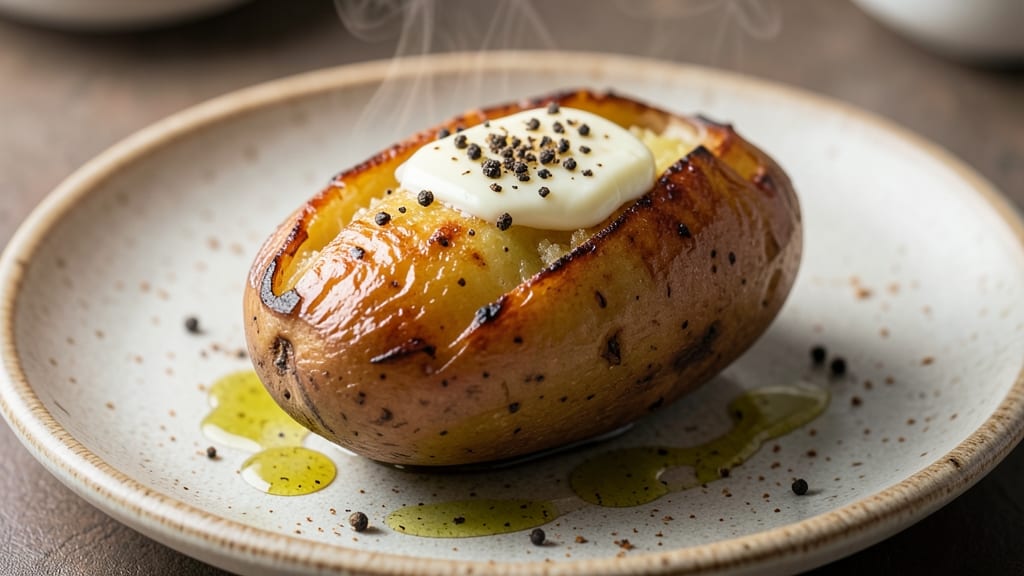
This baked potato convection oven recipe delivers restaurant-quality crispy skin and fluffy interior in just 40 minutes, cutting traditional baking time nearly in half. The convection oven's circulating hot air creates even heat distribution, ensuring perfect results every time without the wait.
I've perfected this method after countless trials—no more soggy centers or uneven browning.
The secret lies in proper preparation: scrubbing the potatoes thoroughly, piercing them to prevent explosions, and preheating the oven to 425°F for maximum crispiness. This technique transforms humble russet potatoes into golden, flaky-skinned masterpieces with tender interiors that hold their shape. Even beginners achieve professional results with these precise steps.
Once baked to perfection, these potatoes become a blank canvas for your favorite toppings—melted butter, sour cream, chives, or even bacon bits. The crispy exterior provides satisfying texture contrast while the interior remains creamy and buttery.
This method makes it possible to serve warm, freshly baked potatoes at any meal without sacrificing quality for speed.
Perfect for game day, family dinners, or meal prep, these convection oven potatoes deliver restaurant-quality results with minimal effort. The time savings alone make this method worth adopting for any potato lover. Let's get started with this foolproof technique that transforms ordinary potatoes into crowd-pleasing centerpieces.
Ingredients for baked potato convection oven
Four russets, butter, and precise timing transform ordinary potatoes into convection oven perfection.
| Ingredient | Amount | Notes |
|---|---|---|
| Russet Potatoes 🥔 | 4 whole | Large size, uniform shape preferred |
| Unsalted Butter 🧈 | ½ cup | Cold, cut into 1-inch cubes |
| Kosher Salt 🧂 | 1 ½ tsp | Diamond Crystal preferred for clarity |
| Black Peppercorns 🌶️ | 1 tsp | Freshly ground, coarse grind |
| Garlic Powder 🧄 | ½ tsp | Not garlic salt |
| Olive Oil 🫒 | 1 tbsp | For brushing exterior |
| Sour Cream 🥛 | ½ cup | Full-fat for creaminess |
| Fresh Chives 🌿 | ¼ cup | Finely chopped, for garnish |
| Bacon Bits 🥓 | ¼ cup | Optional topping |
| Aluminum Foil 📄 | 1 sheet | Heavy-duty, for wrapping |
Russets are non-negotiable here—their high starch content creates that signature flaky exterior. Idaho-grown russets from Costco or local farm markets deliver the best texture, but any russet will work if it's firm and free of sprouts. The key is uniformity: similar-sized potatoes bake evenly. For extra insurance, scrub them thoroughly under cold water to remove dirt—this prevents moisture buildup that leads to soggy skin. Preheat your convection oven to 425°F for 15 minutes before baking; this ensures maximum crispiness from the start. The butter cubes should be cold and roughly the same size—this creates even browning without melting prematurely.
No kosher salt? Diamond Crystal is ideal for its clarity, but any fine sea salt works. Short on time? Olive oil brushed on the exterior adds moisture and enhances browning—just don't overdo it. The garlic powder can be swapped for 1/2 teaspoon fresh minced garlic if you prefer, but it's a non-essential flavor booster. For toppings, sour cream should be full-fat—low-fat versions won't deliver that luxurious texture. Fresh chives add brightness, but dried chives at one-third the amount work in a pinch. The bacon bits are optional but recommended for that smoky depth; pre-cooked bits from Trader Joe's save time and add consistent flavor.
These potatoes reheat beautifully—just wrap them in foil and microwave for 2-3 minutes to restore crispiness. For meal prep, bake an extra batch, wrap individually in foil, and freeze for up to 3 months. When ready to serve, bake from frozen at 425°F for 50 minutes. The butter cubes will crisp during baking, creating a golden crust that's impossible to resist. Store any leftovers in an airtight container with a paper towel to absorb excess moisture—keeps them fresh for 3 days in the fridge. The foil wrapping is crucial: it traps steam during baking, ensuring that fluffy interior while the convection air crispens the skin.
Why You'll Love This Recipe
- Butter-Pepper Magic: That creamy butter melt with cracked pepper and garlic powder? It’s the kind of simple seasoning that makes everything taste like a restaurant dish. (Yes, even on a Tuesday night.)
- Meal Prep MVP: Slice them up ahead of time, store in the fridge, and bake straight from cold—no extra prep. Honestly, I keep a bag of prepped potatoes in my freezer for lazy days.
- Budget-Friendly Feast: Russets are cheap, butter is affordable, and a single batch stretches across lunches, dinners, or even a picnic. Between us, this is how I feed my family without breaking the bank.
Step-by-step instructions for baked potato convection oven recipe
Master the convection oven technique for restaurant-quality potatoes with perfect texture every time.
Prepare the Potatoes for Optimal Cooking
Start by selecting four uniform russet potatoes—this ensures even cooking. Scrub them thoroughly under cold water to remove any dirt, but don't peel them. The skin contains nutrients and helps retain moisture during baking. Using a fork, pierce each potato all over with several deep holes—this prevents them from bursting as steam builds up inside.
Next, place the potatoes on a wire rack set over a baking sheet. This allows hot air to circulate freely around all sides, promoting even browning. Preheat your convection oven to 425°F—this high temperature is crucial for achieving that crispy exterior while keeping the interior fluffy. The convection setting ensures faster, more even heat distribution than a conventional oven.
Season and Cook to Crispy Perfection
Once the oven reaches temperature, carefully place the potatoes on the middle rack. Lightly brush each potato with the 1 tablespoon olive oil using a pastry brush—this creates a barrier that promotes browning and prevents the skin from drying out prematurely. Immediately sprinkle each potato generously with 1.5 teaspoons kosher salt, 1 teaspoon black peppercorns, and 0.5 teaspoon garlic powder.
Bake for 40-45 minutes, rotating the baking sheet halfway through if your oven has hot spots. You'll know they're done when the skin is deep golden brown and crispy to the touch, and a paring knife slides in easily with just slight resistance. The internal temperature should reach 205-210°F—this is the magic number for a fluffy interior. If they brown too quickly, tent them loosely with aluminum foil for the final 10 minutes of cooking.
Prepare the Toppings While Potatoes Rest
While the potatoes bake, prepare your toppings to maintain that restaurant-fresh presentation. In a small bowl, combine the 0.5 cup sour cream with a pinch of salt and pepper. For the garnish, finely chop the 0.25 cup fresh chives and set aside. If using, spread the 0.25 cup bacon bits evenly on a small plate.
Cut the baked potatoes in half lengthwise and use a fork to gently fluff the interiors—this creates those signature steam pockets. The key here is patience: let the potatoes rest for 5 minutes before serving. This allows the heat to redistribute, preventing the insides from falling out when you cut them. The resting period also gives you time to melt the 0.5 cup unsalted butter—cut into 1-inch cubes—for serving.
Assemble and Serve Immediately
Transfer each potato half to a serving plate and immediately top with a generous pat of the melted butter. Spoon the seasoned sour cream mixture over the butter, then sprinkle with the chopped chives and bacon bits. The contrast of creamy, tangy sour cream with crispy bacon and fresh herbs creates the perfect balance of textures and flavors.
Serve immediately while the potatoes are still piping hot. The convection method delivers that coveted crispy skin while maintaining a fluffy, buttery interior—exactly what makes these potatoes irresistible. For best results, use within 15 minutes of baking, as the texture begins to degrade once cut open.
Pro Tips For Making Baked Potato Convection Oven
- PRICK FIRST, THEN BAKE: I learned this the hard way—skipping the fork pricks means uneven cooking and soggy middles. Pierce each Russet 3-4 times with a fork before popping it in the convection oven. The steam escapes, so the skin crisps without the inside turning to mush.
- USE 425°F, NOT 375°: Convection ovens run hotter than conventional ones, and Russets need that extra push. Set it to 425°F for the first 20 minutes—this guarantees a crispy skin without drying out the flesh. After that, drop to 375°F to finish cooking evenly.
- SALT THE SKIN BEFORE BUTTER: This isn’t just about flavor—it’s about texture. Sprinkle kosher salt directly on the skin before adding butter and garlic powder. The salt draws out moisture, helping the skin crisp up while the butter melts into a rich, flavorful crust.
- REST UNDER FOIL FOR 5 MINUTES: Cutting into a freshly baked potato too soon is a crime. Tent the hot potatoes with foil and let them sit for 5 minutes—this lets the steam redistribute, keeping the inside fluffy instead of gummy. (Yes, even if you’re impatient like me.)
Regional styles of this baked potato convection oven
New England Style
In New England, baked potatoes take on a heartier profile with the addition of crispy bacon and sharp cheddar cheese. After baking, cut the potatoes open and load them with ½ cup shredded sharp cheddar and ¼ cup crumbled bacon.
I like to add a dollop of sour cream mixed with ½ teaspoon mustard powder for that tangy kick. The cold climate of New England makes this a staple for winter gatherings—perfect for Thanksgiving or holiday dinners. 🥓
Southwestern Flair
For a Southwestern twist, swap the traditional toppings for black beans, avocado slices, and pico de gallo. After baking, fluff the potatoes and top with ½ cup black beans (warmed with a pinch of cumin and chili powder) and ¼ cup diced avocado.
Finish with 2 tablespoons pico de gallo and a sprinkle of crumbled cotija cheese. This version is a crowd-pleaser for Tex-Mex lovers and adds a vibrant, fresh contrast to the creamy potato. 🌶️
Midwest Classic
The Midwest keeps it simple but hearty, focusing on buttery richness and crispy textures. After baking, cut the potatoes open and top with a generous pat of melted butter mixed with ½ teaspoon garlic powder.
Add a spoonful of brown sugar and a pinch of cinnamon for a subtle sweetness—this is a nod to the Midwest's love of comfort food. Finish with a sprinkle of crushed potato chips for extra crunch, a technique popularized by diners across Iowa and Illinois. 🍴
Pacific Northwest Twist
In the Pacific Northwest, where fresh ingredients shine, baked potatoes often feature smoked salmon and dill cream. After baking, top the potatoes with 2 ounces smoked salmon (thinly sliced) and a dollop of sour cream mixed with 1 teaspoon fresh dill.
Add a squeeze of lemon juice and a sprinkle of freshly cracked black pepper. This version is light yet satisfying, perfect for a brunch or light dinner. The Pacific Northwest’s love of seafood makes this a unique and delicious variation. 🐟
Southern Comfort
Southern-style baked potatoes lean into bold flavors with cheddar cheese, green onions, and a touch of hot sauce. After baking, cut the potatoes open and load them with ½ cup shredded sharp cheddar and 2 tablespoons chopped green onions.
Drizzle with 1 tablespoon hot sauce (like Crystal or Tabasco) and a pat of melted butter. The Southern touch here is the heat—just enough to wake up the flavors without overpowering the creamy potato. This is a staple at Southern barbecues and family cookouts. 🌶️
Nutrition facts
Frequently asked questions
Why does my convection oven baked potato turn out soggy?
The most common causes are overcrowding or insufficient heat. Place potatoes on a wire rack with space between them for proper air circulation. Ensure your oven is preheated to 425°F and use the convection setting—this creates even heat distribution. If they brown too quickly, tent with foil for the final 10 minutes to prevent drying.
Can I bake different sizes of potatoes together in a convection oven?
For even cooking, select potatoes that are as uniform as possible—within 1 inch of each other in diameter. Larger potatoes need 5-10 extra minutes of baking time. If mixing sizes, place the larger ones on the top rack and smaller ones on the bottom to account for heat variation in your convection oven.
How do I know when a convection oven baked potato is fully cooked?
Look for three key indicators: deep golden skin, a paring knife that slides in easily with slight resistance, and an internal temperature of 205-210°F. The skin should be crispy to the touch while the flesh is fluffy. If you're unsure, cut one open to check—it should be completely dry inside with no raw spots.
Can I bake these potatoes ahead of time and reheat them?
Wrap baked potatoes individually in foil and refrigerate for up to 3 days or freeze for 3 months. To reheat, bake from frozen at 425°F for 50 minutes or microwave wrapped in foil for 2-3 minutes. For best texture, add a splash of water to the foil before reheating to restore moisture.
What's the best way to make extra crispy skin?
Start with 425°F and let the convection oven do the work—its circulating air creates superior crispiness. Brush potatoes with olive oil before seasoning, then bake on a wire rack (not directly on the pan). For maximum crunch, broil for 2-3 minutes at the very end, watching closely to prevent burning.