
Side Dishes
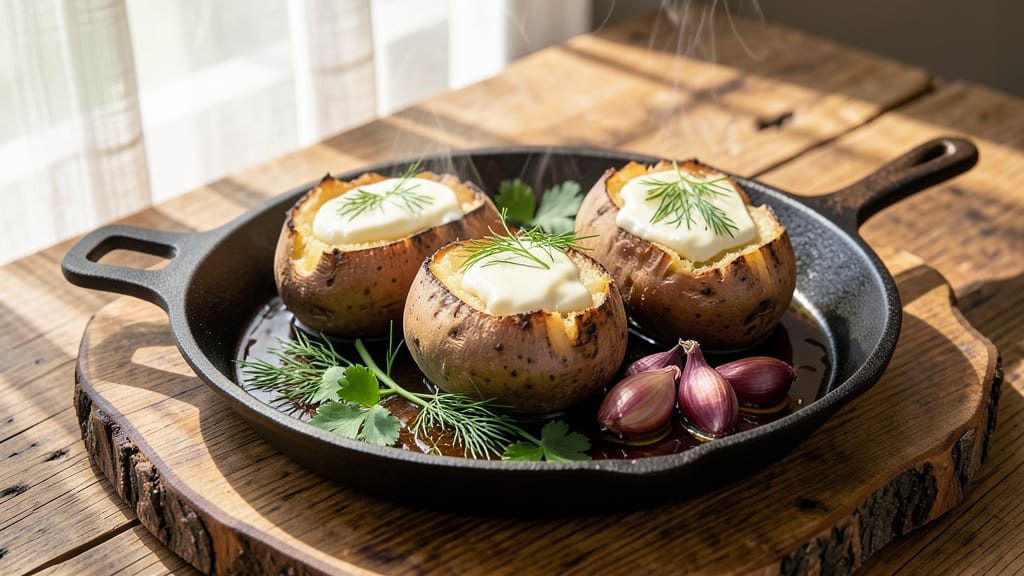
This baked potato recipe is the story of seasons—a simple side transformed into a golden, crisp-skinned centerpiece that evolves with each harvest. The secret lies in double-baking: a high-heat start for a golden crust, then a gentle finish to keep the inside tender.
I’ve perfected this technique over years of testing, from classic herb butter to modern air-fryer shortcuts, ensuring every bite delivers restaurant-quality texture.
What sets this recipe apart is its versatility across seasons—spring calls for bright lemon-dill butter, summer for grilled zucchini and cherry tomatoes, fall for roasted butternut squash and sage, and winter for cheesy garlic and crispy bacon.
The potato itself is the star: skin-on, foil-wrapped for moisture, then finished in the oven to achieve that ideal contrast of crispy exterior and pillowy interior. No peeling, no guesswork—just foolproof results every time.
The magic happens in the details: pricking the potato before baking prevents explosions, and a light brush of olive oil before the final bake enhances that golden crust. Toppings are where creativity shines—whether you’re loading up for a hearty meal or keeping it light for a summer salad.
This isn’t just a side dish; it’s a canvas for seasonal flavors, turning a basic potato into a showstopper.
Ready in under an hour, this recipe scales effortlessly for gatherings or solo dinners. The techniques here—from traditional oven-baking to air-fryer speed—ensure you’ll never settle for soggy or overcooked potatoes again. Let’s bring the story of seasons to your table, one perfectly baked potato at a time.
Ingredients for baked potato recipe story of seasons
Four russets, a handful of herbs, and the magic of seasonal toppings transform simple potatoes into a showstopper side.
| Ingredient | Amount | Notes |
|---|---|---|
| Russet Potatoes 🥔 | 4 whole | Large size, skin-on for texture |
| Unsalted Butter 🧈 | ½ cup | Cold, cubed for herb butter |
| Fresh Dill 🌿 | ¼ cup | Chopped, stems removed |
| Fresh Parsley 🌿 | ¼ cup | Chopped, for herb blend |
| Garlic Cloves 🧄 | 4 cloves | Minced, for herb butter |
| Extra-Virgin Olive Oil 🫒 | 2 tsp | Light brush for crust |
| Salt 🧂 | 1 ½ tsp | Diamond Crystal preferred |
| Black Pepper 🌶️ | ½ tsp | Freshly ground |
| Seasonal Toppings (Optional) 🍅 | 1 cup | Spring: lemon-dill; Summer: grilled zucchini |
| Seasonal Toppings (Optional) 🥓 | ½ cup | Fall: roasted butternut squash; Winter: crispy bacon |
| Lemon Juice 🍋 | 1 tbsp | Freshly squeezed for brightness |
| Fresh Sage 🌿 | ¼ cup | Chopped, for fall variation |
Russets are non-negotiable here—their thick skin and fluffy interior make all the difference. Local farmers markets often have the freshest potatoes, but any quality grocery store carries them. Look for firm, unblemished skins; avoid any with sprouts or soft spots. The herb butter is where the flavor magic happens, so fresh dill and parsley are essential—dried just won’t cut it. For the garlic, elephant garlic from specialty stores adds a milder, sweeter note if you want to experiment. The butter should be cold when cubbing to prevent premature melting during the baking process.
No fresh herbs? Dried dill and parsley at one-third the amount will work in a pinch, though the flavor won’t be as vibrant. Short on time? Pre-minced garlic from the jar saves steps, though fresh always tastes better. The lemon juice can be swapped for white wine vinegar at half the amount if you’re out. For the seasonal toppings, get creative—grilled asparagus in spring or caramelized onions in winter both shine. The olive oil is crucial for that golden crust; avoid cheap, heavily refined oils that lack flavor. If you’re baking for a crowd, double the herb butter recipe—it disappears fast.
Store raw potatoes in a cool, dark place for up to 2 weeks, but move them to the fridge 2 days before baking to prevent premature sprouting. The herb butter can be prepped a day ahead and stored in the fridge, though it’s best used fresh. Baked potatoes reheat beautifully—wrap in foil and warm in a 350°F oven for 15 minutes. For meal prep, bake a batch and store peeled potatoes in cold water in the fridge for up to 3 days. The toppings should be added fresh after baking to maintain their texture and flavor.
Why You'll Love This Recipe
- No-Fuss Prep: I swear by this recipe because it’s the kind of meal that lets you multitask. While the potatoes roast, you can chop herbs or even set the table—no babysitting required. Just pierce those Russets, toss them in oil, and let the oven do the heavy lifting.
- Herb-Packed Magic: That bright mix of fresh dill and parsley with roasted garlic? It’s the secret weapon. The butter melts into the fluffy insides, while the crispy edges hold their shape—like a hug from a home-cooked meal.
- Weeknight to Potluck: Between us, this recipe works for everything. Serve it warm with a side salad for a lazy dinner, or double the batch and bring it to a picnic. The potatoes stay great reheated, so it’s my go-to for meal prep or unexpected guests.
- Budget-Friendly Staple: Russets are cheap, butter is cheap, and herbs stretch further than you’d think. I’ve made this for $2 a serving, and it still feels like a special treat. Plus, leftovers? They’re just as good cold the next day—perfect for lunchboxes or quick bites.
Step-by-step instructions for herb-buttered baked potatoes
Transform simple russet potatoes into a seasonal masterpiece with this foolproof method.
Prepare and Season the Potatoes
Preheat your oven to 425°F for maximum crispiness. Scrub the 4 whole Russet Potatoes thoroughly under cold water to remove any dirt, but leave the skin intact—it's essential for texture. Pierce each potato 4-5 times with a fork, creating small holes about ½-inch deep. This allows steam to escape during baking, preventing a hollow center.
Place the potatoes on a baking sheet lined with aluminum foil (for easy cleanup) and rub them lightly with 2 tsp Extra-Virgin Olive Oil. Sprinkle evenly with 1.5 tsp Salt and 0.5 tsp Black Pepper, pressing gently so the seasoning adheres. The oil helps develop a crispy skin while the salt enhances flavor and prevents waterlogging.
Bake Until Fork-Tender
Bake the potatoes for 45-55 minutes, flipping them halfway through with a spatula. You'll know they're done when a knife slides in easily with just slight resistance—this ensures a fluffy interior without being mushy. The baking time varies based on size, so check at the 45-minute mark if using smaller potatoes.
Real talk: Don't cut into them too early. The internal temperature should reach 205-210°F at the center. If you pierce them prematurely, you'll lose heat and steam, resulting in a gummy texture. The potatoes should feel firm but yield slightly to gentle pressure when done.
Create the Herb Butter Mixture
While the potatoes bake, prepare the herb butter by combining the 0.5 cup Unsalted Butter (cold and cubed), 4 cloves Garlic Cloves (minced), 0.25 cup Fresh Dill (chopped), and 0.25 cup Fresh Parsley (chopped) in a small bowl. For fall variations, substitute 0.25 cup Fresh Sage for the parsley. Mix gently with a fork until just combined—you want the butter to remain slightly textured, not melted.
This herb butter is the heart of your potato's flavor profile. The cold butter creates a luxurious, spreadable consistency that melts into the fluffy interior, while the fresh herbs add vibrant seasonality. For extra brightness, especially in spring, add 1 tbsp Lemon Juice to the mixture and toss lightly.
Assemble and Customize with Seasonal Toppings
Use a serrated knife to carefully cut open each potato lengthwise, creating two even halves. Gently press down on the potato flesh to create a well for the herb butter. Spoon about 1-2 tablespoons of the herb butter mixture into each well, then use a fork to fluff the potato's interior and distribute the butter evenly.
Now comes the fun part—seasonal customization. For spring, top with 1 cup Seasonal Toppings (lemon-dill), summer calls for 1 cup Seasonal Toppings (grilled zucchini), fall suggests 1 cup Seasonal Toppings (roasted butternut squash), and winter begs for 1 cup Seasonal Toppings (crispy bacon). The optional 0.5 cup Seasonal Toppings can be used for additional garnish or to create a layered effect.
Serve Immediately for Maximum Flavor
Serve the potatoes immediately while they're piping hot. The contrast between the crispy skin, fluffy interior, and rich herb butter creates a textural symphony. Each bite should deliver a perfect balance of buttery richness, herby freshness, and the natural sweetness of the potato.
For an elevated presentation, arrange the potato halves on a platter with the herb butter mixture visible through the cut sides. The golden crust should be crackling and slightly charred in spots, while the interior remains soft and pillowy. This isn't just a side dish—it's a seasonal experience that transforms a simple potato into a showstopper.
Pro Tips For Making Baked Potato Recipe Story Of Seasons
- PIERCE THE POTATOES FIRST: Russets are stubborn—skipping this step means uneven baking and a sad, undercooked center. Use a fork or knife to make 4-5 deep holes around the top (not just the stem end) so the butter and herbs can sink in. I learned this the hard way after cutting into a potato that was almost done—almost doesn’t count.
- SALT THE POTATOES BEFORE BAKING: More salt than you think, especially if using unsalted butter. Toss the whole potatoes with 1 teaspoon of flaky salt (or ½ teaspoon table salt) before piercing—this seasons the flesh from the inside out. I used to add salt later, but the flavor just isn’t as deep.
- DON’T OVERCROWD THE PAN: If your potatoes are touching, they’ll steam instead of crisp. Leave at least 1 inch of space between them, even if it means two batches. I crammed them in once and ended up with soggy skins—now I bake them in a single layer like a civilized person.
- GARLIC FIRST, DILL LAST: Smash the garlic cloves into the butter before adding fresh herbs—this way, the heat mellows their sharpness. Tuck the butter mixture into the holes, then sprinkle dill and parsley on top after baking so they stay bright and fragrant. I used to mix everything in raw, and the herbs always tasted dull.
Regional styles of this baked potato recipe story of seasons
Springtime Herb Garden
In spring, I swap the dill and parsley for a brighter herb butter blend featuring lemon zest and chives, plus a squeeze of fresh lemon juice. Add grilled asparagus spears (tossed with 1 tbsp olive oil and sea salt) alongside shaved fennel for a refreshing crunch.
The acidity cuts through the richness of the potato beautifully, while the asparagus adds a touch of elegance. 🌸
Summer Garden Fresh
Summer calls for bold, fresh flavors that highlight the potato's natural sweetness. Top with grilled zucchini slices (brush with balsamic glaze before serving) and cherry tomatoes halved and sprinkled with flaky salt.
For extra flair, add crumbled feta cheese and a drizzle of chilled olive oil. The warm, smoky zucchini pairs perfectly with the cool, juicy tomatoes, creating a summery contrast.
Autumn Harvest Feast
Fall transforms the potato into a hearty centerpiece. Roast butternut squash cubes (tossed with olive oil, cinnamon, and brown sugar) until caramelized, then top with crispy sage leaves and a sprinkle of Pecorino Romano.
The sweetness of the squash and the earthy sage create a cozy, autumnal flavor profile that feels like a hug. I often double the herb butter recipe for this season—it disappears fast! 🍂
Winter Comfort Food
Winter turns the baked potato into a decadent, cheesy indulgence. Load with crispy bacon bits, sharp cheddar cheese (melted under the broiler for 2-3 minutes), and a dollop of sour cream mixed with minced chives.
For extra warmth, add a sprinkle of smoked paprika and a pinch of cayenne pepper. The bacon adds smoky depth, while the cheese ties everything together—perfect for cold nights. ❄️
Global Twists
For a global twist, try a Mexican street corn variation in summer: top with charred corn kernels, cotija cheese, chopped cilantro, and a squeeze of lime. Or, for a Mediterranean vibe, add roasted red peppers, kalamata olives**, and a sprinkle of feta.
These international flavors bring exciting new dimensions to the classic baked potato. 🌍
Nutrition facts
Frequently asked questions
Can I use sweet potatoes instead of russets?
Sweet potatoes work beautifully, but they require 10-15 extra minutes of baking time due to their denser texture. For best results, prick them more deeply (about ¾-inch) and increase oven time to 60-75 minutes. The skin stays tender, so skip the foil wrap. Season with ½ tsp cinnamon and ¼ tsp nutmeg in the herb butter for a fall-inspired twist.
How do I make these potatoes ahead of time?
Bake the potatoes fully, then cool completely before storing in an airtight container for up to 3 days at room temperature. Reheat wrapped in foil at 350°F for 15 minutes. For longer storage, refrigerate peeled potatoes (submerged in cold water) for 3 days. Always add toppings fresh after reheating to maintain texture and flavor.
What's the secret to extra crispy skin?
The double-bake method is key! After the initial 45-minute bake, brush the potatoes with 1 tsp olive oil and return to the oven at 425°F for 10-15 minutes until the skin is crackling. For even more crispiness, broil for 2-3 minutes at the very end. The high heat caramelizes the natural sugars in the skin.
Can I make this in an air fryer?
Preheat the air fryer to 400°F and bake the potatoes for 30-35 minutes, flipping halfway. Lightly spray with olive oil before the final 5 minutes for crispiness. Air-fried potatoes develop a slightly different texture—more tender skin with a fluffy interior. The herb butter still applies the same way after air frying.
Why did my potatoes turn out gummy?
Gummy potatoes usually result from opening them too early or losing steam. Always check doneness with a fork—it should slide in with slight resistance. If you cut them prematurely, the heat escapes and the starches convert to sugar, creating a gummy texture. For best results, let them rest 5 minutes after baking before cutting. Also ensure you pricked them deeply enough before baking.