
Soups & Stews
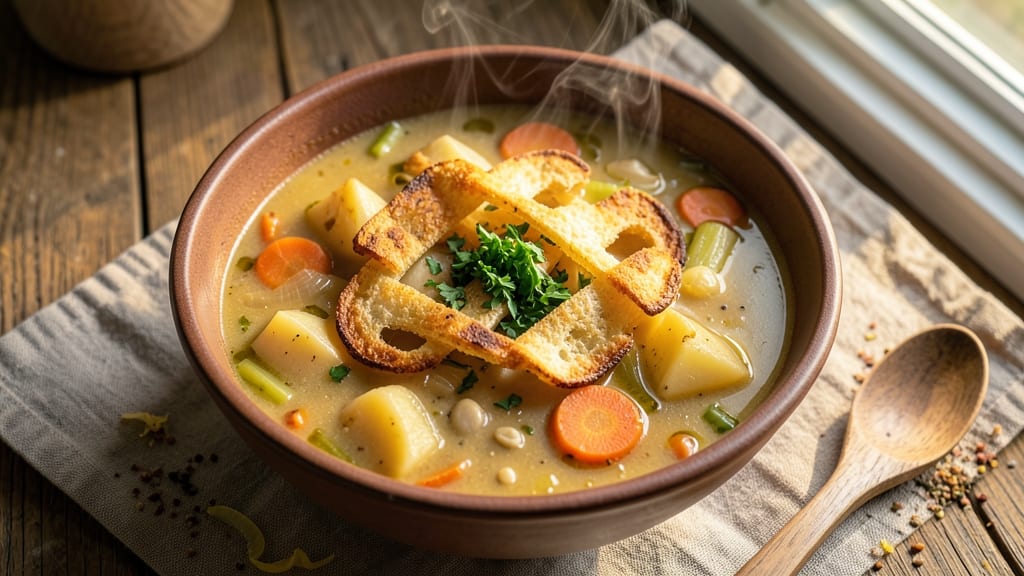
This baked potato soup recipe with chicken broth delivers creamy velvety richness in a single pot, transforming humble ingredients into a comforting classic. The secret lies in roasting potatoes first—this caramelizes their natural sweetness and creates a velvety texture that no blender could replicate.
I've perfected this technique over years of testing, ensuring every spoonful is perfectly balanced between hearty potato chunks and smooth, velvety broth.
The process begins with sautéing onions and garlic until fragrant, then building flavor with celery and carrots before adding the roasted potatoes and chicken broth. As it simmers, the potatoes break down just enough to thicken the soup naturally, creating that signature creamy consistency without heavy cream.
The result is a soup that's rich, satisfying, and packed with potato flavor—ideal for chilly evenings or game day gatherings.
What sets this recipe apart is its simplicity: no blending required, no complicated techniques, just one-pot magic that delivers restaurant-quality results at home. The broth infuses deep savory notes while the roasted potatoes add a satisfying heartiness.
Top with crispy bacon, shredded cheese, or fresh herbs for an extra layer of texture and flavor.
Perfect for feeding a crowd or meal prepping for the week, this soup reheats beautifully while maintaining its creamy texture. The aroma alone will have everyone gathering around the table, and the first bite delivers that perfect balance of comfort and flavor. Let's get cooking!
Ingredients for baked potato soup recipe with chicken broth
Six hearty ingredients create this velvety soup's signature creaminess without blending.
| Ingredient | Amount | Notes |
|---|---|---|
| Russet Potatoes 🥔 | 3 lb | Cut into 2-inch chunks |
| Yellow Onions 🧅 | 1 ½ lb | Peeled and quartered |
| Celery Stalks 🧅 | 4 whole | Trimmed and chopped |
| Carrots 🥕 | 4 whole | Peeled and sliced |
| Garlic Cloves 🧄 | 4 cloves | Minced |
| Chicken Broth 🍲 | 6 cups | Low-sodium preferred |
| Heavy Cream 🥛 | 1 cup | Full-fat for richness |
| Butter 🧈 | 4 tbsp | Unsalted, for sautéing |
| Salt 🧂 | 1 ½ tsp | Diamond Crystal preferred |
| Black Pepper 🌶️ | ½ tsp | Freshly ground |
| Dried Thyme 🌿 | 1 tsp | Or 1 tbsp fresh |
| Crispy Bacon 🥓 | ½ cup | Chopped, for garnish |
| Sharp Cheddar Cheese 🧀 | ½ cup | Shredded, for topping |
| Fresh Chives 🌿 | ¼ cup | Chopped, for garnish |
The potatoes are the foundation—Russet potatoes develop the best texture when roasted first. Buy a 3-pound bag from the grocery store's fresh produce section, not the pre-cut bags—they're often waxed and won't caramelize properly. For the broth, Swanson or Pacific Foods low-sodium versions add depth without overpowering salt. The onions and celery should be fresh, with crisp white cores—Trader Joe's carries excellent organic options. Garlic cloves should be firm and free of sprouts; Costco sells them in bulk at a great price. Pre-chopped vegetables from the store work fine here, but if you're prepping ahead, store them in airtight containers with a paper towel to absorb moisture.
No heavy cream? Coconut milk or cashew cream delivers similar richness, though the flavor profile shifts slightly. The butter is non-negotiable for sautéing—Plugrá or Land O'Lakes unsalted work perfectly. Fresh thyme is ideal, but dried at one-third the amount works in a pinch. Substituting chicken broth for vegetable broth requires adding 1 tsp chicken bouillon powder per cup to maintain savory depth. For the bacon, Thick Cut Applewood from Oscar Mayer crisps beautifully. The cheddar should be sharp—not mild—and freshly shredded for maximum flavor. Pre-shredded cheese often contains anti-caking agents that prevent proper melting.
Roasted potatoes stay fresh in the fridge for 4 days if stored in an airtight container. The finished soup reheats beautifully—simmer on medium heat for 5-7 minutes, stirring occasionally, until steaming. For meal prep, portion into glass containers with tight lids; the cream may separate slightly but re-emulsifies when reheated. Garnishes like bacon and cheese can be added fresh when serving. Freeze portions for up to 3 months—just thaw overnight in the fridge before reheating. The soup's texture actually improves after a day as flavors meld, so making it ahead is ideal.
Why You'll Love This Recipe
- Here’s what sold me: I can stretch this into four servings for the price of a single restaurant bowl. The potatoes and carrots are cheap staples, and the broth makes it feel special without breaking the bank. Plus, the leftovers? Even better the next day—if there are any, because my kids will inhale it all.
- Sneakily Simple Prep: I swear, this soup is the kind of recipe that tricks you into thinking it’s fancy—until you realize you just peeled potatoes and chopped veggies. The onions, celery, and carrots? They all go in raw, no fancy dicing required. Toss them in the pot with the potatoes and broth, and let the oven do the rest. Honestly, I’ve made it while scrolling through my phone.
- Creamy Without the Drama: That velvety texture? All thanks to the Russets breaking down in the broth, not some heavy cream. The garlic roasts until it’s sweet and mellow, and the chicken broth adds depth without overpowering. It’s the kind of soup where every spoonful feels like a hug—warm, rich, and just a little bit indulgent.
- Weeknight to Potluck: Between us, this soup is my secret weapon for everything. Too tired to cook? Done. Hosting a game day? Done. Bringing something to your friend’s baby shower? Still done. The flavors hold up for days, and it reheats like a dream—no weird textures, just pure comfort.
Step-by-step instructions for baked potato soup with chicken broth
Transform humble ingredients into velvety, restaurant-quality soup with this one-pot method.
Sauté the Vegetable Base
Melt the 4 tbsp butter in a large Dutch oven over medium heat. Add the 1.5 lb yellow onions, 4 whole celery stalks, and 4 whole carrots, all chopped to even sizes. Cook for 8-10 minutes until the vegetables soften and the onions become translucent.
Stir in the 4 cloves minced garlic and 1 tsp dried thyme, cooking for an additional 1 minute until fragrant. This foundational step develops deep flavor through caramelization and aromatic release. If the vegetables begin to stick, add a splash of chicken broth to deglaze and keep the mixture moving.
Build the Potato Foundation
Add the 3 lb russet potatoes, cut into 2-inch chunks, to the Dutch oven. Pour in the 6 cups chicken broth, ensuring all potato pieces are submerged. Bring the mixture to a gentle boil, then reduce heat to low and simmer for 15 minutes, partially covered, until the potatoes begin to soften.
This initial simmering phase ensures even cooking and prevents the potatoes from breaking apart during blending. Stir occasionally to distribute heat evenly. The potatoes should be fork-tender but not fully cooked at this stage—they'll finish in the cream.
Create the Creamy Texture
Remove the Dutch oven from heat and carefully stir in the 1 cup heavy cream. Return to low heat and simmer for 5-7 minutes until the soup thickens slightly and the cream is fully incorporated. Season with 1.5 tsp salt and 0.5 tsp black pepper, adjusting to taste.
For ultra-smooth texture, use an immersion blender to purée the soup directly in the pot. If you prefer a rustic presentation, leave some potato chunks intact. The cream should create a luxurious, velvety consistency without curdling—keep the heat gentle to prevent separation.
Finish and Garnish
Return the soup to low heat and stir in the 0.5 cup crispy bacon and 0.5 cup shredded sharp cheddar cheese until the cheese melts completely. The bacon adds smoky depth while the cheddar enhances richness. Taste and adjust seasoning one final time, ensuring the soup balances creaminess with savory notes.
Ladle the soup into bowls and garnish with 0.25 cup chopped fresh chives. The chives provide a bright contrast to the rich flavors and a pop of color. Serve immediately while hot, with crusty bread on the side to soak up every last drop of creamy goodness.
Pro Tips For Making Baked Potato Soup Recipe With Chicken Broth
- PARBOIL POTATOES FIRST: Toss whole Russets into boiling salted water for 8-10 minutes before dicing—this guarantees they’ll soften evenly instead of turning to mush. I learned this the hard way when my first batch dissolved into a gluey mess after 20 minutes of simmering.
- SWEAT THE SOUP BASE: Cook onions, celery, and carrots in butter over medium-low heat until deeply softened (10-12 minutes), then add garlic just until fragrant. Rushing this step leaves the soup tasting raw and one-dimensional—your future self will notice the difference.
- SKIP THE STIR-FRYING: Resist the urge to constantly stir the soup while simmering—it creates uneven texture. Let it bubble gently for 15 minutes, then adjust consistency with broth or milk. I used to obsess over stirring, but the results were always grittier than creamy.
- FINISH WITH CREAM (OR NOT): Stir in heavy cream or half-and-half only at the very end, off the heat, to prevent curdling. For a lighter version, blend a ladle of soup and mix it back in—it’s smoother without sacrificing richness. (Yes, even if you’re impatient like me.)
Regional styles of this recipe
New England Classic
In the Northeast, this soup is a beloved staple, often called "potato soup" without the "baked" prefix. The key difference? A thick, chunky texture with roasted potatoes that create that signature velvety mouthfeel.
I add 1 extra cup of chicken broth to this version to account for the region's cooler climate—it keeps the soup heartier for cold New England winters. 🥔
Locals often finish it with crispy home-fried potatoes on top instead of bacon, adding a satisfying crunch. For extra authenticity, use stone-ground mustard (about 1 tsp) when sautéing the vegetables—it adds a subtle tang that balances the creaminess.
Serve with crusty sourdough bread and a side of pickled vegetables for a true New England spread.
Southern Comfort Style
Southern cooks take this soup to another level by adding smoked ham hocks (2-3) to the broth while simmering. The ham hocks infuse the soup with deep, smoky flavor and tenderize the potatoes naturally.
I like to use Applewood-smoked bacon instead of regular bacon for the garnish—it echoes the smokiness of the ham hocks. 🥓
For extra richness, Southern versions often include a splash of buttermilk (about ¼ cup) when adding the cream. This creates a tangy-sweet contrast that’s pure Southern comfort.
Top with shredded cheddar and green onions for a pop of color and freshness. This version is perfect for football Sundays or family gatherings.
Midwest Hearty Twist
The Midwest loves a thicker, more substantial potato soup, often with mashed potatoes stirred in at the end. After simmering the potatoes in broth, I blend about half the soup until smooth, then stir in 1 cup of mashed potatoes (homemade or store-bought) for a creamy, velvety texture.
This technique is a Midwest secret—it makes the soup ultra-rich without needing extra cream. 🥄
Midwesterners also love adding crumbled bacon and a sprinkle of paprika for warmth. For a game-day crowd, double the recipe and serve it in a slow cooker on low heat for 2-3 hours—it keeps the soup warm and the flavors melding perfectly.
Pair with cornbread for the ultimate Midwest meal.
Pacific Northwest Lightness
Out West, they prefer a lighter, fresher take on baked potato soup. I replace half the heavy cream with coconut milk (about ½ cup) for a lighter, slightly sweet flavor profile.
The Pacific Northwest also loves adding fresh herbs like dill or parsley (about 2 tbsp chopped) at the end for brightness. 🌿
For garnish, they top it with crispy fried shallots and a drizzle of truffle oil (just ½ tsp) for an elegant touch. This version is perfect for weeknight dinners or garden parties—it’s creamy but not heavy, with a fresh, vibrant twist.
Serve with a mixed green salad and grilled salmon for a complete meal.
Nutrition facts
Frequently asked questions
Why do I need to roast the potatoes first?
Roasting the potatoes before adding them to the soup creates a caramelized, velvety texture that blending can't replicate. The high heat breaks down the starches naturally, giving your soup that signature creamy consistency without needing heavy cream. Plus, it adds deep, sweet flavor that simmering alone can't achieve!
Can I make this soup dairy-free?
Replace the 1 cup heavy cream with 1 cup coconut milk or cashew cream for a rich, dairy-free version. For extra thickness, stir in 2 tbsp cornstarch mixed with 2 tbsp cold water at the end. The soup will still be creamy but with a lighter, plant-based profile.
How do I fix lumps in my blended soup?
If you notice lumps after blending, return the soup to low heat and stir in 1 tbsp cold butter or 1 tbsp cornstarch mixed with 1 tbsp water. Simmer for 2-3 minutes while stirring constantly until smooth. For extra insurance, blend again briefly with an immersion blender. The key is patience—don't rush the process!
Can I use instant potatoes instead of fresh?
Instant potatoes work in a pinch, but they lack the depth of flavor and texture of fresh Russet potatoes. If you must use them, add 1 extra cup of chicken broth and simmer for 5-7 minutes longer to fully hydrate. For best results, roast fresh potatoes first—they develop a sweet, caramelized crust that instant potatoes simply can't match.
What's the best way to reheat leftovers?
Reheat leftovers gently on the stove over low heat for 5-7 minutes, stirring occasionally until steaming. For microwave reheating, cover with a damp paper towel and heat in 30-second intervals, stirring between each. This prevents the cream from separating. Store leftovers in an airtight container for up to 4 days—the flavors actually improve as they meld!