
Side Dishes
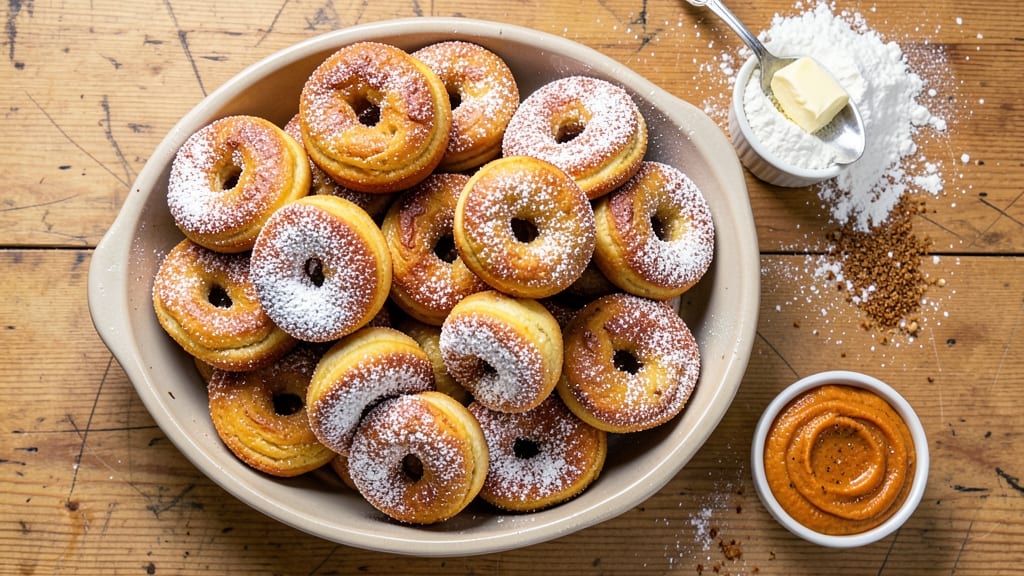
This baked sweet potato donut recipe transforms humble ingredients into golden, crispy cinnamon-sugar crowns with melt-in-your-mouth centers—no deep fryer required. The secret lies in blending sweet potato puree into the dough, which adds natural sweetness and moisture without overpowering the classic donut flavor.
I developed this recipe after years of perfecting the balance between crispy exteriors and gooey interiors, ensuring every bite delivers that satisfying contrast.
The dough comes together with simple pantry staples—flour, baking powder, and a touch of cinnamon—but the sweet potato puree elevates it to something extraordinary. Baking these donuts yields a texture that’s crisp on the outside and tender inside, with that signature cinnamon-sugar crunch that makes them irresistible.
What sets this recipe apart is its foolproof method, designed to avoid common pitfalls like soggy centers or uneven baking.
Once you try these, you’ll never go back to store-bought donuts again. The natural sweetness of the sweet potatoes reduces the need for excess sugar, making them a healthier yet equally indulgent treat.
Whether you enjoy them plain, glazed, or dusted with extra cinnamon, they’re perfect for breakfast, dessert, or anytime you crave something warm and comforting.
For those watching their sugar intake, you can easily adjust the sweetness by reducing the cinnamon-sugar topping or using a lighter glaze. The recipe also lends itself well to vegan adaptations, with flax eggs or coconut milk replacing traditional dairy and eggs.
Let’s get started on creating these crispy, cinnamon-sugar crowns that taste like a bakery favorite.
Ingredients for baked sweet potato donut
Twelve simple ingredients transform into golden, crispy donuts with gooey sweet potato centers.
| Ingredient | Amount | Notes |
|---|---|---|
| Sweet Potato Puree 🍠 | 1 cup | Homemade or canned, no added sugar |
| All-Purpose Flour 🌾 | 2 ½ cups | Sifted for light texture |
| Granulated Sugar 🍚 | ½ cup | Adjust for sweetness preference |
| Brown Sugar 🍚 | ¼ cup | Packed for moisture |
| Active Dry Yeast 🍞 | 2 ¼ tsp | Ensure freshness (test in warm water) |
| Unsalted Butter 🧈 | ½ cup | Cold, cubed for dough |
| Large Eggs 🥚 | 2 whole | Room temperature for mixing |
| Milk 🥛 | ½ cup | Whole milk for richness |
| Ground Cinnamon 🌿 | 2 tsp | Freshly ground preferred |
| Salt 🧂 | ½ tsp | Diamond Crystal kosher |
| Vanilla Extract 🍯 | 1 tsp | Pure, not imitation |
| Granulated Sugar (for coating) 🍚 | 1 ½ cups | Plus 2 tbsp for mixing |
| Ground Cinnamon (for coating) 🌿 | ¼ cup | Mix with sugar for topping |
The sweet potato puree is non-negotiable for that signature moisture and natural sweetness. Canned puree works, but homemade yields better flavor—roast, peel, and blend sweet potatoes until silky smooth. For the yeast, Bob’s Red Mill or Saf-Instant are reliable brands, but test freshness by dropping a pinch in warm water—it should foam within 10 minutes. The butter should be cold when mixed into the dough to prevent overdevelopment, but not rock-hard. If your kitchen runs warm, chill the dough for 30 minutes before shaping. Flour matters too: King Arthur or Gold Medal yield the best texture, but any all-purpose will do in a pinch.
No sweet potato puree? Mashed white potatoes or pumpkin puree can substitute, though flavor will differ. Out of brown sugar? White sugar plus 1 tbsp molasses mimics the depth. The recipe calls for whole milk, but oat or almond milk works if you’re avoiding dairy—just expect slightly less richness. For the cinnamon-sugar coating, Trader Joe’s sells pre-mixed cinnamon sugar, but homemade blends (2:1 sugar to cinnamon) taste fresher. Want extra crunch? Add 1 tbsp turbinado sugar to the coating mix. And if your dough feels too sticky, chill it 15 minutes before rolling—it firms up beautifully.
These donuts keep at room temperature for 2 days in an airtight container, but they’re best enjoyed fresh. For longer storage, freeze shaped (unbaked) donuts on a tray for 1 hour, then transfer to a bag for up to 2 months. Reheat baked donuts at 350°F for 5 minutes to restore crispiness. Pro tip: Brush warm donuts with a little melted butter before dusting with extra cinnamon sugar—it makes all the difference. And if you’re making a batch for a crowd, double the recipe, but bake in two batches to avoid overcrowding the pan.
Why You'll Love This Recipe
- Sweet Potato Swap: I swear by this trick—just blend roasted sweet potatoes into the dough, and suddenly you’ve got a donut that’s naturally moist and packed with warmth. No one will guess it’s not your grandma’s classic recipe.
- Caramelized Crunch: That brown sugar crust? It’s the star. The yeast gives it a light rise, but it’s the crispy edges caramelizing in the oven that make these irresistible—like a hug from your favorite dessert.
- Breakfast or Snack: Honestly, these work anytime. Toss them in a paper bag for a grab-and-go snack, or serve them warm with cinnamon sugar for a weekend treat. My kids ask for them after school and at brunch.
- Budget Magic: Sweet potatoes stretch your dough further than yeasted donuts alone, and the flour and sugars are pantry staples. Plus, they freeze like a dream—just reheat for a quick, cheap dessert when you’re out of ideas.
Step-by-step instructions for baked sweet potato donuts
Here's how to create perfectly golden, crispy donuts with gooey centers—no deep-frying required.
Activate the Yeast for Maximum Rise
In a small bowl, combine the 1 cup sweet potato puree with ½ cup warm milk (about 110°F) and 2 tablespoons of the ½ cup granulated sugar. Stir until the sugar dissolves completely. This warm mixture creates the ideal environment for yeast activation.
Sprinkle the 2¼ teaspoons active dry yeast over the liquid and let it sit for 5-10 minutes until it becomes frothy. You'll see bubbles form and the mixture expand slightly—this confirms the yeast is alive and ready to work. If it doesn't bubble, your yeast may be old, and you'll need to start over with fresh yeast.
Mix the Dough to Perfect Consistency
In the bowl of a stand mixer fitted with the dough hook attachment, combine the 2½ cups all-purpose flour, ½ teaspoon salt, 2 teaspoons ground cinnamon, the remaining ¼ cup granulated sugar, and ¼ cup brown sugar. Mix on low speed until just combined—about 10 seconds—to avoid developing too much gluten.
Add the yeast mixture, 2 whole eggs, ½ cup cold cubed butter, and 1 teaspoon vanilla extract to the dry ingredients. Mix on low speed for 1 minute, then increase to medium speed for 3-4 minutes until the dough pulls away from the sides of the bowl and forms a smooth, elastic ball. The dough should be slightly tacky but not sticky—if it's too wet, add 1 tablespoon more flour.
Knead and Rest for Ideal Texture
Turn the dough out onto a lightly floured surface and knead gently for 2-3 minutes until smooth. Shape it into a round and place it back in the bowl. Cover with a damp towel and let it rise in a warm place for 1-1½ hours, or until it has roughly doubled in size. The dough should feel light and airy when pressed gently—this indicates proper fermentation.
Here's the thing—don't rush this step. The longer the dough rises, the more flavor it develops. If your kitchen isn't warm, place the bowl near a slightly warmed oven with the light on. Patience here ensures those crispy exteriors and gooey centers we're after.
Shape and Proof the Donuts
Punch down the risen dough and turn it out onto a lightly floured surface. Roll it out to about ½-inch thickness and cut out 2-inch rounds using a donut cutter or glass. If you don't have a cutter, use a round cookie cutter and a smaller one to make the holes—just be consistent with sizing for even baking.
Place the donuts on a parchment-lined baking sheet, cover with a damp towel, and let them proof for another 30-45 minutes. They're ready when they've puffed up slightly and the holes are more pronounced. This final proofing ensures they'll rise beautifully in the oven, giving you that perfect donut shape with crispy edges.
Bake to Golden Perfection
Preheat your oven to 375°F. In a shallow bowl, mix together 1½ cups granulated sugar and ¼ cup ground cinnamon for the coating. Brush the tops of the donuts with a little milk to help the coating adhere better.
Roll each donut in the cinnamon-sugar mixture, pressing gently to ensure full coverage. Arrange them on the baking sheet in a single layer, leaving about 1 inch between each donut—they'll expand slightly. Bake for 12-15 minutes until the edges are deep golden brown and the tops are set. They should pull away slightly from the pan but still feel soft in the center.
Cool and Serve Immediately
Let the donuts cool on the baking sheet for 5 minutes before transferring them to a wire rack. The first few bites will be warm and gooey inside with a crispy, cinnamon-sugar crust—this is the moment that matters. Serve them warm with a dollop of whipped cream or a drizzle of caramel for the ultimate treat.
Real talk: These donuts are best enjoyed fresh out of the oven. If you need to store them, keep them in an airtight container at room temperature for up to 2 days, but trust me, they won't last that long. The secret to their success lies in that perfect balance of crispy exterior and soft, sweet center—every bite delivers on that promise.
Pro Tips For Making Baked Sweet Potato Donut
- Boil Potatoes First: Sweet potato puree straight from a box tastes flat—make your own by boiling peeled, cubed sweet potatoes until fork-tender (about 15 minutes), then drain and mash. The texture is smoother, and the flavor is richer—no one will guess you skipped the canned shortcut.
- Mix Yeast Last: Add the yeast to the warm liquid right before combining with flour and sugar. I learned this the hard way—pre-mixing it too early kills the bubbles, and your donuts turn out dense instead of light. Wait until the liquid is 110°F (just warm to the touch) to activate it properly.
- Don’t Overmix the Dough: Stop folding in flour when the dough pulls away from the bowl and forms a shaggy mass—about 30 seconds after it starts clumping. Overworking it makes the donuts tough. If it’s sticky, wet your hands slightly to handle it, but resist the urge to knead like bread dough.
- Bake at 350°F, Not Higher: Cranking the oven to 375°F or 400°F for faster results? Bad idea. Sweet potato dough burns before it rises properly. Stick to 350°F and bake until the tops are golden and a toothpick comes out clean—usually 20-25 minutes. Patience here keeps them tender, not rubbery.
Flavor customization for this recipe
Sweet Potato Variations
Swap the classic sweet potato puree for pumpkin puree (1:1 ratio) to create a spiced fall twist—add ½ tsp pumpkin pie spice to the dough for warmth.
For a tropical vibe, blend in ¼ cup coconut milk with the puree and top with toasted desiccated coconut instead of cinnamon sugar. 🌺
Spice Level Boost
Kick up the heat by adding ½ tsp cayenne to the dough or mixing 1 tbsp chili powder into the cinnamon-sugar coating. For a smoky depth, replace ½ tsp cinnamon with ½ tsp smoked paprika in the dough.
Balance the heat with a cool glaze—try vanilla Greek yogurt glaze for tangy contrast.
Glaze & Topping Ideas
Ditch the cinnamon sugar for a maple cream cheese glaze (mix ½ cup cream cheese, ¼ cup maple syrup, and 1 tsp vanilla) or a chocolate ganache (melt ½ cup dark chocolate with ¼ cup heavy cream).
For texture, roll baked donuts in crushed pecans or toasted coconut flakes before glazing.
Dietary Adaptations
Make these vegan by replacing eggs with 2 tbsp ground flaxseed + 6 tbsp water (let sit 5 mins) and using coconut oil instead of butter. For gluten-free, swap flour for a 1:1 gluten-free blend (like Bob’s Red Mill) and add ½ tsp xanthan gum.
Reduce sugar by 2 tbsp if using very ripe sweet potatoes—they’re naturally sweeter!
Seasonal Twists
Summer version: Add 1 tsp lemon zest to the dough and top with white chocolate drizzle and crushed freeze-dried raspberries. Winter edition? Mix ½ tsp nutmeg into the dough and serve with spiced apple compote for dipping. The possibilities are endless—let your pantry inspire!
Nutrition facts
Frequently asked questions
Can I make these without a donut cutter?
Use a round cookie cutter (about 2 inches for donuts, 1 inch for holes) or even a glass. Dip it in flour between cuts to prevent sticking. For extra crispy edges, press the cutter firmly to create clean lines.
Why did my donuts turn out dense instead of light?
This usually happens when the yeast isn't activated properly or the dough over-proofs. Always test your yeast first (it should foam in 5-10 minutes in warm liquid). Also, ensure your kitchen is warm enough—place the dough near a slightly warmed oven with the light on if needed.
How do I store leftover baked sweet potato donuts?
Keep them in an airtight container at room temperature for up to 2 days. For longer storage, freeze shaped (unbaked) donuts on a tray for 1 hour, then transfer to a bag for up to 2 months. To reheat, bake at 350°F for 5 minutes to restore crispiness.
Can I make these vegan or gluten-free?
Yes! For vegan, replace eggs with 2 tbsp ground flaxseed + 6 tbsp water and use coconut oil instead of butter. For gluten-free, swap flour for a 1:1 blend (like Bob's Red Mill) and add ½ tsp xanthan gum. Both adaptations work beautifully with these donuts!
What's the secret to getting crispy exteriors?
The key is baking at 375°F until edges are deep golden brown (about 12-15 minutes) and brushing the tops with milk before adding the cinnamon-sugar coating. Also, don't overcrowd the baking sheet—leave 1 inch between donuts for proper air circulation.