Soups & Stews
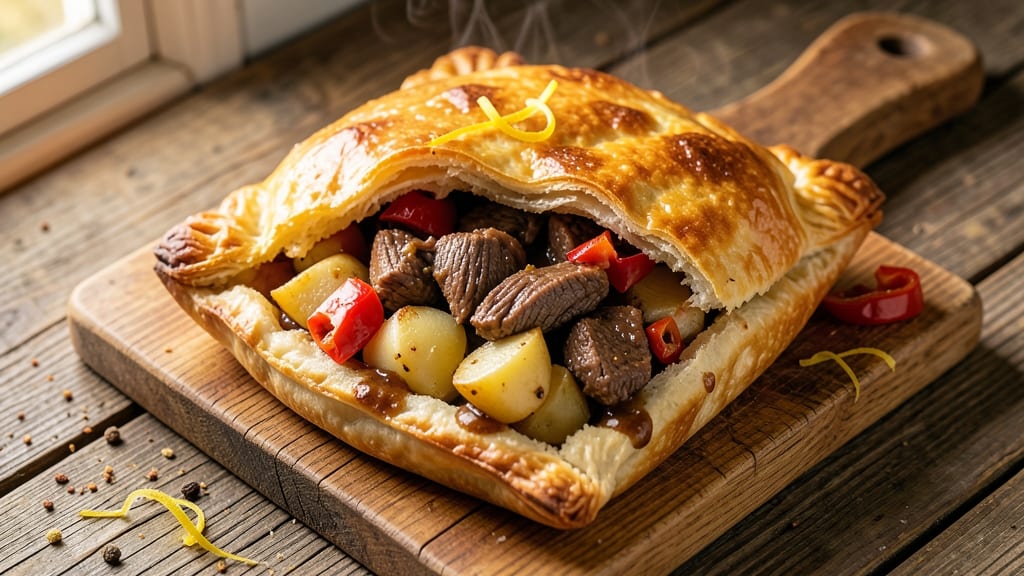
This beef and potato pasty recipe delivers crispy edges and hearty, savory filling in a single, satisfying bake. Inspired by traditional Cornish mining pasties, this recipe combines flaky pastry with tender beef and potatoes—perfect for a comforting meal that feels like a home-cooked hug.
The secret lies in the dough's buttery layers and the filling's perfect balance of seasoning, ensuring every bite is rich yet never greasy.
The beauty of this recipe is its versatility—whether you're making it for a family dinner or meal prep, the foolproof method ensures consistent results. The dough comes together with simple ingredients, while the filling cooks just enough to soften the potatoes and tenderize the beef without drying it out.
No fancy techniques required, just patience and a hot oven.
By the time it emerges from the oven, you'll have a pasty with a golden, flaky crust that shatters at the touch and a filling so flavorful it practically melts in your mouth.
The aroma alone—beef, potatoes, and herbs baking together—will have everyone gathered around the table. Serve it warm with a cold beer or cider for the full Cornish experience.
This recipe also works beautifully as a handheld meal for picnics or potlucks, making it ideal for any occasion. The leftovers reheat perfectly, so you can enjoy it all week long. Let's get started on this classic dish that's as satisfying as it is delicious.
Ingredients for beef and potato pasty
Simple, hearty ingredients for a pasty with crispy edges and savory filling that feels like comfort food.
| Ingredient | Amount | Notes |
|---|---|---|
| All-Purpose Flour 🌾 | 3 cups | For dough, sifted for best texture |
| Cold Unsalted Butter 🧈 | 1 cup | Cut into small cubes, full-fat preferred |
| Ice Water 💧 | ½ cup | Chilled for dough handling |
| Salt 🧂 | ½ tsp | Kosher or sea salt preferred |
| Ground Black Pepper 🌶️ | ½ tsp | Freshly ground for best flavor |
| Dried Thyme 🌿 | 1 tsp | Or 1 tbsp fresh thyme leaves |
| Russet Potatoes 🥔 | 2 lbs | Peeled, cut into 1-inch cubes |
| Yellow Onion 🧅 | 1 whole | Peeled, finely chopped |
| Ground Beef 🥩 | 1 lb | 80/20 fat ratio for juiciness |
| Beef Stock 💧 | ½ cup | Homemade or quality store-bought |
| All-Purpose Flour 🌾 | 2 tbsp | For dusting work surface |
| Egg 🥚 | 1 whole | For egg wash |
| Milk 🥛 | 1 tbsp | For egg wash |
The flour and butter are non-negotiable for that perfect flaky crust. King Arthur flour or Gold Medal work best for the dough, and don't skimp on the butter—it's what creates those crispy layers. For the beef, 80/20 fat ratio is ideal; it keeps the meat juicy while cooking. The potatoes should be russet—they hold up best to baking without turning mushy. If you can't find russets, Yukon Golds are a good second choice, but they'll be slightly creamier. The beef stock can be homemade or a quality brand like Pacific Foods—just avoid anything with added preservatives.
No beef stock? Chicken stock with a splash of Worcestershire sauce works in a pinch, though it won't have the same depth. Fresh thyme is ideal, but dried works at one-third the amount. If you're short on time, pre-cubed potatoes from the grocery store save chopping, but they won't be as even in size. The butter should be cold for the dough—take it out of the fridge 10 minutes before mixing, but no longer. For the egg wash, milk or water works too, but milk gives a slightly richer finish. If you're making these ahead, the dough can be chilled for up to 24 hours before shaping.
The dough keeps best wrapped in plastic in the fridge for 3 days or frozen for 3 months. For the filling, assemble it up to 1 day ahead and refrigerate—it actually tastes better after sitting overnight as the flavors meld. Once baked, these pasties reheat beautifully in a 350°F oven for 15 minutes or wrapped in foil in the microwave. They're perfect for meal prep, so double the recipe and freeze half for later. The crust stays crispy even after reheating if you bake it straight from frozen—just add 10-15 extra minutes to the baking time.
Why You'll Love This Recipe
- No-Fuss Dough: The crust comes together faster than you can say "ice water." Just flour, butter, and a splash of cold water—no yeast, no waiting, no stress. My kids help me mix it; it’s that simple.
- Crispy-Creamy Magic: That flaky, golden crust with the tender beef and buttery potatoes? It’s the kind of combo that makes you pause mid-bite. The pepper adds just enough kick to keep things interesting.
- Picnic or Potluck: Wrap one up for a hike, freeze extras for lazy nights, or bring a batch to a gathering. It reheats like a dream—hot from the oven or straight from the freezer—no one will guess it’s been sitting around.
- Budget Buster: Ground beef and potatoes stretch this recipe far, and the dough costs pennies. Honestly, I’ve fed six people for under $15 with this—leftovers? Even better. They taste just as good the next day.
Step-by-step instructions for beef and potato pasty
Master the art of pasty-making with this foolproof method for golden crust and tender filling.
Prepare the Dough for Crispy Edges
In a large mixing bowl, combine the 3 cups all-purpose flour, ½ teaspoon salt, and ½ teaspoon ground black pepper. Whisk together until evenly distributed. Cut the 1 cup cold unsalted butter into small cubes and add to the flour mixture. Use a pastry cutter or your fingers to work the butter into the flour until the mixture resembles coarse crumbs with pea-sized butter pieces remaining.
Gradually add the ½ cup ice water, 1 tablespoon at a time, mixing gently with a fork or wooden spoon until the dough just comes together. Avoid overmixing—just until the dough holds when pressed. Turn the dough onto a lightly floured surface and knead lightly for 2-3 minutes until smooth. Wrap tightly in plastic wrap and refrigerate for 30 minutes to firm up. This chilling step is crucial for preventing a soggy crust later.
Assemble the Savory Filling
In a large skillet, cook the 1 pound ground beef over medium heat until browned, breaking it into small pieces. Drain excess fat, leaving about 1 tablespoon in the pan. Add the 1 whole yellow onion, chopped, and cook for 3-4 minutes until softened. Stir in the 1 teaspoon dried thyme and cook for another 30 seconds to release the aroma.
Transfer the beef mixture to a bowl and stir in the ½ cup beef stock. In a separate bowl, combine the 2 pounds russet potatoes, peeled and cut into 1-inch cubes. Add the potato cubes to the beef mixture and toss gently to coat. This pre-cooking step ensures the filling is flavorful and the potatoes tender before baking.
Roll and Shape the Pasty
Divide the chilled dough into 4 equal portions (about 8 ounces each). On a lightly floured surface, roll one portion into a 12-inch circle, about ⅛-inch thick. Dust the surface with 2 tablespoons all-purpose flour to prevent sticking. Spoon ¼ of the filling onto the center of the dough, leaving a 1-inch border around the edges.
Fold the dough over the filling to form a half-moon shape. Press the edges firmly to seal, then crimp with a fork or your fingers to create a decorative pattern. Place the pasty seam-side up on a parchment-lined baking sheet. Repeat with the remaining dough and filling.
Create the Signature Egg Wash
In a small bowl, whisk together the 1 whole egg and 1 tablespoon milk until smooth. Brush the egg wash generously over the top of each pasty, focusing on the edges and crimped seams. This wash creates the signature golden-brown crust and adds a subtle sheen. Let the pasties rest for 10 minutes while the egg wash sets slightly.
Preheat your oven to 400°F. Bake the pasties for 40-45 minutes until the crust is deep golden brown and the filling is bubbling through the slits in the dough. The pasties are done when the internal temperature of the filling reaches 185°F—use an instant-read thermometer to check. If the crust browns too quickly, tent loosely with foil to prevent burning.
Rest and Serve for Maximum Flavor
Remove the pasties from the oven and let them rest for 10 minutes before serving. This resting period allows the filling to set slightly, making it easier to slice and preventing the juices from escaping. Serve warm, cutting into wedges to reveal the crispy crust and tender filling inside.
For best results, serve immediately while the crust is still crisp and the filling is hot. The contrast of the flaky, golden pastry with the savory beef and potato filling makes every bite satisfying. Store leftovers in an airtight container for up to 3 days—though they're rarely leftovers!
Pro Tips For Making Beef And Potato Pasty
- CHILL THE BUTTER FIRST: I learned this the hard way—trying to mix cold butter into flour with warm hands makes the dough fight you. Pop that butter in the fridge for 15 minutes before cutting it into the flour. Trust me, your crust will be flakier than a poorly made joke at a family gathering.
- PACK THE POTATOES TIGHT: Don’t just toss diced potatoes into the center like you’re lazy-filling a burrito. Press them firmly into the bottom of your pasty, leaving just enough room for the beef to sit on top. This keeps them from floating upward and turning into sad, waterlogged mush when you bake it.
- DAMPEN THE FLOUR WITH ICE WATER: Skip the warm water—it’s the fast track to a gummy crust. Use ice water (yes, even in summer) to hydrate the dough. The cold slows gluten development, and the result is a crispy, golden top that doesn’t turn into a chewy brick. Your future self will thank you when the pasty doesn’t taste like a hockey rink.
- SEAL THE EDGES WITH WATER: After folding your pasty, brush the edges with a little water before pinching them shut. This creates a stronger seal that won’t split open when you bake it. I know it feels like overkill, but it’s the thing that keeps your filling from leaking out like a bad secret.
Essential equipment for beef and potato pasty
Pastry Cutter or Fork
For the dough, a pastry cutter or even your fingers will work, but I swear by a Benriner Pastry Blender for even distribution of butter.
If you don’t have one, a fork or two butter knives will do the trick—just work the butter into the flour until it resembles coarse crumbs. The goal is to keep those butter pieces pea-sized for maximum flakiness. 🧈
Rolling Pin and Flour
A wooden rolling pin is ideal for rolling out the dough evenly, but a glass or marble pin works too. Keep a bowl of all-purpose flour nearby to dust your surface and dough—this prevents sticking and makes rolling much easier.
I like to roll the dough from the center outward in all directions to maintain even thickness.
Baking Sheet and Parchment
Use a half-sheet baking pan (13x18 inches) lined with parchment paper to prevent sticking and ensure easy cleanup. If you don’t have parchment, lightly grease the pan with butter or oil, but parchment is worth the small investment for foolproof results.
The parchment also helps distribute heat evenly for a crispy crust.
Instant-Read Thermometer
An instant-read thermometer (like the Thermoworks Thermapen) is a game-changer for checking the internal temperature of the filling. The pasties are done when the filling reaches 185°F—this ensures the potatoes are tender and the beef is fully cooked without drying out.
Without one, you’ll have to rely on visual cues (golden crust, bubbling filling), which can be less precise.
Fork or Crimping Tool
For sealing the edges, a fork works perfectly—just press the tines into the dough along the seam for a decorative, secure crimp. If you’re feeling fancy, a crimping tool (like the OXO Good Grips) gives a more professional finish.
Either way, sealing the edges tightly prevents filling from leaking out during baking.
Mixing Bowls and Skillet
A large mixing bowl (8-10 inches) is essential for combining the dough ingredients, and a 10-12 inch skillet (like All-Clad Stainless) is perfect for browning the beef and onions.
I also recommend a small bowl for whisking the egg wash—this keeps it contained and easy to brush onto the pasties.
Nutrition facts
Frequently asked questions
What makes this beef and potato pasty different from other meat pies?
Traditional pasties originate from Cornwall, where miners needed handheld meals packed with filling and sturdy crusts. This recipe uses a single-layer pastry (not two layers like many pies) and a half-moon shape that's easy to hold. The filling includes pre-cooked beef and potatoes seasoned with thyme and beef stock for deep flavor, while the egg wash creates that signature crispy, golden crust. Plus, the edges are crimped for extra security—no filling leaks during baking!
Can I make this recipe without a rolling pin?
Roll the dough between two sheets of parchment paper using a wine bottle or even a clean can. For extra thickness control, place a 1-inch thick book under the parchment and roll over it. The key is to keep the dough ⅛-inch thick for even baking. Just work quickly to prevent sticking—dust generously with flour.
How do I fix a soggy bottom crust?
Prevent soggy bottoms by chilling the dough for 30 minutes before shaping and pre-cooking the filling (beef and potatoes) to remove excess moisture. If it happens, bake the pasties on a preheated baking sheet at 400°F for 10 minutes before transferring to the oven. For extra insurance, sprinkle ½ cup breadcrumbs on the baking sheet before adding the pasties.
What are some creative variations for this recipe?
Swap the beef for lamb (add rosemary) or chicken (use chicken stock). Try adding swede (rutabaga) or carrots to the potatoes. For a vegetarian version, use mushrooms, lentils, and cheese instead of meat. The Australian version often includes rutabaga and onion—worth experimenting with!
Can I make these ahead of time?
Yes! Assemble the pasties (unbaked) up to 24 hours ahead and refrigerate. For best results, bake them straight from the fridge—just add 5-10 extra minutes to the baking time. For longer storage, freeze unbaked pasties for up to 3 months. Thaw overnight in the fridge before baking. Leftovers keep for 3 days in an airtight container.