
Soups & Stews
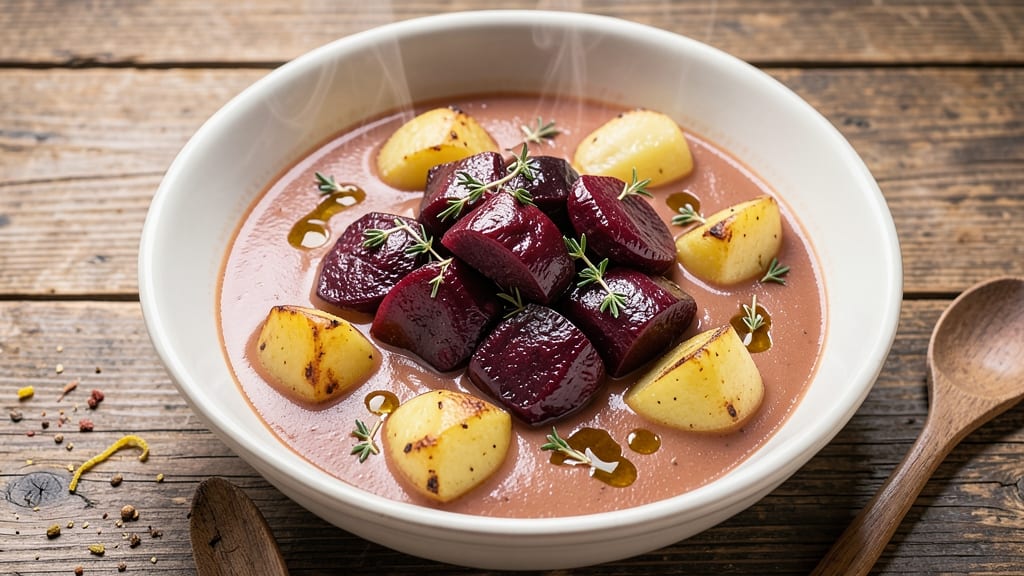
This beet and potato soup delivers earthy depth without cloying sweetness—perfect for cozy evenings when you crave hearty yet refined flavors. The secret lies in roasting the vegetables first, which caramelizes their natural sugars just enough to enhance their sweetness while preserving their rich, umami character.
Unlike many beets-in-soup recipes that rely on canned beets or excessive sugar, this version balances bold flavors through proper technique and ingredient selection.
What sets this recipe apart is its textural contrast—creamy yet never heavy, with tender potatoes and silky beets that blend seamlessly into a velvety broth.
The roasting step (about 40 minutes) intensifies the vegetables' natural sweetness, while simmering them in vegetable stock (not water) deepens their flavor without overpowering the dish. A touch of apple cider vinegar at the end brightens the soup, cutting through richness while adding complexity.
The result is a soup that feels restaurant-quality but requires minimal effort—just 1 hour of active time, including prep. It's hearty enough to serve as a main dish, especially when paired with crusty bread, but light enough to satisfy any time of day.
The technique ensures the beets don't turn mushy or overpower the potatoes, creating a harmonious balance that's both comforting and sophisticated.
For added depth, consider finishing with a swirl of coconut yogurt or fresh dill, though the soup stands beautifully on its own. This recipe is designed to impress without fuss, making it ideal for weeknight dinners or gatherings where you want to serve something memorable but not overly complicated.
Ingredients for beet and potato soup
Roasted vegetables, rich broth, and subtle sweetness create this restaurant-worthy beet and potato soup.
| Ingredient | Amount | Notes |
|---|---|---|
| Medium Beets 🍠 | 4 whole | Organic preferred, trimmed and quartered |
| Yellow Potatoes 🥔 | 2 lb | Russet or Yukon Gold, peeled and cubed |
| Vegetable Stock 💧 | 6 cups | Low-sodium, homemade preferred |
| Extra-Virgin Olive Oil 🫒 | ½ cup | For roasting vegetables |
| Apple Cider Vinegar 🍏 | 1 tbsp | Unfiltered for brightness |
| Fresh Thyme 🌿 | 1 tbsp | Leaves only, finely chopped |
| Fresh Dill 🌿 | ¼ cup | Chopped, for garnish |
| Coconut Milk 🥥 | ½ cup | Full-fat for creaminess |
| Coconut Yogurt 🍦 | ¼ cup | Unsweetened, for garnish |
| Garlic Cloves 🧄 | 4 cloves | Minced for depth |
| Salt 🧂 | 1 ½ tsp | Diamond Crystal preferred |
| Black Peppercorns 🌶️ | ½ tsp | Freshly cracked |
| Maple Syrup 🍁 | 1 tbsp | Grade B for caramel notes |
| Nutritional Yeast 🧀 | 2 tbsp | For umami depth |
The beets and potatoes are the foundation—organic beets from Whole Foods or your local farmers market deliver the deepest flavor, but regular grocery store beets work too if you roast them properly. Look for firm, vibrant beets with smooth skins; avoid any with soft spots or cracks. Yellow potatoes (like Yukon Gold) hold their shape better than russets during roasting, but russets add a slightly creamier texture. Pre-peeling saves time, and cutting them into even 1-inch cubes ensures consistent roasting. The key to avoiding bitter beets is roasting them at 400°F for 40 minutes—just until tender but still holding their shape.
No coconut milk? Cashew cream (blend soaked cashews with water) works beautifully for creaminess, though it lacks coconut's subtle sweetness. Substituting apple cider vinegar? White wine vinegar or lemon juice brightens the soup, but apple cider's malic acid adds complexity. Fresh dill and thyme are ideal, but dried oregano at half the amount suffices in a pinch. The nutritional yeast is non-negotiable for that savory depth—it's the secret to making this soup taste restaurant-quality without dairy. For extra richness, add 1 tbsp vegan butter when blending, though the coconut milk provides enough body on its own.
Roasted vegetables keep in the fridge for 5 days if stored in an airtight container, but I recommend making the soup fresh for optimal texture. The blended soup reheats beautifully—simmer gently on low heat for 5-7 minutes to restore creaminess. For make-ahead convenience, blend the soup, then refrigerate it in portions. It thickens as it cools, so add a splash of vegetable stock when reheating. Garnishes like coconut yogurt and fresh dill stay fresh for 3 days in the fridge, sealed tightly. Freeze the soup (without garnishes) for up to 3 months—it reheats like a dream.
Why You'll Love This Recipe
- One-Pot Wonder: I swear by this—just chop, simmer, and blend. No separate pans, no fussing with layers, and the beets actually soften while the potatoes hold their shape just enough to add texture.
- Earthy Yet Bright: That apple cider vinegar twist? It cuts through the richness of the olive oil and beets, leaving you with something tangy and fresh—not heavy, not sweet, but ridiculously satisfying.
- Weeknight to Potluck: Make a double batch on Sunday, and you’ve got lunch for three days. Or bring it to a picnic—it’s hearty enough for a crowd but light enough to pack, and the color? Always a conversation starter.
- Budget Magic: Beets and potatoes are cheap staples, and stock stretches forever. Honestly, I’ve made this for under $1.50 per serving, and my picky eaters still ask for seconds. (Yes, even on a Tuesday night.)
Step-by-step instructions for roasted beet and potato soup
This method delivers deep earthy flavor while balancing sweetness through precise roasting and layering techniques.
Roast Vegetables for Concentrated Flavor
Preheat your oven to 400°F and line two baking sheets with parchment paper. Toss the 4 whole medium beets and 2 lb yellow potatoes (cut into 1-inch cubes) with 0.5 cup extra-virgin olive oil, 1.5 tsp salt, and 0.5 tsp black peppercorns until evenly coated. Spread them in a single layer on the prepared sheets.
Roast for 40-45 minutes, flipping halfway through, until the beets are tender when pierced with a knife and the potatoes are golden brown. The high heat caramelizes their natural sugars, creating a deep, complex foundation for the soup. Remove from oven and let cool slightly before peeling the beets - their skins will slip off easily after roasting.
Build the Soup Base with Aromatics
In a large Dutch oven, heat 0.5 cup extra-virgin olive oil over medium heat. Add the 4 minced garlic cloves and sauté for 1 minute until fragrant. Add 1 tbsp finely chopped fresh thyme and cook for another 30 seconds, stirring constantly to prevent burning.
Pour in 1 tbsp apple cider vinegar and deglaze the pan, scraping up any browned bits from the bottom. This step captures all the concentrated flavors that would otherwise stick to your pot. Add the peeled, roasted beets and potatoes along with 6 cups vegetable stock and bring to a gentle simmer. The acidity from the vinegar helps balance the natural sweetness of the roasted vegetables.
Simmer and Season for Depth
Reduce heat to low and let the soup simmer uncovered for 20-25 minutes, stirring occasionally. This gentle cooking allows the flavors to meld while maintaining the vegetables' texture. Add 1 tbsp maple syrup and 2 tbsp nutritional yeast during the last 5 minutes of cooking - the maple syrup enhances the natural sweetness subtly while the nutritional yeast adds umami depth.
Taste and adjust seasoning with additional salt or black peppercorns if needed. The soup should have a harmonious balance between earthy beet sweetness and savory potato notes. Use an immersion blender to purée until smooth, or transfer to a blender in batches for a completely silky texture. Return the puréed soup to the pot and keep warm over low heat.
Finish with Creamy Texture and Fresh Herbs
In a small saucepan, gently warm 0.5 cup coconut milk over low heat until steaming but not boiling. Slowly whisk this into the soup in a thin stream, being careful not to scald the milk. The gentle heat helps emulsify the coconut milk for a silky texture without curdling. Stir in 0.25 cup coconut yogurt until fully incorporated and the soup reaches your desired creaminess.
Remove from heat and stir in 0.25 cup chopped fresh dill. Ladle the soup into bowls and garnish with additional dill and a drizzle of coconut milk. The fresh dill adds a bright, herbal note that cuts through the richness of the coconut milk and balances the earthy flavors. Serve immediately while warm to appreciate the full complexity of flavors.
Pro Tips For Making Beet And Potato Soup
- Roast Beets First: Peeling raw beets is a mess—roast them whole (400°F for 45-55 minutes) until tender, then slip off skins. The flavor deepens and they cook faster later. (Yes, even if you’re impatient like me.)
- Cut Potatoes Even: Use a mandoline or knife for uniform ½-inch cubes—they’ll cook at the same rate and avoid gummy spots. Uneven pieces mean some turn to mush while others stay hard.
- Balance the Vinegar: Start with 1 tablespoon apple cider vinegar, then taste before adding more. Too much makes the soup sharp; too little leaves it flat. Adjust in small bursts.
- Simmer Low and Long: After blending, keep heat at a gentle simmer (not a rolling boil) for 20-30 minutes. This lets flavors meld without breaking down the texture. Skimp here, and you’ll regret it.
Essential equipment for beet and potato soup
Roasting Pan Essentials
Start with two rimmed baking sheets—I prefer All-Clad stainless steel for even heat distribution. Line them with silicone baking mats (like Amazon Basics) to prevent sticking.
The 1-inch cube size for potatoes and beets is critical for even roasting, so a sharp chef’s knife (I use Wüsthof) and a mandoline (for precision) make prep faster. 🔥
Blending Tools
For silky texture, an immersion blender (like Ninja 1100) is my go-to—it keeps the process contained and avoids messy transfers. If blending in batches, a high-powered blender (such as Vitamix 5200) handles the roasted veggies’ fibrous texture better than standard models.
Just don’t overfill—work in 2-cup portions for optimal blending.
Dutch Oven Advantage
A 5-6 quart Dutch oven (I love Le Creuset’s stoneware) is perfect for simmering—its thick base maintains even heat while the tall sides prevent spills. For deglazing, keep a small whisk (like OXO Good Grips) handy to scrape up flavorful browned bits.
A fine-mesh strainer (for stock prep) ensures smooth broth without sediment.
Temperature Control
Accurate roasting requires an oven thermometer (I use Thermoworks Oven Thermometer)—many ovens run 25°F hotter than set. For blending, a cold soup base prevents overheating your blender; chill the soup for 10 minutes before blending.
A kitchen scale (like OXO Good Grips) ensures precise measurements for ingredients like nutritional yeast.
Garnish Tools
Fresh dill and coconut yogurt deserve proper presentation. Use tweezers (for precise dill placement) and a small squeeze bottle (to drizzle coconut milk). A slotted spoon helps serve soup without garnishes. For extra flair, a microplane (to zest lemon over the soup) adds brightness—though it’s optional.
Nutrition facts
Frequently asked questions
Why roast the beets and potatoes instead of boiling them?
Roasting caramelizes their natural sugars, creating a deeper, more complex flavor than boiling. The 400°F heat for 40 minutes develops a rich, earthy sweetness that balances perfectly with the savory broth. Plus, roasting makes peeling beets effortless—the skins slip right off!
Can I make this soup without coconut milk?
For a dairy-free alternative, blend ½ cup soaked cashews with ½ cup water for a neutral creaminess. Or use ½ cup unsweetened almond milk (though it adds less richness). The key is warming the milk gently before stirring to prevent curdling.
How do I prevent the soup from being too sweet?
The roasting process concentrates natural sweetness, but the apple cider vinegar and nutritional yeast balance it beautifully. For extra control, reduce the maple syrup to ½ tbsp or omit it entirely. The beets' earthy notes will still shine without overpowering the dish.
What if my soup turns out too thick?
Simply stir in ¼ cup warm vegetable stock and reheat gently. The soup thickens as it cools, so always stir in a splash of stock when reheating. For a smoother texture, blend again briefly with an immersion blender. Avoid adding cold stock directly—it can cause separation.
Can I use canned beets instead of fresh?
Canned beets will work, but they lack the depth of flavor from roasted fresh ones. If using canned, drain and rinse thoroughly, then simmer them in the broth for 15 minutes to soften. Add ½ tsp cinnamon to mimic the caramelized notes from roasting. For best results, stick with fresh beets when possible.