
Side Dishes
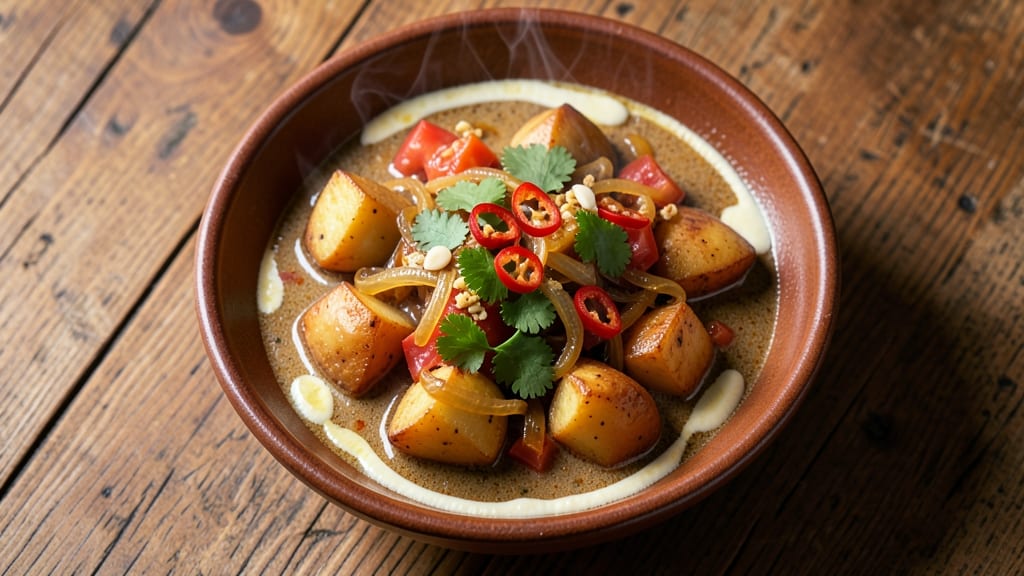
This spicy vegan potato curry delivers the bold, aromatic flavors of South Indian cuisine without a single drop of dairy or egg. The secret lies in carefully balanced spices—cumin, mustard seeds, and chili powder—that build layers of heat and depth while keeping the dish plant-based and satisfying.
I developed this recipe after years of perfecting vegan curries that still deliver restaurant-quality richness, and it never fails to impress even the most skeptical meat-lovers.
The foundation starts with whole spices toasted in coconut oil, which unlocks their full potential before blending with potatoes, tomatoes, and a touch of coconut milk for creaminess. Unlike many vegan curries that rely on heavy coconut cream, this version uses just enough to enhance flavor without overpowering the dish.
The result? A curry that’s spicy yet balanced, with tender potatoes absorbing all the aromatic spices and a sauce that’s neither too thin nor too thick.
What makes this curry truly special is its versatility—serve it steaming hot over basmati rice for a complete meal, or pair it with warm flatbreads to soak up every last drop of the flavorful sauce.
The heat comes from fresh red chili and black pepper, but you can adjust the spice level to suit your taste. Each bite delivers a perfect harmony of smoky, tangy, and slightly sweet notes that make this dish a standout, even among non-vegan curries.
Ready in under 45 minutes, this recipe is perfect for weeknight dinners or meal prep. The spices release their full potential as they simmer, creating a curry that tastes even better the next day.
Whether you're a committed vegan or simply looking for a flavorful plant-based side, this potato curry will become a staple in your rotation—bold, satisfying, and entirely dairy-free.
Ingredients for spicy vegan potato curry
Spices, potatoes, and coconut milk—this bold curry delivers restaurant-quality South Indian flavor, 100% plant-based.
| Ingredient | Amount | Notes |
|---|---|---|
| Yellow Onions 🧅 | 1 whole | Finely chopped, vibrant color |
| Fresh Red Chili 🌶️ | 1 piece | Seeded, adjust for spice |
| Garlic Cloves 🧄 | 6 cloves | Peeled, roughly chopped |
| Russet Potatoes 🥔 | 2 lbs | Medium size, peeled and cubed |
| Medium Tomatoes 🍅 | 3 whole | Ripe, roughly chopped |
| Coconut Oil 🫒 | ½ cup | Unrefined, for toasting spices |
| Full-Fat Coconut Milk 🥥 | ½ cup | Canned, for creaminess |
| Yellow Mustard Seeds 🌿 | 1 tbsp | Whole, for authentic flavor |
| Ground Cumin 🌿 | 1 ½ tsp | Freshly ground preferred |
| Turmeric Powder 🌿 | 1 tsp | Bright orange color |
| Ground Coriander 🌿 | 1 tsp | Freshly ground for best flavor |
| Chili Powder 🌶️ | 1 ½ tsp | Adjust for desired heat |
| Ground Black Pepper 🌶️ | ½ tsp | Freshly cracked preferred |
| Salt 🧂 | 1 ½ tsp | Kosher or sea salt |
| Fresh Cilantro 🌿 | ¼ cup | Chopped, for garnish |
The spices are non-negotiable here. Whole mustard seeds and cumin toasted in coconut oil unlock their full aroma—don't skip this step. I grab my spices from Penzeys or the bulk bins at Whole Foods for maximum freshness. The turmeric should be vibrant orange, not dull yellow. For the chili, fresh red chili gives the best heat, but if you're sensitive to spice, swap for half the amount of dried chili flakes. The potatoes? Russets hold up best to the long simmer, but Yukon Golds work too if you want extra creaminess.
No fresh cilantro? Dried cilantro or parsley at half the amount works in a pinch. Short on coconut milk? Light coconut milk or even cashew cream keeps it rich without overpowering. The tomatoes can be canned (I use San Marzano for the best flavor), but fresh is ideal if you're prepping during tomato season. For extra depth, add a pinch of asafoetida (hing)—it's an Indian pantry staple that adds umami without being fishy. If you can't find it, a dash of soy sauce mimics the effect.
This curry tastes even better the next day—make extra and portion it into containers for the week. Store in the fridge for 5 days or freeze for 3 months. The spices mellow slightly when reheated, so I like to add a splash of water and a pinch of salt before warming. For serving, I always pair it with steamed basmati rice or warm naan. The sauce thickens as it cools, so thin with a little water if needed before reheating.
Why You'll Love This Recipe
- One-Pot Magic: I swear by this recipe because it’s actually one-pot (no, really—just chop, sauté, simmer). The onions caramelize while you dice potatoes, and by the time the chili’s sizzling in the oil, your kitchen smells like a street-side stall. No fancy techniques—just a heavy pot and 20 minutes of your time.
- Heat Without Guilt: That fresh red chili? It’s the star, but don’t worry—it’s the good kind of heat. The garlic mellows it out while the tomatoes add a tangy depth, so you get a slow-building spice that lingers without burning your mouth out. (Yes, even on a Tuesday night.)
- Leftover Goldmine: This curry begs to be reheated—better the next day, honestly. The potatoes soak up the spiced oil, turning tender and crispy at the edges, while the sauce thickens into something rich and clingy. Pack it for lunch or freeze half; it’s the kind of dish that tastes like you slaved over it.
- Budget Stretch: Russets are cheap, onions are cheap, and tomatoes? Always on sale. You’re feeding four for the price of one takeout order, and the flavors punch way above their weight. Honestly, I make this when I’m broke or when I’m not—there’s no wrong time.
Step-by-step instructions for bold South Indian potato curry
Here's how to build layers of spice and depth using only whole foods and plant-based richness.
Toast the Spice Base in Coconut Oil
Heat the 0.5 cup coconut oil in a heavy-bottomed pot over medium heat until shimmering but not smoking. Add the 1 tablespoon yellow mustard seeds and watch them pop and sizzle—this should take about 30 seconds. Immediately add the 6 cloves garlic cloves and 1 whole finely chopped yellow onion, stirring constantly for 3-4 minutes until the garlic turns golden and fragrant.
Here's the thing—this toasting step unlocks the full flavor potential. If the garlic starts to brown too quickly, reduce heat to medium-low. The onions should soften but stay vibrant, not turn mushy. This aromatic base forms the flavor foundation for everything that follows.
Build the Spice Layer with Dry Ingredients
Add the 1 piece seeded fresh red chili, 1.5 teaspoons ground cumin, 1 teaspoon turmeric powder, 1 teaspoon ground coriander, 1.5 teaspoons chili powder, and 0.5 teaspoon ground black pepper all at once. Stir vigorously for 1-2 minutes until the raw spice aroma gives way to a warm, earthy scent—you'll know it's working when the oil releases its golden color and coats the spices evenly.
I like to press the spices into the onions with a wooden spoon to break them down slightly. This ensures maximum flavor extraction. If you smell any burning, reduce heat immediately—spices burn faster than you think. The goal is to toast, not char.
Cook the Tomatoes Until Jammy
Add the 3 whole roughly chopped medium tomatoes and stir well to combine with the spice mixture. Cook uncovered over medium heat for 8-10 minutes, stirring occasionally, until the tomatoes break down into a thick, jammy consistency. You're looking for a deep red sauce that coats the back of a spoon—this is when the tomatoes release their natural sweetness and acidity.
This reduction step concentrates the flavors dramatically. If the mixture sticks to the bottom, add 1-2 tablespoons water to deglaze, but don't overdo it. The sauce should be thick enough to cling to the potatoes later without being gluey.
Simmer the Potatoes in Spiced Sauce
Add the 2 lbs peeled and cubed russet potatoes, 1.5 teaspoons salt, and 0.5 cup full-fat coconut milk, stirring gently to coat the potatoes evenly. Bring to a gentle simmer over medium-low heat, then reduce to the lowest setting that maintains a bare bubble. Cover and cook for 20-25 minutes, stirring occasionally, until the potatoes are fork-tender with just a hint of resistance in the center.
Here's where patience pays off. The coconut milk will create a luscious, velvety texture while the potatoes absorb all that spiced tomato goodness. If the sauce gets too thick, add 2-3 tablespoons water to maintain balance. The potatoes should be tender but still hold their shape—overcooking turns them mushy.
Finish with Fresh Cilantro and Adjust Seasoning
Remove from heat and stir in the 0.25 cup chopped fresh cilantro. Taste and adjust seasoning—you might need an extra pinch of salt or chili powder depending on your fresh chili's heat level. Let the curry sit covered for 5 minutes to allow flavors to meld completely before serving.
The cilantro adds a bright, herbal contrast to the rich, spicy base. For extra depth, I sometimes add a squeeze of lemon juice at the end, but it's optional. Serve with steamed basmati rice or warm naan to soak up every last drop of that flavorful sauce.
Pro Tips For Making Spicy Vegan Potato Curry
- Char Onions Low: I learned this the hard way—cooking onions on medium heat turns them mushy instead of caramelized. For that deep, sweet base in your curry, use the lowest heat setting that still sizzles, and let them sit undisturbed for 10-12 minutes with a splash of water. Yes, it’s slow, but it builds flavor your rushed batch won’t match.
- Dice Potatoes Even: Russets break apart when cubed unevenly, turning your curry into a mushy mess. Cut them into 1-inch chunks first, then slice those into ½-inch cubes—like a cross between dice and matchsticks. They’ll cook uniformly and hold shape, so every bite has texture.
- Blend Tomatoes Smooth: Chunky tomatoes? Your curry will taste like a salad. Pulse them in the blender until completely smooth—no visible bits—before adding to the pan. I know, it’s extra work, but it dissolves into the sauce instead of sitting like floating islands.
- Add Chili Last: Fresh red chili loses heat and flavor when cooked too long. Toss the whole chopped pepper into the finished curry just before serving—it’ll keep its kick and vibrant color. (Pro move: Save a few slices for garnish if you’re feeling fancy.)
Storing and reheating this recipe
Fridge Storage Tips
Let your curry cool completely before transferring to an airtight container—I use glass Pyrex with snap-on lids for best results. Store at 40°F or below for up to 5 days, but I find the flavors actually deepen after 24 hours as the spices meld.
The sauce thickens slightly in the fridge, so stir in 1-2 tablespoons water when reheating if you prefer a looser consistency. 🥥
Freezer Prep
For long-term storage, portion curry into quart-sized freezer bags (leave 1 inch headspace for expansion). Press out excess air to prevent freezer burn, then freeze for up to 3 months. Thaw overnight in the fridge before reheating—microwaving directly from frozen can make the potatoes gummy.
I like to add ½ cup water when reheating frozen portions to restore the sauce's balance. ❄️
Stovetop Reheating
My preferred method is stovetop because it revives the sauce's texture beautifully. Heat curry in a heavy-bottomed pot over medium-low heat, stirring occasionally. Add 2-3 tablespoons water if needed to loosen the sauce, and simmer for 8-10 minutes until steaming.
Taste and adjust seasoning—reheated curry often needs a pinch of salt or chili powder to brighten flavors. 🔥
Microwave Revival
For quick meals, microwave individual portions covered with a damp paper towel (this prevents drying). Heat on 70% power for 2-3 minutes, stir, then continue in 30-second intervals until reaching 165°F.
Add 1 tablespoon water if the sauce seems too thick. The microwave method works best for single servings and takes just 3-4 minutes total. 💡
Sauce Rescue
If your reheated curry seems too thick, thin it with warm water or coconut milk (I use ¼ cup max). For extra richness, stir in 1 tablespoon cashew cream or a splash of lemon juice to refresh flavors.
The key is to restore balance—never force it back to the original texture, just make it enjoyable again. The spices will always bring it back to life! ✨
Meal Prep Strategy
Double the batch and store in two airtight containers—one for fridge, one for freezer. Label with dates to track freshness. I prep this curry on Sunday nights because it reheats perfectly for 3-4 weeknight meals.
The potatoes hold up best when reheated gently, so always prioritize low-and-slow methods over quick fixes. 📅
Nutrition facts
Frequently asked questions
Can I make this curry less spicy?
Reduce the fresh red chili to half or omit it entirely, then use just ½ teaspoon chili powder instead of 1.5 teaspoons. For extra mildness, add 1 teaspoon sugar or ½ teaspoon coconut sugar to balance the heat. The coconut milk also helps mellow the spices naturally.
What's the best way to serve this vegan potato curry?
This rich, spiced curry pairs perfectly with steamed basmati rice or jeera rice (cumin-infused rice) to soak up the sauce. For a heartier meal, serve with warm naan or roti, or add a dollop of vegan yogurt to cool the spice. It also works as a filling for wraps or over quinoa for extra protein.
Can I substitute potatoes with another vegetable?
Yes! Swap potatoes for cauliflower florets (add 5 minutes to cooking time) or carrots (cut into similar-sized chunks). For a protein boost, add 1 cup chickpeas along with the potatoes—they absorb the spices beautifully. Avoid leafy greens like spinach as they wilt quickly in the sauce.
Why did my curry turn out too thin?
This usually happens if you didn't reduce the tomatoes enough or added too much coconut milk. For next time, cook the tomatoes uncovered for an extra 2-3 minutes to thicken the base, or simmer uncovered for 5 minutes after adding potatoes to evaporate excess liquid. If it's already too thin, stir in 1 tablespoon cornstarch mixed with 2 tablespoons water and simmer for 2 minutes.
Can I make this curry in an Instant Pot?
Yes! Sauté the onions, garlic, and spices as directed, then add all remaining ingredients except cilantro. Seal the lid and cook on High Pressure for 4 minutes, followed by a natural release. Finish with fresh cilantro. The Instant Pot version cooks 20 minutes faster but may need 1-2 tablespoons water added during pressure cooking to prevent burning.