
Side Dishes
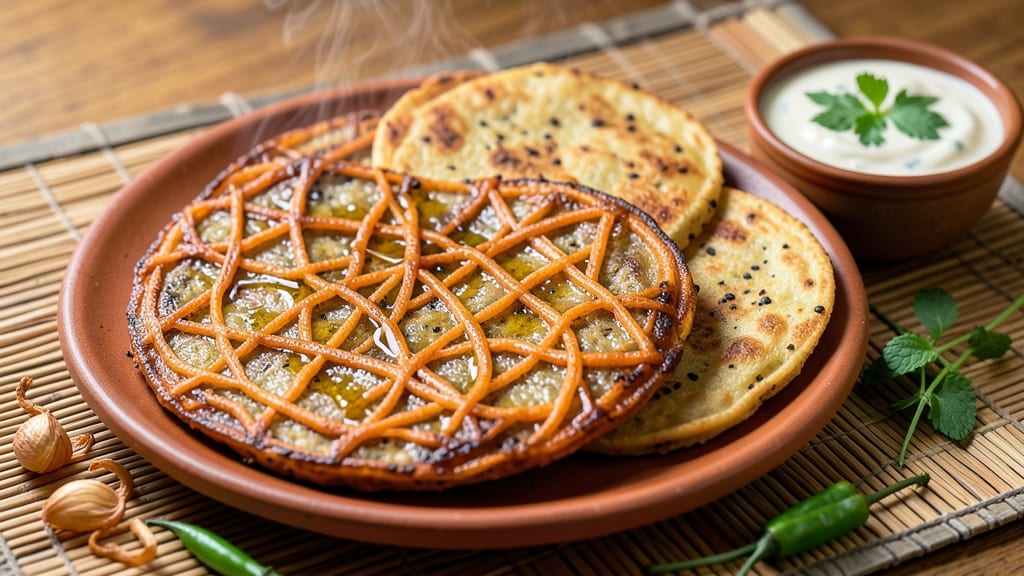
This sweet potato dosa recipe transforms humble ingredients into a crispy, lattice-patterned masterpiece that's as beautiful as it is delicious. The secret lies in blending roasted sweet potatoes with fermented rice and lentils, creating a batter that develops just enough tang to enhance the natural sweetness.
What makes this version special is the careful layering technique that produces those signature crispy edges and delicate lattice patterns—perfect for both visual appeal and satisfying crunch.
Fermentation is key here, as it lightens the batter and develops complex flavors that you won't find in instant mixes. The process is simple: mix, rest overnight, and cook fresh for that authentic restaurant-quality texture.
What you'll end up with is a dosa that's crispy on the outside, tender inside, and packed with the natural sweetness of roasted sweet potatoes—no artificial flavors needed. This recipe delivers restaurant-quality results at home, with minimal effort and maximum flavor impact.
The beauty of this sweet potato dosa lies in its versatility. Serve it with coconut chutney for a refreshing contrast or pair it with sambar for a complete South Indian meal.
The crispy lattice pattern not only looks impressive but also creates those irresistible crunchy pockets that make every bite satisfying. What's more, this recipe is naturally vegan-friendly, making it accessible for all dietary preferences while still delivering bold, authentic flavors.
Ready in about 30 minutes once the batter is prepared, this dosa recipe proves that homemade can be both impressive and effortless. The roasted sweet potatoes add natural sweetness and vibrant color, while the fermented batter ensures that perfect balance of crispiness and tenderness.
Whether you're serving it as a side dish or making it the star of your meal, this recipe will elevate your dining experience with minimal fuss.
Ingredients for sweet potato dosa
Roasted sweet potatoes meet fermented rice and lentils in this crispy lattice dosa masterpiece.
| Ingredient | Amount | Notes |
|---|---|---|
| Orange Sweet Potatoes 🍠 | 2 lbs | Peeled, cubed, medium size |
| White Rice 🍚 | 1 cup | Uncooked, jasmine preferred |
| Split Urad Dal (Black Gram) 🌾 | ½ cup | Uncooked, rinsed well |
| Extra-Virgin Coconut Oil 🫒 | ½ cup | For roasting sweet potatoes |
| Filtered Water 💧 | 1 ½ cups | Room temperature |
| Salt 🧂 | 1 ½ tsp | Diamond Crystal kosher |
| Fresh Fenugreek Leaves 🌿 | ¼ cup | Finely chopped, optional |
| Asafoetida (Hing) 🌶️ | ⅛ tsp | Pinch for fermentation |
| Coconut Chutney 🥥 | ½ cup | Store-bought or homemade |
| Sambar Powder 🌶️ | 1 tbsp | For filling, optional |
| Red Chili Powder 🌶️ | ½ tsp | Adjust to taste |
| Ghee Alternative (Vegan) 🫒 | 2 tbsp | Coconut oil or vegan ghee |
The sweet potatoes are the star—medium-sized oranges develop the perfect sweetness when roasted. Costco or Whole Foods often carry the best quality, with vibrant color and firm texture. Roast them until caramelized but still tender; over-roasting turns them dry. For the rice and lentils, jasmine rice adds subtle floral notes, while urad dal provides the essential protein and fermenting power. Soak both for 4-6 hours before blending—this ensures a smooth batter without grittiness. The asafoetida (hing) is non-negotiable; it adds that signature umami depth that separates homemade from instant mixes. If you can't find fresh fenugreek, dried works at one-third the amount, but fresh is ideal for that bright, slightly bitter kick.
No fresh fenugreek? Dried methi at one-third the amount works, though the flavor profile shifts slightly. The coconut oil for roasting should be extra-virgin—cheaper varieties can taste bitter and overpower the sweet potatoes. For the ghee alternative, coconut oil is the most authentic substitute, though vegan ghee blends work beautifully if you want that rich mouthfeel. The sambar powder can be homemade or store-bought—MTR or Everest brands are reliable if you're short on time. If you're making a large batch, double the batter ingredients and store the extra in an airtight container for up to 3 days in the fridge. The coconut chutney? Store-bought is fine, but homemade with young coconut and green chili takes it to the next level.
Ferment the batter overnight in a warm spot—top of the fridge works best. The ideal temperature is 80-85°F, which speeds fermentation to 8-12 hours. If your kitchen is cold, place the bowl near a sunny windowsill or use a proofing setting on your oven. Once ready, the batter should have light bubbles and a slightly tangy aroma. Use within 24 hours for peak crispiness. Leftover batter? Spread it thin on a parchment-lined tray, freeze, and pop into the toaster for quick dosas later. The roasted sweet potatoes keep for 5 days in the fridge, but reheat them gently to preserve their texture—microwaving makes them rubbery.
Why You'll Love This Recipe
- No-Fuss Fermentation: I swear by the overnight soak—just toss the urad dal and rice in water, forget about it, and wake up to a batter ready to go. The sweet potatoes steam in 15 minutes flat, so no waiting around for hours like some other dosas.
- Sweet & Savory Magic: That caramelized sweet potato flavor? It’s the star. The urad dal gives it a subtle tang, while the coconut oil adds a rich, buttery finish—like a hug for your taste buds. Honestly, the first bite makes you question why you ever ate plain dosas.
- Breakfast or Dinner Hero: Pack these for lunch or serve them crispy at brunch with coconut chutney—no one will judge. They reheat beautifully, too, so they’re my go-to when I’m too tired to cook after work. (Yes, even on a Tuesday night.)
- Pantry Staple Power: You’re already using rice and dal? Boom—half your ingredients are probably in your cupboard. Sweet potatoes are cheap, and coconut oil lasts forever. It’s the kind of recipe that turns a $5 grocery run into a full meal. My wallet thanks me.
Step-by-step instructions for sweet potato dosa with crispy lattice crunch
Master this technique for perfectly crisp dosa shells with an irresistible spiced filling.
Prepare the Sweet Potato Base for Fermentation
Preheat your oven to 400°F and line a baking sheet with parchment paper. Toss the 2 lbs peeled and cubed orange sweet potatoes with 0.5 cup extra-virgin coconut oil and spread them in a single layer on the sheet. Roast for 25-30 minutes until tender and caramelized at the edges—you'll know they're ready when a fork slides in easily.
While still warm, transfer the roasted sweet potatoes to a food processor and blend until smooth, adding 1.5 cups filtered water gradually as needed. The mixture should be thick but pourable. Let this cool to room temperature before proceeding. This step develops the natural sweetness that balances the savory filling.
Create the Fermented Batter
In a large mixing bowl, combine the 1 cup uncooked jasmine rice and 0.5 cup split urad dal. Add 1.5 tsp salt, 0.125 tsp asafoetida, and 0.25 cup finely chopped fresh fenugreek leaves if using. Gradually pour in the sweet potato puree while mixing until you achieve a smooth, thick batter with the consistency of pancake batter.
Cover the bowl with a damp kitchen towel and let it ferment at room temperature for 6-8 hours or overnight in the refrigerator. The ideal fermentation time is when the batter rises noticeably and develops a slightly tangy aroma. This fermentation creates the signature dosa crispiness and light texture. Don't skip this step—it's what transforms ordinary batter into extraordinary dosa.
Assemble the Spiced Filling
In a small bowl, mix together 0.5 cup coconut chutney, 1 tbsp sambar powder, and 0.5 tsp red chili powder with enough filtered water to create a thick, spreadable consistency. The filling should be vibrant orange from the chutney and have a slightly grainy texture from the sambar powder. Taste and adjust the spice level if needed—this is your flavor foundation.
Heat 2 tbsp ghee alternative in a small pan over medium heat until melted. Add the filling mixture and cook for 2-3 minutes until fragrant and slightly thickened. Remove from heat and let cool completely before using. This step enhances the flavors while ensuring the filling stays cohesive when layered in the dosa.
Shape and Cook the Lattice Dosa
Heat a non-stick skillet over medium-high heat until hot. Pour about ½ cup of the fermented batter into the center of the skillet and immediately spread it into a thin, even circle using the back of a spoon. The edges should be slightly thicker to create the lattice pattern.
When the edges begin to set and turn golden brown (about 1-2 minutes), use a skewer to create a lattice pattern by making small cuts from the center outward, leaving the edges intact. Quickly spread 1-2 tablespoons of the spiced filling over the center of the lattice. Cover with a lid and cook for another 2-3 minutes until the bottom is crispy and the filling is heated through.
Finish and Serve Immediately
Carefully flip the dosa using a spatula and cook the other side for 1-2 minutes until golden brown and crispy. The lattice should maintain its structure while the filling stays warm and gooey inside. Transfer to a serving plate and repeat with the remaining batter and filling.
Serve the dosa immediately while still hot and crispy. The contrast between the crispy lattice exterior and the warm, spiced filling creates an unforgettable textural experience. Each bite should deliver the caramelized sweetness of the roasted sweet potatoes balanced by the savory, slightly tangy filling. Pair with additional coconut chutney or a side of sambar for a complete meal.
Pro Tips For Making Sweet Potato Dosa
- STEAM NOT BOIL: Sweet potatoes lose their texture fast—steaming them for 15-18 minutes (until a knife slides in easily) preserves their natural sweetness and prevents mushiness. I learned this the hard way after making a gummy dosa that stuck to the tawa like glue.
- SOAK URAD TWICE: Split urad dal needs a good soak, but don’t rush it: soak for 4-5 hours first, drain, then re-soak for 1 hour before grinding. This removes excess starch, giving you a smoother batter that doesn’t turn gluey when cooking. (Yes, even if you’re impatient like me.)
- HIGH HEAT, LOW PRESSURE: Crank the tawa to max heat before pouring the batter—you want those edges to crisp instantly. Then, gently press the dosa with a spatula once while cooking, not repeatedly. Over-flipping or pressing too much makes them dense instead of light.
- COCONUT OIL TRICK: Use extra-virgin coconut oil only for the final cooking—its smoke point is lower than regular oil, so it adds aroma without burning. Keep a small bowl nearby to drizzle just before flipping; the dosa will sizzle and get that golden crispness faster. (Skip this, and you’ll end up with a bland, soggy edge.)
Common mistakes when making great sweet potato dosa
Over-Fermented Batter
If your batter smells overly sour or has a strong yeasty aroma after fermentation, it's overdone. This happens when left too long in warm conditions or when using too much fenugreek. The result? A bitter, rubbery dosa that lacks crispiness.
I’ve learned to set a timer for 8-12 hours max—any longer and the flavor turns off-putting. To fix it, blend in 1 tbsp fresh coconut milk or ½ tsp sugar to balance the tang before cooking. 🌱
Uneven Cooking
Dosas that cook unevenly—some parts crispy, others soggy—usually mean inconsistent heat or improper batter thickness. Always use a non-stick skillet (I swear by GreenPan) and maintain medium-high heat throughout. If your dosa puffs too much, your batter is too thin; if it’s dense, add 1 tbsp water to adjust.
Spread the batter in a thin, even layer—about ⅛-inch thick—for consistent cooking. ⚡
Lattice Collapsing
The lattice pattern is the star, but it often collapses if the batter isn’t set enough when you cut it. Let the edges brown for 1-2 minutes before making cuts—this gives the structure time to firm up.
Use a skewer or toothpick for precision, and avoid pressing too hard. If the lattice still falls apart, reduce the filling amount to 1 tbsp max and cover immediately to stabilize it. 💡
Filling Too Dry
A dry, crumbly filling ruins the creamy texture you’re aiming for. The trick is to cook it just until fragrant—2-3 minutes max—and let it cool completely before assembling. If it’s too thick, thin it with 1 tsp water or a splash of coconut milk.
Pro tip: Warm the filling slightly before spreading to ensure it stays gooey inside the dosa. 🥥
Skipping the Rest
Ever flipped a dosa too soon and had the filling spill out? That’s because the batter needs time to set after shaping. After creating the lattice, let it rest for 30 seconds before adding filling—this gives the structure a chance to firm up.
Covering with a lid for 2 minutes steams the filling gently, keeping it cohesive. Patience here makes all the difference! 🕒
Using Cold Batter
Cold batter straight from the fridge won’t spread evenly and can make your dosa dense and flat. Let the batter sit at room temperature for 20-30 minutes before cooking—this makes it easier to spread and ensures even cooking.
If you’re short on time, place the bowl in warm water for 5 minutes to speed up the process. Trust me, your dosas will thank you! 🔥
Nutrition facts
Frequently asked questions
Can I make sweet potato dosa without fermentation?
Fermentation is key for authentic texture, but you can make a quick version by mixing the batter with 1 tsp baking soda and cooking immediately. The result will be crispy but lack the light, tangy flavor. For best results, ferment for at least 4-6 hours—this develops the signature dosa crispiness and reduces bitterness from the sweet potatoes.
How do I fix batter that's too thick or too thin?
If your batter is too thick, add 1-2 tbsp water at a time until it reaches pancake consistency. Too thin? Mix in 1-2 tbsp rice flour to thicken. The perfect batter should coat the back of a spoon but still flow smoothly when poured. Test by spreading a small amount on a hot pan—it should sizzle immediately and hold its shape.
What's the best way to reheat leftover sweet potato dosa?
Reheat in a dry skillet over medium heat for 1-2 minutes per side—this restores crispiness. For extra crunch, place in a 350°F oven for 5 minutes with a metal rack above the baking sheet to crisp the bottom. Microwaving makes them soggy, so avoid it. Store leftovers in an airtight container for up to 2 days in the fridge.
Can I substitute regular potatoes for sweet potatoes?
Regular potatoes won't work—they lack the natural sweetness and vibrant color that makes this recipe special. The caramelization from roasting sweet potatoes creates the perfect balance with the savory filling. If you must substitute, try purple sweet potatoes for a different hue, but orange provides the best flavor. For extra richness, add 1 tbsp coconut sugar to the batter.
How do I make this dosa gluten-free?
Replace the jasmine rice with 1 cup gluten-free rice blend and ensure your urad dal is certified gluten-free. For extra binding power, add 2 tbsp gluten-free oat flour to the batter. Test your ingredients first—some gluten-free flours can make the batter too dense. The lattice technique works the same way, but gluten-free batters may need slightly more water for proper spread.