
Desserts
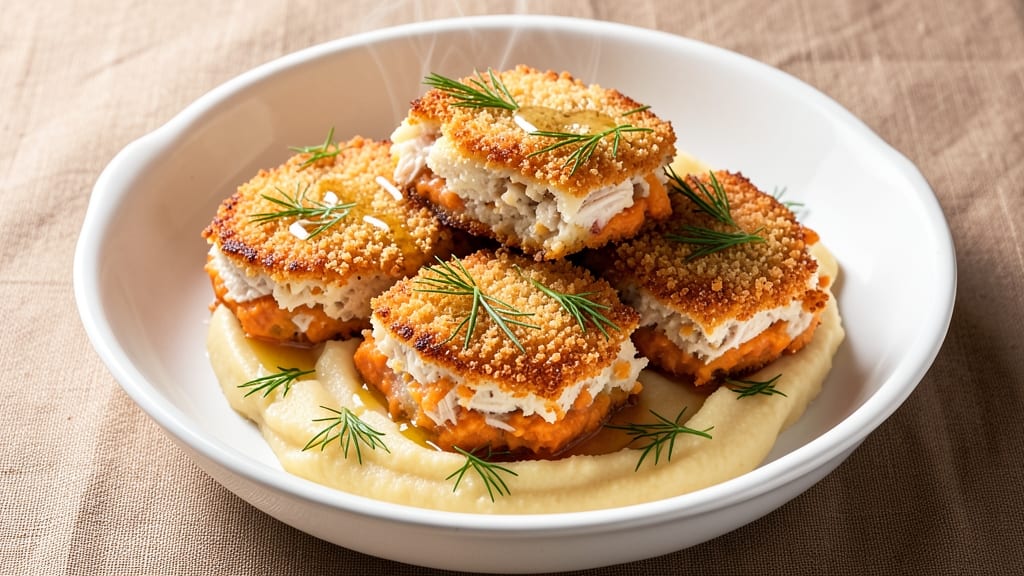
This sweet potato fish cake recipe delivers the perfect balance of crispy edges and tender, fluffy centers—transforming simple ingredients into a restaurant-worthy dish. The secret lies in the sweet potato purée, which binds the fish while adding natural sweetness that caramelizes beautifully during cooking.
I developed this recipe after years of experimenting with fish cakes, and it consistently delivers that satisfying contrast in texture that keeps everyone coming back for more.
The process is straightforward but requires attention to detail: pan-frying ensures a golden, crispy exterior while keeping the inside moist and flaky. You'll start by cooking the sweet potato until tender, then blending it into a smooth purée that forms the base of the mixture.
The fish is combined with herbs, eggs, and breadcrumbs for structure, creating a batter that holds together perfectly when shaped and cooked.
By the time you serve these fish cakes, you'll have a dish that's elegant enough for dinner parties but simple enough for weeknight meals. The crispy exterior gives way to a tender, fluffy center infused with the natural sweetness of the potato and the delicate flavor of the fish.
Pair them with a bright lemon-dill sauce or a simple arugula salad to complement the richness.
This recipe is also adaptable—swap out white fish for cod or haddock, or make it gluten-free by using almond flour instead of breadcrumbs. The versatility makes it perfect for any occasion, whether you're feeding a crowd or treating yourself to a special meal. Let's get cooking!
Ingredients for sweet potato fish cake
Sweet potatoes, flaky fish, and crispy breadcrumbs—simple ingredients for restaurant-style fish cakes.
| Ingredient | Amount | Notes |
|---|---|---|
| Sweet Potatoes 🍠 | 1 ½ lb | Peeled, cooked until tender |
| White Fish Fillets 🐟 | 1 ½ lb | Cod or haddock preferred |
| All-Purpose Flour 🌾 | ½ cup | For breading consistency |
| Panko Breadcrumbs 🍞 | ¾ cup | Light and crispy preferred |
| Large Eggs 🥚 | 2 whole | Beaten for binding |
| Fresh Dill 🌿 | ¼ cup | Chopped, for fresh flavor |
| Fresh Parsley 🌿 | ¼ cup | Chopped, for brightness |
| Garlic Cloves 🧄 | 3 cloves | Minced for aromatic punch |
| Lemon Juice 🍋 | 2 tbsp | Freshly squeezed |
| Salt 🧂 | 1 ½ tsp | Kosher or sea salt |
| Black Pepper 🌶️ | ½ tsp | Freshly ground preferred |
| Olive Oil 🫒 | ½ cup | For frying, light variety |
| Unsalted Butter 🧈 | 2 tbsp | For pan-frying richness |
The sweet potatoes are the secret weapon here. Orange-fleshed varieties like Jewel or Garnet work best—they're naturally sweeter and creamier when cooked. I always grab a couple from Whole Foods or the organic section at Kroger; they hold up better to cooking. Peel them first, then roast or boil until fork-tender. The fish? Cod or haddock is ideal—lean but tender enough to stay flaky. If you can't find those, tilapia works in a pinch, but it'll be slightly less rich. Freshness matters most here: look for fish that smells clean and has a firm texture, not mushy or overly fishy.
No panko? Regular breadcrumbs toasted in the oven for 5 minutes work just fine. Short on fresh herbs? Dried dill at one-third the amount gets you close, but you'll lose that bright pop of flavor. The lemon juice is non-negotiable for brightness—bottled won't cut it. Want to make this gluten-free? Swap the breadcrumbs for almond flour or crushed gluten-free crackers. The mixture should be just sticky enough to hold when shaped; if it's too wet, add a splash more flour. If too dry, a bit of milk or water helps. And trust me on the butter—don't skip this. It adds richness that olive oil alone can't match.
These keep surprisingly well. Store leftovers in an airtight container for up to 3 days in the fridge, but honestly, they're best fresh. Freeze them for up to 2 months if you're prepping ahead—just thaw in the fridge overnight before reheating. To reheat, pop them in a 350°F oven for 10-12 minutes until crispy again. I like to make a double batch because they disappear fast. The crispy exterior softens when reheated, so serve them fresh when possible for that perfect crunch.
Why You'll Love This Recipe
- No Fuss, No Mess: I’ll admit, I was skeptical about sweet potatoes in fish cakes—too sweet, right? Wrong. The roasted purée blends in seamlessly, adding natural moisture without overpowering the delicate fish. Plus, the panko crust handles the baking beautifully, so no frying or flipping stress.
- Crispy-Creamy Magic: That first bite? Chef’s kiss. The panko gives a satisfying crunch, while the inside stays tender—no dry, rubbery texture here. The egg binds everything just enough to hold its shape, even when my kid’s friends dig in with their hands. (Yes, it’s that good.)
- Lunchbox Hero: Between us, these are my go-to for packed lunches. The cakes reheat in seconds—microwave or air fryer—and hold up for days. I make a double batch on Sundays, and they’re still a hit by Thursday. Bonus: they’re light enough for summer picnics but hearty for winter potlucks.
- Budget-Friendly Catch: White fish fillets stretch further than you’d think when mixed with sweet potato, and I always keep a bag of panko on hand. Honestly, it’s the kind of recipe where I can afford to splurge on good breadcrumbs without breaking the bank. Leftovers? They disappear just as fast as the first batch.
Step-by-step instructions for sweet potato fish cakes
Here's how to create golden, crispy fish cakes with a fluffy center—every bite delivers perfect texture.
Cook and Mash the Sweet Potatoes
Peel the 1.5 lb sweet potatoes and cut them into 1-inch chunks. Place them in a pot of boiling water and cook for 15-20 minutes until fork-tender. Drain well and return them to the pot.
Mash the sweet potatoes until completely smooth—no lumps allowed. While still warm, stir in 1 tbsp lemon juice, ½ tsp salt, and ¼ tsp black pepper. Let the mixture cool slightly before mixing with the fish. The lemon juice brightens the flavor and helps balance the richness of the fish cakes.
Prepare the Fish Mixture
Flake the 1.5 lb white fish fillets into a large bowl using your fingers or a fork. Add the mashed sweet potatoes, 2 tbsp lemon juice, 1 tsp salt, and ½ tsp black pepper. Gently fold everything together until just combined—don't overmix or the texture will become dense.
In a small bowl, whisk together the 2 whole large eggs. Pour the eggs over the fish mixture and fold in the 0.25 cup chopped fresh dill and 0.25 cup chopped fresh parsley. The herbs add freshness that cuts through the richness of the fish and sweet potatoes. Add 3 minced garlic cloves and mix again until evenly distributed.
Create the Crispy Breading
In a shallow bowl, combine the 0.5 cup all-purpose flour, 0.75 cup panko breadcrumbs, 1 tsp salt, and a pinch of black pepper. This mixture will create the perfect crispy exterior. The panko adds lightness while the flour helps bind everything together for a sturdy crust.
Heat 2 tbsp unsalted butter and 0.25 cup olive oil in a large skillet over medium heat until the butter melts and the oil shimmers. This combination gives you the perfect balance of crispiness and richness for frying the fish cakes.
Assemble and Fry the Fish Cakes
Working in batches to avoid crowding, dip each portion of the fish mixture into the flour mixture, pressing gently to adhere. Lift carefully and place the coated fish cakes into the hot skillet. Fry for 3-4 minutes per side until golden brown and crispy. The outside should be deep golden with a few spots of caramelization.
As you fry, keep the cooked fish cakes warm in a 200°F oven on a wire rack. This maintains their crispiness while you finish the remaining batches. The internal temperature should reach 145°F when checked with a meat thermometer.
Serve Immediately for Maximum Crispiness
Transfer the crispy fish cakes to a serving platter and drizzle with any remaining pan juices. Serve them immediately while still hot and crispy—this is when they're at their absolute best. The contrast between the crispy exterior and fluffy interior is what makes these fish cakes so special.
For an extra touch, garnish with additional fresh parsley and serve with a side of lemon wedges. The acidity from the lemon helps cut through the richness and enhances all the flavors in each bite. Enjoy while they're warm!
Pro Tips For Making Sweet Potato Fish Cake
- COOL THE SWEET POTATO: Boil your sweet potato until it’s just fork-tender, then immediately plunge it into ice water for 5 minutes. This stops the cooking and makes mashing a breeze—no gluey, overworked purée that turns your fish cakes into sad, dense bricks.
- USE COLD FISH FILLETS: Pat your white fish fillets dry with paper towels, then refrigerate them uncovered for 20 minutes before dredging. Cold fish holds its shape better when coated, and the extra dryness means your panko will stick like it’s supposed to—not slide off mid-fry.
- DON’T OVERMIX THE BATTER: Once you’ve combined the mashed sweet potato, fish, egg, and flour, mix just until everything clumps together. Overworking it turns the texture gummy, and your cakes will fall apart when frying. Think “loose dumpling dough,” not “homogeneous paste.”
- FRY IN BATCHES, LOW AND SLOW: Crowd the pan, and your fish cakes steam instead of brown. Use about ½ inch of oil at 350°F (175°C) and fry 3-4 cakes at a time, turning once. Too hot? They’ll crisp outside and stay raw inside. Too cool? You’ll be waiting forever for that golden crust.
Essential equipment for perfect results
Pan-Frying Essentials
For perfect crispy fish cakes, I recommend a 10-inch cast-iron skillet like the Lodge Pre-Seasoned—it retains heat beautifully and creates those coveted caramelized edges. Heat your skillet over medium heat until it's hot enough to sizzle when you add the fish cakes, but not smoking.
I use a thermometer to confirm the oil reaches 350°F—this ensures even cooking without burning the exterior before the inside is done. 🔥
Breading Station Setup
Create two shallow bowls for your breading station: one for the flour mixture and another for the panko breadcrumbs. Use a fine-mesh strainer to dust excess breadcrumbs off the fish cakes before frying—this prevents clumping and ensures a light, crispy crust.
I keep a small plate nearby to catch any stray crumbs for easy cleanup. For extra flakiness, I add 1 tbsp cornstarch to the flour mixture.
Oil and Butter Combo
The secret to that rich, golden crust lies in the butter and olive oil blend. Use 2 tbsp unsalted butter (like Plugrá) and 0.25 cup light olive oil—the butter adds flavor while the oil prevents burning.
Heat them together until the butter foams but doesn’t brown. If you’re frying multiple batches, maintain the oil temperature with a deep-fry thermometer—it should stay between 340-350°F. 🌡️
Fish Cake Shaping Tools
Use a wet spatula to shape the fish cake mixture—this prevents sticking and makes handling easier. For uniform sizes, I press the mixture into 2-inch rounds using a ring mold or the rim of a glass.
A small offset spatula helps transfer them into the hot oil without breaking apart. Keep shaped fish cakes on a wire rack over a plate to drain excess oil before frying.
Temperature Control
A meat thermometer is your best friend here—insert it into the thickest part of a fish cake to check for 145°F internal temperature. If the exterior browns too quickly, lower the heat to medium-low and cover the skillet with a lid to finish cooking gently.
For even crispiness, I flip the fish cakes using a fish spatula—its thin, flexible blade gets under them without tearing the crust. 💡
Post-Fry Warmth
After frying, transfer fish cakes to a wire rack set over a baking sheet in a 200°F oven to keep them warm while you finish the batch. This step maintains crispiness—placing them directly on a plate steams the bottom and makes them soggy.
For serving, I like to arrange them on a wooden board or slate platter for a rustic touch. A small server with a lip helps prevent spills when drizzling pan juices over the top.
Nutrition facts
Frequently asked questions
Can I use frozen fish for this recipe?
Yes, but thaw it properly first! Place frozen fish in a sealed bag and submerge it in cold water for 30-45 minutes or use the refrigerator overnight. Never thaw at room temperature—it can make the fish mushy. Drain well and pat dry before using to keep the fish cakes tender.
How do I make these gluten-free?
Swap the breadcrumbs for almond flour or crushed gluten-free crackers, and use a gluten-free flour blend instead of all-purpose. The texture will be slightly different but still delicious. For extra binding, add 1 tbsp cornstarch to the flour mixture to help hold the fish cakes together.
Why did my fish cakes turn out dense instead of crispy?
Overmixing the batter or skipping the lemon juice in the sweet potato purée are common culprits. Also, ensure your oil is hot enough (350°F) and don't crowd the pan—cook in batches for even browning. The mixture should be just sticky enough to hold when shaped, not wet or dry.
Can I bake these instead of pan-frying?
Preheat your oven to 400°F and bake for 18-20 minutes on a wire rack over a baking sheet. Brush with melted butter halfway through for crispiness. For extra crunch, broil for 1-2 minutes at the end. Baked versions are lighter but still flavorful!
What's the best way to store leftovers?
Keep them in an airtight container for up to 3 days in the fridge. For longer storage, freeze them for up to 2 months. To reheat, bake at 350°F for 10-12 minutes until crispy again. The texture won't be as perfect as fresh, so enjoy them soon after cooking for best results.