
Side Dishes
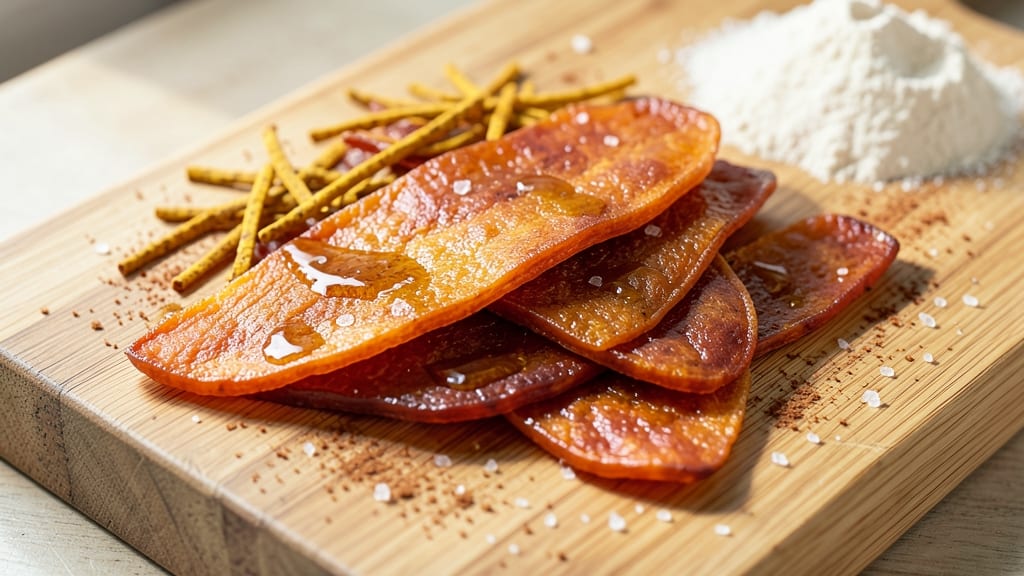
This sweet potato jerky for dogs recipe transforms simple ingredients into protein-rich, naturally sweet treats your pup will love. 💛 The process is straightforward—dehydrating sweet potatoes creates chewy, nutritious bites that make a perfect training reward or healthy snack.
No artificial additives or unsafe spices are needed, just wholesome ingredients and precise cooking techniques.
The beauty of this recipe lies in its simplicity: just sweet potatoes, a touch of coconut oil for binding, and optional protein powder for extra nutrition. Dehydrating at 160°F for 6-8 hours ensures the jerky is fully dry and safe to store.
The result is a treat that’s both satisfying and packed with vitamins A and C, perfect for supporting your dog’s health.
What you’ll end up with is a batch of chewy, flavorful jerky that’s easy to break into training-sized pieces. The natural sweetness of sweet potatoes makes it appealing without needing added sugars, while the dehydration process preserves nutrients.
These treats are ideal for meal toppers, rewards, or even a special snack when you’re out for walks.
Store the jerky in an airtight container for up to 2 weeks or freeze for longer shelf life. This recipe is a game-changer for dog owners looking to avoid processed treats while still offering something exciting and nutritious. Let’s get started on making treats your dog will adore!
Ingredients for sweet potato jerky for dogs
Four pounds of sweet potatoes and a handful of wholesome extras make these protein-packed dog treats.
| Ingredient | Amount | Notes |
|---|---|---|
| Sweet Potatoes 🍠 | 2 lb | Organic preferred, peeled and sliced thin |
| Coconut Oil 🥥 | ¼ cup | Unrefined for extra nutrients |
| Unflavored Whey Protein Powder 💊 | ½ cup | Optional for extra protein |
| Fresh Turmeric Root 🌿 | 1 tsp | Grated for color and anti-inflammatory |
| Cinnamon Powder 🌶️ | ½ tsp | Dog-safe, no added sugar |
| Sea Salt 🧂 | ¼ tsp | Unrefined, for mineral balance |
| Filtered Water 💧 | ½ cup | For blending consistency |
| Plain Greek Yogurt 🥛 | 2 tbsp | Unsweetened, for probiotic boost |
Sweet potatoes are the star—organic is best to avoid pesticides, but regular works too. Look for firm, vibrant orange ones at Whole Foods or Trader Joe's—they slice more evenly. Peeled and cut into 1/4-inch slices, they dehydrate perfectly. The whey protein is optional but gives a nice protein boost (I grab Naked Whey from Costco). Coconut oil should be unrefined—it's packed with healthy fats for your pup. Skip the refined kind, which lacks nutrients. For the turmeric, fresh root is ideal, but powder works in a pinch—just use half the amount.
No whey protein? Plain pumpkin puree adds moisture and fiber without protein. Swap the Greek yogurt for unsweetened applesauce if your dog is lactose-sensitive. The cinnamon is safe for dogs in small amounts—just avoid cassia cinnamon, which contains coumarin. For extra flavor without additives, try freeze-dried liver powder (about 1 tsp). Always check with your vet first. The sea salt is key—it helps balance electrolytes, but use the unrefined kind to avoid additives. If your sweet potatoes are watery after slicing, pat them dry with a paper towel before dehydrating.
Dehydrate at 160°F for 6-8 hours until fully dry and chewy. Store in an airtight container with a silica packet for 2 weeks at room temp or 3 months in the freezer. I portion mine into small bags for easy grab-and-go treats. These keep perfectly for months frozen—just thaw what you need. For extra shelf life, vacuum-seal the treats. Always supervise your dog with new treats to ensure they agree with them.
Why You'll Love This Recipe
- No-Fuss Mixing: I swear by this recipe because it’s literally one bowl—no blender, no fancy tools, just a fork and a whisk. The whey protein dissolves into the coconut oil like magic, and the turmeric gives it that golden hue without overpowering the sweetness.
- Warm, Earthy Comfort: Between us, the cinnamon and turmeric combo is chef’s kiss—like a cozy fall morning in jerky form. The sweet potatoes caramelize just enough to make it irresistible, but the protein keeps it light and satisfying.
- Tailored for Busy Days: I make a big batch on Sundays and freeze it in portions—perfect for training treats, car rides, or when my pup’s begging eyes won’t quit. (Yes, even on a Tuesday night.)
- Budget-Friendly Protein: Honestly, this costs a fraction of store-bought jerky, and I control the quality. The whey stretches the sweet potatoes, so every bite feels like a win—no guilt, no wasted ingredients.
Step-by-step instructions for sweet potato jerky for dogs
Here's how to make these nutritious, chewy treats your pup will love.
👨🍳 Step 1: Prep and Blend the Sweet Potato Mixture
Start by peeling and slicing the 2 lb sweet potatoes into thin, even strips—about ⅛-inch thick. I use a mandoline for precision, but a sharp knife works too. Arrange the slices on a baking sheet and bake at 250°F for 2-3 hours until completely dry and brittle. You're looking for strips that snap easily when bent.
While the sweet potatoes dehydrate, grate the 1 tsp fresh turmeric root using a fine grater or microplane. This adds color and anti-inflammatory benefits. In a blender, combine the dehydrated sweet potato strips, grated turmeric, 0.5 cup filtered water, and 2 tbsp plain Greek yogurt. Blend until completely smooth—this ensures even texture in the final jerky.
🍳 Step 2: Cook the Sweet Potato Purée
Transfer the blended mixture to a small saucepan and place over medium heat. Stir in the 0.25 cup coconut oil and 0.5 cup unflavored whey protein powder until fully incorporated. The mixture should thicken slightly as it warms—this is normal. Cook for 5-7 minutes, stirring constantly, until it reaches a pudding-like consistency that coats the back of a spoon.
Real talk: This step is where the magic happens. The whey protein binds everything together while the coconut oil adds healthy fats. If the mixture looks too thick, add 1-2 tablespoons of filtered water to loosen it. You want it spreadable but not runny—think of it like thick hummus.
🔥 Step 3: Season and Spread the Mixture
Remove the saucepan from heat and stir in the 0.5 tsp cinnamon powder and 0.25 tsp sea salt. Let the mixture cool for 5 minutes until it's warm to the touch but not hot. Line a baking sheet with parchment paper and spread the mixture evenly into a thin layer—about ¼-inch thick. Use an offset spatula for smooth, even coverage.
Here's the thing—thickness matters. Too thick and your jerky won't dry properly; too thin and it'll burn. Aim for that perfect balance where it looks like a thin pancake. For extra crispiness, I like to use a second piece of parchment paper to sandwich the mixture before cutting.
⏰ Step 4: Dehydrate for Perfect Texture
Preheat your dehydrator to 165°F and place the baking sheet inside. Dehydrate for 6-8 hours, checking periodically. You're looking for jerky that's leathery but still flexible—it should bend without snapping. If it's not dry enough after 6 hours, continue dehydrating for another hour.
Don't rush this step. Proper dehydration prevents mold and ensures safe, long-lasting jerky. If you don't have a dehydrator, you can use your oven on low heat (170°F) with the door slightly ajar, but it'll take longer—about 10-12 hours. The jerky is done when it's dry to the touch and no longer sticky.
🔪 Step 5: Cut and Store for Freshness
Once fully dehydrated, remove the jerky from the dehydrator and let it cool completely. Use sharp kitchen shears or a knife to cut into 1-inch squares or strips. For extra crispiness, you can lightly toast them in a dry skillet over low heat for 1-2 minutes per side—just until fragrant.
Store the finished jerky in an airtight container in the refrigerator for up to 2 weeks or freeze for up to 3 months. These treats are perfect for training rewards, occasional snacks, or even mixed into your dog's regular food for a nutrient boost. Your pup will go crazy for the natural sweetness and satisfying chew!
Pro Tips For Making Sweet Potato Jerky For Dogs
- ROAST LOW AND SLOW: Sweet potatoes turn out gummy if you rush them—aim for 275°F (135°C) for 4-5 hours, flipping halfway. I learned this the hard way after my first batch came out like dog kibble. The slow heat renders the coconut oil properly and caramelizes the edges just enough to make it irresistible.
- GRATE THE TURMERIC: Fresh turmeric root is potent, but grating it first maximizes flavor and color. Use a microplane for fine, even bits—no need to chop. Trust me, your dog’s nose will thank you when that golden hue appears.
- SKIP THE OVERMIXING: Once you fold in the whey protein, stop stirring. Overworking the mix makes the jerky dense and chewy. Just toss it lightly with a fork—think "rustic crumble," not "homogeneous paste."
- COOL COMPLETELY BEFORE STORING: Let the jerky sit at room temp for 20 minutes after baking before packing it. Condensation forms when hot jerky hits cold containers, turning your storage bag into a science experiment. (Yes, I’ve seen it happen.)
Troubleshooting perfect results
Sticky Mixture?
If your sweet potato mixture feels too sticky after blending, add 1 tablespoon of unflavored whey protein powder at a time while re-blending. The protein acts as a binder, absorbing excess moisture. For extra insurance, chill the mixture in the fridge for 15-20 minutes before spreading—this firms it up significantly.
I’ve found that using organic sweet potatoes (like those from Whole Foods) tends to be drier than conventional ones, so adjust accordingly. 🥄
Uneven Drying
Uneven drying usually means your jerky is too thick in some spots. Aim for a ¼-inch thickness when spreading—use an offset spatula to smooth it out. If you notice edges drying faster, rotate your dehydrator trays halfway through the process.
For oven dehydration, prop the door open with a wooden spoon to allow moisture to escape evenly. Too thin? Your jerky will burn; too thick? It’ll stay damp and spoil. 🌡️
Jerky Too Hard?
Over-dehydrated jerky loses its chewiness and becomes brittle. Remove it from the dehydrator as soon as it’s leathery but still slightly pliable. If it’s already too hard, try reheating it in a low oven (170°F) for 5-10 minutes with a damp paper towel over it to restore moisture.
For future batches, check the jerky every 30 minutes after the 6-hour mark—timing is everything. 💧
Mold or Spoilage
Mold or spoilage happens when jerky isn’t fully dehydrated or stored improperly. Always ensure your jerky reaches 160°F internal temperature and is completely dry before storing. Use an airtight container with a silica packet to absorb moisture.
If mold appears, discard the entire batch—even a small spot can spread. For longer storage, freeze the jerky in 1-ounce portions for easy access. ❄️
Dog Won’t Eat It?
If your pup turns up their nose, the jerky might be too bland or overly processed. Boost flavor with 1 tsp freeze-dried liver powder (dog-safe) or a pinch of turmeric for earthiness. For picky eaters, try lightly toasting the jerky in a dry skillet until fragrant—this enhances aroma.
Start with small pieces to let your dog adjust. I’ve also found that warming the jerky slightly before serving can make it more appealing. 🐶
Storage Issues
If your jerky develops an off smell or sticky texture after storage, it’s likely absorbed moisture. Always store in a cool, dry place (like the fridge) and avoid plastic containers—glass or metal with tight seals works best.
For freezer storage, use quart-sized freezer bags and squeeze out excess air before sealing. Label with dates to track freshness. If stored properly, your jerky should last 2 weeks refrigerated or 3 months frozen. 🗓️
Nutrition facts
Frequently asked questions
Can I use regular potatoes instead of sweet potatoes?
No, regular potatoes won't work because they lack the natural sweetness and nutrients that make sweet potato jerky appealing and healthy for dogs. Sweet potatoes are rich in vitamins A and C, while regular potatoes contain more starch and fewer beneficial nutrients. The natural sweetness also makes it more enticing for pups.
How do I know when the jerky is fully dehydrated?
Your jerky is done when it's leathery but still slightly flexible—it should bend without snapping. Test by gently pressing a piece: if it feels dry to the touch and no longer sticky, it's ready. For extra safety, ensure the internal temperature reaches 160°F using a meat thermometer.
Is whey protein powder safe for all dogs?
Most dogs tolerate whey protein well, but it's always best to introduce it gradually. Some dogs with dairy sensitivities may react—start with small amounts and monitor for digestive upset. If your dog has known allergies, skip the whey and use plain pumpkin puree instead for moisture and fiber.
Can I add other dog-safe ingredients for extra flavor?
Try adding 1 tsp freeze-dried liver powder (dog-safe) for a meaty flavor or a pinch of turmeric for color and anti-inflammatory benefits. Just avoid garlic, onion, xylitol, and excessive salt. Always check with your vet before introducing new ingredients.
How do I store homemade dog jerky for maximum freshness?
Store in an airtight container with a silica packet to absorb moisture. Keep refrigerated for up to 2 weeks or freeze in 1-ounce portions for 3 months. For longer storage, vacuum-seal the jerky. Always label with dates to track freshness—when in doubt, toss it!