
Soups & Stews
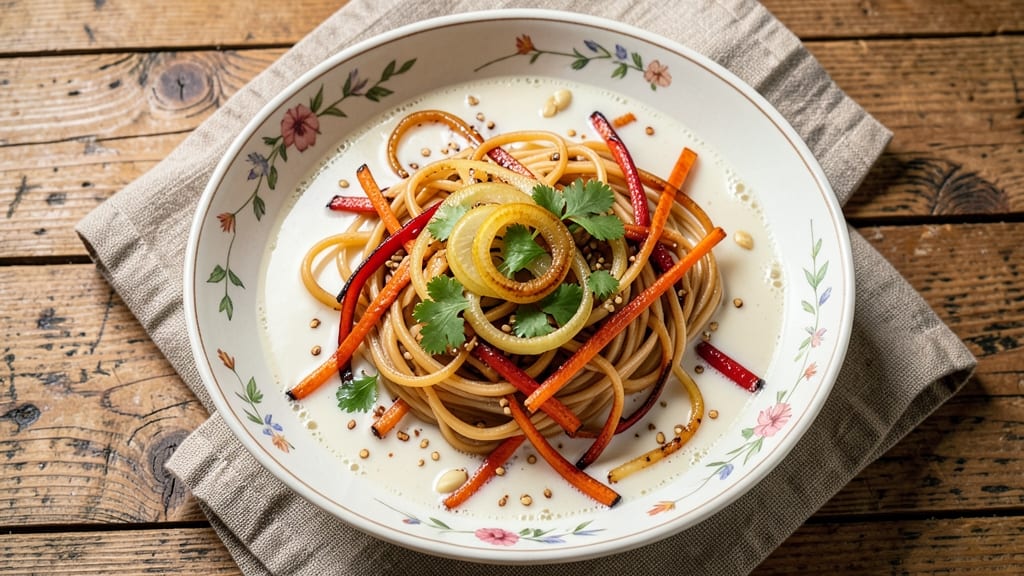
This sweet potato noodles soup recipe transforms humble ingredients into a velvety, comforting bowl that tastes like autumn in every spoonful. The secret lies in roasting sweet potatoes and vegetables until caramelized, then spiralizing them into delicate, silky strands that dissolve into a rich, creamy broth.
What starts as simple prep becomes a restaurant-worthy dish with layers of texture and depth—no fancy techniques required.
The beauty of this soup is its versatility: the base is vegetarian-friendly, but you can easily add protein like tofu, shrimp, or chicken for extra heartiness. A blend of roasted sweet potatoes, zucchini, and carrots creates those signature noodle-like swirls, while a creamy coconut or cashew broth ties everything together.
The result? A dish that’s both elegant and effortless, perfect for chilly evenings or meal prep.
What makes this recipe stand out is the balance of creamy broth and tender, slightly chewy noodles—each bite delivers a harmonious mix of sweetness and savory depth.
The roasting step caramelizes the vegetables, intensifying their natural flavors, while the spiralized strands hold their shape just long enough to create that satisfying "al dente" feel before melting into the broth.
Serve it garnished with fresh herbs, crispy fried shallots, or a drizzle of chili oil for a touch of heat. This soup is as nourishing as it is delicious, making it a go-to for quick weeknight dinners or cozy gatherings. Let’s get cooking!
Ingredients for sweet potato noodles soup
Roasted vegetables, creamy coconut milk, and silky sweet potato strands create this restaurant-worthy vegetarian soup.
| Ingredient | Amount | Notes |
|---|---|---|
| Medium Sweet Potatoes 🍠 | 2 whole | Organic preferred, skin-on |
| Zucchini 🥒 | 1 medium | Seeded and trimmed |
| Carrots 🥕 | 2 medium | Organic preferred, peeled |
| Yellow Onion 🧅 | 1 whole | Yellow or red variety |
| Garlic Cloves 🧄 | 4 cloves | Freshly minced |
| Coconut Milk 🥥 | 1 can (13.5 oz) | Full-fat for creaminess |
| Vegetable Broth 💧 | 4 cups | Low-sodium preferred |
| Fresh Ginger 🌿 | 1 inch | Peeled and sliced thin |
| Extra-Virgin Olive Oil 🫒 | 2 tbsp | For roasting vegetables |
| Salt 🧂 | 1 ½ tsp | Diamond Crystal kosher |
| Black Pepper 🌶️ | ½ tsp | Freshly ground |
| Fresh Thyme Leaves 🌿 | ¼ cup | Chopped for garnish |
| Lemon Juice 🍋 | 1 tbsp | Freshly squeezed |
| Sesame Oil 🫒 | 1 tsp | For finishing |
| Crispy Fried Shallots 🧅 | 2 tbsp | Store-bought or homemade |
The sweet potatoes are the heart of this dish—organic varieties like Beauregard have the best texture and sweetness. Whole Foods or local farmers' markets often carry them year-round, but check the produce section for vibrant, firm tubers. Zucchini and carrots should be fresh and firm—avoid any with soft spots or wilting. For the coconut milk, full-fat canned varieties like Thai Kitchen or Native Forest provide the richest creaminess. If you're using pre-cut sweet potato noodles, ensure they're freshly spiralized for the best texture, or make your own with a spiralizer.
No fresh thyme? Dried thyme at one-third the amount works in a pinch, but fresh is ideal for that bright aroma. Short on coconut milk? Cashew cream or blended silken tofu can mimic the creaminess, though the flavor will differ slightly. For extra depth, add a splash of vegetable-based fish sauce (like Red Boat) for umami. The fried shallots can be swapped for toasted sesame seeds or crushed peanuts if you're avoiding fried elements. Always taste the broth before blending—adjust seasoning with Diamond Crystal kosher salt or a pinch of white miso paste for complexity.
Roasted vegetables keep in the fridge for 5 days in an airtight container, while the broth can be stored separately for up to 1 week. Reheat gently on the stove—never microwave—to preserve the silky texture. For meal prep, assemble the soup fresh and store components separately. The crispy fried shallots stay crunchy for 3 days if kept in a sealed container. Garnishes like fresh thyme or a drizzle of chili oil can be added just before serving to maintain freshness.
Why You'll Love This Recipe
- No Spiralizer Needed: I’ll be honest—this recipe doesn’t require fancy tools. You can spiralize sweet potatoes if you want, but I often just slice them into thin matchsticks and let the broth work its magic. Same creamy, noodle-like texture, zero extra gadgets.
- Sweet & Savory Magic: That caramelized onion and garlic base? Chef’s kiss. The sweet potatoes soak up all the flavor while staying tender, and the zucchini adds a subtle freshness that balances everything. It’s the kind of soup where every bite feels like a hug.
- Lunchbox Hero: Between us, this is my go-to for packed lunches. The flavors hold up all day, and the veggies stay crisp enough to eat cold or warm. Just portion it into jars, and you’ve got a meal that’s as easy to reheat as it is to make.
- Pantry Stretch: I make this when I’ve got a few extra carrots and an onion sitting too long. It’s the ultimate way to use up veggies before they go bad—no waste, all flavor. Plus, it’s cheap enough to feed the whole family without breaking the bank.
Step-by-step instructions for sweet potato noodles soup
Transform simple vegetables into silky, swirling noodles with this precise technique.
Roast Vegetables Until Caramelized
Preheat your oven to 425°F and position a rack in the middle position. Line a baking sheet with parchment paper for easy cleanup. Peel and cut the 2 whole medium sweet potatoes lengthwise into ¼-inch thick planks, then slice each plank into ¼-inch wide matchsticks. Trim the 1 medium zucchini into ¼-inch thick half-moons, peel and cut the 2 medium carrots into ¼-inch thick sticks, and halve the 1 whole yellow onion lengthwise before slicing into ¼-inch thick half-moons.
Toss all prepared vegetables with 2 tablespoons extra-virgin olive oil, 1 teaspoon salt, and ¼ teaspoon black pepper until evenly coated. Spread them in a single layer on the prepared baking sheet, ensuring they don't overlap. Roast for 20-25 minutes until the edges are deep golden brown and the vegetables are tender when pierced with a fork. This caramelization develops the sweet, nutty depth that defines the noodle texture.
Build the Creamy Broth Base
While the vegetables roast, heat 1 tablespoon extra-virgin olive oil in a large pot over medium heat. Add the 4 cloves minced garlic and 1 inch sliced fresh ginger, cooking for 1-2 minutes until fragrant but not browned. Pour in the 4 cups vegetable broth and bring to a gentle simmer. Reduce heat to low and let it steep for 5 minutes to infuse the broth with aromatic depth.
Stir in the 1 can (13.5 oz) coconut milk, 1.5 teaspoons salt, and 0.5 teaspoon black pepper. The mixture should be smooth but slightly thickened. Taste and adjust seasoning if needed—this is your flavor foundation. Keep the broth warm over low heat while you prepare the noodles.
Create Silky Sweet Potato Noodles
Transfer the roasted vegetables to a food processor fitted with the metal blade attachment. Pulse in batches until the mixture reaches a thick, paste-like consistency—this is crucial for achieving the silky noodle texture. You may need to scrape down the sides once or twice to ensure even processing. The result should resemble wet sand with visible vegetable fibers still intact.
Gradually add 1-2 tablespoons of the warm broth mixture to the food processor while pulsing continuously. This hydration step transforms the paste into a smooth, stretchy batter. Transfer the batter to a medium saucepan and cook over medium-low heat, stirring constantly with a silicone spatula, until it reaches 160°F and forms long, silky strands when pulled apart. This process should take about 5-7 minutes—patience is key to achieving the perfect texture.
Assemble and Finish the Soup
Carefully pour the cooked sweet potato noodles into the pot with the remaining warm broth mixture. Stir gently to combine, being mindful not to break the delicate strands. The soup should now have a creamy, velvety consistency with visible vegetable swirls throughout. Return the pot to low heat and let it simmer for 3-4 minutes to meld all the flavors together.
Remove the soup from heat and stir in the 0.25 cup chopped fresh thyme leaves, 1 tablespoon lemon juice, and 1 teaspoon sesame oil. The lemon brightens the dish, while the sesame oil adds a subtle nutty aroma. Taste and adjust seasoning one final time, ensuring the balance of sweetness, creaminess, and acidity is harmonious. Ladle the soup into bowls and garnish each serving with 2 tablespoons crispy fried shallots for added crunch and visual appeal.
Pro Tips For Making Sweet Potato Noodles Soup
- CHAR THE EDGES: Sweet potatoes turn mushy when overcooked—especially in broth. Sear the spiralized noodles in a dry pan for 2-3 minutes first (yes, even if you’re skipping the crispy bit). This builds flavor and keeps them from dissolving into the soup like overconfident guests at a dinner party.
- PEEL AND SPIRAL SMART: Skip the peeler for sweet potatoes—it’s a waste of time and leaves uneven strands. Use a mandoline set to 3mm, but test the first batch: if the noodles crack or break, adjust the thickness. And for the love of all things creamy, soak the zucchini noodles in cold water for 5 minutes before adding to the pot—they’ll release less water and stay intact.
- SAUTÉ ONIONS LOW AND SLOW: I learned this the hard way—caramelizing onions in a hot pan just to toss them into soup is a missed opportunity. Cook them on low heat for 10 minutes with a splash of water, stirring often, until they’re deep gold and jammy. That’s the base flavor your soup will thank you for.
- SAVE THE GARLIC: Don’t mince garlic—smash it with the flat side of your knife first. This keeps it from burning before the soup even simmers. And if you’re using fresh ginger too, grate it last and add it straight to the pot—it’ll infuse faster than if you pre-cook it. (Yes, even if it looks weird.)
Make-ahead tips for this dish
Broth Prep Ahead
Make the creamy coconut broth base 2 days in advance to let flavors meld beautifully. Store it in an airtight container in the fridge - the coconut milk will separate slightly, but just stir vigorously before using.
For extra richness, add 1 tbsp miso paste when reheating. This step saves 15 minutes on busy days! 💫
Roasted Veggie Storage
Roast all vegetables up to 3 days ahead and store in a sealed container. They’ll keep their caramelized sweetness perfectly. Reheat in a 350°F oven for 10 minutes before processing into noodles - this prevents moisture loss that can make them mushy.
I like to roast extra batches and freeze portions for quick soup assembly later.
Noodle Pre-Make Shortcut
For the fastest assembly, make just the sweet potato noodle batter ahead and refrigerate for up to 24 hours. When ready to cook, simply reheat the broth, then cook the cold batter over medium-low heat for 8-10 minutes, stirring constantly.
The texture will be slightly thicker but still silky when properly hydrated. This cuts your active cooking time by half!
Garnish Prep Kit
Assemble a garnish station with all toppings pre-portioned in small containers. Store fried shallots separately (they stay crisp for 5 days), while fresh thyme and lemon juice should be added fresh.
Keep sesame oil in a tiny squeeze bottle for easy drizzling. This system makes serving effortless - just grab and garnish as you ladle soup.
Freezer-Friendly Assembly
For long-term storage, freeze the assembled soup (without garnishes) in silicone molds for perfect portion control. Thaw overnight in the fridge, then reheat gently on the stove.
The noodles may soften slightly but still hold their shape beautifully. I like to freeze individual servings for quick lunches - just add fresh garnishes when serving.
Weeknight Hack
Use pre-spiralized sweet potato noodles from the store to save 20 minutes of prep. Simply roast your veggies, blend with broth, then stir in the store-bought noodles at the end.
For best results, use organic brands like Sweet Potato Noodle Co. - their texture holds up better when reheated. This version still tastes amazing with half the effort! 💡
Nutrition facts
Frequently asked questions
Can I use regular sweet potatoes instead of the organic variety?
Yes, you can! While organic sweet potatoes have fewer pesticides, conventional varieties work perfectly fine for this recipe. Just give them a good rinse and scrub before peeling. The key is choosing firm, vibrant sweet potatoes with no soft spots or sprouts. The texture and flavor will be just as delicious—organic is just a preference, not a requirement.
What if I don't have a food processor for making the noodles?
No problem! You can achieve similar results with a high-powered blender or even a potato ricer. For the blender method, pulse the roasted vegetables until they reach a chunky paste, then add broth gradually while blending. If using a ricer, press the roasted veggie mixture through to create fine strands. The texture will be slightly different but still delicious and comforting.
Can I make this soup without coconut milk for a dairy-free option?
For a dairy-free alternative, use cashew cream (blend soaked cashews with water) or silken tofu blended with broth. Both create a creamy texture without coconut flavor. You can also use vegetable broth thickened with cornstarch for a lighter option. The soup will still be rich and satisfying—just adjust seasoning to taste.
How do I prevent the noodles from turning mushy when reheating?
Reheat the soup gently on low heat for no more than 3-4 minutes, stirring constantly. Avoid microwaving as it can make the noodles rubbery. For best results, reheat only what you need to serve immediately. If storing leftovers, cool the soup quickly in an ice bath before refrigerating. This helps maintain the delicate texture when reheating later.
What protein options work best in this soup?
This soup pairs beautifully with tofu (firm or extra-firm), shrimp, or chicken breast. For tofu, pan-fry cubes until golden before adding to the soup. Shrimp should be cooked separately and added at the end to prevent overcooking. Chicken works well if poached in the broth during the final 5 minutes of simmering. Keep portion sizes balanced—about ½ cup protein per serving maintains the soup's light yet satisfying character.