
Side Dishes
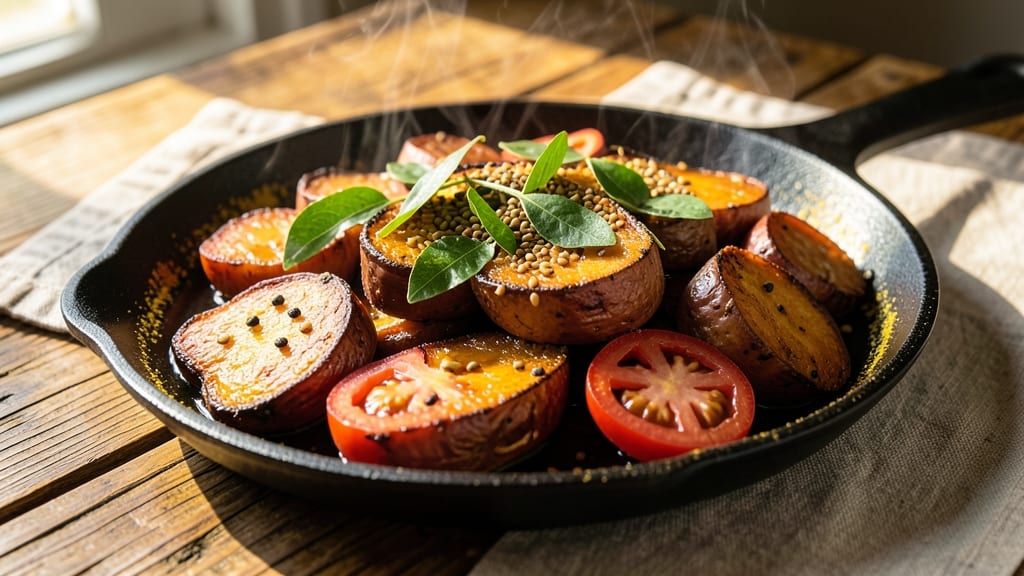
This sweet potato palya recipe brings the vibrant flavors of South India to your one-pan wonder, where golden cubes of sweet potato meet a fragrant spice symphony. The dish transforms humble ingredients into a restaurant-worthy side that pairs perfectly with rice or dosa.
What makes it special is the traditional tempering—mustard seeds sizzling in oil, releasing their nutty aroma, followed by curry leaves that add a fresh, citrusy punch.
The secret lies in balancing sweetness and spice: turmeric-infused sweet potatoes absorb the flavors as they roast, while a touch of tamarind and coconut lend depth. This complete dish requires just one pan and 30 minutes of hands-off cooking, making it ideal for weeknight meals or festive spreads.
The spices don’t just season—they transform, creating layers of warmth and brightness in every bite.
By the end, you’ll have tender sweet potatoes coated in a glossy, spiced oil that clings to each cube, offering a perfect blend of crispy edges and soft centers. The aroma alone—smoky mustard, earthy turmeric, and the faint tang of curry leaves—will have everyone at the table reaching for seconds.
Serve it alongside steamed rice or crispy dosas for an authentic South Indian feast.
This recipe stays true to tradition while adapting to modern kitchens—no special equipment needed, just a cast-iron skillet or heavy-bottomed pan. The versatility of palya means it works as a side, snack, or even a light lunch when paired with yogurt or chutney.
Let’s bring the flavors of South India to your table with this foolproof, aromatic dish.
Ingredients for sweet potato palya
Gather these vibrant ingredients to create South India's aromatic one-pan sweet potato delight.
| Ingredient | Amount | Notes |
|---|---|---|
| Sweet Potatoes 🍠 | 2 lb | Medium-sized, peeled and cubed |
| Mustard Seeds 🌿 | 1 tbsp | Whole, yellow variety preferred |
| Curry Leaves 🌿 | ¼ cup | Fresh, tightly packed |
| Vegetable Oil 🫒 | ½ cup | High smoke point preferred |
| Turmeric Powder 🌶️ | 1 tsp | Freshly ground for best flavor |
| Cumin Seeds 🌿 | 1 tsp | Toasted for deeper aroma |
| Red Chili Powder 🌶️ | 1 tsp | Adjust for heat preference |
| Coriander Powder 🌿 | 1 tsp | Ground fresh preferred |
| Asafoetida Powder 🌶️ | ¼ tsp | Optional for authentic flavor |
| Tamarind Paste 🍈 | 1 tbsp | Adjust for tanginess |
| Coconut Milk 🥥 | ¼ cup | Full-fat for creaminess |
| Salt 🧂 | 1 tsp | Kosher or sea salt preferred |
| Lemon Juice 🍋 | 1 tbsp | Freshly squeezed |
The sweet potatoes are the heart of this dish—look for firm, vibrant orange ones at the store, as they hold their shape best during roasting. Whole Foods or local Indian grocery stores often carry the sweetest varieties. Mustard seeds and curry leaves are non-negotiable for that signature South Indian aroma. Trader Joe's sells curry leaves in jars, but fresh from an Indian market is ideal. Toast your cumin seeds in a dry pan for 30 seconds before grinding to deepen their flavor—worth the extra minute. Turmeric should be a bright, sunny yellow, not dull or grayish.
No curry leaves? Fresh bay leaves can substitute at half the amount, though the flavor won't be identical. Out of tamarind paste? Lemon juice plus a pinch of sugar mimics the tang. For extra richness, swap coconut milk with cashew cream**—blend soaked cashews with water for a nutty depth. The red chili powder can be adjusted—start with half the amount if you're sensitive to heat. Asafoetida (hing) is optional but adds that unmistakable umami punch found in traditional palya. If unavailable, a pinch of garlic powder works in a pinch.
Sweet potatoes keep for 1 week in a cool, dark place. Prep them ahead by peeling and cubing, then toss with a pinch of salt to prevent browning. The spice blend stays potent for 3 months in an airtight container. This dish reheats beautifully—just add a splash of water and cover to steam. For meal prep, portion into containers with a drizzle of coconut milk on top to keep it moist. The flavors actually improve overnight as everything melds together.
Why You'll Love This Recipe
- No-Chop Needed: I swear, this is the kind of dish where you can eyeball the sweet potatoes—no peeling, no fuss. Toss them in whole (or cut into big chunks) and let the oil and spices work their magic while you stir. Honestly, I’ve made it twice with my hands full of laundry and still ended up with that perfect crispy-tender texture.
- Taste Like Home: That first sizzle of mustard seeds in hot oil? Instant nostalgia. The curry leaves release their earthy aroma, and the turmeric gives it that golden warmth—simple spices, but layered just right. Between us, my picky-eater husband goes back for seconds, and he’s never wrong about flavor.
- Lunchbox Hero: Pack this warm or cold, and it’s a hit at work or school. The sweet potatoes hold up for days, and the spices keep it exciting—no sad, soggy leftovers here. I’ll be real: I’ve reheated mine three times and it’s still the star of my meal prep. (Yes, even on a Tuesday night.)
- Pantry Staple Power: You’re already using oil, salt, and turmeric? Done. Sweet potatoes are cheap and shelf-stable, and mustard seeds last forever. This dish costs me pennies per serving, and I’ve never once regretted the trade-off for that satisfying crunch and savory punch. Budget-friendly doesn’t mean boring—it means ridiculously good.
Step-by-step instructions for sweet potato palya
This vibrant South Indian one-pan dish delivers bold flavors with minimal effort—perfect for weeknight dinners.
Prepare and Parboil the Sweet Potatoes
Begin by peeling the 2 lb sweet potatoes and cutting them into 1-inch cubes. Place them in a pot of boiling salted water for 8-10 minutes until they soften slightly but still hold their shape. This partial cooking ensures they finish perfectly tender without turning mushy in the final stir-fry.
Drain the sweet potatoes and set them aside. The slight texture they develop during this step is key—they'll absorb the spices beautifully while maintaining their structure. I like to rinse them briefly under cold water after draining to stop the cooking process and prevent over-softening.
Temper the Spices in Oil
Heat 0.5 cup vegetable oil in a large, heavy-bottomed pan over medium heat. Add 1 tbsp mustard seeds and let them sizzle for 30 seconds until they pop. Immediately add 0.25 cup curry leaves, 1 tsp cumin seeds, and 0.25 tsp asafoetida powder, stirring constantly.
Watch closely—the mustard seeds should turn golden and the cumin seeds should begin to darken slightly. This tempering process releases their full aroma, which forms the flavor base for the dish. If the oil starts smoking, reduce the heat to medium-low to prevent burning these delicate spices.
Add Dry Spices and Sweet Potatoes
To the tempered oil, add 1 tsp turmeric powder, 1 tsp red chili powder, 1 tsp coriander powder, and 1 tsp salt. Stir for 10 seconds to bloom the spices' flavors. Then add the parboiled sweet potatoes and toss gently to coat them evenly with the spice mixture.
Cook on medium heat for 5-6 minutes, stirring occasionally, until the sweet potatoes develop a light golden crust. The spices should stick to the potatoes rather than floating free—this indicates proper coating. If the potatoes stick to the pan, add 1-2 tablespoons of water to help them release.
Finish with Tamarind and Coconut Milk
Dissolve 1 tbsp tamarind paste in 0.25 cup coconut milk by whisking until smooth. Pour this mixture into the pan and stir well to combine. Add 1 tbsp lemon juice and cook for 3-4 minutes on medium-low heat, allowing the flavors to meld.
The sauce should thicken slightly, coating the sweet potatoes in a glossy, tangy layer. Taste and adjust seasoning—add more salt if needed or a pinch of chili powder for extra heat. The lemon juice brightens the dish, cutting through the richness of the coconut milk and sweet potatoes.
Serve Hot with Fresh Garnish
Transfer the sweet potato palya to a serving dish and let it sit for 2-3 minutes to allow the flavors to settle. Garnish with additional curry leaves if desired, though they're optional. Serve immediately with steamed rice or as a standalone dish.
The dish should be vibrant in color—deep orange from the sweet potatoes, green from the curry leaves, and flecked with golden spices. Each bite should deliver a balance of sweet, spicy, tangy, and earthy flavors, with the coconut milk adding a velvety finish. Leftovers keep well in the refrigerator for 2 days, though they're best enjoyed fresh.
Pro Tips For Making Sweet Potato Palya
- CUT POTATO UNIFORMLY: Use a mandoline or sharp knife to slice sweet potatoes into even ¼-inch rounds—thicker pieces stay tough, thinner ones burn fast. I learned this the hard way after serving a palya with some rock-hard chunks while others turned to mush.
- TEMPER MUSTARD LOW: Drop mustard seeds into warm oil (not smoking hot) or they’ll pop like fireworks and burn before releasing flavor. Start on medium heat, then adjust—this isn’t a race.
- SALT THE WATER: Add 1 teaspoon salt to the boiling water for the potatoes. It seasons them while cooking and prevents the curry leaves from turning bitter when they hit the pot later.
- STIR AFTER FIVE: Let the tempered mustard seeds sizzle for 30 seconds before adding curry leaves—this toasts their oils deeper. Then stir immediately or they’ll stick to the pan like glue. (Yes, even if you’re impatient like me.)
Serving suggestions for this dish
Rice Pairing Perfection
Serve this sweet potato palya alongside steamed basmati rice for the ultimate South Indian meal. The fluffy, slightly sticky texture of idli rice or ponni rice absorbs the spiced coconut sauce beautifully.
For extra authenticity, cook rice with a pinch of turmeric and a bay leaf—this subtle flavor boost complements the dish perfectly. 💛
Crispy Dosa Companions
Pair with fermented dosas or crispy appam for a complete breakfast or lunch spread. The light, airy texture of dosas contrasts wonderfully with the hearty sweet potatoes. I like to serve masala dosas with coconut chutney on the side to balance the richness.
For a modern twist, try cheese dosas with this palya for a fusion twist.
Yogurt and Chutney Balance
Serve with cooling coconut yogurt or mint chutney to cut through the spice. The tangy yogurt (made with plain yogurt, grated coconut, and roasted cumin) provides a refreshing contrast.
For extra freshness, add thinly sliced cucumbers and red onions to the yogurt bowl. A drizzle of tamarind date chutney adds another layer of complexity to the meal.
Protein Additions
Boost the meal with spiced chickpeas or crispy tofu for added protein. Toss 1 cup cooked chickpeas with ½ tsp turmeric, ½ tsp cumin, and a pinch of asafoetida before roasting until golden.
Alternatively, pan-fry firm tofu cubes with garlic and chili powder for a vegetarian protein punch. These additions make the dish more satisfying as a main course.
Beverage Pairings
Complement with filter coffee or masala chai to complete the South Indian experience. The bold flavors of Monsoon Malabar or Bengal coffee stand up to the spice, while ginger tea with lemon enhances the dish's tangy notes.
For a modern twist, try sparkling lime soda with a pinch of roasted cumin for a refreshing contrast.
Garnish and Presentation
Elevate the dish with fresh cilantro and toasted coconut flakes for texture and visual appeal. Arrange the palya on a banana leaf for an authentic touch, or serve in a clay pot for rustic charm.
The vibrant colors of the curry leaves and spices make this dish naturally photogenic—perfect for sharing on social media or family gatherings. ✨
Nutrition facts
Frequently asked questions
Can I substitute regular potatoes for sweet potatoes in this recipe?
While regular potatoes will work, they won't deliver the same sweet, caramelized flavor that makes this dish special. Sweet potatoes have a naturally sweeter taste and firmer texture that holds up better to the spice coating. If you must substitute, use yams for a closer flavor profile, but expect slightly less sweetness in the final dish.
What makes the tempering step so important in this recipe?
The tempering releases the full aroma of mustard seeds, curry leaves, and cumin—this is what gives palya its signature flavor. When these spices sizzle in hot oil, they create a fragrant base that coats every piece of sweet potato. Skipping this step means missing out on the dish's authentic South Indian character. The key is to watch closely and remove the pan from heat if the oil starts smoking.
How can I make this dish less spicy?
Start by reducing the red chili powder to ½ tsp instead of 1 tsp, and omit the asafoetida if you're sensitive to heat. For extra mildness, add ½ cup grated cucumber or plain yogurt to the serving dish. The coconut milk in the recipe already balances some of the spice, so don't be afraid to add a bit more if needed.
Can I prepare sweet potato palya ahead of time?
Yes! This dish actually tastes better the next day as the flavors meld together. Store in an airtight container in the refrigerator for up to 2 days. Reheat gently in a pan with 1 tablespoon water to restore moisture. For best texture, serve at room temperature rather than reheating from cold.
What other vegetables can I add to this recipe?
Try adding ½ cup chopped green beans or ½ cup diced bell peppers during the final 3-4 minutes of cooking. For extra texture, include ½ cup roasted peanuts or toasted coconut flakes at the end. Just be mindful of cooking times—vegetables with higher water content (like zucchini) should be added later to prevent mushiness.