
Side Dishes
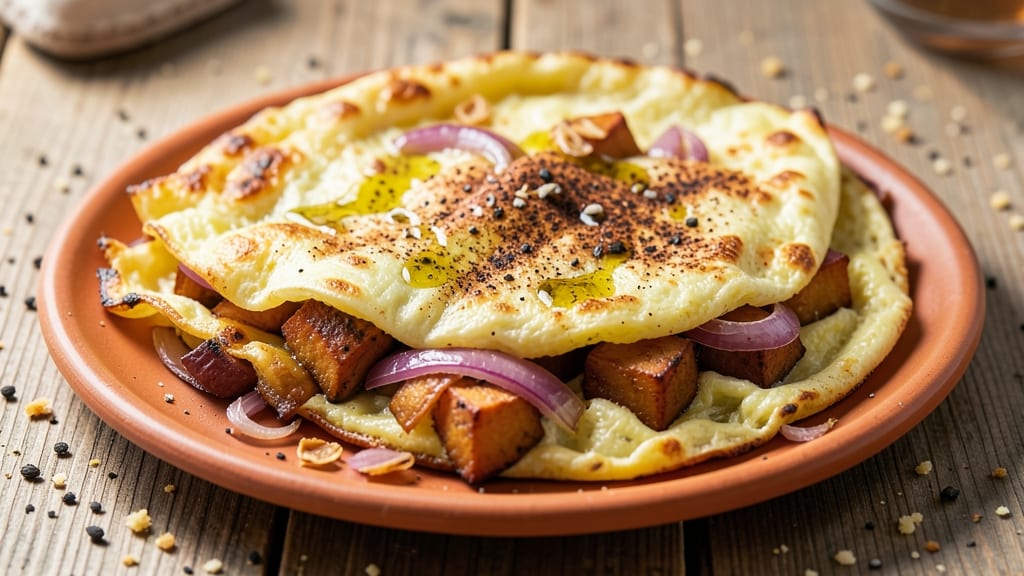
This sweet potato Spanish omelette recipe transforms a classic tortilla into something extraordinary—where crispy edges meet a velvety sweet potato filling. The secret lies in slow-cooking the potatoes until they're tender yet still hold their shape, creating a texture that's both creamy and slightly firm.
I've perfected this version after countless attempts to balance the natural sweetness of the potatoes with the egg's richness, ensuring every bite delivers that perfect contrast.
The foundation of this dish is a proper Spanish technique: sautéing onions until golden, cooking the sweet potatoes until they're just shy of falling apart, and then combining everything with eggs in a single pan.
What sets this apart is the low-and-slow cooking method, which allows the omelette to develop a crispy exterior while keeping the center silky and runny—just the way traditional tortilla should be. The result is a dish that's hearty enough to stand alone but elegant enough for a special meal.
By the time you flip the omelette, you'll have a golden, crispy crust with a creamy, slightly caramelized sweet potato filling that's infused with smoky paprika and savory onions. The edges are perfectly set, while the center remains soft and custard-like, ready to melt into each bite.
This is the kind of dish that turns a simple side into the star of the plate, with every forkful offering a balance of textures and flavors that keep you coming back for more.
Serve it warm with a sprinkle of fresh parsley and a dash of smoked paprika for an authentic touch, or enjoy it as-is for a satisfying, comforting meal. Whether you're making it for a weeknight dinner or a special occasion, this sweet potato Spanish omelette is sure to impress.
Let's get started on creating this restaurant-quality dish at home.
Ingredients for sweet potato spanish omelette
Sweet potatoes, eggs, and onions—simple ingredients for an extraordinary Spanish-inspired dish.
| Ingredient | Amount | Notes |
|---|---|---|
| Large Eggs 🥚 | 6 whole | Fresh, room temperature |
| Sweet Potatoes 🍠 | 1 ½ lb | Peeled, cubed small |
| Yellow Onions 🧅 | 1 whole | Thinly sliced, about 1 cup |
| Extra-Virgin Olive Oil 🫒 | ½ cup | For sautéing and finishing |
| Smoked Paprika 🌶️ | 1 tbsp | Sweet or hot variety |
| Ground Black Pepper 🌶️ | ½ tsp | Freshly cracked preferred |
| Sea Salt 🧂 | 1 tsp | Fine grain preferred |
| Fresh Parsley 🌿 | ¼ cup | Chopped, for garnish |
| Garlic Cloves 🧄 | 3 cloves | Minced, for depth |
| Unsalted Butter 🧈 | 1 tbsp | For crisping edges |
| Heavy Cream 🥛 | ¼ cup | Optional, for richness |
Sweet potatoes are the star here. Look for firm, vibrant orange ones—the deeper the color, the sweeter the flavor. Trader Joe's or Whole Foods often have the best selection, but any grocery store's organic section works. Cube them small (about 1/2-inch pieces) so they cook through evenly. If you're short on time, microwave them 5 minutes first to jumpstart the process. The onions? Yellow or red both work, but yellow has a slightly sharper bite that pairs well with the sweet potatoes. Slice them thinly so they caramelize quickly.
No smoked paprika? Regular paprika plus a pinch of cayenne gets you close. Fresh parsley wilt fast, so buy it the day you cook—or use dried at one-third the amount. The eggs should be fresh but room temperature for best texture. If you're avoiding dairy, skip the butter and use extra olive oil instead. For extra richness, the heavy cream is optional but makes the filling even silkier. Whip it lightly before adding to the eggs—just a few quick pulses with a hand mixer does the trick.
Sweet potatoes keep 3-4 days in the fridge, but cook them the same day for best texture. Prep the filling ahead (up to 1 day) and store in the fridge, but don't cook the omelette until ready to serve. The crispy edges happen fast—watch like a hawk during the last 2 minutes. Leftovers? Reheat gently in a skillet with a splash of water to restore moisture. This isn't a dish that reheats well in the microwave—trust me on that.
Why You'll Love This Recipe
- One-Pan Magic: I swear by this—just dice the sweet potatoes and onions, toss them in olive oil, and let them caramelize while you whisk the eggs. No extra dishes, no stress, and honestly? That smoky paprika smell alone makes my kitchen feel like a cozy bistro.
- Sweet & Smoky Crave: The roasted sweet potatoes add this deep, caramelized sweetness that balances the sharpness of the onions and the warmth of smoked paprika. It’s not just an omelet—it’s a flavor party in your mouth, and I’ll fight anyone who says otherwise.
- Lunchbox Hero: Between us, this is my go-to for meal prep. Slice it into wedges, pack it in containers, and boom—you’ve got a hearty, satisfying lunch that’s way better than sad desk salads. My kids actually eat it cold, and that’s saying something.
- Budget Breakthrough: Sweet potatoes are cheap, eggs are cheap, and a little olive oil goes a long way. I make this for four people for under $8, and it fills everyone up. Leftovers? Even better reheated—just crisp it up in a pan, and it’s like you’re eating it fresh.
Step-by-step instructions for sweet potato Spanish omelette
Here's how to create a Spanish omelette with sweet potatoes—crispy edges and a creamy, flavorful center.
Roast the Sweet Potatoes Until Tender
Preheat your oven to 400°F and line a baking sheet with parchment paper. Toss the 1.5 lb cubed sweet potatoes with 1 tablespoon of the extra-virgin olive oil, 1 teaspoon sea salt, and ½ teaspoon ground black pepper. Spread them in a single layer on the baking sheet.
Roast for 25-30 minutes until the sweet potatoes are fork-tender with slightly caramelized edges. You want them soft enough to mash easily but with enough structure to hold their shape when folded into the omelette. If they're browning too quickly, cover loosely with foil to prevent burning.
Sauté the Onions and Garlic
While the sweet potatoes roast, heat 2 tablespoons of the extra-virgin olive oil in a large skillet over medium heat. Add the thinly sliced yellow onions and cook for 5-6 minutes until softened and translucent. Push the onions to one side of the pan and add the 3 minced garlic cloves.
Cook the garlic for 30 seconds until fragrant—don't let it brown, or it'll turn bitter. Stir the onions and garlic together, then remove the pan from heat. This aromatic base will infuse the omelette with deep, savory flavor. Set aside until ready to use.
Prepare the Egg Mixture
In a large bowl, whisk together the 6 whole large eggs, 1 tablespoon smoked paprika, ½ teaspoon ground black pepper, and ½ teaspoon sea salt until fully combined. The mixture should be uniform with no streaks of egg white. I like to add a splash of water if the eggs seem too thick—just enough to make them flow smoothly.
Stir in the sautéed onions and garlic mixture, then fold in the roasted sweet potatoes. If you're using the ¼ cup heavy cream, add it now for extra richness. The filling should be well distributed, with sweet potatoes evenly coated in the egg mixture. Let this sit for 5 minutes to allow the flavors to meld.
Cook the Omelette to Crispy Perfection
Heat a 10-inch nonstick skillet over medium heat and add 1 tablespoon unsalted butter. Let it melt and foam, then pour in the egg mixture, tilting the pan to spread it evenly. Cook for 3-4 minutes until the edges begin to set and the bottom is lightly golden.
Here's the trick: use a spatula to gently lift the edges of the omelette, letting the uncooked egg flow underneath. This creates that signature crispy exterior while keeping the inside silky. When the top is mostly set but still slightly runny in the center, fold the omelette in half and slide it onto a plate.
Garnish and Serve Immediately
Let the omelette rest for 1 minute to set slightly, then sprinkle with the ¼ cup chopped fresh parsley for a pop of color and freshness. Serve immediately while still warm—this omelette is best enjoyed right out of the pan, with crispy edges and a creamy, sweet potato-infused center.
Slice into wedges and watch as the filling oozes out slightly, creating a beautiful contrast between the crispy exterior and the velvety interior. The smoked paprika adds a subtle warmth that pairs perfectly with the natural sweetness of the sweet potatoes. Enjoy with a simple green salad or crusty bread to soak up any extra filling.
Pro Tips For Making Sweet Potato Spanish Omelette
- Prep Sweet Potatoes Small: Dice them no bigger than ½-inch—any larger and they’ll turn to mush instead of caramelizing. I learned this the hard way when my first batch dissolved into a sad, wet pile by the time the eggs set.
- Salt the Onions: Toss the sliced onions with a pinch of salt and let them sit for 10 minutes before cooking. This draws out moisture so they crisp up properly and don’t make the omelette soggy—trust me, it’s worth the wait.
- Low and Slow for Eggs: Once the sweet potatoes and onions are cooked, turn the heat down to medium-low before adding the eggs. High heat here means rubbery curds, and nobody wants that in a Spanish omelette.
- Use Cold Eggs: Whisk the eggs in a chilled bowl—room temperature eggs cook faster and can end up overdone by the time the filling is ready. Cold eggs give you that silky, just-set texture. (Yes, even if you’re impatient like me.)
Storing and reheating this dish
Refrigerator Storage
Store any leftover sweet potato omelette in an airtight container for up to 3 days. Let it cool completely before refrigerating to prevent condensation, which can make the filling soggy. I like using glass containers with tight-sealing lids—they keep the crispy edges intact better than plastic.
The omelette reheats beautifully, but the texture changes slightly, so it's best enjoyed fresh. 🥄
Freezer-Friendly Prep
You can prep the filling ahead and freeze it for up to 2 months. Combine the roasted sweet potatoes, sautéed onions, and egg mixture in a freezer-safe bag, leaving ½-inch headspace for expansion.
Thaw overnight in the fridge before cooking. For the whole omelette, wrap it tightly in parchment paper and foil, then freeze for 1 month. Reheat gently in a skillet to restore crispiness. ❄️
Stovetop Reheating
For the best results, reheat the omelette in a nonstick skillet over medium-low heat. Add 1 tablespoon olive oil or butter to prevent sticking, then cover the skillet with a lid for 2-3 minutes.
This steams the filling slightly, restoring moisture without overcooking the edges. Flip once to ensure even warmth. Serve immediately for that restaurant-quality texture. 🔥
Microwave Method
If you're short on time, microwave individual portions on 50% power for 1-2 minutes, covered with a damp paper towel. This prevents drying out the filling. Stir halfway through to distribute heat evenly.
The edges won't be as crispy, but it's a quick fix for a satisfying meal. Add a sprinkle of smoked paprika to revive the flavor. 💫
Reviving Texture
If your reheated omelette feels dry, place it in a skillet with 2 tablespoons water or broth for 1 minute on low heat. The steam will plump up the filling and restore some of that creamy sweet potato goodness.
For extra crispiness, finish under a broiler for 30 seconds—just watch it closely to avoid burning. 💡
Nutrition facts
Frequently asked questions
Why do the sweet potatoes need to be roasted instead of sautéed?
Roasting the sweet potatoes first creates a deeper, caramelized flavor and tender texture that sautéing can't match. The slow cooking process breaks down their natural starches, making them creamier when mixed with eggs. Plus, it prevents them from releasing too much moisture into the omelette, which could make it soggy.
Can I substitute regular potatoes for sweet potatoes?
While you can use regular potatoes, the flavor and texture will be completely different. Sweet potatoes add natural sweetness and a velvety quality that regular potatoes lack. If you must substitute, use Yukon golds and reduce the sugar by ½ teaspoon since they're less sweet. The roasting time should also be 5-10 minutes less since they cook faster.
How do I get the perfect runny center without overcooking?
The key is timing and heat control. Cook the omelette on medium heat for 3-4 minutes until the edges are set but the center still jiggles slightly when you shake the pan. Use a 10-inch skillet—smaller pans overcook the edges before the center sets. When you fold it, the residual heat will finish cooking the center just enough to create that perfect custard-like texture.
What's the best way to reheat leftovers without drying them out?
Always reheat in a skillet over medium-low heat with 1 tablespoon butter or oil to restore crispiness. Cover with a lid for 2-3 minutes to steam the filling gently. For extra moisture, add 2 tablespoons water or broth to the pan. Microwaving works in a pinch, but the edges will lose their crispness—sprinkle with smoked paprika to revive the flavor.
Can I make this omelette ahead of time?
You can prep the filling 1 day ahead and store it in the fridge, but cook the omelette fresh for best results. For make-ahead convenience, assemble the omelette and refrigerate it (uncooked) in a skillet for up to 4 hours. Cook it straight from the fridge on low heat, adding 1 extra minute to the cooking time. The texture won't be as crispy, but it's still delicious!