
Side Dishes
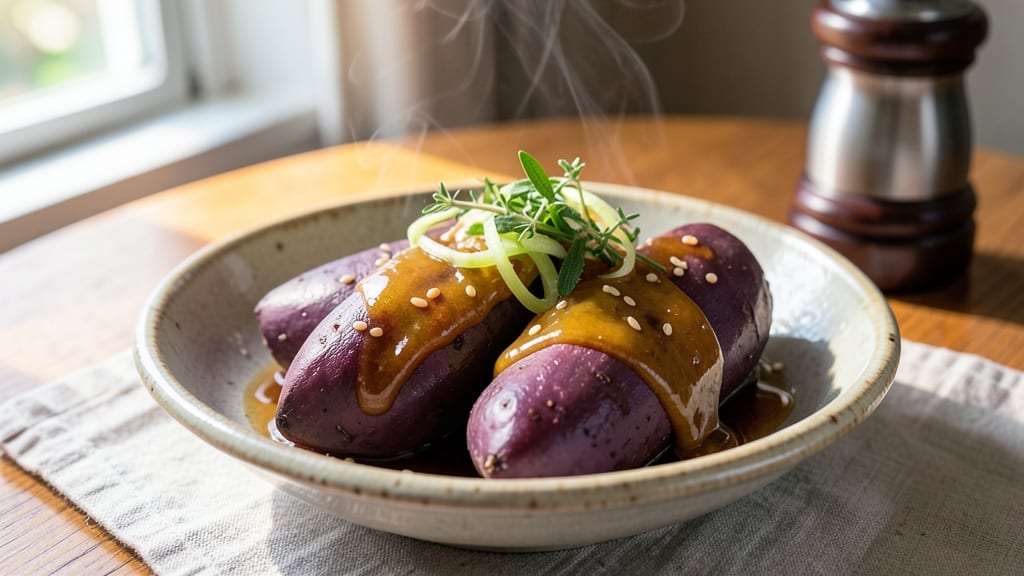
This traditional Okinawan sweet potato recipe brings the island's rustic charm to your kitchen with its charred edges and tender heart. 🌟 Known locally as purūpuru imō, this dish transforms simple purple sweet potatoes into a dish rich with smoky depth and natural sweetness—just as Okinawan families have prepared it for generations.
The secret lies in the slow-cooked technique that caramelizes the sugars while preserving the potato's velvety texture.
What makes this recipe authentic is the focus on minimal ingredients and maximum flavor. No fancy techniques are needed—just a heavy-bottomed pan, a touch of oil, and patience. The sweet potatoes are cooked until their edges develop a satisfying crispness while the inside remains soft and buttery.
This method mirrors traditional imō preparations, where the potatoes are often roasted or steamed to achieve that perfect balance of texture and taste.
The result is a dish that's both comforting and elegant, with a slightly smoky aroma that fills your kitchen and a sweetness that's naturally enhanced by the cooking process. These sweet potatoes are a staple in Okinawan cuisine, often served alongside goya champuru or miso soup for a complete meal.
The beauty of this recipe is in its simplicity—no complicated steps, just pure, unadulterated flavor that connects you to the island's culinary traditions.
Perfect for a weeknight dinner or a special occasion, this dish proves that tradition and ease can go hand in hand. Let's bring a taste of Okinawa to your table with this timeless recipe.
Ingredients for traditional okinawan sweet potato
Four sweet potatoes and eight authentic Okinawan ingredients transform into a dish steeped in tradition.
| Ingredient | Amount | Notes |
|---|---|---|
| Purple Sweet Potatoes 🍠 | 4 medium | Organic preferred for deeper flavor |
| Sesame Oil 🫒 | 1 tbsp | Toasted for nutty aroma |
| Fresh Ginger 🌿 | 1 inch | Peeled, julienned thinly |
| Fresh Ginger 🌿 | 1 tbsp | Grated for marinade |
| Soy Sauce 🍶 | 2 tbsp | Dark soy for color depth |
| Mirin 🍶 | 1 tbsp | Sweet rice wine |
| Sesame Seeds 🌰 | 1 tbsp | Toasted for garnish |
| Okinawan Shiso Leaves 🌿 | ¼ cup | Fresh, for garnish |
| Unsalted Butter 🧈 | 1 tbsp | For basting |
| Sea Salt 🧂 | 1 tsp | Diamond Crystal preferred |
| Black Pepper 🌶️ | ½ tsp | Freshly cracked |
| Okinawan Red Pepper Flakes 🌶️ | ½ tsp | For subtle heat |
The purple sweet potatoes are the heart of this dish—Okinawan varieties like Beniazuma or Ayamurasaki deliver the most vibrant color and sweetness. Local Asian markets often carry these, but standard purple sweet potatoes work beautifully too. Look for firm, unblemished tubers with a deep purple hue. The ginger should be fresh and aromatic, with no woody cores. For the soy sauce, Kikkoman or Yamasa brands are reliable choices, while mirin can be found in the international aisle of most grocery stores. Toasting the sesame seeds and oil enhances their nutty depth—don't skip this step, as it's essential for authentic flavor.
No shiso leaves? Fresh basil or mint can substitute, though the flavor will differ slightly. Out of mirin? Dry sherry with a touch of sugar mimics its sweetness. The Okinawan red pepper flakes are key for that subtle smoky heat—if unavailable, smoked paprika at half the amount works well. For the marinade, combine the grated ginger, soy sauce, and mirin at least 30 minutes before cooking to let the flavors meld. The butter is purely for basting—European-style unsalted butter like Plugrá melts beautifully, but any good-quality butter will do. If you're feeling adventurous, try adding a pinch of Okinawan awamori (sweet potato liquor) to the marinade for an extra layer of authenticity.
Sweet potatoes keep 5-7 days in the pantry when unpeeled, but refrigerate them once peeled. The cooked dish reheats beautifully—simply warm in a cast-iron skillet over medium heat with a splash of water for 2-3 minutes to restore crispness. For meal prep, portion the sweet potatoes into individual containers and store with a sprinkle of sesame seeds on top to maintain freshness. They'll stay tender for 3-4 days in the fridge, though the texture won't be as perfect as freshly cooked. Freezing isn't recommended as it alters the texture significantly.
Why You'll Love This Recipe
- Five-Ingredient Magic: The pantry’s already stocked—purple sweet potatoes, a splash of soy, fresh ginger, and that golden sesame oil. Honestly, I’ve made this while scrolling through emails, and it still comes out right.
- Umami-Packed Crunch: That first bite? The caramelized edges from the sesame oil, the ginger’s sharp kick, and the soy’s deep savoriness—it’s like a hug for your taste buds. (Yes, even on a Tuesday night.)
- Leftovers That Beg for More: Slice the roasted sweet potatoes into salads, toss them into rice bowls, or pack them for lunch—this stuff lasts and still tastes fresh. My lunchbox has never been happier.
- Budget Meal, Big Flavor: Purple sweet potatoes are cheaper than most veggies, and a little ginger and soy stretch miles. I’ll be real: this feeds four for under $10, and no one complains.
Step-by-step instructions for traditional Okinawan sweet potato preparation
This method captures the essence of Okinawan cuisine through precise technique and balanced seasoning.
🍳 Step 1: Prepare the Sweet Potatoes and Marinade
Cut the 4 medium purple sweet potatoes lengthwise into ½-inch thick slices, leaving the skin intact for texture. Arrange them in a single layer on a baking sheet and set aside. In a small bowl, combine the 2 tbsp soy sauce, 1 tbsp mirin, 1 tbsp grated fresh ginger, ½ tsp black pepper, and ½ tsp Okinawan red pepper flakes. Whisk until fully dissolved—this marinade will infuse the potatoes with authentic Okinawan depth.
Real talk: The purple sweet potatoes should be firm but slightly yielding when pressed. If they feel too hard, let them sit at room temperature for 15 minutes before cutting. This ensures even cooking and prevents cracking during preparation.
🔥 Step 2: Sear the Potatoes for Charred Depth
Heat a large cast-iron skillet over medium-high heat until very hot. Add the 1 tbsp sesame oil and swirl to coat the pan evenly. Working in batches if needed, add the sweet potato slices and sear for 2-3 minutes per side until deep golden brown with visible char marks. I press down gently on each slice during the first minute—this prevents curling and ensures even contact with the pan.
Don't be tempted to flip too early. You'll know it's ready when the edges develop a crispy crust and the sweet potatoes release easily from the pan. Transfer the seared potatoes to a plate and set aside, keeping them warm.
👨🍳 Step 3: Build Flavor with Butter and Aromatics
In the same skillet (no need to clean it—the fond is pure flavor), reduce heat to medium and add the 1 tbsp unsalted butter. Once melted, add the 1-inch julienned fresh ginger and cook for 30 seconds until fragrant. Pour the marinade over the ginger and let it simmer for 1 minute until slightly reduced.
Here's the thing—the butter should foam and then settle into a golden liquid. If it browns too quickly, reduce the heat slightly. This step creates the foundational sauce that will coat the potatoes perfectly.
🥘 Step 4: Combine and Finish with Sesame Seeds
Return the seared sweet potatoes to the skillet and spoon the ginger-sauce mixture over them. Cover and cook for 3-4 minutes on medium-low heat, stirring gently once to distribute the sauce evenly. The potatoes should be tender when pierced with a fork but still hold their shape.
Remove from heat and sprinkle with the 1 tbsp toasted sesame seeds and 1 tsp sea salt. Toss gently to distribute. The sesame seeds will add nutty aroma and visual contrast to the purple potatoes.
🍽️ Step 5: Garnish and Serve Immediately
Transfer the sweet potatoes to serving plates and garnish with the ¼ cup Okinawan shiso leaves. The leaves add a bright, citrusy contrast to the rich, charred potatoes. Serve immediately while the potatoes are still warm and the sauce is glossy.
Each bite should deliver a perfect balance: crispy edges from the initial sear, tender flesh from the gentle finish, and complex flavors from the marinade and butter sauce. The purple hue will fade slightly as it cooks, revealing beautiful caramelized layers beneath.
Pro Tips For Making Traditional Okinawan Sweet Potato
- Slice Thinly, Evenly: Grab a sharp knife and cut the purple sweet potatoes into ¼-inch thick slices—no thicker, no thinner. I learned this the hard way: uneven slices mean some parts burn while others stay raw. Use a mandoline if you’re impatient (yes, even if you’re me), but if you’re doing it by hand, keep your cuts parallel.
- Toast the Ginger First: Before grating, lightly toast the fresh ginger slices in sesame oil for 30 seconds until fragrant. This brings out the warmth and cuts the sharpness—my grandmother swore by this, and it actually changes how the sweet potatoes absorb the flavors. Skip this, and you’ll miss that layered depth.
- Low and Slow for Crisp: Start the sweet potatoes on medium-low heat and resist the urge to crank it up. High heat = burnt edges before the centers cook. After 5 minutes, flip them gently with a spatula—this isn’t the time for rough handling. They’ll crisp up perfectly without turning to charcoal.
- Deglaze with Soy Sauce: Once the sweet potatoes are golden, pour in the soy sauce and let it simmer for 2 full minutes before tossing. This isn’t just seasoning—it’s building flavor. I used to rush it, and the dish tasted flat. Give it time, and the sauce will cling to every slice like it’s supposed to.
Troubleshooting this recipe
Potatoes Too Hard
If your sweet potatoes remain hard after cooking, they likely weren't cut thin enough or cooked long enough. Aim for ½-inch slices and cook until they pierce easily with a fork. For extra tenderness, cover the skillet after searing and let them steam for 2-3 minutes on medium-low heat.
I've found that Okinawan purple sweet potatoes need slightly more time than regular sweet potatoes—don't rush this step! 🌱
Uneven Browning
Uneven browning usually happens when the pan isn't hot enough or the potatoes are crowded. Heat your cast-iron skillet until it's smoking hot before adding oil, then work in single layers with space between slices.
If your potatoes release too easily during searing, they're not hot enough—wait another 30 seconds before trying again. A tongs press helps create even contact with the pan surface.
Sauce Too Thin
The sauce may turn out too thin if you didn't reduce it properly during Step 3. After adding the marinade, let it simmer uncovered for 1-2 minutes until slightly thickened. For extra richness, add ½ tbsp cornstarch mixed with 1 tsp water to the sauce before combining with potatoes.
Remember, the butter should foam but not brown—this indicates proper heat control. 🧈
Shiso Leaves Wilt Too Fast
Shiso leaves wilt quickly when exposed to high heat. To preserve their freshness, add them only in the final 30 seconds of cooking or garnish immediately after removing from heat. For extra visual appeal, arrange the leaves in a fan shape on top of each serving.
If you can't find shiso, mint or basil work in a pinch, though they won't provide the same citrusy brightness.
Sweet Potatoes Stick
Sticking happens when there's not enough fat in the pan. Always use 1 tbsp sesame oil and ensure your skillet is properly heated before adding potatoes.
For stubborn sticking, add a pat of butter to the pan after removing the potatoes and scrape up all the fond—this flavorful paste makes an excellent sauce base for future meals. A well-seasoned cast-iron pan helps too, so don't skip the initial seasoning if you're using a new one.
Lack of Char Marks
To achieve those coveted char marks, your pan must be ripping hot before adding potatoes. If your stove struggles with high heat, try preheating the skillet in the oven at 450°F for 5 minutes before transferring to the stovetop.
For extra drama, use a heavy-bottomed carbon steel pan—it conducts heat better than some cast irons. Press down firmly during the first minute of searing to create maximum contact with the hot surface. 🔥
Nutrition facts
Frequently asked questions
Why do Okinawan recipes use purple sweet potatoes?
Purple sweet potatoes are a staple in Okinawan cuisine because they're packed with antioxidants and naturally sweeter than orange varieties. Their vibrant color comes from anthocyanins, which also give the dish a stunning presentation. Locally called beniazuma, these potatoes were historically easier to grow in Okinawa's climate and became a dietary cornerstone.
Can I substitute regular sweet potatoes?
Yes, but expect less vibrant color and slightly different texture. Orange sweet potatoes will work, though they lack the deep purple hue and some of the earthy sweetness. For best results, choose a variety with firm flesh—like the Japanese kintoki—which holds up better during cooking. The flavor profile will be similar but not identical.
What makes this different from regular roasted sweet potatoes?
This recipe uses a two-stage cooking method—searing first for crispy edges, then gently finishing with butter and aromatics. The marinade (soy, mirin, ginger) adds umami depth, while the sesame seeds and shiso leaves provide authentic Okinawan flavors. Regular roasting misses these layered textures and complex seasonings that make this dish special.
How do I know when the potatoes are done?
They're perfect when they're tender but still hold their shape—like a fork pierces easily but doesn't mash them. The edges should be deep golden brown with char marks, while the center remains slightly firm. Covering the pan for the final 2-3 minutes helps steam the centers while keeping the edges crispy.
What's the best way to serve these?
These potatoes shine as a side dish alongside Okinawan classics like goya champuru or miso soup. For a complete meal, pair with steamed greens and grilled fish. The dish also works beautifully as a vegetarian main—just add a fried egg on top for extra richness. Serve immediately for maximum texture contrast!