
Sauces & Condiments
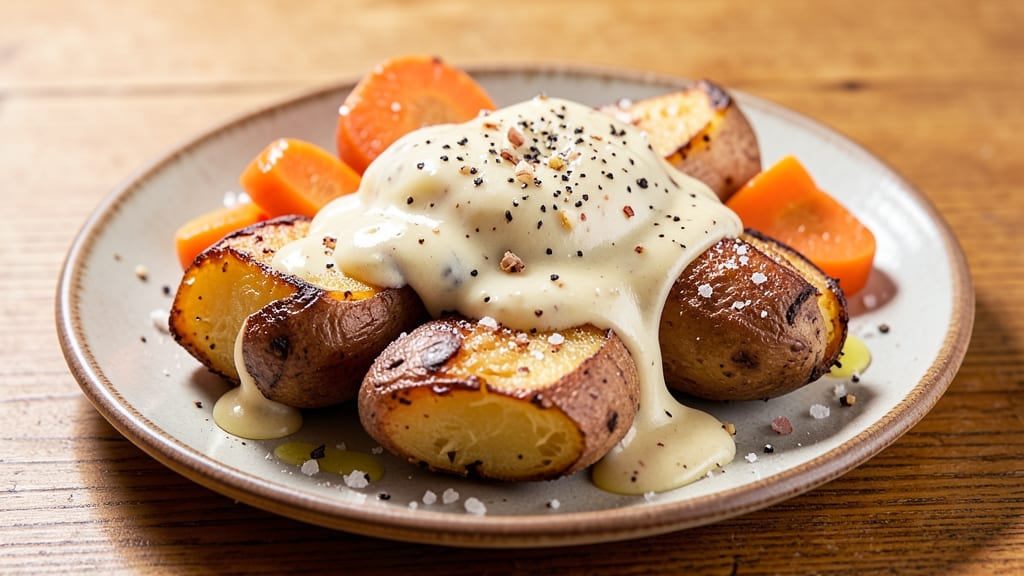
This vegan cheese sauce recipe transforms humble potatoes and carrots into a creamy, comforting dish that rivals classic mac and cheese—without a single drop of dairy. The secret lies in blending cashews until they become velvety, combined with nutritional yeast for that signature cheesy depth. I developed this recipe after years of perfecting plant-based alternatives, and it finally delivers the rich, melty texture everyone craves.
The beauty of this dish is its simplicity: roasted carrots and potatoes caramelize beautifully while the sauce simmers into a luscious, golden blanket. No special equipment is needed—just a blender for the sauce and a baking sheet for the veggies.
The cashews provide natural creaminess, while garlic and lemon brighten the flavors, ensuring every bite is satisfying yet fresh.
What you’ll end up with is a dish that’s hearty enough for a main course but quick enough for a weeknight dinner. The roasted vegetables develop a natural sweetness that pairs perfectly with the nutty, tangy sauce, creating a balance that’s both comforting and exciting.
This recipe proves vegan meals can be indulgent without compromise.
Serve with toasted breadcrumbs or fresh herbs for extra texture, or pair it with a simple green salad to round out the meal. The sauce reheats beautifully, making it ideal for meal prep. Let’s get cooking—your taste buds won’t know it’s plant-based!
Ingredients for vegan cheese sauce recipe potato carrot
Cashews and roasted veggies create a creamy, cheesy sauce that rivals dairy—simple ingredients for a rich vegan dish.
| Ingredient | Amount | Notes |
|---|---|---|
| Russet Potatoes 🥔 | 1 ½ lb | Cubed into 1-inch pieces |
| Carrots 🥕 | 1 ½ lb | Whole, peeled and sliced into sticks |
| Raw Cashews 🥜 | 1 ½ cups | Unsalted, soaked in hot water |
| Nutritional Yeast 🧀 | ½ cup | Fortified, for cheesy flavor |
| Garlic Cloves 🧄 | 4 cloves | Fresh, minced |
| Lemon Juice 🍋 | 2 tbsp | Freshly squeezed |
| Extra-Virgin Olive Oil 🫒 | ½ cup | For roasting and sauce |
| Vegetable Broth 💧 | 1 ½ cups | Low-sodium preferred |
| White Miso Paste 🍶 | 1 tbsp | For umami depth |
| Dijon Mustard 🌶️ | 1 tsp | For subtle tang |
| Salt 🧂 | 1 ½ tsp | Kosher or sea salt |
| Black Pepper 🌶️ | ½ tsp | Freshly ground |
| Fresh Parsley 🌿 | ¼ cup | Chopped, for garnish |
| Toasted Breadcrumbs 🍞 | ¼ cup | For topping |
The cashews are the heart of this sauce. Raw, unsalted cashews from Trader Joe's or bulk bins work best—they blend into a velvety texture that mimics dairy perfectly. Soak them in hot water for 15 minutes to soften, then drain. Nutritional yeast is non-negotiable here; Bragg or Bob's Red Mill brands provide that signature cheesy flavor. For the veggies, Russet potatoes caramelize best—avoid waxy varieties like red potatoes. The carrots should be whole and peeled for even roasting, but baby carrots work in a pinch if you're short on time.
No cashews? Silken tofu or blended white beans can replace them, though texture will differ slightly. Short on nutritional yeast? Vegan cheese shreds at half the amount add cheesiness, but lose the umami depth. The miso paste might be tricky to find—Japanese or Asian markets usually carry it, but a pinch of soy sauce works in a bind. Fresh garlic is ideal, but garlic powder at half the amount gets you close. For the roasted veggies, toss them in olive oil and roast at 400°F until tender—about 25-30 minutes—for that natural sweetness to develop.
This sauce reheats beautifully—simmer on low heat with a splash of water to restore creaminess. Store leftovers in an airtight container in the fridge for 5-6 days, or freeze for 3 months. The roasted veggies keep for 4 days in the fridge if stored separately. For meal prep, assemble the dish just before serving to maintain crispness on the veggies. The sauce thickens as it cools, so thin with a splash of plant-based milk if needed.
Why You'll Love This Recipe
- No-Soak Cashews: I’ll be real—soaking cashews is a hassle. This sauce skips it entirely, blending raw cashews straight into the pot with boiling water. The result? Creamy perfection without the wait, and no extra dishes to rinse.
- Umami Bomb: That nutritional yeast isn’t just a garnish—it’s the secret weapon. One tablespoon turns this into a cheesy, savory dream, especially when you toast it lightly in the pan with the garlic. Honestly? It’s the closest I’ve gotten to dairy cheese without the guilt.
- Leftovers Reinvented: This sauce thickens beautifully when reheated, making it my go-to for lazy lunches. Drizzle it over cold roasted veggies, toss it into grain bowls, or just eat it straight from the jar with crackers. (Yes, even on a Tuesday night.)
- Budget Stretch: Russets and carrots are cheap, and cashews last forever. I make a big batch, freeze half, and still have enough sauce for three meals. Plus, the nutritional yeast adds protein—so it’s not just filling, it’s smart. My wallet thanks me every time.
Step-by-step instructions for nutty cashew cream over roasted veggies
Here's how to create a velvety vegan cheese sauce that perfectly complements roasted potatoes and carrots.
Roast the Vegetables Until Caramelized
Preheat your oven to 425°F and line two large baking sheets with parchment paper. Toss the 1.5 lb cubed Russet potatoes and 1.5 lb sliced carrots with 0.25 cup extra-virgin olive oil, 1 tsp salt, and 0.25 tsp black pepper. Spread them in a single layer, ensuring the potatoes and carrots don't overlap.
Roast for 25-30 minutes, stirring halfway through, until the edges are golden brown and the vegetables are tender when pierced with a fork. The carrots should soften while maintaining their structure, and the potatoes should develop a crispy exterior. This roasting step creates the perfect canvas for your cashew cream sauce to cling to.
Prepare the Cashew Cream Base
While the vegetables roast, drain and rinse the 1.5 cups soaked raw cashews thoroughly. In a high-speed blender, combine the cashews with 1.5 cups vegetable broth, 0.5 cup nutritional yeast, 1 tbsp white miso paste, 1 tsp Dijon mustard, 2 tbsp lemon juice, 1.5 tsp salt, and 0.5 tsp black pepper.
Blend until completely smooth, scraping down the sides as needed. The mixture should be creamy and pale yellow, with no visible cashew pieces. This is your base sauce—it's the foundation that will develop that rich, cheesy flavor. If the sauce is too thick, add 1-2 tablespoons of water to reach a pourable consistency.
Infuse the Sauce with Garlic and Umami
Transfer the cashew cream to a medium saucepan and place it over medium-low heat. Add the 4 minced garlic cloves and stir gently, allowing them to infuse into the sauce for 2-3 minutes. You'll notice the aroma becoming more intense—this is when the garlic releases its full flavor without burning.
Simmer the sauce for 5-7 minutes, stirring occasionally, until it thickens slightly and coats the back of a spoon. The sauce should be smooth and glossy, with a consistency similar to traditional cheese sauce. If it thickens too much, whisk in 1-2 tablespoons of vegetable broth to achieve the perfect coating texture. Remove from heat and keep warm.
Assemble and Garnish the Dish
Transfer the roasted vegetables to a serving platter and generously spoon the warm cashew cream sauce over the top, ensuring each piece is well-coated. Sprinkle with the 0.25 cup toasted breadcrumbs and 0.25 cup chopped fresh parsley for added texture and freshness.
Serve immediately while the vegetables are still warm and the sauce maintains its silky consistency. The breadcrumbs will add a delightful crunch that contrasts beautifully with the creamy sauce and tender vegetables. This dish delivers a satisfying, umami-rich flavor profile that's entirely plant-based yet deeply comforting.
Pro Tips For Making Vegan Cheese Sauce Recipe Potato Carrot
- SOAK CASHEWS 2 HOURS: I learned this the hard way—skipping the soak leaves your sauce gritty and unpleasantly chalky. Toss 1 cup raw cashews in hot water for at least 2 hours (or overnight in the fridge). No, you can’t rush this—even 30 minutes leaves them underhydrated, and your sauce will taste it.
- PEEL CARROTS AFTER COOKING: Peeling raw carrots wastes flavor and fiber. Toss them whole into your pot, cook until tender, then peel while still warm—the skins slip right off. (Yes, even the orange ones. Trust me.)
- STRAIN THE CASHEW MILK: Blending soaked cashews with water gives you a silky base, but not if you don’t strain it. Rub the blended mixture through a fine-mesh sieve or cheesecloth into a bowl—this removes excess starch and makes your sauce velvety. (I used to skip this and wondered why my sauce was thick like glue.)
- LOW AND SLOW FOR SAUCE: Simmer your vegan cheese sauce on low heat after adding nutritional yeast and garlic. High heat burns the yeast, turning it bitter and acrid. Keep it at a bare simmer—just enough to melt the flavors together without racing. (Your nose will thank you.)
Pro cooking tips for great vegan cheese sauce recipe potato carrot
Blend Like a Pro
For that ultra-smooth cashew cream, use a high-speed blender like the Ninja BN601—it pulverizes cashews into a velvety texture in seconds. Start with hot water for soaking (not cold) to soften them faster.
I blend for 2 full minutes after adding all ingredients, scraping down the sides halfway. If you don’t have a high-speed blender, a food processor works but requires more time—pulse until completely smooth. 💫
Temperature Control
Keep the sauce on medium-low heat when simmering—never high heat or it’ll separate. I use a thermometer to monitor the temperature: ideal range is 150-160°F. If the sauce splits, whisk in 1 tbsp cold water to re-emulsify.
For extra richness, stir in 1 tsp vegan butter at the end. The sauce thickens as it cools, so adjust consistency before serving.
Roasting Perfection
Roast potatoes and carrots at 425°F for 25-30 minutes—this caramelizes their natural sugars for depth. Spread them in a single layer to ensure even browning. For extra crispiness, broil for 2-3 minutes at the end.
I use two baking sheets to avoid overcrowding, which can steam the veggies instead of roasting them. 🔥
Sauce Thickening Tricks
If the sauce is too thin, simmer uncovered for 3-5 minutes to reduce. For extra thickness, mix 1 tsp cornstarch with 1 tbsp cold water, then whisk into the sauce. Avoid over-stirring while heating—this can create lumps.
The sauce should coat the back of a spoon but still be pourable. For a restaurant-quality finish, strain it through a fine-mesh sieve to remove any remaining cashew bits.
Garlic Infusion
Add minced garlic to the sauce off the heat first—this prevents burning and preserves its flavor. Let it sit for 2-3 minutes before simmering to let the aroma develop fully.
For a milder taste, use garlic powder (½ tsp) instead. I also add a pinch of red pepper flakes (⅛ tsp) for subtle heat that balances the richness. 🧄
Garnish Like a Chef
Toast breadcrumbs in a dry pan over medium heat for 2-3 minutes until golden—this adds depth. Fresh parsley should be finely chopped to avoid overwhelming the dish. For extra flair, sprinkle with smoked paprika (½ tsp) or nutritional yeast for a cheesy finish.
Serve immediately while the breadcrumbs stay crispy and the sauce remains silky. 🌿
Nutrition facts
Frequently asked questions
Can I use other nuts instead of cashews for the sauce?
Yes, but texture will vary. Almonds or macadamia nuts work well for creaminess, though they require longer blending. Avoid walnuts—they add a strong flavor that overpowers the dish. For a richer taste, blend 1 cup cashews + ½ cup almonds together. If using sunflower seeds, expect a nuttier, less creamy result.
How do I prevent the sauce from separating?
Keep heat at medium-low and stir constantly. If it splits, whisk in 1 tbsp cold water or 1 tsp vegan butter to re-emulsify. For extra stability, blend in ½ tsp xanthan gum with the cashews. Never boil the sauce—high heat breaks the emulsion. Strain through a fine-mesh sieve if needed for silky smoothness.
Can I make this dish ahead of time?
Prepare components separately: roast veggies and make sauce 1 day ahead. Store sauce in an airtight container in the fridge—it thickens further when cold. Reheat gently with 1 tbsp water to restore creaminess. Reheat veggies for 5 minutes at 350°F before adding sauce to maintain texture. Assemble just before serving for best results.
What if I don't have nutritional yeast?
Use ½ cup vegan cheese shreds instead, but reduce to ¼ cup for milder flavor. For extra umami, add 1 tsp soy sauce or ½ tsp white miso paste. The sauce will taste less cheesy but still creamy. If you're avoiding processed foods, blend 2 tbsp hemp seeds with the cashews for a nutty depth.
Can I add protein to this dish?
Stir in 1 cup cooked chickpeas or ½ cup crumbled tofu when assembling. For extra protein, top with ¼ cup lentils or 2 tbsp hemp seeds. The sauce will cling beautifully to these additions. If adding raw tofu, press and pan-fry first to remove excess water. For a heartier meal, serve with a side of quinoa or brown rice.