
Side Dishes
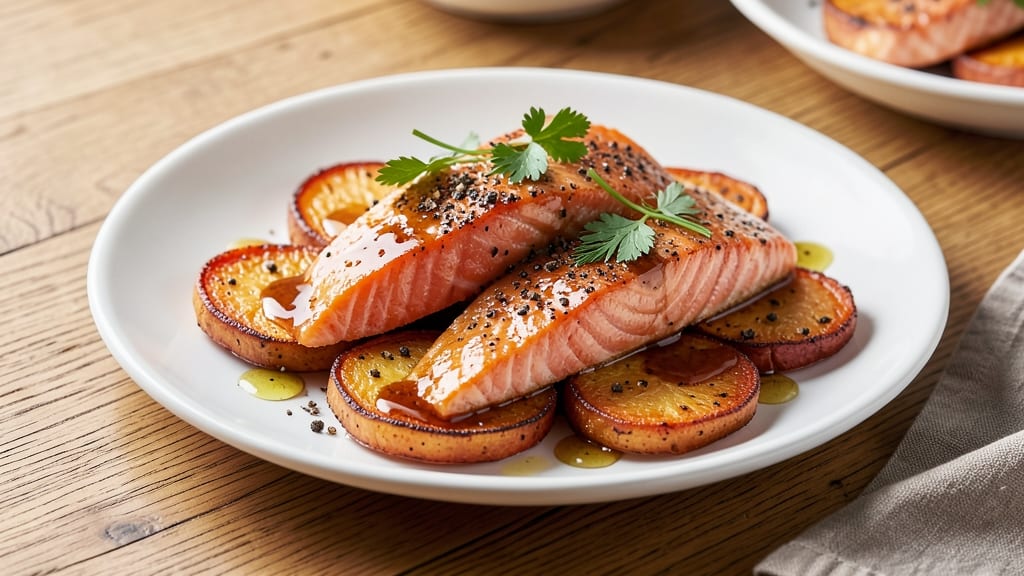
This American Journey salmon & sweet potato recipe transforms weeknight dinners into restaurant-worthy meals with minimal effort. The secret lies in a one-pan approach where perfectly seasoned salmon meets caramelized sweet potatoes, all kissed with a tangy maple-herb glaze.
I developed this dish after years of testing techniques to balance rich salmon flavors with the natural sweetness of sweet potatoes—no complicated steps, just bold results.
The salmon is baked to flaky perfection with a crispy skin, thanks to a dry rub of smoked paprika and garlic powder, while the sweet potatoes roast until tender with a caramelized edge.
The maple-herb glaze ties everything together, adding depth without overpowering the natural flavors. This recipe delivers restaurant-quality harmony in under 40 minutes, making it ideal for both weeknight dinners and special occasions.
What sets this dish apart is the textural contrast—tender salmon paired with creamy, slightly crispy sweet potatoes, all finished with a glossy glaze that adds a touch of sweetness.
The plating is simple yet elegant: arrange the salmon and sweet potatoes on a platter, drizzle with extra glaze, and garnish with fresh herbs. It’s a dish that feels indulgent but remains approachable for home cooks.
Whether you're serving this for a family dinner or impressing guests, the one-pan method ensures easy cleanup while delivering a meal that’s both comforting and sophisticated. The recipe scales effortlessly, so you can adjust the portions without sacrificing flavor. Let’s get cooking!
Ingredients for american journey salmon & sweet potato
Restaurant-quality harmony begins with these premium ingredients for one-pan salmon brilliance.
| Ingredient | Amount | Notes |
|---|---|---|
| Center-Cut Salmon Fillets 🐟 | 4 whole | Skin-on, 6-8 oz each |
| Medium Sweet Potatoes 🍠 | 2 whole | Organic preferred, uniform size |
| Pure Maple Syrup 🍯 | ⅓ cup | Grade B for depth of flavor |
| Extra-Virgin Olive Oil 🫒 | ¼ cup | Light fruity variety |
| Smoked Paprika 🌶️ | 1 tbsp | High-quality, not sweet |
| Garlic Powder 🧄 | 1 tbsp | Freshly ground preferred |
| Diamond Crystal Kosher Salt 🧂 | 1 ½ tsp | For seasoning and finishing |
| Fresh Thyme Leaves 🌿 | ¼ cup | Stems removed, finely chopped |
| Fresh Parsley Leaves 🌿 | ⅛ cup | For garnish, finely chopped |
| Fresh Lemon Juice 🍋 | 1 tbsp | From organic lemons |
| Ground Black Pepper 🌶️ | ½ tsp | Freshly cracked |
| Avocado Oil 🫒 | 1 tbsp | For crisping salmon skin |
The salmon selection is critical—center-cut fillets with skin ensure both flakiness and crispy perfection. Whole Foods Market and Trader Joe's carry excellent options, but any reputable seafood counter will work. Look for fillets with vibrant orange flesh and minimal bruising. Sweet potatoes should be firm and uniform in size for even roasting; organic varieties from the produce section at Costco or local farmers markets provide the best texture. The maple syrup must be Grade B for its deeper flavor profile—New England Maple or Log Cabin brands excel here. Fresh herbs are non-negotiable for the glaze; Whole Foods bulk herb sections offer the most vibrant thyme and parsley.
No smoked paprika? Substitute with a mix of sweet paprika and a pinch of cayenne for similar depth without heat. Garlic powder can be replaced with fresh minced garlic at double the amount, but the texture will differ slightly. For a quicker prep, pre-chopped frozen herbs work in a pinch, though fresh yields superior results. The avocado oil is essential for crisping the salmon skin—light olive oil won't provide the same high smoke point. Lemon juice can be swapped with white wine vinegar at half the amount, though the citrus brightness will be slightly muted. For a vegetarian adaptation, replace salmon with extra-firm tofu pressed and marinated in soy sauce and maple syrup.
Salmon should be used within 2 days of purchase for optimal freshness, while sweet potatoes keep for 2 weeks in a cool, dark place. The maple-herb glaze components can be prepped 1 day ahead and stored in the fridge, though the herbs should be added fresh before serving. Leftover salmon and sweet potatoes reheat beautifully in a 350°F oven for 10 minutes, though the skin may lose some crispness. For meal prep, portion the glaze separately and assemble just before serving to maintain freshness. All ingredients except the salmon and sweet potatoes can be stored in the pantry for 6-12 months when properly sealed.
Why You'll Love This Recipe
- One-Pan Magic: I swear by this for lazy nights—just toss everything on a sheet pan, pop it in the oven, and walk away. The salmon flakes apart with the slightest nudge, and those sweet potatoes caramelize into golden perfection without a single pot to wash.
- Sweet Heat Balance: That smoked paprika and maple syrup combo is chef’s kiss—smoky, slightly sweet, with just enough depth to make it feel special. Honestly, it’s the kind of flavor that turns a simple weeknight dinner into something you’d order at a restaurant.
- Prep-Ahead Powerhouse: I make double batches on Sundays because it reheats like a dream—great for lunches or a quick dinner when you’re too tired to cook. The salmon stays moist, and the sweet potatoes hold their texture, so it’s never sad leftovers.
- Budget-Friendly Luxury: Salmon feels fancy, but center-cut fillets are often on sale, and sweet potatoes stretch further than regular potatoes. A drizzle of maple syrup makes it taste indulgent without breaking the bank—my wallet thanks me every time.
Step-by-step instructions for one-pan baked salmon and sweet potatoes
This method delivers perfectly crisp salmon skin and caramelized sweet potatoes in a single pan.
Prep and Season the Sweet Potatoes
Preheat your oven to 400°F. While it heats, scrub the 2 whole medium sweet potatoes clean and slice them lengthwise into ½-inch thick rounds. You should end up with about 8-10 slices total, depending on potato size.
Arrange the sweet potato slices on a parchment-lined baking sheet in a single layer, leaving about ½ inch between each slice. This spacing ensures even browning. In a small bowl, whisk together 0.25 cup extra-virgin olive oil, 1 tbsp smoked paprika, 1 tbsp garlic powder, 0.5 tsp ground black pepper, and 1 tsp diamond crystal kosher salt (half of the total amount).
Drizzle this mixture evenly over the sweet potatoes, coating both sides completely. The paprika will give them that beautiful golden hue while the garlic and pepper add depth. Let them sit for 5 minutes while you prepare the salmon—this allows the seasoning to penetrate slightly.
Season and Arrange the Salmon Fillets
While the sweet potatoes marinate, pat the 4 whole center-cut salmon fillets dry with paper towels. This step is crucial—any moisture will prevent the skin from becoming crispy. Place each fillet skin-side down on a clean work surface and season both sides generously with the remaining 0.5 tsp diamond crystal kosher salt and 0.5 tsp ground black pepper.
Arrange the salmon fillets on top of the seasoned sweet potatoes, positioning them slightly overlapping or side-by-side. The residual heat from the potatoes will help cook the salmon more evenly. In a small bowl, combine 0.33 cup pure maple syrup, 0.25 cup fresh thyme leaves, and 1 tbsp fresh lemon juice. This will become our maple-herb glaze.
Roast Until Sweet Potatoes Are Tender
Transfer the baking sheet to the preheated oven and roast for 15 minutes. After this initial cooking time, check the sweet potatoes by piercing them with a fork—they should be tender but not falling apart. If they're not quite there, continue roasting for another 5-10 minutes while you prepare the glaze.
Remove the baking sheet from the oven and carefully transfer the sweet potatoes to a plate. Brush the salmon fillets with the maple-herb glaze, coating them evenly on both sides. Return the salmon to the oven for 8-10 minutes until the skin is deep golden brown and crispy, and the flesh flakes easily with a fork.
Finish with Fresh Herbs and Rest
Once the salmon is perfectly cooked, remove it from the oven and let it rest for 5 minutes. This resting period allows the juices to redistribute throughout the fillets, ensuring each bite is moist and flavorful. While the salmon rests, return the sweet potatoes to the oven for 2-3 minutes to warm them through.
Just before serving, sprinkle the 0.125 cup fresh parsley leaves over both the salmon and sweet potatoes. The bright green color provides a beautiful contrast to the golden-brown dishes and adds a fresh herbal note. Serve immediately with the maple-herb glaze spooned over the top for extra flavor.
Pro Tips For Making American Journey Salmon & Sweet Potato
- CRISP THE SKIN FIRST: Toss the salmon in a tiny bit of olive oil and smoke paprika, then sear skin-side down in a cold pan for 3-4 minutes on medium-low. I learned this the hard way—rushing the skin always means a gummy finish, and nobody wants that when you’re pouring maple syrup over it later.
- CUBE THE SWEET POTATO: Cut the sweet potatoes into 1.5-inch chunks, not thin slices. They’ll caramelize faster and stay tender, soaking up that maple glaze like a sponge. (Yes, even if it looks less "restaurant-worthy"—it’s about flavor, not Instagram.)
- DON’T OVERMAPLE IT: Start with 1 tablespoon of maple syrup per salmon fillet, then add more as it cooks—salmon absorbs liquid fast, and you’ll end up with a sticky mess if you dump it all at once. Taste as you go; you’re aiming for sticky, not drowned.
- USE THE MAPLE SYRUP TWICE: Save half the maple syrup for the sweet potatoes after roasting—toss them in a hot pan with a splash and a pinch of smoked paprika for 2 minutes. The residual sugar caramelizes instantly, giving you that deep, smoky-sweet contrast without extra effort. (Your future self will high-five you.)
Essential equipment for american journey salmon & sweet potato
One-Pan Essentials
This recipe thrives on simplicity with just three core pieces of equipment: a rimmed baking sheet (preferably half-sheet size for optimal airflow), parchment paper, and a sharp chef's knife. I use a Nordic Ware Naturals half-sheet pan—it's sturdy and non-reactive, ensuring even heat distribution.
The parchment prevents sticking and makes cleanup a breeze, while a Wüsthof Classic 8-inch chef's knife handles both sweet potato slicing and salmon prep with precision. 🌟
Oven Precision
An oven thermometer is non-negotiable for accuracy—your oven's displayed temperature can be off by 25°F or more. I recommend the Thermoworks Oven Thermometer; it's affordable and reliable. Preheat your oven to 400°F for both the sweet potatoes and salmon.
If you're using a convection oven, reduce the temperature to 375°F to prevent over-browning. For even cooking, place the baking sheet on the middle rack where heat circulates most evenly.
Crispy Skin Secrets
The key to that perfect salmon skin lies in two tools: a paper towel and avocado oil. Pat the salmon fillets completely dry with paper towels—this removes moisture that would otherwise steam the skin instead of crisping it.
Then, brush the skin with 1 tbsp avocado oil (not olive oil) just before the final cooking stage. The high smoke point of avocado oil ensures a crispy finish without burning. I keep a small bowl of oil nearby for quick application. ⚡
Glaze Tools
For the maple-herb glaze, a small whisk and measuring spoons are all you need. I use a Westcott 6-inch whisk to emulsify the maple syrup, lemon juice, and thyme into a smooth consistency. A spoonula comes in handy for brushing the glaze onto the salmon without tearing the delicate skin.
Store-bought maple syrup works, but I prefer the deeper flavor of Grade B maple syrup from local farms—it's worth the splurge for this dish.
Serving Presentation
Elevate your plating with a small offset spatula and tweezers. Use the spatula to arrange the salmon and sweet potatoes on a platter, then use tweezers to place the fresh parsley garnish precisely. I like to serve this on a white ceramic platter to make the colors pop.
For extra flair, drizzle any remaining glaze in a zigzag pattern over the top. A pair of kitchen shears also helps for quick herb chopping if you're short on time. 💫
Nutrition facts
Frequently asked questions
Can I substitute regular potatoes for sweet potatoes in this recipe?
While you can technically use regular potatoes, the flavor and texture will differ significantly. Sweet potatoes add natural sweetness and a creamy, slightly fibrous texture that pairs perfectly with the salmon. If you must substitute, try using Yukon Gold potatoes—they're creamier than russets and won't fall apart as easily when sliced. However, the dish will lose its signature depth of flavor.
How do I know when the salmon is fully cooked?
The salmon is perfectly cooked when it reaches an internal temperature of 145°F and the flesh flakes easily with a fork. For center-cut fillets, this typically takes 8-10 minutes in a 400°F oven after the initial roasting. The skin should also be deep golden brown and crispy—if it's still translucent, return it to the oven for another 2-3 minutes.
Can I make this recipe ahead of time?
You can prep the sweet potatoes and glaze components 1 day ahead, but it's best to cook the salmon fresh. The sweet potatoes can be roasted up to 2 days in advance and reheated in a 350°F oven for 10 minutes, though the texture will be slightly softer. Keep the salmon and sweet potatoes separate until ready to serve—reheating cooked salmon can make it dry. The fresh herbs should always be added just before serving for maximum flavor.
What if my sweet potatoes aren't caramelizing?
If your sweet potatoes aren't browning properly, try these fixes: increase the oven temperature to 425°F for the last 5-10 minutes, use a darker baking sheet (or line with foil), or brush them with a little more maple syrup before roasting. The spacing between slices is also critical—leave at least ½ inch between each piece for proper air circulation. If they're still not caramelizing, they may need more time in the oven.
Is this recipe suitable for meal prep?
While the concept works for meal prep, the salmon's texture suffers when reheated. The best approach is to prep the sweet potatoes and glaze components ahead, then cook the salmon fresh and assemble everything just before serving. For a more meal-prep friendly version, try baking the salmon separately and storing it in an airtight container for up to 2 days, then reheating it gently in the oven before serving with prepped sweet potatoes.