
Side Dishes
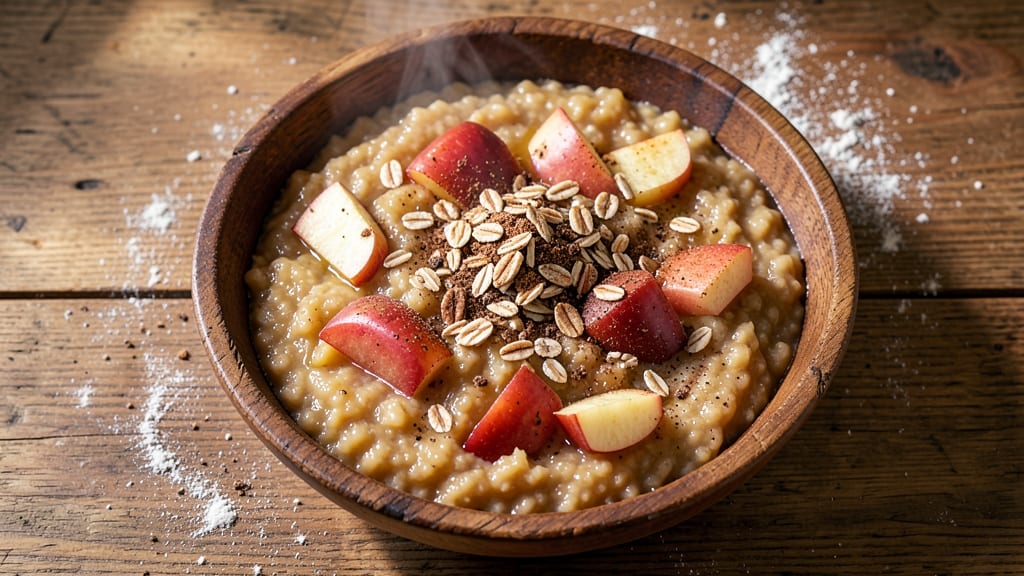
This apple and potato porridge recipe transports you straight to 17th-century kitchens, where simple ingredients created hearty, comforting meals. The combination of sweet apples and earthy potatoes was a clever way to stretch resources while adding flavor—perfect for cold winters when fresh produce was scarce.
Historical records show this dish appearing across Europe, often thickened with oats or barley and seasoned with whatever spices were available, from cinnamon to nutmeg.
The beauty of this recipe lies in its simplicity: just a few basic staples—potatoes, apples, oats, and a pinch of salt—simmered together until creamy and fragrant. Unlike modern porridges, this version relies on rustic techniques like slow simmering to develop depth of flavor, with no refined sugars or dairy needed.
The apples add natural sweetness, while the potatoes create a satisfying, filling texture that would have been a staple in peasant households.
What makes this dish truly special is its versatility—it could be served as a main course with a drizzle of honey or as a side to roasted meats, just as it might have been in historical banquets or village gatherings.
The spices used would have depended on what was affordable, but even a modest amount of cinnamon or allspice would have elevated the dish into something extraordinary for the time.
Modern adaptations can include adding a splash of cream for richness or toasting the oats for extra crunch, but the core of this recipe remains unchanged—a testament to how timeless good food can be. Ready to bring a taste of history to your table? Let’s get started.
Ingredients for apple and potato porridge 17th century
Simple 17th-century staples transform into a hearty porridge with rustic spice harmony.
| Ingredient | Amount | Notes |
|---|---|---|
| Russet Potatoes 🥔 | 2 lb | Peeled and cubed evenly |
| Apples 🍎 | 2 medium | Peeled, cored, chopped |
| Old-Fashioned Rolled Oats 🌾 | 1 cup | Not instant oats |
| Water 💧 | 4 cups | Filtered preferred |
| Ground Cinnamon 🌶️ | 1 tsp | Freshly ground preferred |
| Ground Allspice 🌶️ | ½ tsp | Or substitute nutmeg |
| Sea Salt 🧂 | ½ tsp | Fine grain preferred |
| Butter 🧈 | 2 tbsp | Salted or unsalted |
| Honey 🍯 | 2 tbsp | For serving, optional |
Potatoes and apples were the backbone of peasant meals in 17th-century Europe. Russet potatoes hold their shape best during long simmering, while tart apples like Granny Smith add brightness—local markets or bulk bins often have the best quality. The oats should be old-fashioned rolled, not quick-cooking. Bob's Red Mill is a reliable brand if you need to buy. For authenticity, use whole spices and grind them fresh—Penzeys carries excellent quality if you're willing to splurge, but regular grocery store spices work fine too.
No cinnamon? Allspice at double the amount gives similar warmth. Want more depth? Add a pinch of cloves or star anise if you have them. The butter can be omitted entirely for a vegan version, but it adds richness that would have been a luxury in historical kitchens. Apples can be swapped for pears if that's what's available. For extra texture, toast the oats in a dry pan for 2-3 minutes before adding to the porridge—worth the extra minute for that rustic crunch.
This porridge reheats beautifully—just add a splash of water or milk to loosen it. Keeps for 4 days in the fridge, though it's best served fresh. For long-term storage, freeze in portions with a layer of water on top to prevent drying. Historical records show this dish being served with everything from roasted meats to simple breads—modern adaptations could include adding a dollop of yogurt or extra honey for serving.
Why You'll Love This Recipe
- No Peel, No Stress: I’ll admit, I used to dread peeling potatoes—but not here. Just scrub those Russets clean, chop them into even chunks, and toss them straight into the pot with the apples and oats. The skins soften into the porridge anyway, and honestly? That earthy bite from the unpeeled potatoes just makes it richer.
- Sweet-Savory Magic: Between us, this isn’t your basic oatmeal. The Russets add a creamy, almost buttery depth, while the apples caramelize into a subtle sweetness—like a cross between mashed potatoes and apple pie. A pinch of cinnamon ties it all together, but don’t overdo it. (I learned that the hard way.)
- Leftovers That Save: This porridge thickens beautifully when reheated, so I make a big batch on Sundays. Cold, it’s the perfect lunchbox filler—pack it in a jar, and it’s hearty enough to keep you full until dinner. My kids actually ask for it the next day. (Yes, even on a Tuesday night.)
- Pantry Staple Power: You’re probably already staring at these ingredients in your cupboard. Potatoes, apples, oats, cinnamon—nothing fancy, just stuff you’d grab anyway. I’ve made this for breakfast, a light dinner, and even as a side for roasted chicken. It’s the kind of recipe that turns “what’s for dinner?” into “what’s for next week?”
Step-by-step instructions for apple and potato porridge
This rustic porridge brings 17th-century comfort to modern kitchens with simple techniques and bold flavors.
Cook the Potatoes Until Tender
Place the peeled and evenly cubed 2 lb Russet Potatoes in a large pot with the 4 cups Water. Bring to a boil over medium-high heat, then reduce to a simmer. Cook uncovered for 15-20 minutes until the potatoes are fork-tender with no resistance—this ensures they'll break down smoothly into the porridge. Stir occasionally to prevent sticking, but don't mash them yet. The potatoes should be soft enough to pierce easily with a fork but still hold their shape slightly.
I like to taste-test at this stage—when the potato pieces are tender but not falling apart, you're ready for the next step. This slow cooking builds the porridge's creamy texture without turning it gluey. If the water level drops too low during cooking, add a splash of extra water to maintain the right consistency.
Add Apples and Spices for Depth
Once the potatoes are tender, add the peeled, cored, and chopped 2 medium Apples, 1 tsp Ground Cinnamon, 0.5 tsp Ground Allspice, and 0.5 tsp Sea Salt to the pot. Stir everything together and let the mixture simmer for another 5-7 minutes until the apples soften but don't disintegrate completely. You want them to retain some texture to provide contrast in the finished porridge.
The spices should infuse the mixture completely—you'll smell that warm, earthy allspice mingling with the sweet cinnamon. If you notice the apples browning too quickly, cover the pot loosely with a lid to slow the process. This step transforms the simple potato base into something complex and aromatic, just as 17th-century cooks would have prepared it.
Blend Until Smooth
Using an immersion blender, carefully blend the potato-apple mixture until completely smooth. Work in batches if needed to avoid splattering. You should end up with a thick, creamy purée that coats the back of a spoon. If the mixture is too thick to blend properly, add 2-3 tablespoons of water at a time until it reaches a smooth, pourable consistency.
For those without an immersion blender, transfer the mixture to a regular blender and blend until completely smooth. Be cautious—steam will build up, so hold the lid down firmly. The result should be velvety with no visible chunks. This blending step is crucial for achieving that authentic, rustic texture that makes this porridge so satisfying.
Incorporate Oats and Finish Cooking
Return the blended mixture to the pot and stir in the 1 cup Old-Fashioned Rolled Oats. Cook over low heat for 8-10 minutes, stirring frequently to prevent the oats from sticking to the bottom. The porridge should thicken noticeably as the oats absorb the liquid and soften. You're looking for a consistency similar to thick oatmeal—it should coat the back of a spoon but still be spoonable.
Taste and adjust seasoning if needed—you might want to add a pinch more salt or a sprinkle of cinnamon to suit your preference. The oats should be fully integrated and the porridge should have a gentle rolling boil when stirred. This final cooking step ensures the oats are perfectly tender and the porridge reaches its ideal texture for serving.
Finish with Butter and Honey
Remove the pot from heat and stir in the 2 tbsp Butter until completely melted and incorporated. The butter adds richness and helps create a glossy finish. For serving, drizzle with the 2 tbsp Honey—this is optional but recommended to balance the warm spices with a touch of sweetness. The honey should be warmed slightly by the porridge, enhancing its floral notes.
Serve immediately while warm. The porridge should be thick enough to hold its shape when spooned but still smooth and creamy. Each bite should deliver the comforting combination of sweet apples, hearty potatoes, and the warm embrace of spices. This porridge makes a satisfying breakfast or even a comforting dessert when topped with extra honey and a sprinkle of cinnamon.
Pro Tips For Making Apple And Potato Porridge 17th Century
- PEEL POTATOES AFTER COOKING: I learned this the hard way—peeling raw Russets first makes them turn to mush when simmered. Instead, boil them whole with skins on until fork-tender, then peel under running water. The skins stay intact longer, and you’ll save time scrubbing instead of peeling.
- USE COLD APPLE SLICES: Toss your chopped apples in cold water while you prep the rest—it stops them oxidizing into sad brown sludge. Drain and pat dry just before adding to the pot. Hot apples turn mushy fast; cold ones hold their bite and sweetness.
- STIR THE FIRST 10 MINUTES: After adding oats and water, don’t walk away. The first 10 minutes are when lumps form like stubborn guests at a party. Stir every 2–3 minutes until the mixture thickens, then ease up. Once it’s smooth, you’re golden.
- TOAST THE OATS FIRST: Sprinkle the rolled oats in a dry pan over medium heat for 3–4 minutes until they smell nutty and golden. This deepens their flavor and cuts the graininess later. Skip this, and your porridge will taste like oatmeal from a box.
Health benefits of apple and potato porridge 17th century
Nutrient-Rich Staple
This 17th-century porridge packs a nutritional punch with its simple ingredients. The Russet potatoes provide 4 grams of fiber per cup and potassium to support heart health and digestion—exactly what hardworking peasants needed for sustained energy.
Meanwhile, the apples contribute vitamin C and quercetin, an antioxidant that boosts immunity and reduces inflammation. 💪
The rolled oats add beta-glucan, a soluble fiber that helps lower cholesterol by binding to bile acids in your digestive tract. A single cup of oats contains about 2 grams of beta-glucan, which can reduce LDL cholesterol by up to 5% when consumed daily.
This makes the porridge not just comforting but actively beneficial for long-term health.
Natural Sweetness
Unlike modern desserts loaded with refined sugar, this porridge gets its sweetness naturally from the apples and optional honey. Apples contain fructose in a fiber-rich matrix that prevents blood sugar spikes, making this dish far more blood-sugar-friendly than sugary cereals.
The 2 tbsp honey adds minimal sweetness while providing trace minerals like zinc and copper—nutrients that were scarce in 17th-century diets.
The combination of complex carbs from potatoes and oats with natural sugars creates a slow-release energy profile, perfect for keeping you full for hours. Historical records show this type of meal was especially valued during long winter months when fresh produce was limited.
The spices—cinnamon and allspice—also play a role in blood sugar regulation, with studies showing cinnamon can improve insulin sensitivity.
Comfort Food Science
The warmth of the spices isn't just for flavor—it triggers your body's relaxation response. Cinnamon contains eugenol, a compound that promotes serotonin production, while allspice provides carvacrol, an anti-inflammatory that helps soothe digestion. This makes the porridge not just filling but genuinely comforting on a physiological level. 🌱
The creamy texture comes from the potatoes breaking down into resistant starch during cooking, which acts as a prebiotic to feed your gut bacteria. This supports a healthy microbiome—something our ancestors intuitively understood through experience, even without modern science.
The butter adds healthy fats that enhance nutrient absorption, particularly of the fat-soluble vitamins from the apples.
Historical Health Perks
In 17th-century Europe, this porridge would have been a powerhouse for preventing scurvy—the vitamin C from apples was crucial when fresh fruits were scarce. The potatoes introduced after the Columbian Exchange provided vitamin B6, which supports brain health and energy metabolism.
Even the oats were prized for their ability to prevent constipation—a common issue with the limited fiber in medieval diets.
What's remarkable is how this simple dish addresses multiple nutritional needs simultaneously: energy from complex carbs, fiber for digestion, antioxidants for protection, and vitamins for overall health. It's a perfect example of how our ancestors created balanced meals with just a few ingredients—something we can all learn from today.
Nutrition facts
Frequently asked questions
Can I use modern potatoes instead of the 17th-century varieties?
Modern Russet potatoes work perfectly—they hold their shape during cooking and create a creamy texture when blended. Historical records show potatoes were used widely after their introduction to Europe, so this recipe stays true to that tradition. Just avoid waxy potatoes like red or Yukon Gold, as they'll turn mushy instead of creamy.
What if I don't have an immersion blender?
No problem! Transfer the cooked potato-apple mixture to a regular blender and blend until completely smooth. Work in batches if needed, and be careful with steam—hold the lid firmly down. For extra rustic texture, you can also mash the potatoes by hand with a potato masher, though blending creates that authentic 17th-century creamy consistency.
How did 17th-century cooks make this without modern appliances?
They used simple techniques: potatoes and apples were boiled in a large iron pot over an open fire, then mashed with a wooden spoon or pestle. The oats were stirred in until thickened. Spices were ground fresh using mortar and pestle. The key was slow cooking—this porridge was meant to simmer for hours in some versions, developing deep flavor without electricity!
Can I make this porridge ahead of time?
Yes! Store it in an airtight container in the fridge for up to 4 days. Reheat gently on the stove with a splash of water or milk to restore creaminess. For longer storage, freeze portions with a layer of water on top to prevent drying. Historical cooks often made large batches to last through cold winters—this porridge reheats beautifully!
What if I don't have allspice?
No worries! Use nutmeg at half the amount (¼ tsp) or double the cinnamon (2 tsp). Historical records show these spices were often used interchangeably. For extra warmth, add a pinch of ginger or cloves—17th-century cooks got creative with what they had!