
Side Dishes
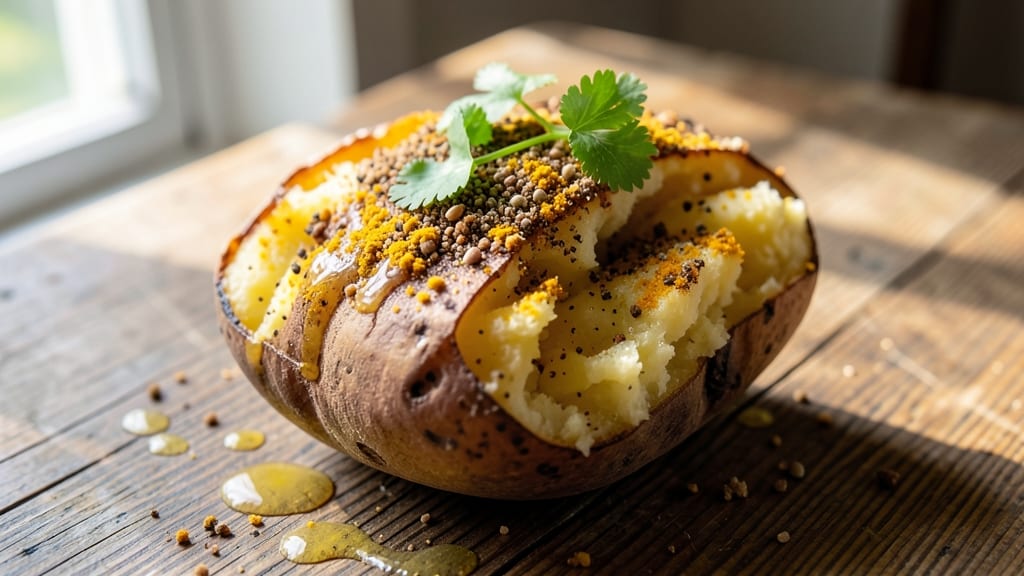
This Indian-style baked potato recipe transforms humble spuds into a crispy, spiced masterpiece with golden charred edges and aromatic turmeric-cumin seasoning. 🌟 The secret lies in baking them skin-on at high heat until the edges blister, then finishing with a fragrant dry rub that mimics Mumbai street food flavors.
Unlike your average baked potato, this version delivers restaurant-quality texture and depth in just 45 minutes—no microwave required.
Inspired by the aloo tikki tradition of crispy potato patties, this recipe elevates simple potatoes with a turmeric-cumin crust that crackles with every bite. The key steps—proper baking technique and the right spice blend—ensure perfectly crispy edges while keeping the inside fluffy.
Traditional toppings like yogurt, pickled onions, and chaat masala take it from side dish to star, but you can customize it with paneer for protein or coconut yogurt for a vegan twist.
What sets this apart is the dual-texture magic: the outside develops a caramelized crunch, while the inside stays tender and infused with warm spices. The turmeric not only adds color but also enhances the potato’s natural sweetness, creating a balance that’s both comforting and exciting.
This is the kind of dish that turns a simple side into the centerpiece of your meal—bold, satisfying, and impossible to resist.
The beauty of this recipe lies in its versatility. Serve it as a standalone dish with a side of raita, or pair it with grilled meats or dal for a complete Indian feast.
The method is foolproof, and the flavors are endlessly adaptable—whether you’re cooking for a weeknight dinner or a festive gathering. Let’s get started on making your potatoes unforgettable.
Ingredients for baked potato indian
Four russet potatoes and eleven aromatic ingredients transform into Mumbai street food-inspired crispy spuds.
| Ingredient | Amount | Notes |
|---|---|---|
| Russet Potatoes 🥔 | 4 whole | Large, skin-on for crispy edges |
| Ground Turmeric 🌿 | 1 tbsp | Freshly ground for vibrant color |
| Ground Cumin 🌿 | 1 tbsp | Toasted for deeper aroma |
| Ground Coriander 🌿 | 1 tbsp | Freshly ground for brightness |
| Garlic Powder 🧄 | 1 tbsp | Not garlic salt |
| Ground Black Pepper 🌶️ | ½ tbsp | Freshly cracked for heat |
| Ghee or Vegetable Oil 🫒 | 2 tbsp | For basting and crisping |
| Plain Yogurt 🥛 | ½ cup | Whisked for raita topping |
| Red Onion 🧅 | ¼ cup | Thinly sliced for pickled onions |
| Lemon Juice 🍋 | 1 tbsp | Freshly squeezed for tang |
| Chaat Masala 🌶️ | 1 tsp | For final flavor burst |
| Salt 🧂 | 1 tsp | Diamond Crystal preferred |
| Fresh Cilantro 🌿 | ¼ cup | Chopped for garnish |
The potatoes are non-negotiable—Russet delivers the crispy edges and fluffy interior this recipe demands. Look for firm, unblemished spuds with thin skins at your local grocery store’s produce section, or opt for organic from Whole Foods for extra assurance. The spice blend is where the magic happens: Penzeys Spices or bulk bins at Indian markets are ideal for freshly ground turmeric and cumin, though pre-ground works in a pinch. Toast your cumin seeds briefly in a dry pan before grinding for an extra depth of flavor that elevates the entire dish. For the ghee, Gujarat brand is preferred if available, but any high-quality ghee or neutral vegetable oil will suffice for the same crisping effect.
No fresh turmeric? Ground turmeric works fine, but toast it lightly in a dry pan to enhance its earthy notes. Swap yogurt for coconut yogurt if you're avoiding dairy, though the tang will be slightly milder. For the pickled onions, red wine vinegar can replace lemon juice if needed, though the bright acidity of lemon is ideal. The chaat masala is essential—MTR brand from Indian grocery stores is the gold standard, but any good-quality blend will work. If you can't find it, a mix of black salt, cumin, and coriander can mimic its complexity. For a protein boost, consider adding crumbled paneer or spiced chickpeas as a topping, though the dish shines just as well on its own.
Store leftover potatoes in an airtight container for up to 3 days, though they're best enjoyed fresh. The pickled onions and yogurt topping keep separately for 5 days in the fridge. For maximum crispiness, reheat in a 400°F oven for 10 minutes—the edges will regain their golden crunch. The spices lose potency after about 6 months, so keep them in a cool, dark place. Prep the toppings ahead of time for a stress-free weeknight dinner; the flavors actually meld better when assembled just before serving.
Why You'll Love This Recipe
- One-Pot Magic: I swear by this recipe when I’m too tired to chop a million things. Russets go straight from oven to spice bath—no peeling, no fuss—just slice, bake, and sprinkle. The cumin and coriander do all the flavor work while I’m scrolling through my phone.
- Golden Crust Alert: That crispy exterior with a fluffy inside? It’s the turmeric and garlic powder working together like a dream team. Honestly, the first time I bit into one still warm, I nearly dropped the fork. (Yes, even on a Tuesday night.)
- Meal Prep MVP: Between us, this is my go-to for lunches all week. The spices keep them tasting fresh for days, and I can reheat them straight from the fridge—no soggy potatoes here. My daughter picks out the biggest pieces, but still asks for seconds.
- Pantry Staple Power: I’m always stocked with these spices, so it costs me pennies per serving. No specialty ingredients, no last-minute grocery runs—just what’s already there. Plus, the leftovers? They’re my secret weapon for lazy days.
Step-by-step instructions for turmeric cumin crunch baked potatoes
Transform simple russet potatoes into restaurant-quality Indian-inspired baked potatoes with crispy charred edges and aromatic spice blends.
🔥 Step 1: Preheat and Prepare the Potatoes
Preheat your oven to 425°F with a rack positioned in the lower third. This positioning ensures even browning and crispy edges. While the oven heats, scrub the 4 whole Russet Potatoes thoroughly under cold water to remove any dirt, but leave the skins intact for texture and nutrients.
Pierce each potato 4-5 times with a fork to allow steam to escape during baking. This prevents potential bursting and ensures even cooking. Place them on a parchment-lined baking sheet, spacing them about 2 inches apart to allow for proper air circulation and even browning.
👨🍳 Step 2: Create the Spice Rub
In a small bowl, combine 1 tablespoon ground turmeric, 1 tablespoon ground cumin, 1 tablespoon ground coriander, 1 tablespoon garlic powder, and ½ tablespoon ground black pepper. This blend creates the vibrant color and complex aroma that defines this Indian-inspired preparation. Mix thoroughly until the spices are evenly distributed.
Using your hands, generously coat each potato with the spice mixture, pressing it into the skin so it adheres well. The spices will infuse into the potato as it bakes, creating that signature golden hue and aromatic profile. I like to press particularly hard on the sides and bottom where the potatoes will touch the baking sheet—this is where the crispy char develops.
🔥 Step 3: Bake Until Crispy and Tender
Baste the potatoes with 2 tablespoons ghee or vegetable oil using a pastry brush or your fingers. The fat helps create the crispy edges we're after. Place the baking sheet on the lower oven rack and bake for 45 minutes. After this initial baking time, rotate the baking sheet 180 degrees for even browning.
Continue baking for another 30-45 minutes until the potatoes are fork-tender and the skin is deep golden brown with charred edges in spots. The internal temperature should reach 205-210°F when measured with an instant-read thermometer. Here's the thing—don't be tempted to check them early. The potatoes need this full baking time to develop both the crispy exterior and fluffy interior.
🥘 Step 4: Prepare the Yogurt and Onion Toppings
While the potatoes bake, whisk together ½ cup plain yogurt, 1 tablespoon lemon juice, 1 teaspoon salt, and 1 teaspoon chaat masala in a small bowl. This creates a tangy, cooling raita that balances the richness of the baked potatoes. Thinly slice the ¼ cup red onion and set aside for the pickled onions.
In a separate small bowl, combine the sliced onions with 1 teaspoon chaat masala and let them sit for 10 minutes to soften slightly. This preparation step enhances their flavor and prevents them from being too sharp when served. Chop the ¼ cup fresh cilantro finely and set aside for garnishing.
🍽️ Step 5: Assemble and Serve
Carefully transfer the baked potatoes to a serving platter. Using a sharp knife, cut each potato lengthwise to create two halves. The interior should be fluffy with a golden hue from the spices, and the exterior should have crispy, charred edges that give way to the tender flesh underneath.
Spoon the yogurt mixture over each potato half, then top with the marinated red onions and chopped cilantro. The contrast of the cool yogurt with the warm, spiced potatoes creates a perfect balance of flavors and textures. Serve immediately while the potatoes are still hot and the toppings are fresh, ensuring every bite delivers that satisfying combination of crispy, creamy, and aromatic elements.
Pro Tips For Making Baked Potato Indian
- PIERCE POTATOES FIRST: Russet skins are tough—prick them with a fork before baking, not after. I learned this the hard way when my potatoes exploded like overripe squash in the oven. Three deep holes per side keeps them from bursting and lets the spices seep in evenly.
- TOAST THE SPICES: Skip the pre-ground spices straight from the jar—toss ground turmeric, cumin, and coriander in a dry pan over medium heat for 30 seconds. The toasted aroma is richer, and it cuts through the earthy potato flavor better. (Yes, even if you’re impatient like me.)
- DON’T OVERMIX THE TOPPING: Once you mix the spices with garlic powder and butter, resist the urge to press them into the potato flesh. Sprinkle them on top like a loose blanket—this keeps the skin crispy while letting the flavors meld with the steam. Overmixing turns your spuds into mushy spice pudding.
- BAKE AT 400°F UNTIL FINGER-TESTED: Crank the oven to 400°F and bake until a fork slides in without resistance—about 60-75 minutes, depending on size. I used to pull them out too soon (because who wants to wait?), but undercooked centers make the spice topping soggy. A quick internal check saves seconds of regret later.
Regional styles of these flavors
Mumbai Street Food
This recipe draws direct inspiration from Mumbai’s beloved aloo tikki—crispy potato patties—adapted for baked potatoes. The key similarity is the turmeric-cumin crust that creates that signature golden crunch. In Mumbai, street vendors serve these with tangy chutneys and pickled onions, just like our yogurt topping and pickled red onions.
The difference? Our version keeps the potato whole for a heartier, more satisfying dish that still delivers that Mumbai-style crispy magic. 🌟
Punjabi Aloo Paratha
For a more rustic take, think of this as a deconstructed aloo paratha—the flaky, spiced potato dish wrapped in dough. Here, we skip the dough and focus on the spiced potato filling that’s traditionally used.
The turmeric-cumin blend mirrors what you’d find in paratha fillings, while the charred edges mimic the crispy texture of a well-cooked paratha. Serve with mint chutney or tamarind date chutney for a true Punjabi-inspired meal.
This version is perfect for those who love the flavors of parathas but want something lighter and easier to make.
South Indian Masala Potato
In South India, potatoes are often cooked with mustard seeds, curry leaves, and coconut—a completely different flavor profile. But if you want to blend South Indian techniques with our recipe, try adding ½ teaspoon toasted mustard seeds and 2-3 curry leaves to the spice rub.
The coconut flavor works surprisingly well with the yogurt topping, creating a creamy, slightly sweet contrast to the spiced potatoes. This variation is especially popular in Kerala and Tamil Nadu, where coconut is a staple.
North Indian Keema Aloo Fusion
For a protein-packed twist, top your baked potatoes with spiced ground lamb (keema) or crumbled paneer mixed with the yogurt topping. This fusion mirrors the keema aloo dishes you’d find in North Indian restaurants, where potatoes are cooked with ground meat or paneer.
The yogurt acts as a cooling base, while the spices in the keema or paneer add depth. Garnish with fresh coriander and a squeeze of lemon for a dish that’s hearty, flavorful, and perfect for a weeknight dinner. 💛
Bengali Potato Curry Adaptation
Bengali cuisine often features potatoes in curries with mustard oil and panch phoron (five-spice blend). While our recipe focuses on the baked potato, you can mimic Bengali flavors by adding 1 teaspoon panch phoron to the spice rub and using mustard oil instead of ghee.
Serve with a side of begun bhaja (fritters) or dal for a full Bengali-inspired meal. The mustard oil adds a unique, slightly pungent depth that pairs beautifully with the yogurt topping.
Nutrition facts
Frequently asked questions
Can I use sweet potatoes instead of russets?
While sweet potatoes will work, they have a different texture and flavor profile. Russets are ideal for this recipe because their high starch content creates the perfect crispy exterior and fluffy interior. Sweet potatoes will be slightly sweeter and less crispy. If you must use them, reduce the baking time by 10-15 minutes and increase the oven temperature to 450°F for better browning.
How do I make this recipe vegan?
Swap the yogurt for coconut yogurt and use vegetable oil instead of ghee. For extra flavor, add ½ teaspoon garam masala to the spice rub. The rest of the recipe remains the same, and the coconut yogurt will still provide that creamy, tangy contrast to the spiced potatoes.
Why do my potatoes turn out soggy instead of crispy?
Soggy potatoes usually happen when steam builds up instead of escaping. Pierce each potato 4-5 times before baking and place them on a single layer with 2 inches of space between them. Also, ensure your oven rack is in the lower third for proper browning. If your oven runs hot, reduce the temperature to 400°F to prevent burning.
Can I make these ahead of time?
Yes! Bake the potatoes as directed, then let them cool completely. Store in an airtight container for up to 3 days. Reheat in a 400°F oven for 10 minutes to restore crispiness. Prepare toppings separately and assemble just before serving for the best flavor.
What other toppings can I try besides yogurt and onions?
Get creative! Try spiced chickpeas for protein, mint-cilantro chutney for freshness, or crumbled paneer for richness. For heat, add a sprinkle of red chili powder or chopped green chilies. South Indian lovers might enjoy coconut chutney with toasted mustard seeds.