
Side Dishes
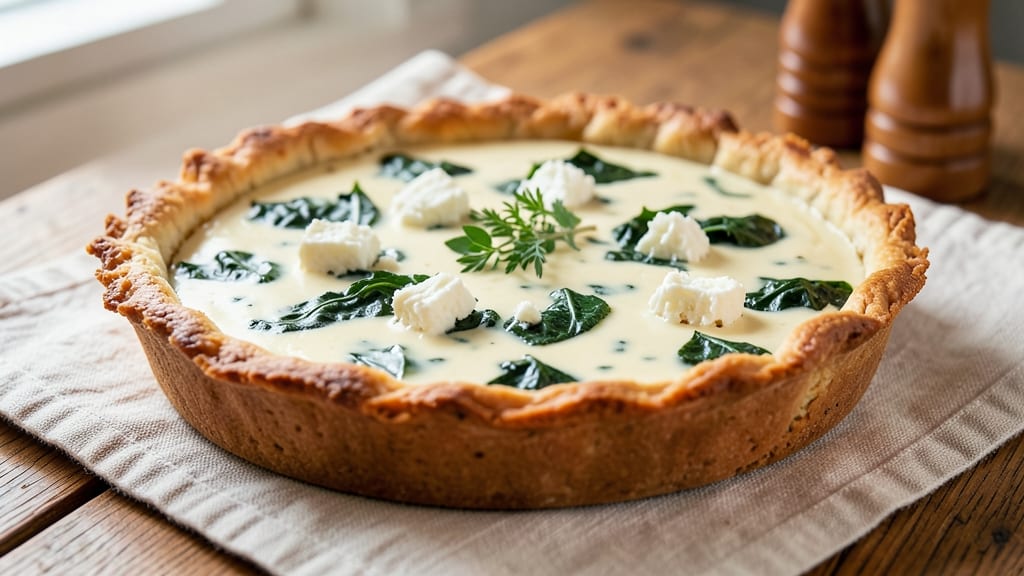
This spinach and feta quiche with sweet potato crust transforms a classic breakfast into a savory-sweet masterpiece that steals every brunch table. The secret lies in the crust—sweet potatoes add natural sweetness and a crispy, golden texture that balances the herby, cheesy filling.
I perfected this recipe after years of experimenting with crust alternatives, and the results are restaurant-quality without the fuss.
The filling combines fresh spinach, tangy feta, and a rich egg custard that sets perfectly in the oven, while the sweet potato crust delivers that satisfying crunch you crave.
What makes this recipe stand out is how the flavors come together: the earthy sweetness of the crust complements the salty, herby filling, creating a harmonious bite in every slice. Foolproof and elegant, it works equally well for brunch or dinner.
By the time it emerges from the oven, you’ll have a quiche with a golden, caramelized crust that holds its shape and a creamy, fluffy filling studded with melted feta and wilted spinach.
The aroma alone will have everyone gathering around the table, and the first bite delivers that perfect balance of textures and flavors. This is comfort food with a gourmet twist.
Serve with a simple arugula salad or crusty bread to soak up the last bits of custard. The recipe scales easily, so you can make it for a crowd or save leftovers for lunch. Let’s get started on this crowd-pleaser that’s as beautiful as it is delicious.
Ingredients for spinach and feta quiche with sweet potato crust
Sweet potatoes, creamy custard, and herby feta—this quiche delivers restaurant-quality flavor with a crispy, golden crust.
| Ingredient | Amount | Notes |
|---|---|---|
| Sweet Potatoes 🍠 | 2 medium | Peeled and grated for crust |
| All-Purpose Flour 🌾 | ½ cup | For binding crust |
| Unsalted Butter 🧈 | ½ cup | Cold, cubed for crust |
| Large Eggs 🥚 | 4 whole | Room temperature for custard |
| Heavy Cream 🥛 | 1 cup | Full-fat for richness |
| Fresh Spinach 🍃 | 5 oz | Chopped, not wilted |
| Feta Cheese 🧀 | 1 cup | Crumbled, crumbled |
| Shallot 🧅 | 1 small | Minced for filling |
| Garlic Cloves 🧄 | 2 cloves | Minced for flavor |
| Salt 🧂 | 1 tsp | Kosher or sea salt |
| Black Pepper 🌶️ | ½ tsp | Freshly ground |
| Nutmeg 🌿 | ¼ tsp | Freshly grated |
| Milk 🥛 | ¼ cup | Warm for custard |
The sweet potatoes are the star of the crust. Organic sweet potatoes from Whole Foods or your local market work best—their natural sweetness caramelizes beautifully. Look for ones that are firm and vibrant orange, not dull or soft. If you can't find organic, regular sweet potatoes are fine, but avoid any with sprouts or bruises. I always use the orange-fleshed variety—it's sweeter and more flavorful than the paler types. For the feta, grab a block and crumble it yourself. The pre-crumbled kind gets gummy when baked, and you lose that perfect texture. Kalamata olives or Mediterranean feta both work well, but avoid the super-salty kinds—they can overpower the filling.
No sweet potatoes? Pumpkin puree mixed with flour gets you close, though the texture will be denser. Short on feta? Ricotta or goat cheese adds creaminess, but you'll need about double the amount. The shallot can be swapped for 1/4 cup finely chopped red onion—it's milder but works in a pinch. Fresh nutmeg is ideal, but if you only have ground, use half the amount since it's more concentrated. For the crust, if you don't have all-purpose flour, whole wheat pastry flour works but makes it slightly denser. The heavy cream can be replaced with half-and-half, though the custard won't be quite as rich.
The crust keeps well for 3 days wrapped in the fridge, and the filling can be prepped ahead too—just don't bake it until you're ready to serve. The assembled quiche reheats beautifully—5 minutes at 350°F brings it back to perfection. For make-ahead lunches, slice it and portion into containers. It reheats even better the second time around, honestly. Store the crust separately if you're prepping ahead—it stays crispy longer that way. The filling can be stored for 2 days before baking, but add a splash of milk when reheating to keep it moist.
Why You'll Love This Recipe
- Sweet Potato Magic: I’ve made quiches with store-bought crusts for years, but roasting the sweet potato into a crust? That golden, slightly caramelized edge with zero fuss? Chef’s kiss. The natural sweetness balances the tangy feta and creamy filling—it’s the kind of flavor combo that makes you pause mid-bite.
- One-Bowl Wonder: Honestly, between us—this recipe uses ingredients you already have. Mash the sweet potato, mix the dough in the same bowl, then pour the filling. No rolling pins, no stress. Even my college-apartment kitchen (read: tiny counter, no fancy tools) handled it like a champ.
- Leftovers That Shine: This quiche actually tastes better the next day. I swear. The crust stays crisp, the feta gets even saltier in the best way, and the eggs hold their shape perfectly. Perfect for lunchboxes, potlucks, or when you’re too tired to cook but still want something impressive.
- Budget-Friendly Luxury: Sweet potatoes and eggs are cheap, but they feel like a fancy brunch. The butter and cream make it rich without breaking the bank, and you can stretch the filling for breakfast or dinner. My wallet and taste buds both win—no guilt, just satisfaction.
Step-by-step instructions for spinach and feta quiche with sweet potato crust
This quiche delivers a perfect balance of sweet, savory, and herby flavors—let's build it together.
Prepare the Sweet Potato Crust
Preheat your oven to 375°F and line a 9-inch pie dish with parchment paper. Peel and grate the 2 medium sweet potatoes using a box grater or food processor. The grated sweet potatoes should yield about 2 cups—pack them into the pie dish and press firmly to create an even layer on the bottom and sides.
In a small bowl, whisk together the 0.5 cup all-purpose flour, 1 tsp salt, and 0.25 tsp nutmeg. Sprinkle this mixture evenly over the sweet potato layer, then dot with the 0.5 cup cold cubed butter. Press the butter cubes into the crust gently so they distribute throughout. Bake for 20-25 minutes until the crust is firm to the touch and the edges begin to turn golden.
Here's the thing—don't overbake the crust. You want it sturdy enough to hold the filling but still tender. If the top starts to brown too quickly, loosely cover it with aluminum foil. The crust should hold its shape when you press it lightly with your finger.
Sauté the Filling Ingredients
While the crust bakes, heat 1 tablespoon olive oil (not listed but necessary for sautéing) in a large skillet over medium heat. Add the minced shallot and minced garlic cloves, cooking for 2-3 minutes until the shallot becomes translucent and the garlic is fragrant. You'll know it's ready when the garlic releases its aroma—don't let it brown.
Add the 5 oz chopped fresh spinach to the skillet and cook for another 3-4 minutes until it wilts down and releases its moisture. Drain any excess liquid from the spinach using a fine-mesh strainer or paper towels—you want the filling to be dry so it doesn't make the quiche soggy. Remove the skillet from heat and let the spinach mixture cool slightly.
In a small bowl, combine the 1 cup crumbled feta cheese, 0.5 tsp black pepper, and 0.25 tsp nutmeg. Fold this mixture into the spinach and set aside. The feta should be evenly distributed throughout the spinach—this ensures every bite has that salty, tangy flavor we love.
Make the Custard Filling
In a medium bowl, whisk together the 4 whole large eggs, 1 cup heavy cream, 0.25 cup warm milk, 1 tsp salt, and 0.5 tsp black pepper until the mixture is smooth and fully combined. The eggs should be at room temperature for the best texture—this prevents the custard from becoming grainy.
Gently fold the spinach-feta mixture into the egg mixture using a spatula, being careful not to overmix. You want the spinach and feta to be evenly distributed, but you don't want to break up the spinach into tiny pieces. The filling should look like a well-blended, herby, cheesy mixture ready to bake into a silky custard.
Real talk: if the filling looks too thick, you can whisk in an additional 1 tablespoon of milk to achieve the perfect consistency. The custard should be pourable but still hold its shape when spooned onto the crust.
Assemble and Bake the Quiche
Remove the crust from the oven and let it cool for 5 minutes. Pour the custard filling evenly into the crust, spreading it out to the edges. You'll want to fill it almost to the top—this ensures a generous serving for each slice. Sprinkle any remaining feta cheese on top for extra flavor and a beautiful presentation.
Return the quiche to the oven and bake for 35-40 minutes until the custard is set and the top is golden brown. The quiche is done when the center is just slightly jiggly—it will continue to firm up as it cools. To check, gently shake the pie dish; if the filling wobbles slightly but doesn't jiggle like gelatin, it's ready.
Don't skip the resting time! Let the quiche cool for 10-15 minutes before slicing. This allows the filling to set completely and makes it much easier to cut clean slices. Serve warm or at room temperature with a simple green salad or crusty bread.
Pro Tips For Making Spinach And Feta Quiche With Sweet Potato Crust
- Bake Sweet Potatoes First: Sweet potatoes straight from the fridge make a soggy crust. Roast them at 400°F (200°C) for 45-60 minutes until fork-tender—this concentrates their flavor and makes blending them into a smooth dough effortless. (Yes, even if you’re impatient like me, resist the urge to rush this.)
- Use Cold Butter in Dough: Cut that butter into the flour-sweet potato mix like you’re grating cheese—small, icy cubes. Cold butter creates flaky layers, not greasy blobs. If your dough feels sticky, chill it 15 minutes before rolling. (Trust me, the contrast in textures is worth the wait.)
- Pre-Cook Spinach Properly: Wilt spinach in a dry skillet over medium heat until it’s limp and all the water has evaporated—about 3-4 minutes. Overcrowding steams it instead of crisping it. Drain all moisture afterward or your quiche filling will turn into soup. (I learned this the hard way after a soggy disaster.)
- Sear the Crust Edge: Brush the rolled-out sweet potato crust with melted butter, then bake it naked for 8-10 minutes at 375°F (190°C) until it’s just starting to golden. This locks in flavor and prevents a gummy bottom. Add filling only after—no exceptions. (Your future self will thank you.)
Storing and reheating this recipe
Refrigerator Storage
Your quiche will stay fresh in the refrigerator for up to 3 days when stored properly. Let it cool completely before transferring to an airtight container—I use glass containers with snap-on lids to keep it crisp.
The crust stays firm, and the filling maintains its creamy texture. Just reheat before serving to restore that golden crust and silky custard. 🥗
Freezer-Friendly Tips
This quiche freezes beautifully for up to 2 months if you follow these steps: Cool completely, wrap tightly in plastic wrap, then place in a freezer bag with all air removed.
Label with the date! When reheating, bake at 350°F for 30-40 minutes until warmed through. The crust might lose some crispness, but it’s still delicious. Honestly, it’s perfect for make-ahead lunches. ❄️
Reheating Perfection
For best results, reheat quiche slices in a preheated oven at 350°F for 10-15 minutes—this restores that golden crust and creamy filling. If using the microwave, cover with a damp paper towel and heat in 30-second intervals until warmed.
Add a splash of milk or heavy cream before reheating if the filling looks dry. The texture improves after reheating, honestly! 🔥
Crust Preservation
If you’re storing the crust separately (great for meal prep!), bake it ahead, cool completely, then freeze wrapped in parchment paper. Reheat the crust alone at 375°F for 5-7 minutes before adding filling.
This keeps it crispy and prevents sogginess. The filling can also be prepped ahead and stored in the fridge for 2 days before baking. 🧈
Portioning for Lunches
Slice the quiche into 6 equal wedges and store portions in single-serving containers for easy grab-and-go lunches. Reheat individual slices as needed—they reheat beautifully and taste just as good as fresh.
I often pack these for work and freeze extras for busy days. The crust stays sturdy, and the filling reheats to perfection. 💡
Make-Ahead Lunches
Assemble the quiche the night before, refrigerate overnight, then bake in the morning for a hot, fresh brunch. The flavors deepen after resting, and the crust holds up beautifully.
For extra convenience, prep the filling and crust separately, then assemble and bake when ready. This quiche is a game-changer for busy mornings! ✨
Nutrition facts
Frequently asked questions
Can I make this quiche gluten-free?
Replace the all-purpose flour in the crust with a 1:1 gluten-free flour blend** (like Bob's Red Mill) and ensure your feta is certified gluten-free. The sweet potato crust remains sturdy and delicious. For extra binding, add 1 tablespoon cornstarch to the flour mixture. The texture will be slightly denser but still holds up beautifully.
Why did my sweet potato crust turn soggy?
Soggy crusts usually happen when the filling is too wet or the crust isn't fully baked. Drain excess liquid from the spinach thoroughly and ensure your custard isn't too runny. Pre-bake the crust for 20-25 minutes until firm—it should hold its shape when pressed. If the crust still feels underdone, bake it 5 more minutes before adding filling.
How do I prevent the feta from getting rubbery?
Use freshly crumbled feta (not pre-shredded) and avoid overbaking. The cheese should melt into the custard rather than sit as chunks. For extra insurance, sprinkle feta on top after baking—it stays creamy while the custard sets. If your feta turns rubbery, try swapping it for goat cheese or ricotta, which melt more smoothly.
Can I use frozen spinach instead of fresh?
Yes, but thaw and drain it very well first. Press frozen spinach in a clean towel to remove all moisture—this prevents a watery filling. For 5 oz fresh spinach, use 2 cups frozen spinach (thawed, drained, and squeezed dry). Sauté it longer to evaporate extra liquid, then proceed as directed.
What’s the best way to serve this quiche?
Pair it with a crisp arugula salad (tossed with lemon vinaigrette) or warm crusty bread to soak up the custard. For a complete meal, add roasted asparagus or cherry tomatoes on the side. The sweet-savory contrast of the crust makes it perfect for brunch, lunch, or even a light dinner with a glass of Sauvignon Blanc.