
Side Dishes
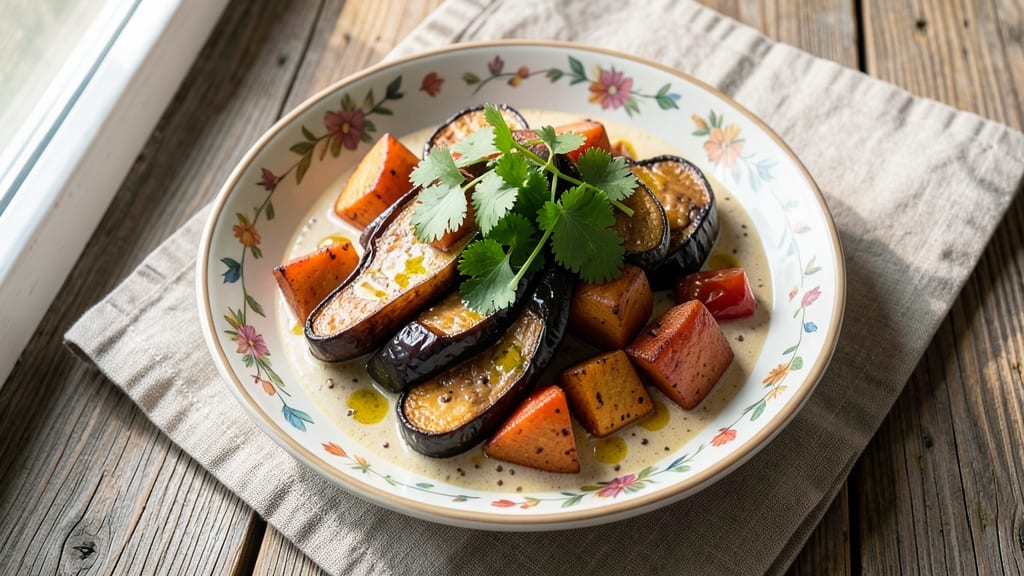
This sweet potato and eggplant curry recipe delivers the kind of spiced depth and charred edges that make vegetarian dishes unforgettable. The secret lies in caramelizing the vegetables first—transforming their natural sweetness into rich, smoky notes that form the heart of the curry.
I’ve perfected this method over countless batches, ensuring every bite balances earthy eggplant, sweet potato, and aromatic spices like cinnamon and cumin.
The foundation of this curry is a slow-simmered sauce built with coconut milk, tomatoes, and a blend of warm spices that infuse the vegetables with layers of flavor. Unlike quick stir-fries, this dish rewards patience—allowing the vegetables to soften while absorbing the sauce until tender yet still holding their shape.
The result? A dish that’s hearty enough to stand alone but still light enough to pair beautifully with rice or naan.
What sets this curry apart is the charred edges on the vegetables, achieved through a simple pan-searing technique before simmering. These crispy bits add texture and depth, while fresh cilantro and a squeeze of lime brighten the dish at the end.
The aroma alone—spiced, coconutty, and slightly smoky—will have everyone at the table asking for seconds.
Serve this curry with steamed basmati rice or warm flatbread to soak up every last drop of that velvety sauce. The best part? It’s a one-pot wonder, making cleanup effortless while delivering restaurant-quality results. Let’s get cooking!
Ingredients for sweet potato and eggplant curry
These 17 ingredients transform into a vegetarian curry with restaurant-quality spiced depth and charred edges.
| Ingredient | Amount | Notes |
|---|---|---|
| Sweet Potatoes 🍠 | 2 lbs | Medium size, peeled and cubed |
| Eggplants 🍆 | 2 medium | Organic preferred, sliced lengthwise |
| Coconut Milk 🥥 | 1 can (13.5 oz) | Full-fat for creaminess |
| Canned Crushed Tomatoes 🍅 | 1 can (14.5 oz) | San Marzano preferred |
| Yellow Onion 🧅 | 1 large | Finely diced |
| Garlic Cloves 🧄 | 6 cloves | Minced for depth |
| Ground Cumin 🌿 | 1 ½ tbsp | Toasted for warmth |
| Ground Coriander 🌿 | 1 tbsp | Freshly ground preferred |
| Ground Turmeric 🌶️ | 1 tsp | Bright yellow color |
| Ground Cinnamon 🌿 | ½ tsp | Ceylon preferred |
| Garam Masala 🌶️ | 1 tsp | Homemade or quality blend |
| Fresh Cilantro 🌿 | ¼ cup | Chopped, for garnish |
| Fresh Lime 🍋 | 1 whole | Juiced, for brightness |
| Olive Oil 🫒 | ¼ cup | Extra-virgin for charring |
| Salt 🧂 | 1 ½ tsp | Diamond Crystal preferred |
| Black Pepper 🌶️ | ½ tsp | Freshly ground |
| Basmati Rice 🍚 | 1 ½ cups | Uncooked, for serving |
The sweet potatoes and eggplants are the stars here. Organic eggplants have fewer seeds and more flavor, but conventional works fine. For the sweet potatoes, medium-sized ensures even cooking—anything larger takes too long to caramelize. Whole Foods or Trader Joe's carry excellent organic options, but your local grocery store's produce section will do. The key is to choose firm, unblemished vegetables—no soft spots or wrinkled skin. These will form the heart of your curry, so invest a little time in selecting the best.
No garam masala? Mix equal parts cumin, coriander, cinnamon, and cardamom for a close substitute. Fresh cilantro is ideal, but dried works at one-third the amount if needed. For the tomatoes, San Marzano cans are worth the splurge—they're sweeter and less acidic, which balances the spices perfectly. The coconut milk should be full-fat for that velvety texture, but light works in a pinch. If you're short on time, pre-chopped onions and garlic from the store save minutes without sacrificing flavor, though freshly minced always tastes better.
This curry develops better overnight, so make it a day ahead if possible. Store in an airtight container in the fridge for up to 5 days, or freeze portions for 3 months. The rice can be cooked separately and reheated alongside the curry. For serving, I like to toast the rice in a dry pan with a pinch of cumin for extra aroma. The charred edges on the vegetables? Those crispy bits are what make this dish unforgettable—don't skip the pan-searing step, even if it adds a few minutes to your prep time.
Why You'll Love This Recipe
- One-Pan Magic: I swear by this recipe when I’m too tired to scrub pots—just chop, sauté, and simmer. The eggplant and sweet potatoes soften right in the same skillet, so you’re not juggling three dishes.
- Creamy Without Guilt: That coconut milk and crushed tomatoes combo? Rich but not heavy, sweet but not cloying. The caramelized onions tie it all together—like a hug in a bowl, but with actual nutrients.
- Leftover Goldmine: Between us, this curry begs to be made extra. The flavors deepen overnight, and reheating it the next day? Better than takeout. I keep a jar of it in the fridge for lazy days.
- Budget-Friendly Luxury: Sweet potatoes and eggplant stretch for miles, and coconut milk adds depth without breaking the bank. Honestly, it’s the kind of meal that makes you feel fancy while still being cheap—my kind of win.
Step-by-step instructions for sweet potato and eggplant curry
Master the balance of charred edges and aromatic spices for a curry that delivers both texture and depth.
Char and Prep the Vegetables
Heat a large skillet over medium-high heat and add the 0.25 cup olive oil. Working in batches to avoid crowding, add the sliced eggplants and sweet potatoes. Let them sear undisturbed for 3-4 minutes per side until deep golden brown with visible char marks—this develops the smoky depth that defines this curry.
Transfer the charred vegetables to a cutting board and slice the eggplants crosswise into ½-inch thick pieces, then cube the sweet potatoes into 1-inch chunks. Set aside—those charred edges will infuse the entire dish with complex flavor as they cook further.
Build the Spice Base
In the same skillet (no need to clean it—the fond adds flavor), add the 1 large yellow onion and cook for 5-6 minutes until softened and translucent. Add the 6 cloves garlic cloves and cook for 30 seconds until fragrant but not browned.
Reduce heat to medium and stir in the 1.5 tbsp ground cumin, 1 tbsp ground coriander, 1 tsp ground turmeric, 0.5 tsp ground cinnamon, 1.5 tsp salt, and 0.5 tsp black pepper. Toast the spices for 1 minute until aromatic and slightly sizzling—this wakes up their flavors and prevents bitterness.
Simmer the Curry Sauce
Pour in the 1 can (14.5 oz) canned crushed tomatoes and 1 can (13.5 oz) coconut milk, stirring to combine. Add the charred vegetables and bring to a gentle simmer. Partially cover and cook for 25-30 minutes until the vegetables are tender but still hold their shape.
Taste and adjust seasoning—you may need an additional ½ tsp salt or more garam masala for depth. The sauce should coat the back of a spoon but remain slightly loose to cling to the vegetables. If it thickens too much, stir in 2-3 tablespoons water to balance the consistency.
Finish and Serve
Remove from heat and stir in the 1 tsp garam masala and juice of the 1 whole fresh lime. Garnish with the 0.25 cup chopped fresh cilantro just before serving—this brightens the dish and adds fresh contrast to the rich spices.
Serve the curry immediately over 1.5 cups cooked basmati rice, spooning generous portions of sauce and vegetables onto each serving. The charred edges should contrast beautifully with the creamy coconut milk base, while the spices deliver layered warmth in every bite.
Pro Tips For Making Sweet Potato And Eggplant Curry
- CHAR THE ONIONS FIRST: Sweat those yellow onions low and slow with a pinch of salt until they’re translucent and just starting to caramelize—about 8-10 minutes. I used to rush this, and the whole curry would taste flat. The deeper the onion flavor, the richer the base, especially when paired with sweet potatoes and eggplant.
- SALT THE EGGPLANT BEFORE COOKING: Toss sliced eggplant with 1-2 teaspoons of salt and let it sit for 20 minutes before draining. This pulls out bitterness and keeps it from turning mushy. I learned this the hard way after a curry tasted like a sad, waterlogged sponge.
- SIMMER THE COCONUT MILK: Don’t boil the coconut milk—simmer it gently over medium-low heat once added to the curry. Boiling can split the fats and make it separate, turning your creamy sauce into a greasy mess. Keep it at a bare simmer, and the texture stays smooth.
- PEEL THE SWEET POTATOES AFTER COOKING: Skip peeling them raw—just scrub and chop, then add them whole to the curry. The skins soften and blend right in, adding texture and saving you 10 minutes of peeling. (Yes, even if you’re impatient like me.)
Pro cooking tips for this dish
Charred Edge Mastery
This is where the magic happens—those deep golden-brown char marks on your sweet potatoes and eggplant are the secret to restaurant-quality flavor. Use a large, heavy-bottomed skillet (I love my Lodge cast iron) to ensure even heat distribution.
Work in 2 batches if needed to avoid crowding, and resist the urge to stir too soon. Let those vegetables develop caramelized crusts for 3-4 minutes per side—this builds smoky depth that infuses the entire curry. 🔥
Spice Toasting Technique
Never skip toasting your spices! Heat your skillet to medium after removing the vegetables, then add the onions and garlic. Once the onions soften, reduce to medium-low and add your spices. Toast them for exactly 1 minute—this releases their essential oils and prevents bitterness.
I like to use Penzeys Spices for my ground cumin and coriander because their quality makes a noticeable difference. The moment the spices start sizzling and fill your kitchen with aroma, they're ready to go into the sauce. ⏱️
Sauce Consistency Secrets
The perfect curry sauce should be velvety but not gloppy, coating the vegetables without being too thick. If your sauce reduces too much during simmering, add 2-3 tablespoons water or coconut milk in 1-tablespoon increments until you reach that ideal consistency.
I test by dipping a spoon in—it should leave a light coating on the back. For extra richness, stir in 1 tablespoon of reserved coconut milk from the can before serving. The sauce should cling to every bite without overwhelming the vegetables. 💛
Simmering Like a Pro
Low and slow is key here—gentle simmering at medium-low heat prevents the vegetables from falling apart while allowing them to absorb all that spiced coconut goodness. If you notice the sauce is too thin after 20 minutes, partially cover the pot and let it reduce naturally.
The vegetables should be fork-tender but still hold their shape. I always check doneness by piercing a sweet potato cube with a fork—it should go in easily but not fall apart. 🍽️
Garnish Game-Changers
Fresh cilantro and lime juice aren't just for looks—they're flavor multipliers! Add the cilantro last so it stays vibrant and bright. The lime juice cuts through the richness of the coconut milk and balances the spices beautifully.
For an extra touch, I sometimes add ¼ teaspoon of chili powder or a pinch of smoked paprika to the sauce before serving for a subtle smoky kick. These finishing touches elevate the dish from good to unforgettable. 🌿
Nutrition facts
Frequently asked questions
Can I substitute regular potatoes for sweet potatoes in this curry?
While you can use regular potatoes, sweet potatoes bring natural sweetness and a creamier texture that pairs beautifully with the eggplant and coconut milk. For a similar flavor, try yams or purple sweet potatoes. If you must use white potatoes, add an extra ½ teaspoon of brown sugar to compensate for the lack of sweetness.
How do I prevent the eggplant from becoming too mushy?
Salt the eggplant slices and let them sit for 10-15 minutes before cooking to remove excess moisture. This step is crucial! After salting, pat them dry thoroughly. Also, avoid overcrowding the pan when charring—work in batches if needed. The vegetables should be tender but still hold their shape after simmering.
Can I make this curry without coconut milk?
Yes, but the texture and richness will change. Replace the coconut milk with 1 cup heavy cream or 1 cup Greek yogurt for a tangier version. For a dairy-free alternative, use 1 cup vegetable broth plus ½ cup tomato paste—just reduce the tomatoes to ½ can to maintain balance. The spices will still shine, but the sauce will be lighter.
What's the best way to reheat leftovers?
Reheat gently on the stovetop over low heat with 1-2 tablespoons of water or coconut milk to prevent drying. Avoid microwaving—it can make the eggplant rubbery. If reheating from the fridge, let the curry sit at room temperature for 10 minutes first. For extra flavor, add a splash of lime juice and fresh cilantro when reheating.
Can I add protein to this vegetarian curry?
Tofu, chickpeas, or paneer work beautifully. For tofu, press and cube 1 block (14 oz) before adding it with the vegetables. Chickpeas add heartiness—just drain and rinse 1 can (15 oz) before simmering. Add protein in the last 10 minutes of cooking to prevent overcooking. The spices will infuse perfectly into any of these options.