
Side Dishes
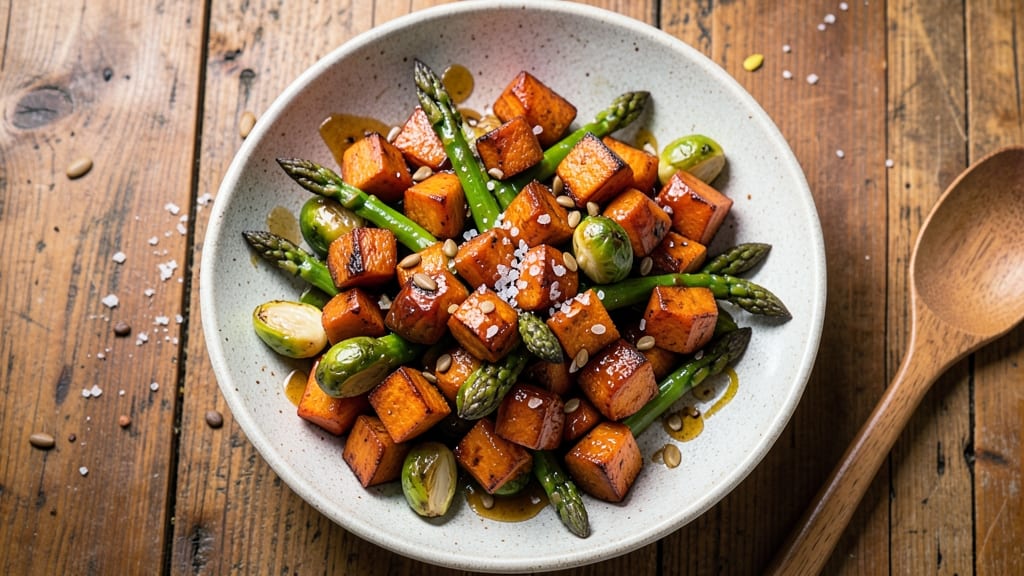
This sweet potato asparagus and Brussels sprouts recipe transforms humble vegetables into a restaurant-worthy side dish with just five ingredients and 30 minutes of hands-off roasting.
The secret lies in the honey-balsamic glaze, which caramelizes into a sticky, tangy-sweet crust while preserving each vegetable's natural texture—crispy edges on the sprouts, tender sweetness in the potatoes, and slightly charred asparagus spears.
What sets this dish apart is the balanced flavor profile: the earthy Brussels sprouts and sweet potatoes harmonize with the bright acidity of balsamic and the natural sweetness of honey, while a pinch of smoked paprika adds depth without overpowering.
The vegetables roast together in one pan, making cleanup effortless while ensuring each component reaches its ideal doneness simultaneously.
By the time it emerges from the oven, you'll have a vibrant, colorful tray that's perfect as a standalone vegetarian meal or alongside grilled chicken, salmon, or tofu.
The caramelized edges create irresistible texture contrast, and the glossy glaze ties everything together with a sophisticated finish that belies its simple preparation.
This recipe is designed to be foolproof—no fancy techniques required, just high heat and patience. The key is timing the vegetables so they all cook through without burning, and I'll walk you through exactly how to achieve that perfect balance. Ready to elevate your weeknight dinners?
Ingredients for sweet potato asparagus and brussel sprouts
Five vibrant ingredients transform into a restaurant-quality honey-balsamic roast with caramelized edges.
| Ingredient | Amount | Notes |
|---|---|---|
| Sweet Potatoes 🍠 | 2 lbs | Medium-sized, peeled and cubed |
| Asparagus 🌱 | 1 lb | Trimmed, tough ends removed |
| Brussels Sprouts 🥬 | 1 lb | Trimmed, halved if large |
| Extra-Virgin Olive Oil 🫒 | ½ cup | High quality, fruity variety |
| Honey 🍯 | 3 tbsp | Wildflower preferred for depth |
| Balsamic Vinegar 🍶 | 2 tbsp | Aged, aged preferred |
| Smoked Paprika 🌶️ | 1 tsp | For subtle smoky depth |
| Diamond Crystal Kosher Salt 🧂 | 1 ½ tsp | Fine grain preferred |
| Freshly Ground Black Pepper 🌶️ | ½ tsp | Coarsely cracked |
The sweet potatoes are the foundation—orange-fleshed varieties like Jewel or Beauregard develop the deepest caramelization. Whole Foods or local farmers markets often carry the best quality, with firm texture and vibrant color. Brussels sprouts should be compact with bright green leaves, no yellowing at the stem. Asparagus spears should snap cleanly when bent—the thicker the spears, the longer they'll take to cook. The honey-balsamic glaze relies on quality ingredients too: aged balsamic vinegar (at least 12 years) adds complexity, while raw, unfiltered honey provides authentic floral notes. Smoked paprika from Penzeys delivers that perfect smoky aroma without overpowering.
No aged balsamic? Red wine vinegar plus 1 tsp maple syrup mimics the depth. Substitute maple syrup for honey if needed—use the same amount. Brussels sprouts too tough? Blanch them 2 minutes first to soften. Asparagus spears too thick? Cut them in half lengthwise for even cooking. The smoked paprika can be swapped for regular paprika (reduce to 0.75 tsp), but you'll lose that subtle smokiness. For extra richness, add 1 tbsp tahini to the glaze—it emulsifies beautifully with the honey-balsamic. If you're short on time, pre-cut frozen Brussels sprouts work perfectly (no thawing needed).
Roasted vegetables keep best when refrigerated in an airtight container for 3-4 days. The glaze can be prepped ahead and stored in a sealed jar for 1 week—just whisk before using. For meal prep, roast the vegetables without the glaze, then toss with the sauce when reheating. The flavors actually improve overnight as the glaze reduces further. Portion into single servings for easy grab-and-go lunches. If reheating, cover loosely with foil to prevent drying—450°F for 5-7 minutes restores crispiness perfectly.
Why You'll Love This Recipe
- One-Pan Magic: I swear by this recipe for lazy nights—just toss everything on a sheet pan, drizzle with olive oil, and let the oven do the work. No chopping boards cluttered, no pots to scrub, and honestly? That crispy-sweet potato edge with caramelized brussels? Worth every minute of zero effort.
- Sweet Heat Balance: The honey glaze on those roasted sweet potatoes? It’s the secret weapon—sticky, slightly tangy, and just sweet enough to make the asparagus’ earthy bite sing. I’ll be real: my picky husband actually finishes his plate now. (Small victories.)
- Meal Prep MVP: Make a double batch on Sunday, and you’ve got lunch for three days. The flavors only get better as the sweet potatoes soften and the brussels mellow out—perfect for work lunches or school lunches. Between us, it’s the only veggie dish my teen will eat cold from the fridge.
- Budget-Friendly Flex: Sweet potatoes and brussels are the unsung heroes of affordable eating—cheaper than chicken, more filling than pasta, and packed with nutrients. Plus, this recipe stretches easily: add a protein, swap in butternut squash, or serve it alongside rice. My wallet and my family thank me every time.
Step-by-step instructions for honey-balsamic roasted sweet potatoes, asparagus, and Brussels sprouts
Transform humble vegetables into a caramelized, flavor-packed dish with this straightforward roasting technique.
Prep the Vegetables for Even Roasting
Begin by preheating your oven to 425°F with a rack positioned in the middle position. Line two large rimmed baking sheets with parchment paper for easy cleanup. Cut the 2 lbs sweet potatoes into 1-inch cubes—uniform size ensures even cooking. Toss them in a large bowl with 1 tablespoon of the extra-virgin olive oil, ½ teaspoon of the smoked paprika, and ¾ teaspoon of the diamond crystal kosher salt.
For the 1 lb asparagus, snap off the tough ends and trim the woody bases. Toss the spears with 1 tablespoon of the remaining extra-virgin olive oil, ¼ teaspoon of the smoked paprika, and ¼ teaspoon of the diamond crystal kosher salt. Halve the 1 lb Brussels sprouts lengthwise if they're large, then toss with the last 1 tablespoon of extra-virgin olive oil, ¼ teaspoon of smoked paprika, and the remaining ¾ teaspoon of diamond crystal kosher salt. Spread each vegetable type in a single layer on the prepared baking sheets—crowding leads to steaming instead of crispy edges.
Roast Until Caramelized and Tender
Place the baking sheets in the oven and roast for 20 minutes. After this initial roast, remove the sheets and gently flip each vegetable piece with tongs. Return to the oven and roast for another 15-20 minutes, until the sweet potatoes are tender when pierced with a fork and the Brussels sprouts have crispy brown edges. The asparagus should be slightly charred and fork-tender.
Watch closely in the final minutes—this is when the caramelization happens. You're aiming for deep golden-brown spots on the sweet potatoes and Brussels sprouts, with asparagus spears developing a subtle char. If any pieces are browning too quickly, move those pans to the lower oven rack. The vegetables should be tender but still hold their shape when pierced.
Create the Honey-Balsamic Glaze
While the vegetables roast, whisk together the 3 tbsp honey, 2 tbsp balsamic vinegar, and the remaining ½ teaspoon of diamond crystal kosher salt in a small bowl. Add the ½ teaspoon freshly ground black pepper and stir well. This glaze should be smooth and slightly thick—it will become more fluid as it heats.
When the vegetables are nearly done roasting, reduce the oven temperature to 375°F. Remove the baking sheets and immediately drizzle the honey-balsamic mixture evenly over all the vegetables. Return to the oven for 3-5 minutes to let the glaze caramelize and coat the vegetables. The edges should develop a glossy sheen, and the aroma will be intense and sweet-tangy.
Finish and Serve Immediately
Remove the vegetables from the oven and transfer them to a large serving platter. Toss gently with tongs to redistribute the glaze. The sweet potatoes should be tender with caramelized edges, the Brussels sprouts crispy on the outside and tender inside, and the asparagus slightly charred with a glossy finish. Sprinkle with an additional pinch of freshly ground black pepper if desired.
Serve immediately while the vegetables are hot and the glaze is still fluid. The contrast of textures—crispy edges on tender vegetables—paired with the sweet-tangy glaze makes this dish exceptionally satisfying. For best results, serve with a side of grilled protein or a simple green salad to balance the richness. The flavors develop as they cool, so enjoy while the vegetables are at their peak temperature and texture.
Pro Tips For Making Sweet Potato Asparagus And Brussel Sprouts
- CUT SPROUTS IN HALF LENGTHWISE: I learned this the hard way—whole Brussels sprouts hide uneven cooking. Slice them in half lengthwise (not just cutting off the stem), so they brown faster and stay tender. The edges crisp up nicely, and you avoid that sad, undercooked center.
- ROAST SWEET POTATOES FIRST: Start with the sweet potatoes—toss them in olive oil, salt, and roast at 425°F (220°C) for 15–20 minutes before adding the rest. They’ll soften just enough to soak up the honey later without turning to mush when everything hits the pan together.
- DON’T OVERCROWD THE PAN: I used to jam all the veggies in at once, and they’d steam instead of crisp. Spread them out in a single layer—even if it means two batches. You want golden edges, not soggy piles. (Yes, it’s worth the extra 5 minutes.)
- USE HONEY SPARINGLY: A drizzle is enough—about 1 tablespoon for the whole dish. Too much honey turns the asparagus sticky and cloying. Toss it with the sprouts after they’ve roasted, so it caramelizes just enough to add sweetness, not syrup.
Essential equipment for great sweet potato asparagus and brussel sprouts
Rimmed Baking Sheets
Invest in two large rimmed baking sheets (16x12 inches each) with at least 2-inch sides—this prevents spills while roasting. I recommend All-Clad Stainless Steel sheets for their durability and even heat distribution. The rim helps contain the honey-balsamic glaze during the final caramelization phase, reducing mess.
If you're short on space, use one sheet at a time—just rotate pans halfway through roasting for even browning. 🔥
Parchment Paper
Line your baking sheets with heavy-duty parchment paper (like Reynolds Kitchens Unbleached Parchment Paper) to prevent sticking and make cleanup effortless. The paper also creates a slight barrier that helps crisp up the edges of your Brussels sprouts and sweet potatoes.
Pro tip: Cut the paper to fit snugly—loose edges can curl up during roasting. For extra insurance, use two sheets per pan if your vegetables are particularly oily.
Tongs for Flipping
A good pair of long-handled tongs (I use OXO Good Grips) is essential for flipping vegetables without crushing them. The 12-inch length keeps your hands safe from the oven's heat while giving you precision control.
Look for tongs with silicon tips—they grip slippery Brussels sprouts better than metal. These tongs also help redistribute the honey-balsamic glaze evenly after roasting, creating that perfect glossy finish. 💫
Whisk for Glaze
For the honey-balsamic glaze, use a small wire whisk (like Mercer Culinary Genesis) to combine the ingredients smoothly. The fine wires ensure the honey and vinegar emulsify perfectly, creating a silky glaze that coats every vegetable. A whisk also helps incorporate the salt and pepper evenly.
If you don't have a whisk, a fork works in a pinch, but you'll need to stir more vigorously to avoid clumps. The glaze should be pourable but slightly thick—this consistency ensures it caramelizes beautifully on the vegetables.
Oven Thermometer
Ovens run hot or cold, and accuracy is key for perfect caramelization. Use a digital oven thermometer (like Thermoworks Oven Thermometer) to verify your oven's actual temperature. Place it near the vegetables while roasting—this helps you adjust for hot spots.
I've found my oven runs about 25°F hotter than set, so I compensate by preheating to 400°F instead of 425°F. The thermometer ensures your sweet potatoes develop those coveted caramelized edges without burning. 🌡️
Serving Platter
Transfer your finished roasted vegetables to a large, shallow serving platter (like Le Creuset Stoneware) to showcase their vibrant colors and glossy glaze. The platter's size accommodates all components while keeping them within easy reaching distance for serving.
For an elevated presentation, choose a platter with a matte finish—it contrasts beautifully with the vegetables' glossy sheen. A wooden board also works well for a rustic touch, but ensure it's food-safe and large enough to hold all the vegetables without overcrowding.
Nutrition facts
Frequently asked questions
Can I use regular potatoes instead of sweet potatoes?
Regular potatoes will work, but the flavor and texture will be different. Sweet potatoes add natural sweetness and a creamier texture when roasted. If substituting, use Yukon Gold potatoes for better flavor, but reduce the roasting time by 5-7 minutes since they cook faster. The honey-balsamic glaze will still work well, but the overall dish will be less rich and caramelized.
How do I adjust this recipe for a larger group?
Double or triple the recipe, but use two or three rimmed baking sheets to maintain even cooking. Increase the oven capacity by spacing pans 1 inch apart on the middle rack. For 8 servings, use 4 lbs sweet potatoes, 2 lbs asparagus, and 2 lbs Brussels sprouts. The honey-balsamic glaze should be increased proportionally—6 tbsp honey and 4 tbsp balsamic vinegar for 8 servings.
Can I make this dish ahead of time?
Yes! Roast the vegetables without the glaze up to 2 days ahead and store them in an airtight container. Reheat at 400°F for 10-12 minutes until warm. For the glaze, mix it fresh before reheating or store it separately in the fridge for 1 week. Toss the reheated vegetables with the glaze just before serving to maintain crispy edges. The flavors actually improve overnight as the glaze reduces further.
What if my Brussels sprouts burn before the sweet potatoes are done?
This happens when they're crowded or your oven runs hot. First, spread them in a single layer with 1-inch spacing between pieces. If they still brown too quickly, move the pan to the lower oven rack after 15 minutes of roasting. For extra insurance, parboil the Brussels sprouts for 3 minutes before roasting to soften them slightly. The sweet potatoes will catch up—just cover them loosely with foil if needed.
Can I add protein to this dish?
This dish pairs beautifully with grilled chicken, salmon fillets, or crispy tofu. For tofu, press and marinate 1 block firm tofu in 1 tbsp soy sauce, 1 tbsp maple syrup, and 1 tsp smoked paprika for 30 minutes before roasting alongside the vegetables. Add protein in the last 10 minutes of roasting to prevent overcooking. The honey-balsamic glaze complements all these proteins perfectly.