
Side Dishes
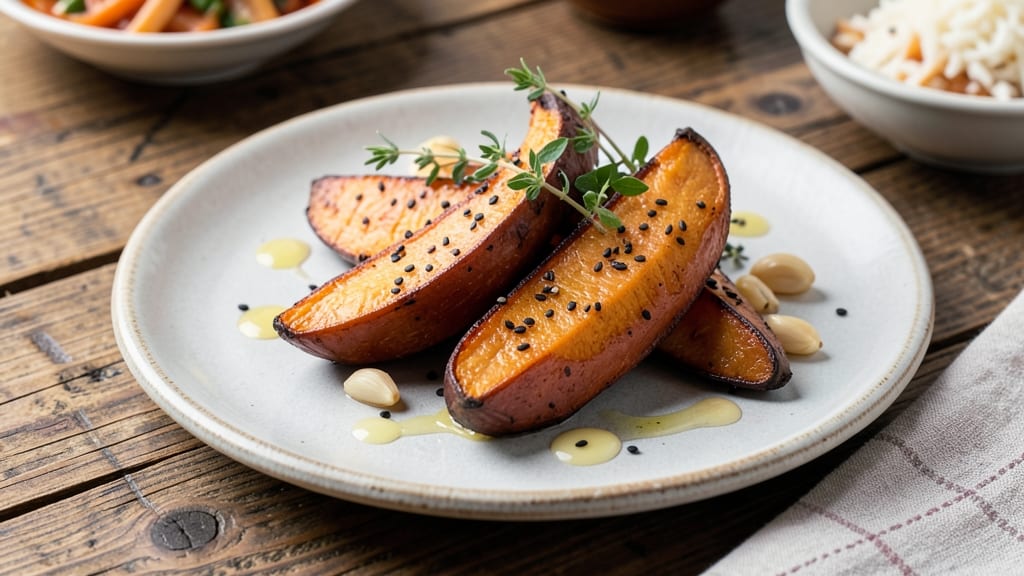
This sweet potato banchan recipe delivers the perfect balance of crispy-skinned texture and savory-sweet flavor that elevates any Korean meal. 💛 The secret lies in thinly slicing the sweet potatoes and pan-frying them until golden—creating that satisfying contrast between tender flesh and crispy edges.
Unlike many Western-style sweet potato dishes, this banchan focuses on simple seasoning to let the natural sweetness shine through, making it a staple side for kimchi, grilled meats, or rice.
What makes this recipe stand out is its versatility—it works as a warm side dish or even a cold appetizer when properly chilled. The process is straightforward: boil the sweet potatoes first to soften them, then pan-fry until they develop that irresistible crispiness.
A light sprinkle of salt and sesame seeds at the end enhances the flavor without overpowering the natural taste of the sweet potatoes. By the time you finish, you’ll have a dish that’s visually appealing with its golden-brown edges and vibrant color, while delivering a satisfying crunch in every bite.
The aroma alone will make your kitchen smell like a traditional Korean home, where banchan like this are carefully prepared to complement the main dishes. This recipe is perfect for meal prep—make a batch ahead and serve it warm or cold.
It pairs beautifully with rice, grilled fish, or even as a standalone snack. Let’s get cooking!
Ingredients for sweet potato banchan
Eight simple ingredients transform into a crispy-skinned Korean side dish perfect for any meal.
| Ingredient | Amount | Notes |
|---|---|---|
| Sweet Potatoes 🍠 | 2 lbs | Medium-sized, peeled and sliced thin |
| Vegetable Oil 🫒 | ½ cup | High smoke point for frying |
| Kosher Salt 🧂 | 1 ½ tsp | Fine grain preferred |
| Toasted Sesame Seeds 🌾 | 1 tbsp | For garnish and flavor |
| White Sesame Oil 🫒 | 1 tsp | For aroma and richness |
| Minced Garlic Cloves 🧄 | 3 cloves | Freshly minced for flavor |
| Water 💧 | 4 cups | For boiling sweet potatoes |
| Rice Vinegar 🍶 | 1 tbsp | For subtle tanginess |
| Gochugaru (Korean Red Pepper Flakes) 🌶️ | ½ tsp | Optional for mild heat |
The sweet potatoes are the star here—Japanese sweet potatoes (like those from Asian grocery stores) have a creamier texture, but regular orange sweet potatoes work too. Look for firm, unblemished tubers. Peeled and sliced uniformly, they'll cook evenly. For the oil, avocado or vegetable oil works best due to their high smoke point—olive oil can burn at high heat. If you can't find gochugaru, a pinch of smoked paprika adds depth without the same heat profile.
No sesame seeds? Toasted sunflower seeds give a similar crunch, though the flavor won't be identical. Running out of rice vinegar? Apple cider vinegar works in a pinch, but reduce to half the amount to avoid overpowering. For extra crispiness, double the oil and fry in batches—just watch closely to avoid burning. The garlic can be omitted if you're sensitive to its flavor, but the sesame oil and sesame seeds are non-negotiable for that authentic Korean taste.
Store leftovers in an airtight container for up to 5 days—they reheat beautifully in a dry skillet or air fryer. For meal prep, make a double batch and keep one portion refrigerated for quick weeknight dinners. These slices also freeze well for 2 months—thaw overnight in the fridge before reheating. The crispiness diminishes slightly after freezing, but the flavor remains intact.
Why You'll Love This Recipe
- One-Pan Magic: The moment I realized this recipe only needs a single sheet pan? My heart skipped a beat. No chopping boards to clean, no pots to scrub—just toss those sweet potatoes in oil, salt, and roast until they’re caramelized gold. That’s it. The sesame seeds and oil finish it off while you’re still wiping your hands.
- Nutty Crunch Perfection: Between us, the toasted sesame seeds and that final drizzle of white sesame oil? It’s the little details that make this dish ridiculously good. The sweet potatoes stay tender inside while the edges get that crispy, almost crackly texture—like a hug for your taste buds. (Yes, even on a Tuesday night.)
- Banchan for Everything: Honestly, this is my go-to side for anything—grilled meats, fried rice, or even just with a bowl of ramen. It’s neutral enough to play well with others but bold enough to stand out. Plus, it’s the kind of dish that makes you look like a banchan pro, even if you’re just heating up leftovers.
- Budget-Friendly Leftovers: Sweet potatoes last forever in the fridge, and this recipe stretches to feed a crowd or save for days. I’ve reheated portions straight from the pan, and they still taste like they just came out—no soggy sides here. It’s my secret weapon for stretching groceries without sacrificing flavor.
Step-by-step instructions for sweet potato banchan
Here's how to achieve that perfect balance of crispy skin and tender interior—just like in Korean restaurants.
🍳 Step 1: Boil Sweet Potatoes Until Fork-Tender
Place the 2 lbs of peeled, thinly sliced sweet potatoes in a large pot and cover with the 4 cups of water. Bring to a rolling boil over medium-high heat, then reduce to a gentle simmer. Cook for 8-10 minutes until the sweet potatoes are fork-tender—they should pierce easily but still hold their shape.
Drain immediately in a colander and rinse under cold water for 30 seconds to stop the cooking process. This step ensures the sweet potatoes stay tender while developing that signature crispy exterior later. Pat them dry thoroughly with a clean kitchen towel—any moisture will prevent crispiness.
🔥 Step 2: Fry Until Golden and Crispy
Heat the 0.5 cup vegetable oil in a large skillet over medium heat until it shimmers but doesn't smoke. Add the drained sweet potato slices in a single layer, working in batches if needed. Cook for 3-4 minutes per side until they develop a deep golden brown color and crisp up.
Don't overcrowd the pan or the oil temperature will drop, leading to soggy potatoes. You'll know they're ready when they release easily from the pan and have a satisfying crunch. Transfer to a paper towel-lined plate to drain excess oil.
👨🍳 Step 3: Season with Savory-Sweet Flavors
In a small bowl, whisk together the 1 tbsp rice vinegar, 1 tsp white sesame oil, 3 cloves minced garlic, 0.5 tsp gochugaru, and 1.5 tsp kosher salt. Pour this seasoning mixture evenly over the hot sweet potatoes and toss gently to coat.
The vinegar brightens the sweetness, while the sesame oil and garlic add depth. The gochugaru provides just a hint of heat that balances the sweet potatoes' natural sweetness. Let them sit for 2-3 minutes to absorb the flavors while still warm.
🥘 Step 4: Garnish and Serve Warm
Transfer the seasoned sweet potatoes to a serving platter and sprinkle with the 1 tbsp toasted sesame seeds. The seeds add texture and nutty aroma that complements the crispy exterior and tender interior.
Serve immediately while still warm—this banchan is best enjoyed fresh from the pan. The contrast of crispy edges and soft centers makes every bite satisfying, and the savory-sweet seasoning pairs perfectly with Korean meals. Store any leftovers in an airtight container for up to 2 days, but they won't be as crispy when reheated.
Pro Tips For Making Sweet Potato Banchan
- USE A HEAVY PAN: Sweet potatoes release a ton of moisture when sliced—start with a deep, heavy skillet or cast iron to avoid steam turning your panchan into a soggy mess. I learned this the hard way when my first batch turned into a watery puddle mid-cook.
- CUT UNIFORM SLICES: No, "eyeballing it" won’t work here. Aim for ¼-inch thick rounds—thinner slices crisp faster, while thicker ones stay tender inside. Use a mandoline if you’re impatient (yes, even if you’re impatient like me), or a sharp knife and steady hand.
- SALT BEFORE FRYING: Toss the slices with ½ teaspoon kosher salt per pound before hitting the oil. This seasoning gets locked in during the initial sear, not sprinkled on afterward like an afterthought. Trust me, your taste buds will notice the difference.
- TOAST SEEDS LAST: Save the sesame seeds for the final 30 seconds—toss them in with the white sesame oil right as you pull the pan off heat. This keeps them from burning into bitter bits (I’ve made that mistake more times than I’ll admit) and lets their aroma hit you fresh.
Flavor customization for this recipe
Sweet and Spicy Twist
For a bolder flavor, add 1 tbsp gochujang (Korean chili paste) to the seasoning mixture. This transforms the banchan into a sweet-spicy version that pairs perfectly with grilled meats or rice.
The gochujang adds depth and a subtle tang—just reduce the rice vinegar to ½ tbsp to balance the flavors. 🌶️
Honey-Glazed Option
Swap the rice vinegar for 1 tbsp honey and add ½ tsp grated ginger to the seasoning. This creates a caramelized glaze that enhances the sweetness of the potatoes while adding a warm, aromatic touch.
Toss the fried sweet potatoes in the honey mixture while still hot for a sticky, glossy finish.
Sesame-Crusted Crunch
For extra texture, coat the sweet potatoes in a mix of 2 tbsp toasted sesame seeds and 1 tbsp panko breadcrumbs before frying. Press the mixture gently onto each slice so it adheres.
This creates a crunchy sesame crust that adds a nutty, toasty layer to every bite. Use ½ cup oil for frying to ensure even crispiness.
Garlic-Infused Oil
Instead of minced garlic in the seasoning, infuse the frying oil with 4 cloves smashed garlic and 1 tsp grated ginger for 2 minutes before adding the sweet potatoes. This imparts a fragrant, aromatic depth that enhances the overall flavor profile.
Strain the oil before frying to remove the solids, but save a few cloves for garnishing after cooking.
Cheesy Korean Fusion
Add ½ cup shredded mozzarella or Korean cheese (like chogochujang cheese) to the pan during the last 30 seconds of frying. The cheese melts into a gooey blanket over the crispy potatoes, creating a savory-sweet fusion that’s irresistible.
Sprinkle with 1 tsp toasted sesame seeds and a pinch of gochugaru for a modern twist on the classic banchan.
Cold Banchan Variation
For a room-temperature or chilled version, skip the frying step and instead boil the sweet potatoes until fully tender (12-15 minutes). Toss them with a dressing of 1 tbsp rice vinegar, 1 tsp sesame oil, 1 tsp honey, and ½ tsp salt.
Chill for 1 hour before serving—this works especially well as a refreshing side for summer meals or as a snack with beer. ✨
Nutrition facts
Frequently asked questions
Can I use regular sweet potatoes instead of Japanese sweet potatoes?
Yes! While Japanese sweet potatoes (like those from Asian markets) have a creamier texture, regular orange sweet potatoes work perfectly. Just ensure they're firm and unblemished. The key is thin, even slicing—this ensures consistent cooking. Japanese varieties may require slightly less frying time due to their higher moisture content.
How do I prevent the sweet potatoes from sticking together?
Pat the sweet potatoes completely dry after boiling and rinsing—any moisture causes sticking. Use a clean kitchen towel to press between slices. For extra insurance, toss them with a tiny pinch of salt before frying. Also, avoid overcrowding the pan during frying—work in batches if needed.
Can I make this banchan ahead of time?
Cook the sweet potatoes up to 2 days ahead and store in an airtight container. For best texture, reheat in a dry skillet over medium heat for 2-3 minutes per side until crispy again. The flavor actually improves overnight as the seasoning penetrates. For a cold version, see the chilled variation in the customization options.
What's the best way to serve this banchan?
This dish shines as a warm side with Korean meals—pair it with rice, grilled meats, or kimchi. For a modern twist, serve it as a snack with beer or as part of a Korean-style charcuterie board. The crispy texture makes it especially satisfying with rich dishes like bulgogi or fried chicken. Garnish with extra sesame seeds for presentation.
Why did my sweet potatoes turn out soggy instead of crispy?
Soggy results usually mean one of three things: under-drying after boiling, overcrowding the pan, or insufficient frying time. First, ensure slices are completely dry. Second, fry in batches with enough oil to coat each slice. Finally, cook until golden brown—3-4 minutes per side at medium heat. If they're still soft, try frying longer at a slightly lower temperature.