
Side Dishes
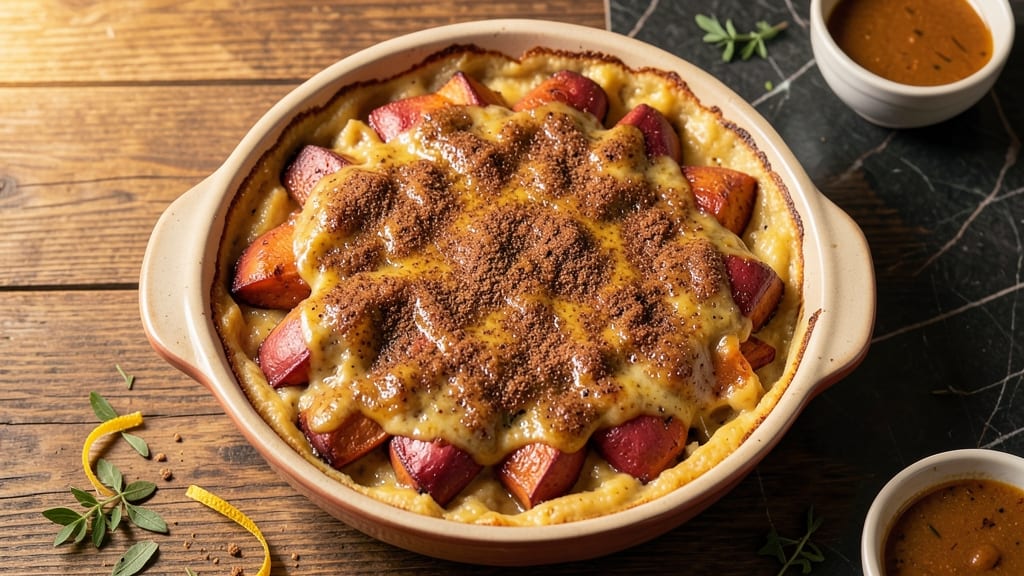
This sweet potato casserole recipe in Spanish brings comfort food to life with a crispy streusel crown that contrasts beautifully with the warm, spiced filling. 🌟 The traditional dish, known as pastel de camote, has roots in Southern U.S. cuisine but has become a beloved staple in Spanish-speaking homes, especially during holidays.
The secret to its success lies in the perfect balance of sweetness and spice, with a topping that stays crunchy even after baking.
The recipe starts with tender sweet potatoes, mashed and seasoned with cinnamon, nutmeg, and a touch of brown sugar for depth. The streusel topping—made from flour, butter, and a hint of vanilla—creates that coveted crispy texture that makes this dish irresistible.
Unlike some versions that rely on marshmallows, this adaptation keeps it classic with a buttery, nutty crown that adds richness without overpowering the filling.
Baked until golden and bubbling, this casserole delivers a harmonious blend of textures and flavors: creamy sweet potatoes beneath a crunchy, caramelized topping. It’s the kind of dish that feels like a hug—perfect for family gatherings, holiday feasts, or even a cozy weeknight dinner.
The best part? It’s easier to make than it looks, with simple steps and ingredients you likely already have in your pantry.
Whether you’re preparing it for Nochebuena, Thanksgiving, or just a special meal, this recipe delivers restaurant-quality results with a touch of home. Let’s get started on creating a dish that will become a new tradition in your kitchen.
Ingredients for sweet potato casserole recipe in spanish
Six ingredients for the filling, six for the streusel—just twelve staples for this showstopping Spanish-inspired casserole.
| Ingredient | Amount | Notes |
|---|---|---|
| Large Sweet Potatoes 🍠 | 3 lbs | Peeled, cubed, and steamed until tender |
| Unsalted Butter 🧈 | 1 cup | Cold, cut into small cubes |
| Granulated Sugar 🍚 | 1 cup | Light brown preferred for depth |
| Packed Brown Sugar 🍚 | ½ cup | For extra caramelized richness |
| Ground Cinnamon 🌿 | 2 tbsp | Freshly ground for warmth |
| Ground Nutmeg 🌿 | ½ tsp | Freshly grated for authentic flavor |
| Salt 🧂 | ½ tsp | Diamond Crystal preferred |
| Pure Vanilla Extract 🍯 | 1 tsp | High-quality, not imitation |
| All-Purpose Flour 🌾 | 1 ½ cups | Sifted for light streusel |
| Chopped Walnuts 🥜 | ½ cup | Toasted for nutty depth |
| Evaporated Milk 🥛 | ½ cup | For creamy texture |
| Large Eggs 🥚 | 2 whole | Room temperature for binding |
The sweet potatoes are non-negotiable—orange-fleshed varieties like Beauregard are ideal, and Whole Foods or local markets often carry the best. For the streusel, butter matters most—use European-style (like Plugrá) if you can find it, or at least unsalted. The walnuts? Toast them first—3 minutes in a dry pan until fragrant. That’s where the magic happens. If you’re making this for a holiday, buy extra ingredients now—Costco’s bulk bins are your friend for flour and sugar.
No brown sugar? Substitute white sugar plus 1 tbsp molasses for depth. Running low on walnuts? Pecans or toasted oats work in a pinch. The vanilla extract can be imitation in a bind, but high-quality vanilla (like Nielsen-Massey) makes all the difference. For the streusel, if you forget to toast the nuts, pulse them in a food processor for extra crunch. The filling’s spices? Mexican cinnamon (like Canela) adds a deeper flavor—worth hunting down at a Latin market if you’re ambitious.
This casserole tastes even better the next day—make it ahead and refrigerate for up to 2 days. The streusel stays crispy for 3 days covered at room temperature, but reheat it in the oven at 350°F for 10 minutes to restore that golden crunch. For holidays, double the recipe—it freezes beautifully for up to 3 months in an airtight container. Just thaw overnight in the fridge before reheating.
Why You'll Love This Recipe
- Foolproof Roast: I bake the sweet potatoes whole—yes, whole—until they’re fork-tender, then mash them with butter, sugars, and cinnamon. No peeling, no dicing, no stress. The skin just peels right off after roasting, and you’re left with silky texture every time.
- Cinnamon Sugar Magic: Between us, that combo of granulated and brown sugar with warm cinnamon? It’s like a hug in dessert form. The brown sugar caramelizes just enough to give it this deep, buttery sweetness that pairs perfectly with the earthy sweet potatoes—no artificial flavors needed.
- Holiday or Weeknight: Honestly, this works for everything. Serve it as a side at Thanksgiving when you’re drowning in prep, or pull it out for a lazy Sunday brunch with eggs. Even my picky teen clears his plate—(yes, even on a Tuesday night).
- Budget-Friendly Feast: Sweet potatoes are cheap, and this recipe stretches to feed six for under $8. The leftovers reheat beautifully—throw them in the microwave or bake until crispy again. I’ve sent this to potlucks three times this year, and no one’s ever asked for the recipe but to bring more.
Step-by-step instructions for sweet potato casserole
Here's how to create that perfect balance of crispy streusel and tender sweet potato filling.
🍳 Step 1: Prepare the Sweet Potato Filling
Peel the 3 lbs large sweet potatoes and cut them into 1-inch cubes—uniform size ensures even cooking. Place them in a large pot of boiling salted water and steam for 15-20 minutes until fork-tender. You'll know they're ready when a knife slides in easily with just a little resistance.
Drain the sweet potatoes thoroughly and return them to the pot. In a separate bowl, whisk together the 1 cup unsalted butter, 1 cup granulated sugar, 0.5 cup packed brown sugar, 2 tbsp ground cinnamon, 0.5 tsp ground nutmeg, and 0.5 tsp salt. Pour this warm spiced butter mixture over the sweet potatoes and toss gently to coat evenly. Stir in the 1 tsp pure vanilla extract and 0.5 cup evaporated milk—this creates a creamy, flavorful base. Let the mixture cool slightly for 10 minutes before assembling.
👨🍳 Step 2: Make the Streusel Topping
In a large bowl, combine the 1.5 cups all-purpose flour, remaining 0.5 cup packed brown sugar, 0.5 tsp salt, and 0.5 tsp ground nutmeg. Cut in the 1 cup cold unsalted butter using a pastry cutter or your fingers until the mixture resembles coarse crumbs with pea-sized butter pieces—this texture is key for that perfect crispy crown. Fold in the 0.5 cup chopped walnuts for nutty depth and texture contrast.
Here's the thing—don't overmix. Just toss the walnuts in until evenly distributed. The streusel should hold together when pressed but still crumble easily. If it feels too dry, add 1-2 teaspoons of ice water to bind it slightly. Spread the streusel mixture evenly over a parchment-lined baking sheet and refrigerate for 15 minutes while you preheat the oven to 375°F. This chilling step prevents the streusel from melting too quickly in the oven.
🥘 Step 3: Assemble and Bake the Casserole
Transfer the cooled sweet potato mixture to a 9x13-inch baking dish and spread it evenly. The filling should be about 1-inch thick—don't pack it down. Sprinkle the chilled streusel mixture evenly over the top, pressing down gently with your fingers to create a compact layer. This ensures maximum crispiness when it bakes.
Bake in the preheated 375°F oven for 45-50 minutes until the streusel is deep golden brown and the filling is bubbling at the edges. The center should still be slightly soft—it will firm up as it cools. Don't overbake; you want that crispy crown to stay crispy, not turn to crackers. Real talk: the first 10 minutes are critical—resist opening the oven door during this time to prevent the streusel from sinking.
⏰ Step 4: Rest and Serve for Maximum Crispiness
Remove the casserole from the oven and let it rest for 10-15 minutes before serving. This resting period allows the filling to set slightly and the streusel to firm up. The contrast between the warm, spiced sweet potatoes and the crispy streusel crown is what makes this dish incredible.
Serve warm with a dollop of whipped cream or a scoop of vanilla ice cream. The streusel should shatter slightly when you cut into it, releasing that caramelized sugar crunch. If you're serving this for a crowd, I promise you'll hear "This is the best sweet potato casserole ever!"—and it'll be well-deserved after all this work.
Pro Tips For Making Sweet Potato Casserole Recipe In Spanish
- BOIL THEM WHOLE: Sweet potatoes take 45 minutes to cook properly—don’t cube them. Wrap whole, unpeeled potatoes in foil with a pat of butter and bake at 400°F (200°C) until fork-tender. Peeling and mashing after baking keeps them creamier and saves you from soggy, waterlogged filling later.
- USE BROWN SUGAR LAST: Mix the granulated sugar into the mashed sweet potatoes first, then fold in the packed brown sugar just before baking. The molasses in brown sugar burns easily, and adding it early turns your casserole into a sad, bitter mess.
- DON’T OVERMIX THE TOPPING: The streusel topping (butter, sugars, cinnamon) should look like crumbly gravel, not wet sand. Overworking it turns it into a gluey paste that clumps instead of crisping. Work fast with your fingers—less handling means better texture.
- BAKE UNTIL THE EDGES CRACK: A golden top isn’t just for looks—it’s the only way to guarantee a crispy finish. Cover with foil for the first 30 minutes, then uncover and bake another 15–20 minutes until the edges darken and pull away slightly. Patience here makes all the difference.
Troubleshooting great sweet potato casserole recipe in spanish
Streusel Too Soft
If your streusel turns out soft instead of crispy, it’s likely because the butter melted too quickly during baking. I’ve found that chilling the streusel mixture for 30 minutes (instead of 15) before baking makes a huge difference.
Also, make sure your butter is cold—cut it into small cubes and let it sit in the fridge for 10 minutes before mixing. Another trick? Spread the streusel on a parchment-lined baking sheet before sprinkling it on top—this helps it crisp up faster.
Filling Too Watery
A watery filling usually means the sweet potatoes weren’t drained well enough or the evaporated milk was added too early. Always drain the sweet potatoes thoroughly after steaming and press them gently with a clean kitchen towel to remove excess moisture.
For extra insurance, let the filling sit at room temperature for 20 minutes before baking—this helps the liquid evaporate slightly. If it’s still too wet, bake it uncovered for the first 10 minutes to let excess moisture escape.
Uneven Baking
Uneven baking often happens when the oven isn’t preheated properly or the casserole dish isn’t placed on the middle rack. Always preheat your oven for at least 15 minutes before baking.
For even cooking, place your 9x13-inch baking dish on the middle rack and avoid opening the oven door for the first 20 minutes. If you notice one side browning faster, rotate the dish halfway through baking. A light-colored metal pan also helps distribute heat more evenly than dark-colored dishes.
Streusel Sticking
Streusel sticking to the baking dish is a common issue, but it’s easily fixed with the right technique. Always use a 9x13-inch baking dish—this size gives the streusel enough room to spread out without sticking.
Before assembling, lightly grease the dish with butter or nonstick spray, then dust it with a thin layer of flour. For extra insurance, place a piece of parchment paper under the streusel before baking—this makes cleanup a breeze and prevents sticking.
If it still sticks, let the casserole cool for 5 minutes before trying to remove it.
Burnt Topping
A burnt streusel topping usually means the oven was too hot or the casserole was left in too long. Stick to the 375°F temperature and keep a close eye on it after 35 minutes.
If the streusel starts to darken too quickly, tent it loosely with aluminum foil and continue baking. For even browning, try placing a small baking sheet under the dish to reflect heat upward. If you’re using a dark-colored baking dish, reduce the oven temperature by 25°F to prevent over-browning.
Filling Too Dry
If your filling turns out dry, it’s likely because the sweet potatoes were overcooked or the butter mixture wasn’t distributed evenly. Always steam the sweet potatoes until they’re tender but not mushy—15-20 minutes is perfect.
When mixing the filling, make sure the butter is fully melted and evenly coated over the sweet potatoes. For extra moisture, stir in an additional 2 tablespoons of evaporated milk before baking.
If the filling still seems dry, drizzle a little honey or maple syrup over the top before serving to add back some richness.
Nutrition facts
Frequently asked questions
¿Puedo usar batatas en lugar de camotes?
¡Sí, pero con precaución! Las batatas (camotes dulces) funcionan mejor, pero evita las variedades moradas o anaranjadas intensas, ya que pueden dar un color inesperado al resultado final. Para el mejor sabor, usa camotes de color naranja claro como el "Beauregard". Si solo encuentras batatas moradas, reduce la cantidad de azúcar en la receta en 1 cucharada para equilibrar la dulzura natural.
¿Cómo evito que el topping de harina se humedezca?
El secreto está en la textura y el frío: primero, corta la mantequilla en cubos pequeños y refrigéralos 10 minutos antes de mezclar. Luego, forma el topping con las manos y refrigera 30 minutos antes de hornear. También ayuda usar una bandeja para hornear con papel encerado debajo del topping para que se dore mejor. Si el clima es húmedo, añade 1 cucharadita de maicena a la mezcla del topping para absorber la humedad.
¿Puedo preparar esta receta sin horno?
Sí, pero con adaptaciones: hornea el relleno de camote en una sartén antiadherente a fuego medio-bajo (325°F) durante 25-30 minutos, cubierto con papel aluminio. Para el topping, calienta una sartén seca a fuego medio y espolvorea el topping en capas delgadas, removiendo constantemente hasta que esté dorado (3-5 minutos). El resultado será más denso, pero mantendrá los sabores. Ideal para cocinas sin horno o emergencias.
¿Qué alternativas tengo si no encuentro nueces?
¡No hay problema! Puedes sustituir las nueces por pecanas tostadas, avellanas o incluso copos de avena tostados para un toque crujiente. Si usas frutos secos, tuéstalos 3 minutos en una sartén seca antes de mezclarlos. Para una versión sin frutos secos, añade 1 cucharadita de canela extra al topping para compensar el sabor a nuez. La textura será ligeramente diferente, pero igual de deliciosa.
¿Cuánto tiempo aguanta esta receta en el refrigerador?
El pastel de camote sabe mejor al día siguiente y se conserva en el refrigerador (40°F o menos) durante 4-5 días, cubierto con papel film. Para recalentar, hornea a 350°F durante 15-20 minutos hasta que el topping esté crujiente. Si lo guardas en un recipiente hermético, también puedes congelarlo hasta 3 meses. Descongélalo en el refrigerador toda la noche antes de recalentar.