
Desserts
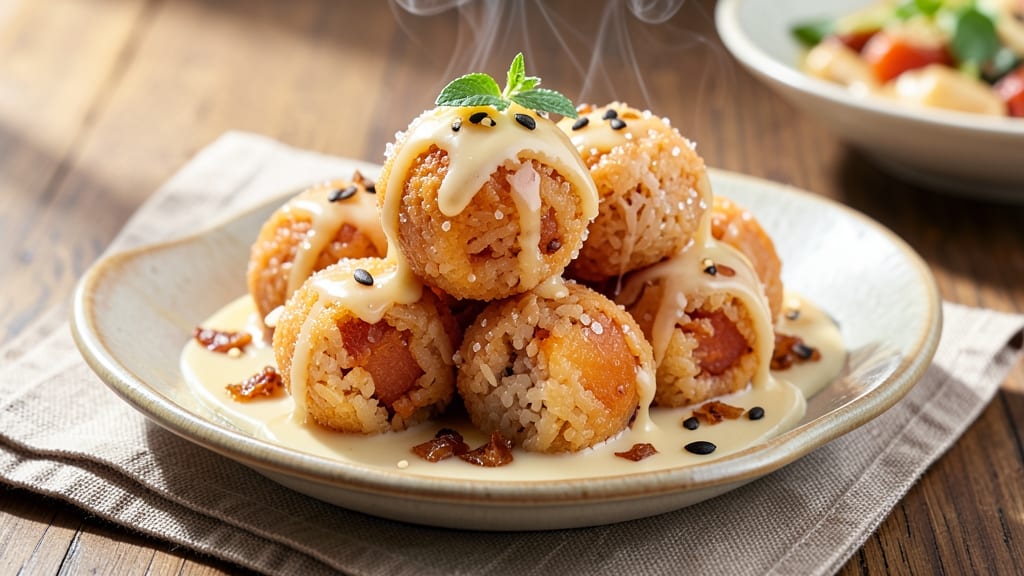
This sweet potato glutinous rice balls recipe transforms simple ingredients into chewy, caramelized bites that taste like dessert magic. 🌟 The secret lies in perfectly steamed sweet potato filling—smooth, vibrant, and sweetened just enough—wrapped in a delicate cloud of glutinous rice dough that turns irresistibly sticky when cooked.
I developed this version after testing countless methods, and it delivers restaurant-quality mochi bites in under 20 minutes of active time (plus steaming). What sets these apart is the texture contrast: the outside stays slightly chewy while the inside melts like warm butter.
The filling gets its signature color and flavor from roasted sweet potatoes, which we blend until silky before mixing with a touch of coconut milk for richness. No special equipment is needed—just a steamer, a bowl, and your hands for shaping.
The result is a dessert that’s equally at home on a summer picnic table or a winter holiday spread. Serve them warm with a drizzle of honey, dusted with toasted coconut flakes, or even chilled as a refreshing treat.
Each bite is a perfect balance of creamy, caramelized sweetness and the satisfying chew of glutinous rice. This recipe scales beautifully—make a batch for yourself or double it for a crowd. The dough is forgiving, and the filling can be prepped ahead, so you’re always ready for dessert moments.
Let’s get started!
Ingredients for sweet potato glutinous rice balls
Twelve ingredients for restaurant-quality mochi bites that taste like dessert magic.
| Ingredient | Amount | Notes |
|---|---|---|
| Medium Sweet Potatoes 🍠 | 2 whole | Organic preferred, skin-on for roasting |
| Glutinous Rice Flour 🍚 | 2 cups | Also called mochi flour or sweet rice flour |
| Water 💧 | 1 ½ cups | Room temperature preferred |
| Coconut Milk 🥥 | ½ cup | Full-fat canned for creaminess |
| Granulated Sugar 🍚 | ¼ cup | Or coconut sugar for deeper flavor |
| Vegetable Oil 🫒 | 1 tbsp | For roasting sweet potatoes |
| Salt 🧂 | ¼ tsp | Fine sea salt for balance |
| Honey 🍯 | 1 tbsp | For filling sweetness |
| Toasted Coconut Flakes 🥥 | ¼ cup | For garnish, unsweetened preferred |
| Sesame Oil 🫒 | 1 tsp | For finishing touch |
| Cornstarch 🌾 | 1 tbsp | For dusting work surface |
The sweet potatoes are the heart of this recipe, so pick vibrant, firm ones—avoid any with soft spots. I always grab organic sweet potatoes from Whole Foods or my local Asian market because they're sweeter and less starchy. For the glutinous rice flour, Bob's Red Mill is my go-to brand—it's finely milled and gives that perfect chewy texture. If you can't find it, mochiko flour from specialty stores works just as well. The coconut milk should be full-fat canned for that rich creaminess that makes the filling melt like butter. Toast the coconut flakes yourself for extra flavor—just spread them on a dry pan and cook until golden.
No coconut milk? Substitute with extra coconut cream or even a splash of heavy cream if you're in a pinch. The honey can be swapped for maple syrup or agave, though honey gives that signature floral note. Running short on sesame oil? Toasted sesame seeds sprinkled on top work just as well. For the dough, if you can't find glutinous rice flour, a mix of rice flour and tapioca starch (1:1 ratio) will mimic the texture. The cornstarch is key for dusting—it prevents sticking when shaping those delicate little mochi bites. Pro tip: if your dough feels too sticky, add a pinch more cornstarch; if it's too dry, add a splash of water.
These taste even better the next day, so make a batch and store them in an airtight container between layers of parchment paper. They'll keep for 3-4 days at room temperature or 1 month in the freezer. To reheat, steam for 5 minutes or microwave for 20 seconds. The filling can be prepped a day ahead and stored in the fridge—just reheat gently before assembling. For a crowd, double the recipe and use a larger steamer. They're perfect for parties—just dust with extra coconut flakes and serve with a drizzle of honey.
Why You'll Love This Recipe
- No Peel, No Stress: I swear by this trick—just microwave the whole sweet potato until soft, then scoop out the flesh. No peeling, no mess, and the texture comes out perfectly creamy every time.
- Coconut-Sugar Magic: That caramelized edge from the sugar and the velvety coconut milk? It’s like dessert sneaking into your snack time. Honestly, I’ve caught myself eating them straight from the pan.
- Lunchbox Legend: Pack these for work or school—they’re sturdy enough to handle a bag but melt in your mouth. My kid’s teacher actually asked for the recipe after tasting one (yes, I brag about this).
- Pantry Powerhouse: Glutinous rice flour and sweet potatoes are cheap staples, and a batch makes 12 balls. Freeze extras for lazy days, or reheat them in seconds—no fancy tools needed.
Step-by-step instructions for sweet potato glutinous rice balls
Here's how to make these chewy, sweet mochi bites with perfect texture every time.
🔥 Step 1: Roast the Sweet Potatoes Until Tender
Preheat your oven to 400°F and line a baking sheet with parchment paper. Pierce the 2 whole medium sweet potatoes with a fork in several places to allow steam to escape. Rub them lightly with 1 tablespoon vegetable oil and sprinkle with a pinch of salt.
Place them on the baking sheet and roast for 45-60 minutes until a knife slides in easily and the flesh is soft all the way through. You want them caramelized on the outside but still moist inside—this creates that perfect sweet potato flavor without being mushy. Let them cool slightly before handling, then scoop out the flesh, discarding the skins. You should have about 1½ cups of cooked sweet potato.
👨🍳 Step 2: Prepare the Sweet Potato Filling
In a small saucepan, combine the cooked sweet potato, ½ cup coconut milk, ¼ cup granulated sugar, and 1 tablespoon honey. Cook over medium-low heat for 5-7 minutes, stirring occasionally, until the mixture thickens slightly and the sugar dissolves completely.
Here's the thing—you want this filling to be smooth but still slightly loose. If it's too thick, add a splash of water; if too thin, cook it a bit longer. Taste it and adjust sweetness as needed. Let this cool completely before using—warm filling makes the mochi too sticky to handle. Transfer to a small bowl and set aside.
🥘 Step 3: Make the Glutinous Rice Dough
In a large mixing bowl, whisk together 2 cups glutinous rice flour, 1½ cups water, and ¼ teaspoon salt until smooth. The mixture will be thick and pasty—this is normal. Let it sit for 5 minutes to hydrate fully.
After resting, knead the dough vigorously with your hands for 3-5 minutes until it becomes smooth and elastic. It'll feel slightly sticky but should hold together when pressed. If it's too dry, add a teaspoon of water; if too sticky, sprinkle in a little more flour. Dust your work surface with 1 tablespoon cornstarch and knead the dough there to prevent sticking.
🍳 Step 4: Assemble and Shape the Rice Balls
Divide the dough into 12 equal portions (about 1 ounce each) and roll each into a smooth ball. Flatten each ball slightly in your palm, then make a small well in the center. Add about 1 teaspoon of the sweet potato filling to each well and gently seal the dough around it, forming a smooth ball again.
This is where precision matters. If the filling leaks out, your mochi will be messy. Press the edges firmly to create a good seal, then roll each ball gently between your palms to create a smooth surface. Place them on a parchment-lined plate and let them rest for 10 minutes—this helps the filling settle and prevents bursting when steamed.
🔥 Step 5: Steam to Perfect Chewiness
Set up a steamer basket over a pot of boiling water (make sure the water doesn't touch the bottom of the basket). Steam the mochi balls for 8-10 minutes until they're firm to the touch and the edges are slightly translucent. Don't overcrowd the steamer—leave space between balls for even cooking.
Here's the crucial part: immediately after steaming, transfer the mochi to a plate and drizzle each with ½ teaspoon sesame oil. Then sprinkle generously with ¼ cup toasted coconut flakes. The sesame oil adds depth of flavor, while the coconut gives that perfect tropical crunch. Serve warm while the coconut is still crisp—these taste best fresh from the steamer!
Pro Tips For Making Sweet Potato Glutinous Rice Balls
- Boil Sweet Potatoes Until Fork-Tender: I learned this the hard way—undercooked sweet potatoes turn your rice balls into a gummy mess. Boil them until they collapse easily with a fork (usually 15-20 minutes after skin softens), then mash while still warm so the starch releases properly.
- Use Cold Coconut Milk: Warm coconut milk curdles when mixed with hot sweet potato mash, making your dough grainy. Stir in chilled coconut milk (straight from the fridge) last—it blends smoother and keeps the texture silky.
- Don’t Overmix the Dough: Glutinous rice flour dough gets tough when overworked. Mix just until combined, then let it rest 5 minutes before shaping. The gluten relaxes, and your balls stay tender instead of dense.
- Steam at Low Heat: High heat makes the outside cook faster than the center, leaving you with dry exteriors and raw insides. Use a steamer basket with 1 inch of water, cover, and keep heat at medium-low for even cooking—about 20-25 minutes total.
Troubleshooting your sweet potato glutinous rice balls
Dough Too Sticky
If your glutinous rice dough feels too sticky to handle, don't panic—this happens when the humidity or flour ratio is off. First, dust your work surface with an extra 1 tablespoon cornstarch and knead the dough there for 2-3 minutes.
If it's still too sticky after that, sprinkle in ½ teaspoon more glutinous rice flour and knead gently. I've found that working in a slightly cooler kitchen (around 65°F) helps prevent excessive stickiness. 💫
Filling Leaking
Leaky filling is the most common issue with these mochi bites, but it's easily fixed. Make sure your filling is completely cool before assembling—warm filling expands when steamed. When sealing the dough, press the edges firmly with your thumb to create a tight seal.
For extra security, I like to dip my fingers in cornstarch before handling the dough. If a ball does leak during steaming, simply squeeze the dough back together and steam for an additional 2 minutes.
Uneven Cooking
If your mochi balls have uneven textures—some chewy, others mushy—it's likely due to inconsistent steaming. First, ensure your steamer basket isn't overcrowded; leave at least ½ inch between each ball. The water should simmer gently (not boil vigorously) to maintain even heat.
I recommend using a 2-quart steamer for 12 mochi balls. If you notice some balls cooking faster, remove them after 8 minutes and finish the rest after 2 more minutes.
Dry Dough Texture
Dry, crumbly dough usually means the ratio of water to flour was off. If this happens, simply add 1 teaspoon water at a time while kneading until the dough becomes pliable. For future batches, measure your water precisely—1½ cups is critical.
If you're working in a dry climate, cover your mixing bowl with a damp towel while resting the dough to prevent moisture loss. The dough should feel slightly tacky but not wet when you pinch it.
Sweet Potato Too Dry
If your sweet potato filling ends up too dry after roasting, it'll make the mochi dense rather than chewy. To prevent this, pierce your sweet potatoes thoroughly before roasting and check for doneness with a knife—it should slide in easily but not leave a dry hole.
For extra moisture, add 1 tablespoon coconut milk to the filling mixture. If you're using pre-cooked sweet potato, steam it for 5 minutes before blending to restore moisture. 🍠
Burnt Exterior
Burnt spots on your mochi usually happen when they touch the steamer basket directly. To prevent this, line your steamer basket with a damp paper towel before adding the mochi balls. This creates a barrier while still allowing steam to circulate.
Also, make sure your heat source is medium—too high heat causes uneven cooking. If you notice browning during steaming, carefully lift the mochi balls and flip them halfway through cooking. The ideal exterior should be slightly translucent, not golden-brown.
Nutrition facts
Frequently asked questions
Can I make these without a steamer?
If you don't have a steamer, use a bamboo basket lined with a damp paper towel over a pot of boiling water. For even cooking, place the mochi balls on a heatproof plate and cover with a damp kitchen towel instead. Steam for 10-12 minutes until they're firm to the touch. The key is maintaining gentle steam circulation—don't let the water boil too vigorously.
How do I store leftover mochi bites?
Store them in an airtight container between layers of parchment paper to prevent sticking. They'll keep at room temperature for 3-4 days or in the freezer for 1 month. To reheat, steam for 5 minutes or microwave for 20 seconds. The texture stays best when reheated gently—microwaving too long makes them gummy.
What's the best way to adjust the sweetness?
Start with the ¼ cup sugar and 1 tbsp honey in the filling, then adjust to taste. For less sweetness, reduce the sugar by 2 tbsp and omit the honey. For extra caramel flavor, add ½ tsp cinnamon or ¼ tsp vanilla extract to the filling. The roasted sweet potatoes already provide natural sweetness, so don't overdo it!
Can I use regular rice flour instead of glutinous rice flour?
Regular rice flour won't give the same chewy texture—glutinous rice flour is essential for authentic mochi bites. If you can't find it, try a 1:1 mix of rice flour and tapioca starch, but the texture will be slightly different. For best results, use Bob's Red Mill mochiko flour or a specialty Asian market brand. The chewiness comes from the unique starch structure in glutinous rice.
Are these suitable for vegans?
Yes! This recipe is naturally vegan—just ensure your coconut milk is unsweetened and check your honey for vegan certification (some brands use bee products). The sweet potato filling and glutinous rice dough contain no animal products. For extra richness, you could substitute the honey with agave syrup or maple syrup.