
Side Dishes
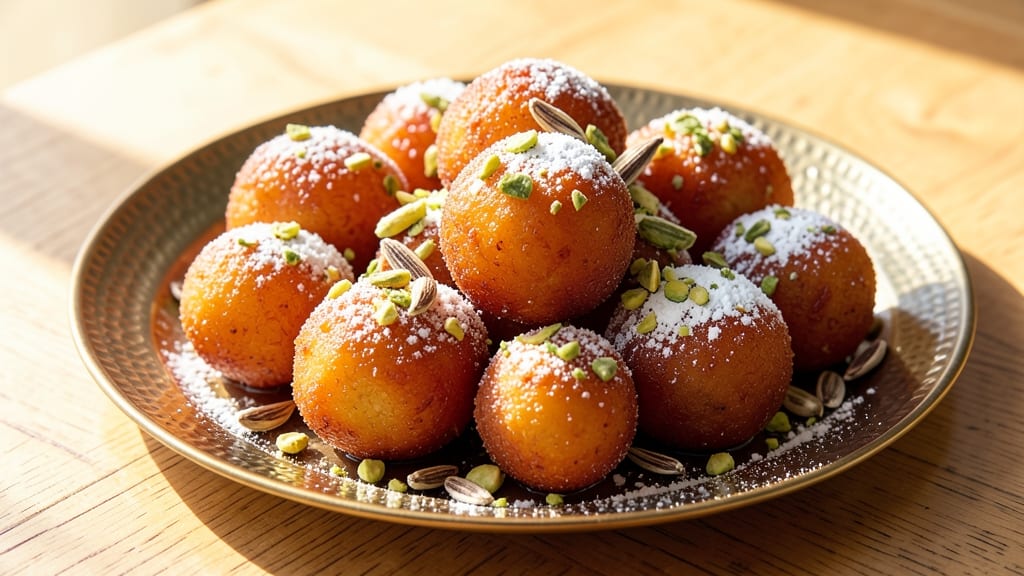
Sweet potato gulab jamun delivers the perfect balance of spiced sweetness and tender texture that makes every bite irresistible. 💛 Unlike traditional milk-based versions, this recipe transforms humble sweet potatoes into golden, pillowy clouds infused with fragrant cardamom and nutty pistachios—all while maintaining that signature melt-in-your-mouth consistency.
The secret lies in achieving the right dough moisture and syrup concentration, which I’ve perfected through years of trial and error.
What sets this recipe apart is the harmonious blend of earthy sweet potato and aromatic cardamom, creating a flavor profile that’s both familiar and uniquely sophisticated.
The dough requires precise kneading and resting to develop its signature texture, while the syrup must be reduced to just the right thickness to coat each jamun perfectly without making them soggy. This isn’t just dessert—it’s a celebration of texture and tradition in every bite.
By the time you’re done, you’ll have a plate of golden-brown gulab jamuns that float effortlessly in a fragrant syrup, their centers remaining soft and pillowy while their edges achieve that perfect crispness.
The addition of crushed pistachios adds a delightful crunch and visual appeal, making these perfect for special occasions or when you want to impress guests with restaurant-quality results at home.
While traditional recipes rely on milk powder, this sweet potato version offers a lighter yet equally satisfying alternative that’s easier to find and more budget-friendly.
The technique remains the same—deep-frying for that signature golden hue followed by a quick soak in warm syrup—but the flavor transformation is what makes this recipe truly special. Let’s get started on creating these deep-fried cardamom clouds!
Ingredients for sweet potato gulab jamun
Transform humble sweet potatoes into golden, pillowy gulab jamun clouds with this fragrant, cardamom-infused vegetarian delight.
| Ingredient | Amount | Notes |
|---|---|---|
| Orange Sweet Potatoes 🍠 | 2 lbs | Medium-sized, peeled and boiled |
| All-Purpose Flour 🌾 | 2 cups | For dough structure |
| Powdered Sugar 🍚 | 1 ½ cups | Confectioners' sugar preferred |
| Ghee or Vegetable Oil 🫒 | ½ cup | For deep-frying |
| Cardamom Pods 🌿 | 1 tbsp | Crushed, plus extra for garnish |
| Crushed Pistachios 🥜 | ½ cup | For topping and garnish |
| Milk Powder 🥛 | ½ cup | For dough richness |
| Baking Soda 🧪 | ½ tsp | For texture |
| Salt 🧂 | ¼ tsp | Fine sea salt |
| Water 💧 | ½ cup | For dough consistency |
| Sugar 🍬 | 1 ½ cups | Granulated, for syrup |
| Rose Water 🌹 | 1 tsp | For fragrance |
| Saffron Strands 🌼 | ¼ tsp | Soaked in 2 tbsp warm water |
| Lemon Juice 🍋 | 1 tbsp | Freshly squeezed |
The sweet potatoes are the magic ingredient here—orange-fleshed varieties like Jewel or Beauregard pack the perfect sweetness and moisture. Grab 2 lbs of medium-sized potatoes from the produce section (the organic ones at Whole Foods or your local Indian market have the best flavor). Peel and boil them until fork-tender, then mash until smooth—no lumps, or your jamuns will be dense. For the cardamom, green pods from the bulk bin are fresher than pre-ground powder, and crushing them yourself releases more aroma. Pro tip: Toast the pistachios lightly in a dry pan before crushing—they’ll add a deeper nutty flavor to each bite.
No milk powder? Substitute with 1/4 cup Greek yogurt plus 1/4 cup powdered sugar for a lighter texture. Running low on rose water? Orange blossom water works too, though it has a slightly different floral note. The saffron is non-negotiable for that golden hue, but if you can’t find strands, use 1/4 tsp saffron powder dissolved in warm water. For the syrup, if you prefer less sweetness, reduce the sugar to 1 cup plus 1 tbsp—trust me, these jamuns are rich enough. And if you’re worried about deep-frying, use a candy thermometer to keep the oil at 350°F (175°C) for perfect golden-brown edges every time.
Freshly made gulab jamuns are best enjoyed within 2 days—the syrup stays warm and fragrant, and the dough maintains its pillowy texture. Store leftovers in an airtight container in the fridge, then reheat the syrup gently before serving. For longer storage, freeze the jamuns in a single layer before transferring to a bag—they’ll keep for up to 2 months. The syrup can be made ahead too; just reheat it before soaking the jamuns. Garnish with extra crushed pistachios right before serving—they add that restaurant-quality crunch that makes all the difference.
Why You'll Love This Recipe
- No Boil, No Stress: I swear by this method—just mash those orange sweet potatoes raw, mix in flour and a pinch of cardamom, and roll them in your palms. No waiting for milk to thicken or khoya to set; these come together while you sip your chai.
- Velvet Texture Magic: That crispy ghee-fried shell with a pillowy center? It’s the star. The sweet potatoes add natural moisture, so they stay soft inside while the outside gets that golden, caramelized crunch—no dry gulab jamuns here.
- Party in a Plate: Between us, these disappear at gatherings. Serve them warm with mint chutney for a festive touch, or pack them in boxes for Diwali sweets—no one will guess they’re secretly budget-friendly. (My cousin’s kids ask for seconds every time.)
- Pantry-Friendly Luxury: Honestly, you’re using ingredients you already have. Sweet potatoes last weeks, flour doesn’t go bad, and a stick of ghee stretches for ages. Make a big batch, store them in an airtight jar, and reheat in seconds—no waste, all reward.
Step-by-step instructions for sweet potato gulab jamun
Transform humble sweet potatoes into ethereal cardamom clouds with this foolproof method.
👨🍳 Step 1: Prepare the Sweet Potato Dough
Boil the 2 lbs orange sweet potatoes until fork-tender, then peel and mash them while still warm. The texture should be completely smooth with no lumps—this is your dough foundation.
In a large mixing bowl, combine the mashed sweet potatoes with the 2 cups all-purpose flour, 0.5 cup milk powder, 1.5 cups powdered sugar, 0.5 tsp baking soda, and 0.25 tsp salt. Mix vigorously for 5 minutes until you achieve a thick, pliable dough that holds together when pressed. Here's the thing—this dough needs to be elastic, not sticky. If it feels too dry, add 1-2 tablespoons of the 0.5 cup water gradually until it becomes moldable.
Now for the aromatic magic: crush the 1 tbsp cardamom pods and mix them into the dough. The fragrance should fill your kitchen—this is where the authentic flavor begins. Cover the bowl and let the dough rest for 30 minutes at room temperature. This resting period relaxes the gluten and makes the dough easier to handle.
🍳 Step 2: Shape and Deep-Fry to Golden Perfection
Heat the 0.5 cup ghee or vegetable oil in a deep frying pan over medium heat until it reaches 350°F. You'll know it's ready when a drop of dough sizzles and rises immediately. Here's the critical part: divide the dough into 12 equal portions (about 1.5 oz each) and roll them between your palms into smooth, golf-ball sized spheres.
Fry the gulab jamuns in batches—never overcrowd the pan. They'll take 3-4 minutes to cook through, but watch closely as they puff up dramatically. You're aiming for a golden brown exterior that's crispy to the touch. If they brown too quickly, reduce the heat slightly. The moment they float to the surface and develop a crackly crust, remove them with a slotted spoon and drain on paper towels.
Real talk: the first batch might be tricky. If a jamun cracks open, don't toss it—just press it gently back into shape with your fingers before frying. The steam inside creates that beautiful puff, but you need to contain it properly.
🥘 Step 3: Prepare the Fragrant Syrup
In a heavy-bottomed saucepan, combine the 1.5 cups sugar with 0.5 cup water and bring to a boil over medium-high heat. Stir occasionally until the sugar completely dissolves, then reduce heat to low and let it simmer for 8-10 minutes until it reaches a light syrup consistency.
While the syrup simmers, soak the 0.25 tsp saffron strands in 2 tbsp warm water for 10 minutes to extract their vibrant color. Add this saffron infusion along with the 1 tsp rose water and 1 tbsp lemon juice to the syrup. The kitchen should now smell like a Persian garden—this is the signature aroma of authentic gulab jamun.
Simmer the syrup for another 5 minutes until it thickens slightly but remains pourable. Remove from heat and let it cool to warm room temperature—you want it just warm enough to coat the jamuns but not so hot that it causes them to deflate.
⏰ Step 4: Infuse and Serve
Gently add the fried gulab jamuns to the warm syrup one at a time, using a slotted spoon. Let them soak for 10-15 minutes, turning occasionally, until they absorb the syrup completely. The jamuns should be plump, glossy, and infused with that floral-cardamom aroma.
For the final touch, sprinkle the 0.5 cup crushed pistachios evenly over the top. I like to press them gently into the jamuns so they adhere. Serve immediately while still warm, or store in an airtight container in the refrigerator for up to 5 days. The syrup will thicken as it cools—simply reheat gently before serving.
Here's the moment you've been waiting for: each bite should deliver a perfect balance of crispy exterior, soft sweet potato center, and that intoxicating floral-cardamom syrup. The pistachios add a delightful crunch that contrasts beautifully with the tender jamuns.
Pro Tips For Making Sweet Potato Gulab Jamun
- STEAM NOT BOIL: Boil your sweet potatoes until a fork slides in like butter—no fight, no resistance. Overcooking turns them mushy, and you’ll end up with dense, flavorless jamuns. Test at 15 minutes, then adjust; underdone potatoes won’t melt into that silky dough.
- GRATE COLD, REST WARM: Grate sweet potatoes straight from the fridge—they’ll release less moisture and stick together better. Once mixed with flour, let the dough sit for 10 minutes before shaping; this prevents crumbling when frying.
- SIEVE THE FLOUR: Skip the sift, and your jamuns might clump. Lightly sieve the flour into the potato mix to cut gluten and aerate the dough—this guarantees a fluffy, airy texture instead of dense, chewy bites.
- LOW-HEAT SEALING: Fry the jamuns on medium-low heat after the initial sizzle. High heat seals the outside too fast, trapping steam and making them tough. Let them puff gently, then finish on low to crisp evenly—no soggy centers.
Storing and reheating this dish
Refrigerator Storage
Store your sweet potato gulab jamuns in an airtight container with the syrup for up to 5 days. The syrup will thicken as it cools, so gently reheat it on the stovetop over low heat—just enough to make it pourable again.
Keep the jamuns submerged in the syrup to maintain their moisture and prevent drying out. I like using glass containers because they keep the aroma sealed in beautifully. 💛
Freezing for Later
For longer storage, freeze the jamuns in a single layer on a parchment-lined tray for 2 hours before transferring to a freezer bag. This prevents them from sticking together. They’ll keep for up to 2 months—just thaw in the fridge overnight before reheating.
The syrup can be frozen separately in an ice cube tray for portion control. When ready to serve, reheat the syrup gently and let the jamuns soak for 5-10 minutes to revive their texture.
Reheating Syrup
To reheat the syrup, pour it into a saucepan and warm over low heat until it reaches 160°F—just enough to loosen its consistency. Avoid boiling, or the sugar may crystallize. If the syrup looks grainy, stir in 1 tsp water and heat until smooth.
For extra flavor, add ½ tsp rose water or a pinch of cardamom powder while reheating. The jamuns will absorb the syrup faster when warm, so serve them while the syrup is still slightly warm. ✨
Reviving Texture
If your jamuns lose their crispy exterior after storage, don’t worry! Reheat them in a dry skillet over medium heat for 1-2 minutes per side until golden again. For extra crispiness, brush them lightly with melted ghee before reheating.
The sweet potato dough holds up well to reheating, so you can enjoy them just as delicious as fresh. Just avoid microwaving—it makes them rubbery. 🔥
Serving Warm
For the best experience, serve your gulab jamuns warm straight from the fridge. The contrast of the cool syrup with the slightly warm jamuns is pure magic. Garnish with extra crushed pistachios and a sprinkle of cardamom powder right before serving.
Pair with mint chutney or yogurt for a refreshing contrast. Trust me, this is when they taste like a restaurant masterpiece. 🌟
Nutrition facts
Frequently asked questions
Why does my sweet potato gulab jamun dough feel too sticky?
This usually happens when the sweet potato puree has too much moisture or the flour ratio is off. Gradually add 1 tablespoon of flour at a time until the dough becomes pliable but not dry. For extra insurance, chill the dough for 15 minutes before shaping—this helps tighten the gluten structure. If it's still too sticky, your sweet potatoes might need more boiling time to reduce moisture.
Can I make this recipe without milk powder?
The recipe remains vegetarian by substituting ½ cup Greek yogurt plus ¼ cup powdered sugar for the milk powder. This creates a lighter texture while maintaining the same rich flavor. For even more richness, add 1 tablespoon of melted ghee to the dough—it adds a beautiful sheen and enhances the sweet potato flavor.
What's the secret to getting perfectly golden gulab jamuns?
The key lies in three things: oil temperature, dough consistency, and timing. Maintain oil at 350°F (175°C) using a thermometer, shape the dough into perfectly smooth balls, and fry in batches without overcrowding. The jamuns should puff dramatically and develop a crackly crust in 3-4 minutes. If they brown too quickly, reduce heat by 25°F (15°C) for the next batch.
How do I fix jamuns that turned out too dense?
Dense gulab jamuns usually result from overmixing the dough or insufficient resting time. For next time, mix just until combined (about 3-4 minutes), let the dough rest for the full 30 minutes, and ensure your sweet potato puree has no lumps. If you've already made them, try reheating in a dry skillet with 1 tablespoon of ghee for 1 minute—this adds crispiness that masks density.
Can I use regular potatoes instead of sweet potatoes?
While you can use regular potatoes, the flavor and texture will be completely different. Regular potatoes lack the natural sweetness and moisture that make sweet potatoes perfect for this recipe. The sweet potato version has a delightful earthy depth that pairs beautifully with the cardamom and pistachios. If you're set on regular potatoes, reduce the sugar in the syrup by ¼ cup to balance the flavor difference.