
Side Dishes
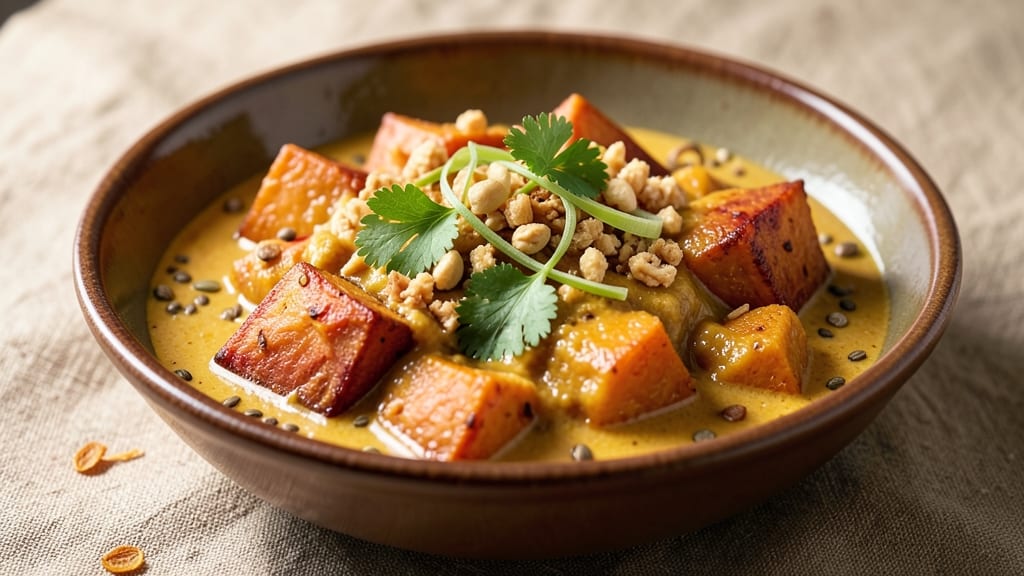
This sweet potato korma recipe transforms humble sweet potatoes into a luxurious, creamy centerpiece that rivals any restaurant dish. The secret lies in a rich, velvety sauce made with coconut milk and cashews, simmered with aromatic spices until the sweet potatoes melt into tender, flavorful perfection.
What makes this dish special is the balance of sweetness from the potatoes and the earthy warmth of cumin, coriander, and turmeric—all tempered in hot oil for that signature depth.
The technique is straightforward yet professional: sauté whole spices until fragrant, then build the sauce with tomatoes and coconut milk for natural creaminess. Cashews add a luxurious texture without overpowering the dish, while sweet potatoes absorb the flavors beautifully.
The result is a dish that’s hearty enough to stand alone but elegant enough to serve with basmati rice or warm naan.
What you’ll achieve is a creamy, fragrant korma with tender sweet potatoes that hold their shape yet soak up the rich sauce. The sauce itself is velvety, with just the right balance of sweetness and spice, making it versatile for any meal.
This recipe delivers restaurant-quality results with minimal effort, proving that home cooking can be both impressive and approachable.
Serve with a dollop of yogurt or a sprinkle of fresh cilantro for brightness, and you’ve got a dish that’s as comforting as it is sophisticated. Perfect for weeknight dinners or special occasions, this sweet potato korma is sure to become a staple in your recipe collection.
Ingredients for sweet potato korma
Creamy coconut-cashew sauce meets aromatic spices for this luxurious vegetarian centerpiece.
| Ingredient | Amount | Notes |
|---|---|---|
| Medium Sweet Potatoes 🍠 | 2 whole | Peeled, cut into 1-inch cubes |
| Vegetable Oil 🫒 | ½ cup | For tempering spices |
| Yellow Onion 🧅 | 1 whole | Finely chopped |
| Garlic Cloves 🧄 | 6 cloves | Minced |
| Fresh Ginger 🌿 | 1 inch | Grated, peeled |
| Canned Crushed Tomatoes 🍅 | 14 ½ oz | San Marzano preferred |
| Coconut Milk 🥥 | 13 ½ oz | Full-fat canned |
| Raw Cashews 🥜 | ½ cup | Soaked in warm water 15 mins |
| Ground Cumin 🌿 | 1 tsp | Toasted for depth |
| Ground Coriander 🌿 | 1 tsp | Freshly ground preferred |
| Turmeric Powder 🌶️ | ½ tsp | Bright yellow color |
| Ground Garam Masala 🌿 | 1 tsp | For aromatic finish |
| Salt 🧂 | 1 tsp | Adjust to taste |
| Plain Yogurt 🥛 | ¼ cup | For serving, optional |
| Fresh Cilantro 🌿 | ¼ cup | Chopped, for garnish |
The sweet potatoes are the foundation—look for firm, vibrant orange ones at the grocery store. Trader Joe's or Whole Foods usually carry the best quality. Peeled and cubed, they'll absorb the sauce beautifully. For the cashews, raw, unsalted is key—they blend into a velvety texture that elevates the dish. The coconut milk should be full-fat canned, not carton—it makes all the difference in creaminess. And those San Marzano crushed tomatoes? Worth seeking out for their sweet, rich flavor.
No fresh ginger? Powdered works at half the amount, though fresh gives that bright zing. Running low on garam masala? Mix equal parts cumin, coriander, and cinnamon for a quick substitute. The cashews need soaking to blend smoothly—15 minutes in warm water is enough. For extra richness, stir in 1 tbsp of vegan butter at the end. And if you're short on time, pre-chopped onions from the freezer section save minutes without sacrificing flavor.
This sauce reheats beautifully—simmer gently on the stove for 2-3 minutes to restore creaminess. Store leftovers in airtight containers for 4-5 days in the fridge. The sauce thickens as it cools, so a splash of water or coconut milk brings it back to perfection. For meal prep, portion the sauce separately from the potatoes—reheat them together for the best texture. Garnish with fresh cilantro right before serving to keep it vibrant.
Why You'll Love This Recipe
- Here’s what sold me: that first bite where the caramelized sweet potatoes meet the warm, earthy korma sauce—it’s like dessert and dinner had a baby. The ginger and garlic? They’re the secret handshake making this dish ridiculously addictive.
- One-Pot Magic: I swear by this recipe because it’s actually one-pan—no chopping boards covered in sticky rice or multiple pots. Just toss the cubed sweet potatoes into the same pot where you sauté the onions and garlic, and let the spices work their magic together.
- Sweet & Spicy Balance: Here’s what sold me: that first bite where the caramelized sweet potatoes meet the warm, earthy korma sauce—it’s like dessert and dinner had a baby. The ginger and garlic? They’re the secret handshake making this dish ridiculously addictive.
- Weeknight to Weekend: Between us, this is my go-to when I need something hearty but still feels special. Serve it over rice for a quick weeknight dinner, or pile it onto naan for a lazy Sunday brunch. (Yes, even on a Tuesday night.)
Step-by-step instructions for sweet potato korma
This method delivers a perfectly balanced sweet potato korma with velvety coconut-cashew sauce every time.
Prepare the Sweet Potatoes and Cashew Base
Peel the 2 whole medium sweet potatoes and cut them into 1-inch cubes. Soak the 0.5 cup raw cashews in warm water for 15 minutes—this softens them for blending into a silky paste. While they soak, heat 0.25 cup vegetable oil in a large skillet over medium heat. Add the sweet potato cubes and cook for 8-10 minutes, stirring occasionally, until they begin to soften slightly but don't brown.
Remove the sweet potatoes from the skillet and set aside. Drain the soaked cashews and blend them with 0.25 cup plain yogurt until completely smooth. This cashew-yogurt mixture will form the creamy foundation of your sauce. The slight tang from the yogurt balances the richness of the coconut milk later.
Build the Aromatic Spice Base
In the same skillet, add 0.25 cup vegetable oil (reserving the remaining 0.25 cup for later) and heat over medium heat. Add the finely chopped yellow onion and cook for 5-6 minutes until softened and translucent. Add the minced garlic cloves, grated ginger, 1 tsp ground cumin, 1 tsp ground coriander, 0.5 tsp turmeric powder, and 1 tsp salt, stirring constantly for 1-2 minutes until fragrant.
Here's where the magic happens: the spices should sizzle gently without burning. If they darken too quickly, reduce the heat slightly. The aroma should fill your kitchen—this is your cue that the spices are properly toasted and ready to infuse the sauce with depth. Add the 14.5 oz canned crushed tomatoes and simmer for 5 minutes to meld the flavors.
Create the Creamy Coconut-Cashew Sauce
Pour in the 13.5 oz coconut milk and bring to a gentle simmer. Stir in the blended cashew-yogurt mixture and the cooked sweet potatoes. Simmer for 10-12 minutes over low heat, stirring occasionally, until the sweet potatoes are tender and the sauce thickens slightly. The mixture should coat the back of a spoon with a velvety consistency.
Taste and adjust seasoning with additional salt if needed. The sauce should be rich but not overly heavy—this balance comes from the cashew-yogurt blend and coconut milk working together. If the sauce is too thick, add 1-2 tablespoons of water to reach your desired consistency. The sweet potatoes should be fork-tender but still hold their shape slightly.
Finish and Serve with Garam Masala
Remove the skillet from heat and stir in 1 tsp ground garam masala. This final spice blend adds warmth and complexity to the dish. Let the korma sit for 5 minutes to allow the garam masala to infuse fully. Garnish with 0.25 cup chopped fresh cilantro just before serving to add freshness and brightness.
Serve immediately over steamed basmati rice or with warm naan bread. The sauce should be creamy yet light enough to coat the sweet potatoes perfectly, with a harmonious blend of sweet, spicy, and tangy flavors. Each bite should deliver tender sweet potatoes in a luxurious, aromatic sauce that's rich without being greasy.
Pro Tips For Making Sweet Potato Korma
- Parboil First: Toss peeled sweet potatoes into boiling salted water for 5 minutes before simmering—this keeps them from turning to mush later. I learned this the hard way after one batch fell apart into a gluey mess (yes, even with gentle simmering).
- Char the Onions: Cook onions over medium-low heat until deep golden, not brown—this builds flavor without bitterness. My grandmother swore by this, and she was right: rushed onions taste flat, no matter how much spice you add.
- Grate Ginger Fine: Use a microplane or fine grater for ginger—no chunks, no settling. I was skeptical until I tried it: the texture blends smoothly, and the heat distributes evenly (no surprise bursts of spice).
- Simmer Slowly: Keep the sauce at a bare simmer after adding coconut milk—boiling splits the cream and ruins the velvety texture. Sounds weird, but it works: low and steady wins every time.
Essential equipment for this recipe
Skillet Essentials
Start with a heavy-bottomed stainless steel skillet like the All-Clad D5—it distributes heat evenly and prevents burning during the spice toasting phase. I use an 8-inch for this recipe, but a 10-inch works if you're serving more.
Avoid nonstick—it can't handle the high heat needed for proper spice tempering. 🔥
Blender for Creamy Sauce
A high-speed blender like the Ninja BN601 is perfect for blending soaked cashews into a silky paste. Avoid immersion blenders—they struggle with nuts and can leave lumps. If you don’t have one, a food processor works, but pulse frequently to avoid overheating. The texture difference is noticeable!
Spice Toasting Tools
For the spice tempering, use a small cast-iron skillet (like Lodge) if you want extra heat retention. A wooden spoon is ideal for stirring spices—it won’t scratch the pan like metal.
Keep a fine-mesh strainer handy if you prefer a smoother sauce (strain out any cashew bits after blending).
Measuring Precisely
Invest in a digital kitchen scale for spices—1 tsp of garam masala can vary wildly by brand. I use the OXO Good Grips for accuracy. For liquids, a medicine cup ensures you measure 13.5 oz coconut milk perfectly. Precision here makes all the difference in balancing flavors.
Garnish Must-Haves
Fresh cilantro and yogurt deserve quality tools: a sharp chef’s knife (like Victorinox Fibrox) for chopping cilantro, and a small bowl for serving yogurt on the side. A microplane is great for grating ginger if you skip pre-grated. These small touches elevate the dish from homemade to restaurant-worthy. ✨
Nutrition facts
Frequently asked questions
Can I substitute regular potatoes for sweet potatoes in this korma?
While you can use regular potatoes, sweet potatoes bring a natural sweetness and creamier texture that pairs beautifully with the coconut-cashew sauce. For a similar flavor, try orange-fleshed potatoes like Yukon Gold, but expect slightly less sweetness. The cooking time may also vary—sweet potatoes typically take 10-12 minutes to soften in the sauce, while regular potatoes may need 5-7 minutes less.
How do I make this korma spicier?
Add ½ to 1 teaspoon of cayenne pepper or 1-2 teaspoons of red chili powder when tempering the spices. For heat with depth, stir in ½ teaspoon of mustard seeds during the spice toasting phase—they add a subtle kick. Always taste as you go, since spice levels vary by brand. Fresh red chili flakes or a pinch of asafoetida (hing) can also elevate the heat while adding complexity.
Can I make this korma ahead of time?
Yes! This dish actually tastes better the next day as the flavors meld. Store in an airtight container in the fridge for up to 4 days. The sauce will thicken—simmer with 1-2 tablespoons of water or coconut milk to restore creaminess before reheating. For meal prep, portion the sauce separately from the potatoes and reheat together over low heat for 3-4 minutes to preserve texture. Garnish with fresh cilantro just before serving.
What if I don't have coconut milk?
Use ½ cup heavy cream plus ½ cup water for a lighter version, or 1 cup cashew cream (blend soaked cashews with water) for extra richness. For a dairy-free alternative, try ½ cup Greek yogurt plus ½ cup water—it adds tanginess. The sauce will be slightly less creamy, but the spices will still shine. For best results, adjust the liquid ratio to reach your desired consistency after simmering.
Why did my sauce turn out too thick?
This usually happens when the sauce reduces too much during simmering. To fix it, stir in 1-2 tablespoons of water or coconut milk and simmer for 1-2 minutes more. For prevention, keep the heat at low during the final 10-12 minutes of simmering. If the sauce is still too thick after adding liquid, blend in 1-2 tablespoons of yogurt to lighten it while adding tang. The ideal consistency should coat the back of a spoon but still be pourable.