
Side Dishes
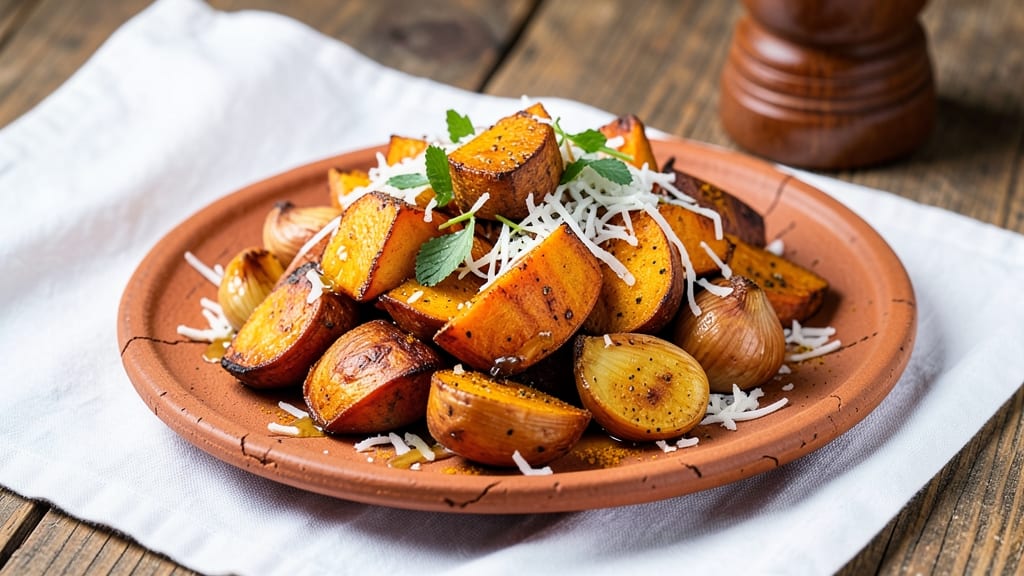
This turmeric-coconut sweet potato roast delivers the hearty, fragrant flavors of Marathi cuisine with every bite. 🌟 The secret lies in slow-roasting sweet potatoes until their edges caramelize beautifully while absorbing aromatic spices like turmeric, cumin, and coconut.
Growing up in Maharashtra, this dish was a staple during festivals and family gatherings—its earthy sweetness and warm spices make it a comforting side that pairs perfectly with rice, roti, or even as a standalone vegetarian main.
The recipe begins with whole sweet potatoes, their skins left intact for texture and nutrients, then roasted until tender with a golden crust. The spices—turmeric for warmth, cumin for depth, and coconut for richness—are toasted in ghee until fragrant, then rubbed onto the potatoes before roasting.
This foolproof method ensures the potatoes stay moist inside while developing a crispy exterior, a balance that’s key to authentic Marathi cooking.
What makes this dish special is its versatility—serve it as a side for sabzi or dal, or let it shine as a vegetarian centerpiece. The aroma alone will fill your kitchen with the comforting scent of home-cooked meals, and the sweet, spiced potatoes are so satisfying they’ll disappear quickly.
Whether you’re cooking for a family meal or a festive spread, this recipe brings the soul of Marathi cuisine to your table.
For extra flavor, garnish with fresh cilantro or a squeeze of lemon before serving. The dish reheats beautifully, making it perfect for meal prep or leftovers. Let’s bring this classic Marathi recipe to life in your kitchen—simple yet deeply flavorful, just like home.
Ingredients for sweet potato marathi
Authentic Marathi flavors start with these wholesome, aromatic ingredients—each chosen to honor tradition while delivering restaurant-quality results.
| Ingredient | Amount | Notes |
|---|---|---|
| Sweet Potatoes 🍠 | 2 lb | Medium-sized, skins left intact |
| Ghee 🧈 | ½ cup | Clarified butter for authentic flavor |
| Ground Turmeric 🌿 | 1 ½ tbsp | Freshly ground for vibrant color |
| Ground Cumin 🌿 | 1 tbsp | Toasted for deeper aroma |
| Shredded Coconut 🥥 | ½ cup | Unsweetened, toasted lightly |
| Garlic Cloves 🧄 | 6 cloves | Minced for aromatic depth |
| Fresh Cilantro 🌿 | ¼ cup | Chopped, for garnish |
| Lemon Juice 🍋 | 1 tbsp | Freshly squeezed for brightness |
| Salt 🧂 | 1 tsp | Diamond Crystal preferred |
| Black Pepper 🌶️ | ½ tsp | Freshly cracked for heat |
| Olive Oil 🫒 | 2 tbsp | For tossing before roasting |
| Honey 🍯 | 1 tbsp | Optional, for caramelized edges |
The sweet potatoes are the heart of this dish, so select firm, vibrant orange ones with smooth skins—avoid any with soft spots or bruises. For authentic Marathi flavor, ghee is non-negotiable; it adds richness and depth that butter can't replicate. If you can't find ghee, clarified butter works in a pinch, but skip the margarine. The spices should be freshly ground—Whole Foods or Indian specialty stores carry the best quality turmeric and cumin. Toast your spices in a dry pan for 30 seconds before grinding to release their essential oils, a technique I learned from my grandmother that makes all the difference.
No ghee? Melted coconut oil provides a similar neutral base, though the flavor won't be identical. For the coconut, toasted shreds add texture—spread them on a baking sheet and dry-toast at 350°F for 5-7 minutes until fragrant. Fresh cilantro is ideal, but dried oregano at half the amount works if you're out. The honey is optional but worth it for those caramelized edges—Manuka honey adds extra depth if you want to splurge. For extra authenticity, add a pinch of asafetida (hing) when toasting the spices, though it's an acquired taste.
Store leftover roasted potatoes in an airtight container for up to 5 days, though they reheat best when warmed gently in a skillet with a splash of water. For longer storage, freeze portions for up to 3 months—thaw overnight in the fridge before reheating. The spices and shredded coconut can be prepped ahead and stored in the freezer for 6 months in a sealed container. Garnish with fresh cilantro and a squeeze of lemon just before serving to keep the flavors vibrant—the aroma alone will transport you to Maharashtra
Why You'll Love This Recipe
- One-Pot Magic: Honestly, this dish is that easy—just peel, slice, and let the ghee work its magic. No chopping marathons, no multiple pans, just sweet potatoes caramelizing in rich spice until they’re tender enough to melt in your mouth.
- Golden Spice Bomb: That first bite? Warm, earthy cumin and turmeric kissing the natural sweetness of the potatoes, then the toasted coconut crunch at the end. It’s like a hug in food—comfortable but never boring.
- Lunchbox Hero: Between us, this keeps perfectly for days. Pack it cold for work lunches (yes, the flavors even improve overnight) or reheat with a splash of water for that same cozy taste. My kids beg for it in their school tiffins—no exaggeration.
- Budget Bright Spot: Sweet potatoes are my pantry MVP—cheap, filling, and packed with nutrients. A little ghee and coconut stretch this into a hearty meal that feeds four for under $5. Plus, the leftovers? Even better the next day.
Step-by-step instructions for sweet potato turmeric-coconut roast
Transform humble sweet potatoes into a vibrant, aromatic Marathi-inspired dish with this precise roasting method.
🍳 Step 1: Prep and Parboil the Sweet Potatoes
Preheat your oven to 425°F for the roasting stage. Peel the 2 lb sweet potatoes and cut them into 1-inch chunks, leaving the skins intact for better texture. Place them in a large pot and cover with cold water by 1 inch.
Bring to a boil over medium-high heat, then reduce to a simmer for 8-10 minutes until the sweet potatoes are tender but not falling apart when pierced with a fork. Drain immediately and transfer to a large mixing bowl. This parboiling step ensures even cooking and prevents the sweet potatoes from becoming gummy during roasting.
👨🍳 Step 2: Create the Turmeric-Cumin Spice Blend
In a small bowl, combine the 1.5 tbsp ground turmeric, 1 tbsp ground cumin, 1 tsp salt, and 0.5 tsp black pepper. This blend is the soul of the dish—turmeric provides vibrant color and earthy warmth, while cumin adds depth. Toast the spices in a dry skillet over low heat for 1 minute until fragrant, then let cool completely before mixing.
While the spices cool, lightly toast the 0.5 cup shredded coconut in the same skillet over medium heat for 3-4 minutes until golden and aromatic. This enhances the coconut's natural sweetness and adds a nutty complexity. Let it cool slightly before combining with the sweet potatoes.
🥘 Step 3: Toss with Ghee and Roast to Golden Perfection
In the bowl with the parboiled sweet potatoes, add the 0.5 cup ghee (melted and cooled slightly), the spice blend, toasted coconut, 6 minced garlic cloves, and 2 tbsp olive oil. Toss everything together with your hands or a sturdy spoon until each piece of sweet potato is evenly coated. The ghee will create a luscious, caramelized crust during roasting.
Spread the sweet potatoes in a single layer on two rimmed baking sheets, leaving ½ inch between pieces for even browning. Roast in the preheated oven for 25-30 minutes, stirring once halfway through, until the edges are deep golden brown and the sweet potatoes are tender when pierced with a fork. For extra caramelization, drizzle with 1 tbsp honey during the last 5 minutes of roasting.
🍽️ Step 4: Finish with Fresh Herbs and Bright Acid
Remove the roasted sweet potatoes from the oven and transfer them to a serving platter. Immediately sprinkle with the 0.25 cup chopped fresh cilantro and drizzle with 1 tbsp lemon juice. The cilantro adds a fresh, herbaceous note that cuts through the richness of the ghee and coconut, while the lemon juice brightens the dish and balances the sweetness.
Let the sweet potatoes rest for 5 minutes before serving to allow the flavors to meld. The final dish should have a caramelized exterior with tender, flavorful sweet potatoes inside, complemented by the nutty coconut and aromatic spices. Serve warm as a side dish or main course with yogurt or a simple salad for a complete meal.
Pro Tips For Making Sweet Potato Marathi
- Boil Until Fork-Tender: Sweet potatoes for this dish need to be soft enough to mash but not falling apart—aim for a fork sliding in like butter. I learned this the hard way: undercooked chunks turn to mush when fried, overcooked ones get gluey. Test one piece early; it should collapse with light pressure, not resist.
- Toast Coconut Low and Slow: Dump shredded coconut straight into a dry pan and cook on low heat, stirring every 30 seconds. High heat burns it before it browns—you want golden flecks, not charcoal. Do this while the sweet potatoes cook; it adds 5 minutes but makes the texture sing.
- Bloom Spices in Ghee: Heat the ghee until it shimmers, then add turmeric and cumin before the sweet potatoes. Let the spices sizzle for 20 seconds—their aroma will deepen, and the ghee won’t taste raw. Skip this, and your dish will lack that earthy, toasty depth.
- Fry in Batches, Not Crowds: This isn’t a stir-fry—give each piece space in the pan. Overloading steams the potatoes instead of crisping them, and they’ll turn soggy when you add coconut. Work in two batches if needed; the extra 2 minutes saves you from a greasy mess.
Common mistakes when making your sweet potato marathi
Over-Spicing the Potatoes
The spices in this dish are meant to enhance, not overpower. I’ve seen beginners add double the turmeric or cumin, thinking more equals better—this actually leads to a bitter, metallic taste.
Stick to the 1.5 tbsp turmeric and 1 tbsp cumin called for, and toast them lightly in ghee first to mellow their intensity. The key is balance: the sweetness of the potatoes should shine through, not compete with the spices. 🌶️
Skipping the Parboil Step
This is a common rookie mistake—skipping the 8-10 minute parboil to save time. Without it, the sweet potatoes will either stay raw inside or turn to mush from over-roasting. The parboil sets the foundation for even cooking and prevents a gummy texture.
Pro tip: Test doneness with a fork—it should pierce easily but not fall apart. If you’re short on time, cut the potatoes slightly smaller (½-inch chunks) to speed up the process, but never skip the parboil entirely.
Using Wrong Ghee Substitutes
Many cooks reach for butter or oil when they can’t find ghee, but this changes the dish entirely. Butter burns easily and adds a dairy flavor that clashes with the coconut and spices.
If you must substitute, use clarified butter (ghee alternative) or coconut oil, but expect a slightly different texture. For authenticity, invest in store-bought ghee (like Gowardhan Ghee from Indian markets) or make your own by simmering butter until the milk solids separate.
The rich, nutty flavor of real ghee is worth the effort.
Overcrowding the Pan
When roasting, I’ve seen people pile the sweet potatoes too tightly on the baking sheet, which traps steam and prevents proper browning. Leave at least ½ inch between each piece for even caramelization. If your tray is small, roast in batches—this ensures crispy edges and golden color.
For extra insurance, use two rimmed baking sheets at once. The goal is a crispy exterior with tender interiors, and crowding ruins both.
Under-Roasting for Crispiness
Many cooks pull the sweet potatoes out too soon, leaving them soft and unappetizing. The magic happens in the last 5-10 minutes of roasting when the edges caramelize. Watch closely after 25 minutes—if the potatoes aren’t golden brown, return them to the oven.
For deeper color, drizzle with 1 tbsp honey in the final minutes. Patience here makes all the difference in achieving that restaurant-quality crust. ⏳
Ignoring the Resting Time
Fresh out of the oven, the sweet potatoes might seem perfect—but serving them immediately can lead to a messy, juicy pile. Let them rest for 5 minutes before plating. This allows the juices to redistribute, keeping the potatoes tender and preventing a soggy texture.
It also gives the spices time to meld fully, ensuring every bite is cohesive and flavorful. Trust me, this small step elevates the dish from good to exceptional.
Nutrition facts
Frequently asked questions
Can I use regular potatoes instead of sweet potatoes?
While you can substitute regular potatoes, the flavor and texture won't be the same. Sweet potatoes have a natural sweetness and creamier texture that pairs perfectly with the turmeric and coconut. If you must use regular potatoes, opt for Yukon Gold for a slightly sweeter taste, but expect a less rich, earthy flavor.
How do I make this dish vegetarian-friendly?
This recipe is already vegetarian! The ghee, coconut, and spices are all plant-based. For extra protein, serve with a side of chana masala or tofu curry. The dish pairs beautifully with steamed basmati rice or whole wheat roti for a complete vegetarian meal.
Can I prepare this dish ahead of time?
Roast the sweet potatoes up to 2 days in advance and store them in an airtight container. Reheat in a skillet over medium heat for 5-7 minutes, adding a splash of water to prevent drying. For best results, garnish with fresh cilantro and lemon juice just before serving to keep the flavors vibrant.
What other Marathi dishes pair well with this?
This turmeric-coconut roast pairs beautifully with classic Marathi sides like dal (lentil curry), bhaat (steamed rice), or bhakri (millet flatbread). For a complete meal, add a mango or tamarind chutney to cut through the richness. The coconut and turmeric flavors also complement sambar (vegetable stew) wonderfully.
Why does my dish taste bitter?
Bitter flavors usually come from over-spicing or burning the ghee. Stick to the 1.5 tbsp turmeric and 1 tbsp cumin called for, and toast them lightly in ghee before adding to the potatoes. Never let the ghee smoke—keep it on low heat until it's just melted. If you've already added too much spice, balance it with a squeeze of lemon juice or a pinch of sugar.