
Soups & Stews
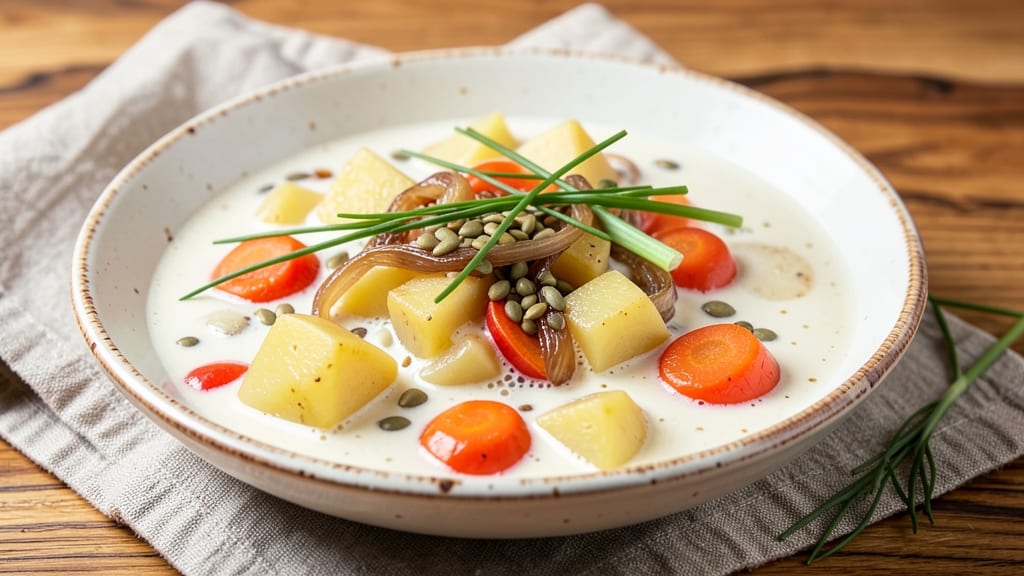
This vegan potato chowder delivers restaurant-quality creaminess without dairy—thanks to a silky coconut-cashew base that melts into every spoonful. The secret lies in blending soaked cashews with coconut milk until perfectly smooth, creating a velvety texture that rivals traditional cream-based soups.
I developed this recipe after years of perfecting plant-based versions, ensuring each bite delivers hearty potatoes, savory herbs, and just the right amount of warmth from smoked paprika.
The beauty of this chowder is its foolproof technique that works for both weeknight dinners and holiday gatherings. You'll start by sautéing onions and garlic until fragrant, then building layers of flavor with celery and carrots before adding the potatoes.
The coconut-cashew mixture transforms the broth into something luxuriously rich, while fresh thyme and bay leaves add herbal depth that makes it taste homemade—not store-bought.
What you'll end up with is a deeply satisfying soup that's creamy yet light, packed with tender potatoes and aromatic vegetables. The cashew base adds natural creaminess without heaviness, making it perfect for those who avoid dairy but still crave comfort food.
Each spoonful delivers a perfect balance of flavors—herby, slightly smoky, and undeniably comforting.
Serve it piping hot with crusty bread for dipping or a sprinkle of fresh parsley to brighten the presentation. This chowder reheats beautifully, so it's ideal for meal prepping or feeding a crowd.
The best part? It's completely plant-based without sacrificing any of the soul-warming qualities that make chowder a classic.
Ingredients for vegan potato chowder
This velvety vegan chowder transforms humble potatoes into a restaurant-worthy dish—no dairy needed.
| Ingredient | Amount | Notes |
|---|---|---|
| Yellow Onions 🧅 | 1 ½ whole | Diced into small pieces |
| Garlic Cloves 🧄 | 4 cloves | Freshly minced for aroma |
| Carrots 🥕 | 2 whole | Peeled and diced small |
| Celery Stalks 🧅 | 3 whole | Diced finely for texture |
| Russet Potatoes 🥔 | 2 ½ lb | Peeled and cubed evenly |
| Full-Fat Coconut Milk 🥥 | 1 ½ cups | Canned, unsweetened preferred |
| Raw Cashews 🥜 | ¾ cup | Soaked in hot water 15 mins |
| Vegetable Broth 💧 | 4 cups | Low-sodium preferred |
| Fresh Thyme 🌿 | ¼ cup | Stems removed, chopped |
| Bay Leaves 🌿 | 2 whole | Removed after cooking |
| Smoked Paprika 🌶️ | 1 tbsp | For subtle smokiness |
| Extra-Virgin Olive Oil 🫒 | ¼ cup | For sautéing vegetables |
| Lemon Juice 🍋 | 1 tbsp | Freshly squeezed |
| Salt 🧂 | 1 ½ tsp | Adjust to taste |
| Black Pepper 🌶️ | ½ tsp | Freshly ground |
The coconut-cashew base is where the magic happens. Trader Joe's has the best canned coconut milk—full-fat for maximum creaminess. For cashews, Costco bulk bins offer the most budget-friendly option, but any raw cashews work. Soak them in hot water for 15 minutes—they'll blend into a luxurious, velvety texture that replaces cream perfectly. The smoked paprika adds warmth without overpowering, while fresh thyme brings that homemade herbal depth. I always double-check my vegetable broth is low-sodium to avoid any bitterness creeping in later.
No coconut milk? Silken tofu blended with extra cashews works in a pinch, though the texture will be slightly different. Short on fresh thyme? Dried thyme at one-third the amount gets you close, but nothing beats the real thing. The potatoes should be cubed evenly—1-inch pieces cook perfectly without turning mushy. For extra richness, add a splash of nutritional yeast at the end (about 2 tbsp), which also adds a cheesy note. The smoked paprika can be swapped for regular paprika if you prefer a milder flavor, though I wouldn't skip it entirely—it's what gives this chowder its signature depth.
This chowder tastes even better the next day as flavors meld together beautifully. Store leftovers in an airtight container for up to 5 days in the fridge or freeze for 3 months. For meal prep, portion into containers with a layer of coconut milk on top to prevent a skin from forming. Reheat gently on the stove with a splash of water or broth to restore that creamy consistency. The cashew base thickens when chilled, so stir in a bit more broth when reheating if needed.
Why You'll Love This Recipe
- One-Pot Magic: I swear by this recipe because it’s literally one pot—no chopping board chaos, no extra pans. Dice the onions, carrots, and celery together (I use the same knife for all three), toss them in with the potatoes and garlic, and let the stove do the work. Honestly? That’s my kind of cooking.
- Creamy Without the Guilt: The secret’s in the cashew cream—blend soaked cashews with broth until silky, and suddenly you’ve got that rich, velvety texture without a drop of dairy. That crispy edge on the potatoes? Chef’s kiss. The garlic and thyme make it taste like a hug from your grandma, but with zero cholesterol.
- Lunchbox Hero: Between us, this chowder is my go-to for meal prep. It reheats like a dream—no splitting or soggy bread, just hearty bowls that keep me full through meetings. Pack it in jars for work or freeze half for those nights when you’d rather binge Netflix than cook. (Yes, even on a Tuesday night.)
- Pantry Staple Power: Russets are cheap, carrots last forever, and onions? Always on sale. This recipe turns basic ingredients into something ridiculous good without breaking the bank. Plus, leftovers taste just as good the next day—proof that good food doesn’t have to be fancy to be worth making twice.
Step-by-step instructions for creamy vegan potato chowder
This chowder delivers restaurant-quality creaminess without dairy—just rich coconut-cashew magic.
Sauté the Vegetable Base
Heat the 0.25 cup extra-virgin olive oil in a large pot over medium heat. Add the 1.5 whole yellow onions and cook for 5 minutes until translucent and slightly caramelized at the edges. This foundational step builds flavor—don't rush it.
Add the 2 whole carrots, 3 whole celery stalks, and 1 tbsp smoked paprika, stirring to coat. Cook for another 5 minutes until the vegetables soften slightly but still hold their shape. The paprika adds subtle depth that elevates the entire dish. Keep the heat steady—too high will burn the vegetables before they release their sweetness.
Develop the Aromatics and Add Potatoes
Stir in the 4 cloves minced garlic cloves and cook for 30 seconds until fragrant. The garlic should sizzle but not brown—this ensures pure aromatic flavor without bitterness. Immediately add the 2.5 lb cubed russet potatoes, tossing to coat them in the vegetable mixture.
Pour in the 4 cups vegetable broth and bring to a gentle boil. Reduce heat to medium-low and simmer for 15 minutes until the potatoes are fork-tender but not falling apart. You want them to hold their shape while still being soft enough to mash slightly when pressed. This is the perfect texture for chowder—substantial but creamy when blended.
Create the Creamy Cashew-Coconut Base
While the potatoes cook, prepare the cashew mixture: Drain the 0.75 cup soaked raw cashews and blend them with the 1.5 cups full-fat coconut milk, 0.25 cup chopped fresh thyme, 1 tbsp lemon juice, 1.5 tsp salt, and 0.5 tsp black pepper until completely smooth. This blend is your secret weapon for velvety texture—no dairy needed.
Add the 2 whole bay leaves to the pot and continue simmering for another 10 minutes until the potatoes are fully tender. Remove the bay leaves before blending. The thyme and lemon juice brighten the coconut's richness, while the cashews create that luxurious mouthfeel we all crave in chowder.
Blend and Finish
Use an immersion blender to purée the chowder directly in the pot until completely smooth. For even creamier texture, you can blend half at a time and return it to the pot. The result should be velvety with no visible chunks—this is where the cashew-coconut magic transforms everything.
Return the pot to low heat and stir in the cashew-coconut mixture. Simmer for 5-7 minutes, stirring occasionally, until everything is heated through and the flavors meld beautifully. Taste and adjust seasoning—you might need a pinch more salt to balance the coconut's natural sweetness. The final chowder should be rich, creamy, and packed with herby depth from the thyme and paprika.
Serve Warm with Crusty Bread
Ladle the chowder into bowls and serve immediately while hot. The contrast of warm chowder with crispy bread is pure comfort food perfection. For extra richness, top each serving with a drizzle of olive oil or a sprinkle of fresh thyme. This chowder keeps well in the refrigerator for 3-4 days—just reheat gently on the stove, stirring occasionally to prevent skin formation.
Here's the thing—this chowder tastes even better the next day as the flavors deepen. The cashew-coconut base thickens slightly upon cooling, making it even more satisfying when reheated. Store leftovers in an airtight container, and you'll have hearty lunches ready in minutes.
Pro Tips For Making Vegan Potato Chowder
- SOFTEN POTATOES FIRST: Peel and cut your Russets into ½-inch chunks, then boil them in salted water for 5 minutes before adding to the chowder. This guarantees they’ll finish tender without turning to mush—no more gummy potatoes ruining your creamy base.
- SWEAT VEGETABLES LOW: After dicing onions, carrots, and celery, cook them on medium-low heat for 10 minutes with a splash of water. The extra time draws out their natural sweetness and prevents burning—trust me, your chowder won’t taste like charred sad vegetables.
- SALT THE POTATOES: Toss your peeled potato chunks in 1 teaspoon of salt before boiling or simmering. It seasons them from the inside out and keeps the final chowder from tasting flat, even if you forget to add salt later.
- SKIP THE MUSHY BASE: If your chowder thickens too much, resist the urge to add water. Instead, whisk in a spoonful of cold plant-based milk or broth—it cools the mixture just enough to smooth out the texture without breaking the creaminess.
Common mistakes when making your vegan potato chowder
Skipping the Soak
One of the biggest mistakes is using raw cashews straight from the bag without soaking them first. The cashews need to be softened in hot water for at least 15 minutes to break down properly and create that silky texture.
I've made this error before—when I skipped soaking, the chowder ended up grainy and chalky. Always soak them in hot water for best results. 🥜
Overcooking the Potatoes
Potatoes can easily turn mushy if left too long in the broth. The goal is tender but still holding their shape—about 15 minutes of simmering time after adding them.
I learned this the hard way when my chowder ended up with a watery consistency. Test with a fork for doneness and remove from heat immediately when they're fork-tender.
Using Low-Quality Coconut Milk
Not all coconut milk is created equal. Light coconut milk won't give you the same creamy results as full-fat. I recommend Trader Joe's full-fat coconut milk—it's the best for this recipe.
Light versions can make your chowder thin and watery. If you must use light coconut milk, add an extra 0.25 cup cashews to compensate for the lack of fat.
Ignoring the Bay Leaves
Bay leaves infuse subtle herbal notes into the broth, but they must be removed before blending. I've forgotten to take them out before puréeing, which left my chowder with a bitter aftertaste. Always strain or remove bay leaves before blending the chowder for a smooth, clean finish. 🌿
Rushing the Blending Process
For the creamiest texture, you need to blend the chowder thoroughly. Using an immersion blender is ideal, but if you transfer it to a countertop blender,
Over-Salting the Broth
Vegetable broth can vary in saltiness, so always check the label for low-sodium options. I've accidentally used regular broth, which made my chowder taste bland or overly salty. Taste your broth before adding it to the pot and adjust seasoning accordingly. If you're unsure, err on the side of less salt—you can always add more later. 🧂
Nutrition facts
Frequently asked questions about vegan potato chowder
Can I make this chowder without coconut milk?
Yes, but you'll need to adjust the texture. Replace the 1.5 cups coconut milk with 1 cup silken tofu blended with 0.5 cup extra cashews for creaminess. The chowder will be slightly lighter but still delicious. For extra richness, add 2 tbsp nutritional yeast at the end to mimic cheesy notes.
How do I make this chowder spicier?
Add ½ tsp cayenne pepper or 1 tsp hot sauce when blending the cashew-coconut mixture. For smoky heat, increase smoked paprika to 2 tbsp. Always taste first—you can adjust to preference, but start conservative to avoid overpowering the creamy base.
Can I use sweet potatoes instead of russet?
Sweet potatoes add natural sweetness and vibrant color. Use the same 2.5 lb amount, but reduce the cooking time by 5 minutes since they soften faster. For extra depth, add ½ tsp cinnamon when sautéing the vegetables—it pairs beautifully with sweet potatoes.
Why does my chowder taste too coconutty?
The lemon juice and thyme balance coconut's sweetness, but if it's still overpowering, add 1 tbsp apple cider vinegar or ½ tsp black pepper to cut through the richness. For a milder flavor, reduce coconut milk to 1 cup and add ½ cup unsweetened almond milk to maintain creaminess.
Is this chowder freezer-friendly?
Yes! Let it cool completely, then store in airtight containers for up to 3 months. Thaw overnight in the fridge and reheat gently on low heat, stirring occasionally. The cashew-coconut base thickens when frozen, so add 2-3 tbsp broth when reheating for the perfect texture.