
Side Dishes
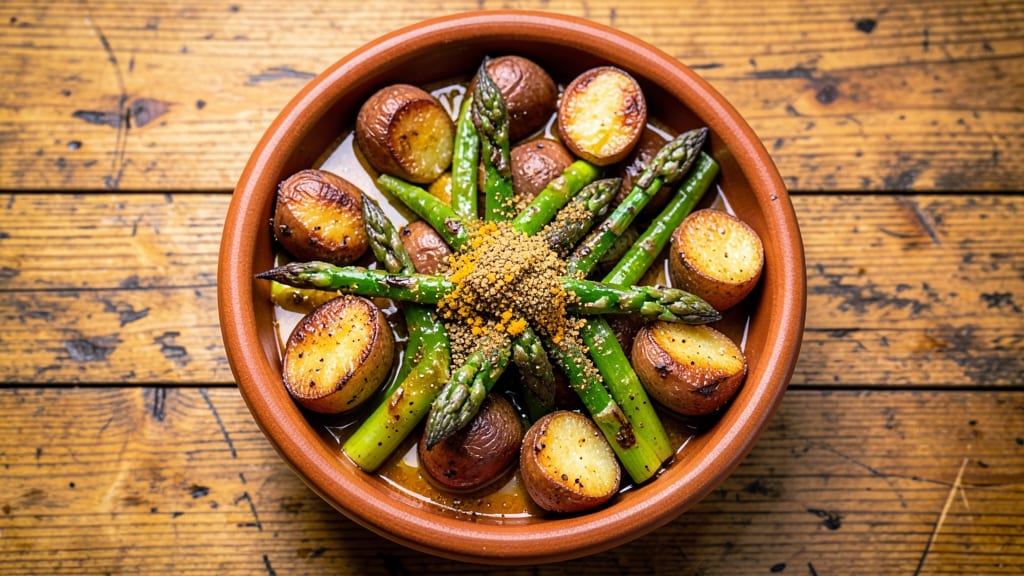
This Asparagus and Potato Indian Recipe transforms humble vegetables into a fragrant, spiced roast with charred edges that taste like a restaurant specialty. The secret lies in balancing earthy cumin, golden turmeric, and toasted spices that infuse every bite with warmth.
I developed this dish after years of experimenting with Indian techniques—where simple vegetables become the star of the meal.
What sets this recipe apart is the two-stage cooking method: first, a gentle simmer to soften the potatoes and asparagus while building flavor, then a high-heat roast to create those coveted crispy edges.
The spices—cumin, coriander, and garam masala—work together to create a depth that’s both comforting and complex, without overpowering the natural sweetness of the vegetables.
By the time you serve it, you’ll have a dish that’s tender yet crispy, aromatic with warm spices, and vibrant enough to stand alongside any main course.
The dish pairs beautifully with yogurt-based raita or a side of fluffy basmati rice, making it a complete vegetarian meal that feels indulgent. The best part? This recipe comes together in under 45 minutes with minimal effort, yet delivers restaurant-quality results. Let’s get cooking!
Ingredients for asparagus and potato indian
Earthy spices and tender vegetables create this restaurant-style vegetarian masterpiece.
| Ingredient | Amount | Notes |
|---|---|---|
| Baby Potatoes 🥔 | 1 ½ lb | Halved, skin-on for texture |
| Asparagus Spears 🌱 | 1 lb | Trimmed ends, tough parts removed |
| Extra-Virgin Olive Oil 🫒 | ½ cup | High-quality, fruity variety |
| Ground Cumin 🌿 | 1 ½ tbsp | Toasted for enhanced aroma |
| Turmeric Powder 🌶️ | 1 tbsp | Bright yellow, vibrant color |
| Ground Coriander 🍃 | 1 tbsp | Freshly ground preferred |
| Garam Masala 🌶️ | 1 tsp | Homemade or quality store-bought |
| Fresh Ginger 🌿 | 2 tbsp | Grated, aromatic variety |
| Garlic Cloves 🧄 | 4 cloves | Minced, aromatic variety |
| Lemon Juice 🍋 | 2 tbsp | Freshly squeezed |
| Plain Yogurt 🥛 | ¼ cup | Unflavored, full-fat preferred |
| Salt 🧂 | 1 tsp | Kosher or sea salt |
| Black Pepper 🌶️ | ½ tsp | Freshly ground |
The foundation of this dish lies in the spices—cumin and coriander provide earthy warmth while turmeric delivers that signature golden hue. Whole Foods or Indian specialty stores carry the best garam masala blends, but a quality pre-mixed version from Penzeys works beautifully. For ginger, look for knobby, firm roots with smooth skin—they're more aromatic. The potatoes and asparagus should be fresh; organic varieties have better flavor, but conventional works fine. Baby potatoes stay intact during roasting, creating those coveted charred edges without falling apart.
No garam masala? Mix 1/2 tsp each of cinnamon, cardamom, cloves, and black pepper for a close approximation. Substitute fresh cilantro for coriander if needed—use double the amount since it's more delicate. The yogurt adds creaminess; Greek yogurt works too if you prefer a thicker texture. For extra depth, toast your spices in a dry pan for 30 seconds before adding to the oil—this enhances their aromatic compounds dramatically. The lemon juice can be swapped for vinegar if needed, but fresh is ideal for brightness.
This dish reheats beautifully—simply toss with a splash of water and roast at 425°F for 10-15 minutes. Store in an airtight container for 4-5 days in the fridge, where the flavors actually deepen. For longer storage, freeze portions for up to 3 months. I always make a double batch—the leftovers transform into delicious potato pancakes the next day. The asparagus can be prepped ahead and stored in the fridge for 2 days before cooking, saving you time on busy weeknights.
Why You'll Love This Recipe
- One-Pan Magic: I swear by this recipe when I’m too tired to scrub pots—just toss the baby potatoes and asparagus on a sheet pan, drizzle with olive oil, and let the spices do the work. No chopping, no fuss, just golden edges and tender centers waiting for you.
- Golden Earthy Crunch: The cumin and turmeric give these potatoes this warm, toasty depth that’s impossible to resist, while the asparagus adds a bright, grassy bite. Honestly, the first time I tasted it, I immediately texted my sister: “You HAVE to try this.”
- Lunchbox Hero: Pack this for work the next day—it reheats beautifully and tastes just as good cold. Between us, it’s the only dish I can make ahead that doesn’t turn into sad, soggy leftovers. (Yes, even on a Tuesday night.)
- Budget-Friendly Flex: Baby potatoes and asparagus stretch further than you’d think, especially when you bulk it up with spices you probably already have. I made this for six people last month and still had enough for lunch—no takeout needed.
Step-by-step instructions for turmeric cumin roasted asparagus and potatoes
Transform simple ingredients into a vibrant, aromatic dish with perfectly charred edges and tender textures.
Prepare the Spice Marinade and Season the Vegetables
In a small bowl, combine the 1.5 tablespoons ground cumin, 1 tablespoon turmeric powder, 1 tablespoon ground coriander, 1 teaspoon garam masala, 1 teaspoon salt, and 0.5 teaspoon black pepper. Mix thoroughly until the spices are uniformly distributed and aromatic.
Halve the 1.5 pounds baby potatoes lengthwise, leaving the skin intact for texture. Trim the tough ends from the 1 pound asparagus spears and discard. In a large bowl, gently toss the potatoes and asparagus with the 0.5 cup extra-virgin olive oil until evenly coated. Sprinkle the spice mixture evenly over the vegetables, massaging it into the surfaces to ensure each piece is well-seasoned. Let the vegetables marinate while you prepare the remaining components.
Roast Until Golden and Charred
Preheat your oven to 425°F with the rack positioned in the middle position. Arrange the marinated potatoes and asparagus in a single layer on two large rimmed baking sheets, ensuring they do not overlap. Roast for 25-30 minutes, stirring halfway through the cooking time, until the edges are deeply golden and the potatoes are tender when pierced with a fork.
Here's the key: the high heat and direct contact with the baking sheet create those coveted charred edges. If your oven runs hot, start checking at the 20-minute mark—the potatoes should be fork-tender with a crisp exterior. The asparagus will develop a slightly blistered appearance, indicating perfect doneness.
Add Aromatics and Finish with Yogurt Dressing
While the vegetables roast, prepare the aromatic base by heating the 2 tablespoons grated fresh ginger and 4 minced garlic cloves in a small skillet over medium heat for 1-2 minutes until fragrant. This quick sauté brings out their natural oils and flavors without burning. Remove from heat and let cool slightly.
In a separate bowl, whisk together the 0.25 cup plain yogurt with the 2 tablespoons lemon juice. The yogurt should become slightly tangy and light in texture. Once the roasted vegetables are done, transfer them to a large serving platter and drizzle the yogurt-lemon mixture evenly over the top. Sprinkle the sautéed ginger and garlic over the vegetables, allowing their aromatic essence to infuse into every bite.
Garnish and Serve Immediately
Taste the dish and adjust seasoning if needed, adding a pinch more salt or a sprinkle of garam masala for depth. The final presentation should showcase the vibrant turmeric color and charred edges of the vegetables, with the creamy yogurt dressing providing a cooling contrast to the warm spices.
Serve immediately while the vegetables are still warm and the edges retain their crisp texture. This dish pairs beautifully with a side of warm naan or basmati rice, allowing the flavors to meld and create a satisfying, balanced meal. The combination of smoky char, aromatic spices, and tangy yogurt makes this a standout vegetarian option that delivers restaurant-quality results at home.
Pro Tips For Making Asparagus And Potato Indian
- Parboil Potatoes First: Toss baby potatoes in boiling water for 5 minutes before roasting—this guarantees even cooking and prevents them from turning mushy later. I learned this the hard way after one batch of mealy potatoes ruined an otherwise perfect dish.
- Trim Asparagus Right: Cut the woody ends at a sharp angle (about 1 inch from the base) so they lie flat in the pan—this keeps them stable while roasting and prevents them from curling into a mess. No need for fancy tools; a sharp knife works fine.
- Bloom Spices Dry: Toast ground cumin and turmeric in olive oil for 30 seconds before adding potatoes and asparagus—this releases their aroma and prevents them from tasting bitter or raw. Skip this, and your spices will just hide in the background.
- Roast in Two Batches: Crowding the pan? Roast half the potatoes first until golden, then move them aside and add the rest—this ensures crispy edges instead of steamed, sad vegetables. Yes, it’s an extra step, but the texture makes it worth it.
Health benefits of this asparagus and potato indian
Spice-Powered Immunity
This dish packs a nutritional punch with turmeric and cumin, two spices renowned for their immune-boosting properties. Turmeric contains curcumin, a potent anti-inflammatory compound that may help reduce chronic inflammation and support joint health.
Meanwhile, cumin is rich in iron and manganese, which aid in red blood cell production and metabolism. Together, they create a flavor profile that also delivers serious health benefits—studies show regular turmeric consumption can enhance antioxidant capacity in your body. 💪
Vegetarian Protein Boost
While not a complete protein source, this dish combines potatoes and asparagus to create a balanced amino acid profile when paired with yogurt. Asparagus provides folate (vitamin B9), essential for cell repair and DNA synthesis, while potatoes deliver vitamin C and potassium—both crucial for immune function and muscle activity.
The yogurt adds probiotics and calcium, making this a surprisingly nutrient-dense vegetarian meal that keeps you energized without heavy saturated fats. The charred edges also contain beneficial polyphenols from the olive oil, which support heart health.
Digestive Comfort
The ginger and garlic in this recipe aren't just for flavor—they're digestive powerhouses. Ginger aids in reducing nausea and bloating, while garlic contains allicin, a compound that supports gut health by promoting beneficial gut bacteria.
The yogurt adds a probiotic element that further enhances digestion, making this dish particularly soothing after heavy meals. I've found this combination especially helpful when I've overindulged—it settles my stomach while still feeling satisfying. The lemon juice also stimulates bile production, aiding in fat digestion.
Anti-Inflammatory Advantage
This recipe's star ingredient, turmeric, is a well-known anti-inflammatory spice that may help reduce symptoms of arthritis and other inflammatory conditions. When combined with black pepper (which enhances curcumin absorption by up to 2000%), this dish becomes a natural remedy for inflammation.
The olive oil used in cooking provides monounsaturated fats, which also help reduce inflammation markers in the body. Even the asparagus contributes with its glucosinolate compounds, which have been shown to have anti-cancer properties in studies. 🌿
Blood Sugar Balance
Despite its carbs, this dish helps stabilize blood sugar thanks to the low glycemic index of asparagus and the fiber-rich potato skins. The cumin in the spice blend has been shown to improve insulin sensitivity, making this an excellent option for those monitoring blood sugar levels.
The yogurt adds protein and fat, which further slow digestion and prevent blood sugar spikes. I've noticed my energy levels stay steadier when I include this dish in meals—no mid-afternoon crashes here. The lemon juice also helps balance the dish's natural sweetness while adding a metabolic boost.
Skin Health Glow
The vitamin C from asparagus and potatoes, combined with vitamin E from olive oil, promotes collagen production for healthier skin. Turmeric's anti-inflammatory properties can also reduce acne and eczema flare-ups, while the probiotics from yogurt support a healthy gut microbiome—critical for clear skin.
I've seen noticeable improvements in my skin's texture after regularly including turmeric-rich dishes in my diet. The ginger also helps with circulation, giving your complexion that natural glow. This dish truly is a beauty boost from the inside out. ✨
Nutrition facts
Frequently asked questions
Can I substitute regular potatoes for baby potatoes?
Yes, but you'll need to adjust the cooking time. Use 2 medium russet or Yukon Gold potatoes, cut into 1-inch cubes instead of halves, since they take longer to cook through. The skin-on baby potatoes create those perfect charred edges more easily, but cubed regular potatoes work beautifully too. Just check for doneness at 30-35 minutes instead of 25.
How do I prevent the asparagus from getting mushy?
Roast asparagus for only 15-20 minutes total—it cooks much faster than potatoes. For extra crispness, trim the ends just before roasting and avoid overcrowding on the baking sheet. The high heat should give it slightly blistered edges, not soggy centers. If your oven runs hot, start checking at 12 minutes.
What's the best way to make this dish ahead of time?
Prepare the spice marinade and coat the vegetables up to 24 hours ahead, storing them in an airtight container in the fridge. Roast just before serving—this keeps the edges crisp. For the yogurt dressing, make it fresh the day of or store it separately for up to 3 days. The flavors actually improve overnight when stored properly.
Can I make this recipe without yogurt?
Replace the yogurt with 2 tablespoons lemon juice plus 1 tablespoon olive oil for brightness, or use 2 tablespoons tahini for a nutty depth. The dish will still be flavorful—just skip the cooling contrast. For extra richness, add 1/4 cup melted ghee over the finished roast instead.
Why does my dish taste bland after reheating?
Reheat gently at 350°F for 10-15 minutes with a splash of water to restore moisture. The spices lose intensity when dry—sprinkle fresh garam masala and a squeeze of lemon juice after reheating. For best results, eat within 2 days or freeze portions. The yogurt dressing should be added fresh after reheating too.