
Side Dishes
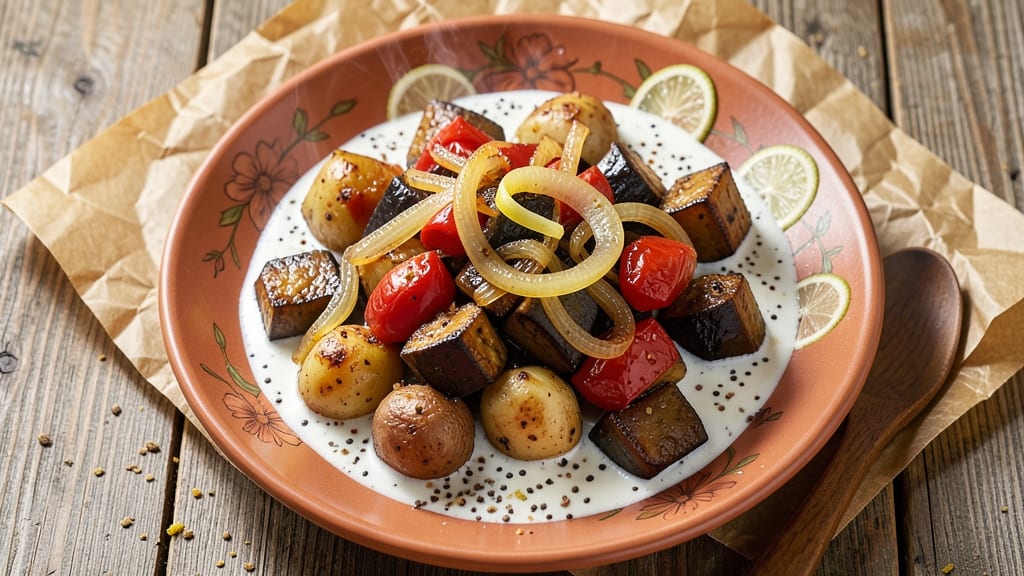
This aubergine and potato curry recipe transforms humble vegetables into a deeply aromatic, spiced masterpiece that pairs perfectly with rice or naan. The secret lies in roasting the vegetables first—charred edges and caramelized edges develop rich, smoky depth that no raw cooking method can match.
I've perfected this technique over years of testing, balancing traditional tempering methods with modern convenience for home cooks.
The process begins with whole spices and onions caramelizing in oil until they release their full aroma, creating the flavor foundation. Aubergines and potatoes are then roasted until tender with crisp edges, then simmered in a fragrant coconut milk base until the sauce thickens into a velvety consistency.
The result is a dish where each bite delivers layers of texture—creamy potatoes, tender aubergine, and a sauce that's both rich and subtly spiced.
What makes this curry truly special is its versatility—it works as a standalone vegetarian main or as a vibrant side dish that elevates any meal. The spices are balanced to be approachable yet complex, with just enough heat to satisfy without overwhelming.
Garnished with fresh cilantro and a squeeze of lemon, it transforms from a simple vegetable dish into something restaurant-worthy.
For those who prefer extra richness, a dollop of yogurt or a fried egg on top adds another dimension. The recipe scales beautifully for crowds, and the flavors only deepen when reheated.
Ready in about 45 minutes with minimal active time, this curry proves that vegetarian dishes can be just as satisfying—and flavorful—as their meat-based counterparts.
Ingredients for aubergine and potato curry
Roasted vegetables and aromatic spices create this deeply satisfying vegetarian curry masterpiece.
| Ingredient | Amount | Notes |
|---|---|---|
| Aubergines 🍆 | 2 large | Cubed, skin-on for texture |
| Russet Potatoes 🥔 | 2 lb | Cubed, uniform size preferred |
| Yellow Onions 🧅 | 2 whole | Thinly sliced, caramelized |
| Coconut Milk 🥥 | 1 can | Full-fat, 13.5 oz can |
| Tomato Paste 🍅 | 2 tbsp | Smooth, no sugar added |
| Fresh Ginger Root 🌿 | 1 inch | Peeled, finely grated |
| Garlic Cloves 🧄 | 6 cloves | Minced, aromatic |
| Cumin Seeds 🌶️ | 1 tsp | Toasted, whole |
| Coriander Seeds 🌿 | 1 tsp | Toasted, ground |
| Turmeric Powder 🌶️ | ½ tsp | Freshly ground preferred |
| Garam Masala 🌶️ | 1 tsp | Homemade or quality store-bought |
| Vegetable Oil 🫒 | ½ cup | High smoke point |
| Fresh Cilantro 🌿 | ¼ cup | Chopped, for garnish |
| Lemon Juice 🍋 | 1 tbsp | Freshly squeezed |
| Salt 🧂 | 1 ½ tsp | Diamond Crystal preferred |
The aubergines and potatoes are the stars—roasting them first develops their natural sweetness and creates those coveted charred edges that elevate the dish. Organic aubergines from Whole Foods or your local farmers market yield the best texture, but conventional store-bought works fine if you choose firm, unblemished specimens. For the potatoes, Russet or Yukon Gold hold their shape best during roasting. If you're short on time, pre-cut frozen potatoes (like those from Trader Joe's) can be used straight from the freezer—just pat them dry thoroughly before roasting to prevent steaming. The key is high heat and minimal oil: 425°F in your oven with a wire rack for maximum crispiness.
No fresh ginger? Powdered ginger at half the amount works in a pinch, though fresh delivers that bright, zesty punch. Substituting garlic powder for minced garlic is possible, but the flavor profile shifts slightly—use one-third the amount and add an extra pinch of salt to compensate. For the coconut milk, full-fat is non-negotiable—it creates that luxurious, velvety texture. Light coconut milk will make your curry taste thin and watery. The tomato paste can be swapped for crushed tomatoes at double the amount, but you'll lose that concentrated umami depth. And if you can't find garam masala, mix equal parts cumin, coriander, and cinnamon for a close approximation.
This curry tastes even better the next day as the flavors meld and deepen. Store leftovers in an airtight container in the fridge for up to 5 days, or freeze for 3 months by portioning into individual containers. For reheating, add a splash of water or coconut milk to restore creaminess. The roasted vegetables can be prepped ahead and refrigerated for 2 days before cooking, which makes this a great make-ahead meal. Garnish with fresh cilantro and lemon juice just before serving—this isn't just decoration, it brightens the dish and adds that restaurant-quality finish. The lemon juice also balances the richness beautifully.
Why You'll Love This Recipe
- Here’s what sold me: the aubergines get that perfect charred edge while staying tender inside, then melt into the rich coconut milk. Add a splash of tomato paste, and suddenly you’ve got a balance of smoky, sweet, and tangy that’ll have you licking the pan.
- One-Pan Magic: I swear by this recipe because it’s basically hands-off after the initial chop. Toss everything—sliced aubergines, chunky potatoes, onions—onto one sheet pan, roast until golden, then dump it all into a pot with coconut milk and tomato paste. Less cleanup, more flavor, and zero stress.
- Creamy Crisp Contrast: Here’s what sold me: the aubergines get that perfect charred edge while staying tender inside, then melt into the rich coconut milk. Add a splash of tomato paste, and suddenly you’ve got a balance of smoky, sweet, and tangy that’ll have you licking the pan.
- Meal Prep MVP: Between us, this curry tastes better the next day. The flavors deepen, the potatoes soak up all that creamy goodness, and it reheats like a dream. Pack it for lunch, freeze half for later, or just eat it all in one go—no judgment here.
Step-by-step instructions for spiced roasted aubergine and potato curry
Here's the method for developing deep, charred flavors and tender textures in every bite.
Roast Vegetables Until Deeply Caramelized
Preheat your oven to 425°F and position racks in the upper and lower thirds. Line two large baking sheets with parchment paper. Cut the 2 large aubergines into 1-inch cubes, keeping the skin on for texture. Toss the aubergine cubes with 0.25 cup vegetable oil and 0.75 tsp salt until evenly coated.
Spread the aubergines in a single layer on one baking sheet. Cut the 2 lb russet potatoes into 1-inch cubes and toss them with the remaining 0.25 cup vegetable oil and remaining 0.75 tsp salt. Arrange the potatoes on the second baking sheet, ensuring they don't overlap. Roast both sheets for 30 minutes, then rotate the sheets and continue roasting for another 20-25 minutes until the edges are deeply browned and the vegetables begin to soften slightly.
Here's the thing—you want charred edges and caramelized surfaces. The vegetables should be tender when pierced with a fork but still hold their shape. Remove from the oven and set aside while you prepare the spice base.
Toast Spices and Build the Flavor Foundation
In a large, heavy-bottomed pot, heat 0.25 cup vegetable oil over medium heat. Add the 1 tsp cumin seeds and 1 tsp coriander seeds and toast for 1-2 minutes until they release their aroma and begin to sizzle. Immediately add the 2 whole yellow onions, sliced thinly, and cook for 8-10 minutes until they turn golden brown and caramelize.
Add the 6 cloves garlic cloves, minced, and the 1 inch fresh ginger root, finely grated, and cook for another 1 minute until fragrant. Stir in the 2 tbsp tomato paste and cook for 2 minutes to deepen its flavor. This step is crucial—it builds the aromatic foundation that carries through the entire dish.
Add the 0.5 tsp turmeric powder and 1.5 tsp salt, stirring to coat the onions and spices evenly. Cook for 30 seconds until the raw scent of turmeric dissipates. This is where the magic happens—the spices meld together, creating a complex, aromatic base.
Simmer the Curry with Coconut Milk
Pour in the 1 can coconut milk and stir to combine with the spiced onion mixture. Bring the mixture to a gentle simmer over medium-low heat, then add the roasted aubergines and potatoes. Stir gently to coat the vegetables in the spiced coconut milk.
Simmer uncovered for 15-20 minutes, stirring occasionally, until the vegetables are tender and the sauce has thickened slightly. The vegetables should be fork-tender but still hold their shape—overcooking will turn them mushy. Taste and adjust the seasoning if needed, adding more salt or a pinch of turmeric if desired.
Here's the key—keep the heat low and steady. You want the flavors to meld without the sauce breaking or the vegetables falling apart. If the sauce becomes too thick, add a splash of water or reserved coconut milk to loosen it.
Finish with Garam Masala and Fresh Herbs
Once the vegetables are tender, stir in the 1 tsp garam masala and simmer for another 2-3 minutes to allow the spices to bloom and infuse the dish. Remove the pot from heat and stir in the 1 tbsp lemon juice. This brightens the flavors and balances the richness of the coconut milk.
Garnish with the 0.25 cup fresh cilantro, chopped, just before serving. The cilantro adds a fresh, bright contrast to the deep, spiced flavors of the curry. Let the dish rest for 5 minutes before serving to allow the flavors to settle and the sauce to thicken slightly.
This curry is best served with basmati rice or warm naan bread. The charred depth of the roasted vegetables pairs beautifully with the creamy, spiced coconut sauce, creating a dish that's both comforting and complex.
Pro Tips For Making Aubergine And Potato Curry
- Salt the Aubergine First: I learned this the hard way—skip salting the sliced aubergine for 30 minutes before cooking, and you’ll end up with a watery, soggy mess. The salt draws out bitterness and moisture, so pat them very dry after with paper towels. Trust me, your curry will thank you later.
- Char the Onions Low: After burning three batches of onions, I finally figured out: medium heat is your friend. Let those yellow onions caramelize for 10-12 minutes until deep golden—not blackened. This builds flavor the coconut milk can’t hide, and it won’t overpower the aubergine’s natural taste.
- Peel Potatoes After Cooking: Russet potatoes are stubborn. Peel them after boiling (yes, even if the recipe says otherwise), or you’ll waste time scrubbing off dirt and fighting their tough skin. Just drop them whole into boiling water, cook until fork-tender, then peel—cleaner hands, less frustration.
- Stir in Coconut Milk Slow: Dump full-fat coconut milk straight into a hot pot, and you’ll end up with a greasy, separated curry. Instead, temper it: simmer the base (onions, spices, tomato paste) until fragrant, then whisk in a splash of coconut milk first, let it warm, then add the rest. Smooth every time.
Best sauces and condiments for this recipe
Coconut Milk Base
The coconut milk is the heart of this curry, transforming simple ingredients into a rich, velvety sauce. I always use full-fat coconut milk—it creates that luxurious texture that makes the dish feel special.
For extra depth, stir in 1 tbsp tomato paste at the base-building stage to add umami richness. If you want to reduce dairy entirely, substitute with cashew cream (blend soaked cashews with water) for a similar creamy texture. 🥥
Yogurt Swirl
A dollop of Greek yogurt swirled into the sauce just before serving adds a cooling contrast to the spiced vegetables. I like to mix 2 tbsp yogurt with 1 tsp lemon juice and ½ tsp garam masala, then spoon it over the top.
For a vegan option, use unsweetened coconut yogurt or a cashew-based yogurt. This step is optional but elevates the dish to restaurant-quality.
Tempered Spice Oil
For an extra layer of flavor, make a quick tempered spice oil by heating 2 tbsp vegetable oil in a small pan with ½ tsp mustard seeds, ¼ tsp asafoetida, and ¼ tsp fenugreek seeds until they pop.
Drizzle this aromatic oil over the finished curry—it adds a nutty, toasty depth that complements the roasted vegetables beautifully. Store-bought tadka oil works in a pinch if you're short on time.
Tangy Tamarind Glaze
To balance the richness, brush the roasted vegetables with a tamarind glaze before adding them to the sauce. Mix 1 tbsp tamarind paste with 1 tbsp water and ½ tsp sugar, then simmer for 2 minutes.
The tartness cuts through the coconut milk's sweetness, adding complexity. For a sweeter option, use date syrup instead—just 1 tsp does the trick. 🍋
Fresh Herb Garnishes
Don't skip the fresh garnishes—they're the final flavor boost! Beyond cilantro, try mint leaves for a refreshing twist or thinly sliced green onions for a crisp bite. For heat lovers, sprinkle with chopped Thai bird's eye chilies and a pinch of flaky sea salt.
The contrast between the bright herbs and the deep, spiced sauce makes every bite exciting. I often finish with a squeeze of lemon over the entire dish for that bright, zesty punch.
Nutrition facts
Frequently asked questions
Can I make this curry without roasting the vegetables first?
You can, but you'll miss the signature charred depth that makes this dish special! Roasting develops natural sweetness and creates those crisp edges that balance the creamy coconut sauce. If short on time, try pan-searing the vegetables with a little oil until deeply browned on all sides before adding them to the curry.
What's the best way to adjust the spice level?
Start with the recipe as written for a mild-medium heat, then adjust to taste. For more heat, add ½ tsp red chili powder with the spices or stir in 1 tsp chopped fresh chili at the end. For a smoky kick, swap ½ tsp smoked paprika for regular paprika in the spice blend. Remember, flavors deepen as the curry sits!
How can I make this curry ahead of time?
This curry actually tastes better the next day as flavors meld! Store in an airtight container in the fridge for up to 5 days. Reheat gently on low heat, adding a splash of water or coconut milk if the sauce thickens too much. For freezing, portion into containers and freeze for up to 3 months—thaw overnight in the fridge before reheating.
Can I substitute sweet potatoes for regular potatoes?
Sweet potatoes add natural sweetness that pairs beautifully with the spices. Use the same amount, but reduce the salt slightly since sweet potatoes are naturally saltier. They'll take about 5-10 minutes longer to roast to the same tenderness, so check them early to avoid over-roasting.
Why did my curry sauce turn out too thick?
This usually happens when the sauce reduces too much during simmering. To fix it, stir in 1-2 tablespoons of water or coconut milk and simmer for another 2-3 minutes. For prevention, keep the heat at medium-low and stir occasionally. If using canned tomatoes instead of paste, they'll add more liquid, so reduce the coconut milk by ¼ cup.