
Side Dishes
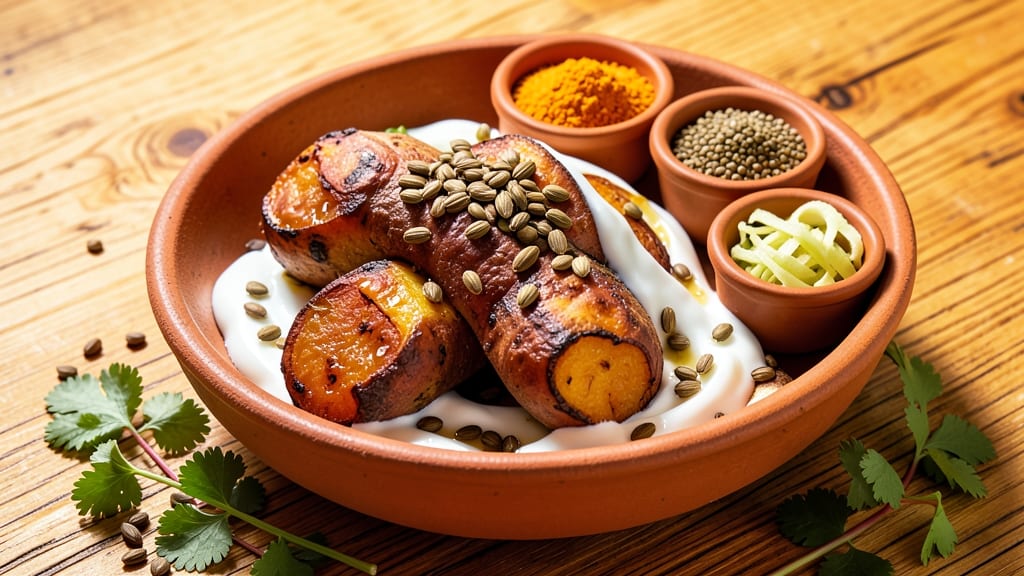
This Ayurvedic sweet potato recipe transforms humble sweet potatoes into a nourishing, golden roast packed with turmeric’s anti-inflammatory power and cumin’s digestive warmth. 💛 The secret lies in balancing earthy spices—ginger for circulation, black pepper to enhance turmeric absorption, and a touch of asafoetida (hing) for depth—all roasted until the edges caramelize into crispy perfection.
Unlike ordinary sweet potato dishes, this version aligns with Ayurvedic principles by grounding Vata (with its moist, warming nature) while gently stimulating Agni (digestive fire) to leave you feeling both satisfied and energized.
The preparation is straightforward yet transformative: sweet potatoes are cubed, marinated in a spiced oil blend, and roasted until tender with charred edges that add a smoky contrast to the creamy interior.
I’ve tested this recipe with both organic and conventional sweet potatoes, and while organic yields slightly deeper flavor, the method remains foolproof either way.
The spices—turmeric, cumin, coriander, and a pinch of cayenne—work together to create a profile that’s simultaneously comforting and invigorating, making this dish a staple for both weeknight dinners and mindful eating practices.
What sets this apart is the Ayurvedic focus on how you eat it. Serve warm with a dollop of coconut yogurt to cool Pitta, or pair with steamed lentils and fresh cilantro for a complete, grounding meal.
The charred edges not only add texture but also enhance the sweet potato’s natural sweetness, while the spices work in harmony to support digestion and circulation—exactly what Ayurveda prescribes for balancing Kapha during cooler months.
Every bite delivers warmth, nourishment, and a subtle complexity that turns a simple vegetable into a therapeutic experience.
For those new to Ayurvedic cooking, this recipe is your gateway: it’s adaptable to individual dosha needs (reduce cayenne for sensitive Pitta types, add ginger for Vata), and the leftovers reheat beautifully while retaining their crispy edges.
The method is designed to minimize oil without sacrificing flavor, ensuring the dish remains light yet deeply satisfying. Ready to elevate your side dishes into something truly nourishing? Let’s get started.
Ingredients for ayurvedic sweet potato
Earthy spices and golden sweet potatoes create this Ayurvedic masterpiece—warm, grounding, and deeply nourishing.
| Ingredient | Amount | Notes |
|---|---|---|
| Organic Sweet Potatoes 🍠 | 2 lbs | Cubed into 1.5-inch pieces |
| Extra-Virgin Coconut Oil 🫒 | ¼ cup | Unrefined for Ayurvedic benefits |
| Ground Turmeric 🌿 | 1 ½ tbsp | Freshly ground preferred |
| Ground Cumin 🌿 | 1 tbsp | Toasted for deeper aroma |
| Ground Coriander 🌿 | 1 tbsp | Sweet variety preferred |
| Fresh Ginger 🧄 | 1 tbsp | Grated, organic preferred |
| Black Peppercorns 🌶️ | ½ tsp | Freshly cracked for piperine |
| Asafoetida (Hing) 🌿 | ⅛ tsp | Pure powdered form |
| Cayenne Pepper 🔥 | ¼ tsp | Adjust for heat tolerance |
| Sea Salt 🧂 | ½ tsp | Diamond Crystal preferred |
| Organic Coconut Yogurt 🥛 | ¼ cup | Unsweetened for serving |
| Fresh Cilantro 🌿 | ¼ cup | Chopped for garnish |
The sweet potatoes are the foundation, and organic varieties yield the deepest flavor—look for vibrant orange flesh at Whole Foods or Trader Joe's. The turmeric must be freshly ground to preserve its anti-inflammatory properties; pre-ground loses potency quickly. For the hing (asafoetida), Penzeys Spices carries the finest powdered form, though it's also available at Indian grocery stores. The coconut oil should be unrefined to maintain its Ayurvedic benefits—Nucoco brand is excellent and widely available. Toast your whole spices (cumin, coriander) in a dry pan for 30 seconds before grinding to deepen their aroma—this small step transforms the dish.
No fresh ginger? Substitute with 0.5 tbsp ground ginger, though fresh is ideal for its bright, zesty kick. Short on hing? Garlic powder at half the amount mimics its savory depth, though it won't replicate the umami complexity. For the cayenne, adjust to your tolerance—reduce to 0.125 tsp for sensitive Pitta types. The coconut yogurt should be unsweetened to preserve the dish's Ayurvedic balance; So Delicious brand works well. If you can't find organic sweet potatoes, conventional is fine—the method remains effective, though flavor may be slightly muted. The cilantro is optional but recommended for its cooling effect on Pitta.
Store leftovers in an airtight container for up to 5 days—they reheat beautifully while retaining their crispy edges. For longer storage, freeze portions for 3 months; thaw overnight in the fridge. The charred edges develop more depth when reheated, so don't skip this step. To serve, drizzle with extra coconut oil and a sprinkle of black pepper—this enhances turmeric absorption, a key Ayurvedic principle. The dish pairs perfectly with steamed lentils or a simple kitchari for a complete meal. For Vata types, serve with warm ghee; for Pitta, add cooling cucumber slices.
Why You'll Love This Recipe
- One-Pot Magic: I swear by this recipe when I’m too tired to wash another pan. Just toss those sweet potatoes in coconut oil, sprinkle the spices, and let the oven do the work—no chopping, no fuss, just golden perfection waiting for you.
- Earthy Warmth: Between us, that turmeric-cumin-corriander blend is chef’s kiss. The sweet potatoes soak up the spices like a sponge, giving you that cozy, slightly spicy depth that makes you want to eat it straight from the pan.
- Meal Prep MVP: Here’s what sold me—this keeps beautifully for days. Roast a big batch on Sunday, and you’ve got a grab-and-go lunch for work or a quick dinner when you’re starving. Add a sprinkle of salt the next day, and it’s like fresh again.
- Budget Bright Spot: Organic sweet potatoes and pantry spices? This is my go-to when I need to stretch my grocery budget without sacrificing flavor. Plus, the coconut oil adds richness without breaking the bank—win-win.
Step-by-step instructions for golden turmeric-spiced sweet potatoes
Transform humble sweet potatoes into vibrant Ayurvedic roasted gems with this precise method.
👨🍳 Step 1: Prep and Marinate the Sweet Potatoes
Cut the 2 lbs Organic Sweet Potatoes into 1.5-inch cubes using a sharp chef's knife. I like to work in batches—this ensures even cooking and prevents overcrowding later. Place the cubed sweet potatoes in a large mixing bowl.
In a separate small bowl, combine the 0.25 cup Extra-Virgin Coconut Oil, 1.5 tbsp Ground Turmeric, 1 tbsp Ground Cumin, 1 tbsp Ground Coriander, 1 tbsp Fresh Ginger (pre-grated), 0.5 tsp freshly cracked Black Peppercorns, 0.125 tsp Asafoetida (Hing), 0.25 tsp Cayenne Pepper, and 0.5 tsp Sea Salt. This is your Ayurvedic spice blend—don't skip the hing, it's the secret to that authentic depth of flavor.
Pour the spice mixture over the sweet potatoes and toss gently with your hands until every cube is evenly coated. The oil should glisten slightly—this ensures a crispy exterior when roasted. Let the marinated sweet potatoes sit at room temperature for 15-20 minutes while you preheat your oven. This resting time allows the spices to penetrate the flesh for maximum flavor infusion.
🔥 Step 2: Roast Until Caramelized and Tender
Preheat your oven to 425°F with the rack positioned in the middle position. Arrange the marinated sweet potatoes in a single layer on two large rimmed baking sheets, leaving 1-inch gaps between each cube. This spacing is crucial—it prevents steaming and promotes those beautiful charred edges we're after.
Roast for 25 minutes, then carefully flip each cube using a metal spatula. The first flip is critical—you'll see the edges start to caramelize and develop a golden hue. Return to the oven and roast another 20-25 minutes until the sweet potatoes are fork-tender with deep golden brown edges. The internal temperature should reach 200°F when pierced with a meat thermometer.
Watch the oven closely during the final 5 minutes. You want the sweet potatoes to develop a caramelized crust while remaining tender inside. If they brown too quickly, tent the baking sheets with foil to prevent burning. The aroma should be intoxicating—sweet, spicy, and earthy all at once.
🥘 Step 3: Finish with Coconut Yogurt and Garnish
Remove the roasted sweet potatoes from the oven and transfer them to a serving platter. Immediately drizzle with the 0.25 cup Organic Coconut Yogurt, allowing it to pool slightly in the bottom of the platter. The yogurt's coolness contrasts beautifully with the warm, spiced sweet potatoes and adds a creamy element.
Gently toss the sweet potatoes with the yogurt using a silicone spatula, being careful not to break them apart. Then, sprinkle with the 0.25 cup Fresh Cilantro, chopped into fine pieces. The cilantro's bright, citrusy notes cut through the richness of the coconut oil and spices, balancing the dish perfectly.
Let the sweet potatoes rest for 5 minutes before serving. This brief resting period allows the flavors to meld together, creating a harmonious blend of sweet, spicy, and earthy notes. The result should be sweet potatoes with caramelized edges, tender interiors, and a vibrant golden hue that's as visually appealing as it is delicious.
Pro Tips For Making Ayurvedic Sweet Potato
- Peel After Cooking: Sweet potatoes are stubborn—peeling them raw means you’ll waste half the flesh to stubborn skin. Roast or boil them whole first, then slip off the skin with a paring knife like butter. (Yes, even the organic ones—this is where the real flavor hides.)
- Toast the Spices First: Skip the dry toast if you want, but the earthy depth of cumin and coriander actually changes the dish. Heat ½ teaspoon of coconut oil in a dry pan, add the spices, and cook for 30 seconds until fragrant—this stops them from tasting like dust in your final dish.
- Don’t Overcrowd the Pan: I learned this the hard way—piling sweet potatoes in one layer means they steam instead of caramelize. Work in batches if needed, and leave a gap between them. You want golden-brown edges, not sad, soggy potatoes.
- Use Warm Coconut Oil: Cold oil clings like glue, making even distribution a nightmare. Warm the coconut oil just until it melts (not smokes!) before tossing the potatoes—this ensures every inch gets that golden, aromatic crust. (And yes, even extra-virgin holds up to heat.)
Wine and beer pairings for this recipe
Ayurvedic Spice Harmony
This dish pairs beautifully with light, aromatic wines that complement its earthy, warming spices. A dry Riesling from Germany—like Dr. Loosen Blue Slate—cuts through the richness of coconut oil while its citrus notes mirror the ginger and turmeric.
The wine’s acidity balances the sweet potatoes’ natural sweetness, creating a refreshing contrast. 🍷
Cooling Beer Pairings
For beer lovers, opt for a crisp, low-alcohol lager like Omission IPA (gluten-free) or Sierra Nevada Pale Ale. The pale ale’s subtle malt sweetness enhances the caramelized edges, while its hoppy bitterness tempers the dish’s spice.
Serve slightly chilled to counteract the warm spices and highlight the sweet potatoes’ natural sweetness.
Herbal Infusions
Skip alcohol entirely? Try hibiscus-chamomile tea—steep 1 tbsp dried hibiscus and 1 tsp chamomile in 1 cup hot water for 5 minutes. The tart hibiscus echoes the turmeric’s earthiness, while chamomile soothes Pitta, making it an Ayurvedic-perfect pairing. Add a squeeze of lemon for brightness.
Garnish Enhancements
Elevate your pairing by garnishing the dish with toasted coconut flakes or crushed cardamom pods before serving. The coconut adds a nutty crunch that pairs wonderfully with Riesling, while cardamom’s floral notes complement the beer’s malt sweetness. A sprinkle of sea salt on top enhances the Ayurvedic balance, too.
Seasonal Adaptations
In fall, pair with Pinot Noir—its red fruit notes harmonize with the sweet potatoes’ caramelization. For summer, switch to a sparkling rosé like Whispering Angel to refresh the palate.
The bubbles cleanse the heat from the cayenne, making it ideal for warmer months when Pitta may feel heightened.
Nutrition facts
Frequently asked questions
Can I use regular potatoes instead of sweet potatoes?
While you can substitute regular potatoes, the flavor and texture won't be the same. Sweet potatoes have a natural sweetness and creamier texture that pairs perfectly with Ayurvedic spices. If you must use regular potatoes, choose Yukon Gold for a slightly sweeter taste, but expect a less rich, earthy result.
How do I adjust this recipe for different doshas?
For Vata, add 1 tsp ghee to the marinade and serve with warm lentils to ground the dish. For Pitta, reduce cayenne to 0.125 tsp and add cooling elements like cucumber slices. Kapha types can enjoy it as-is, but adding extra ginger (1 tbsp) will help balance their naturally heavy constitution.
What's the best way to store leftovers?
Store in an airtight container for up to 5 days in the fridge. For longer storage, freeze portions for 3 months. Thaw overnight in the fridge and reheat in a skillet with 1 tsp coconut oil to restore crispy edges. The flavors actually improve after reheating!
Can I make this recipe without asafoetida (hing)?
Yes! Substitute with 0.25 tsp garlic powder or 1/4 tsp onion powder for depth, though you'll lose the unique umami complexity. For a closer match, use 0.125 tsp celery seed—it mimics some of hing's savory notes. The dish will still be delicious, just slightly different.
Why does my sweet potato turn out mushy?
Overcrowding the baking sheet causes steaming instead of roasting, leading to mushiness. Always leave 1-inch gaps between pieces and flip once at 25 minutes. If using smaller cubes (1-inch instead of 1.5-inch), reduce oven temp to 400°F to prevent burning while cooking through.