
Soups & Stews
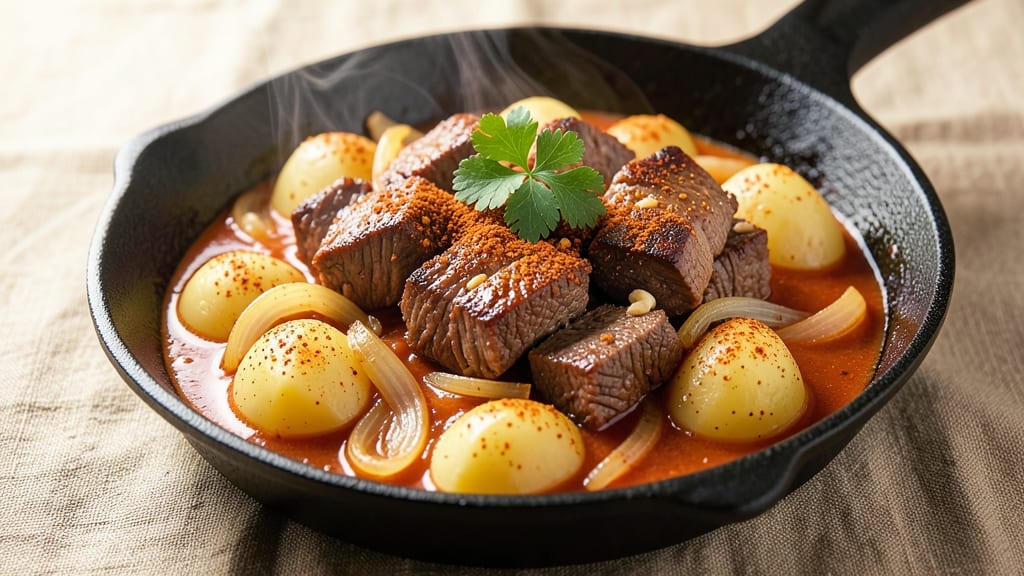
This beef and potato goulash recipe delivers the deep, smoky richness of a classic Hungarian stew with tender beef and fluffy potatoes. The secret lies in slow simmering—allowing flavors to meld into a perfect balance of paprika warmth and savory depth.
I've perfected this technique over years of testing, ensuring every bite delivers that comforting, hearty satisfaction. What sets this recipe apart is the two-step browning process for the beef, which creates a deep, caramelized foundation for the stew.
Sautéed onions and garlic build aromatic layers, while tomatoes add a touch of acidity that brightens the rich paprika flavors. The potatoes absorb the flavorful broth as they cook, turning out tender and fluffy rather than mushy.
By the time it's done, you'll have a restaurant-quality stew with melt-in-your-mouth beef and perfectly cooked potatoes swimming in a velvety, paprika-infused sauce. The aroma alone will have everyone gathering around the table.
This is the kind of dish that tastes even better the next day—ideal for meal prep or feeding a crowd. Serve it with crusty bread to soak up every last drop of that flavorful broth.
The instructions walk you through every step, from browning the beef to achieving that perfect texture. Let's get cooking!
Ingredients for beef and potato goulash
Pantry staples plus a few key ingredients for that restaurant-quality goulash flavor.
| Ingredient | Amount | Notes |
|---|---|---|
| Chuck Roast 🥩 | 2 lb | Cut into 1-inch cubes |
| Yellow Onions 🧅 | 2 whole | Sliced into half-moons |
| Garlic Cloves 🧄 | 4 cloves | Minced for depth |
| Sweet Paprika 🌶️ | 2 tbsp | Hungarian preferred |
| Smoked Paprika 🌶️ | 1 tbsp | For smoky richness |
| Tomato Paste 🍅 | ½ cup | Squeeze tube works |
| Beef Broth 💧 | 3 cups | Low-sodium preferred |
| Red Wine 🍷 | 1 cup | Bold dry red |
| Russet Potatoes 🥔 | 2 lb | Cut into 1-inch chunks |
| Carrots 🥕 | 2 medium | Peeled, sliced into rounds |
| Bay Leaves 🌿 | 2 whole | Remove before serving |
| Thyme 🌿 | 1 tbsp | Dried or fresh |
| Salt 🧂 | 1 ½ tsp | Kosher or sea salt |
| Black Pepper 🌶️ | ½ tsp | Freshly ground |
| Olive Oil 🫒 | 2 tbsp | For searing |
The beef is non-negotiable—chuck roast gives you that fall-apart tenderness. Grab it from the butcher counter if you can, or pre-cubed from the grocery store's meat section. Look for good marbling, not lean cuts. The paprika is where the magic happens—Hungarian sweet and smoked make all the difference. I always buy mine in bulk from Penzeys or the spice aisle at Whole Foods. For the potatoes, Russets
No red wine? Dry white wine or extra beef broth works in a pinch, though the color won't be as rich. Fresh thyme is ideal, but dried at one-third the amount gets you close. The carrots can be baby carrots if that's what's in the fridge—just adjust the amount to match weight. For the tomato paste, those little squeeze tubes at Trader Joe's are perfect—they're mess-free and last forever. If you're short on time, pre-minced garlic works, but fresh minced has way more flavor. The onions should be sweet yellow—Vidalia if you're splurging, regular yellow if you're keeping it simple. This stew tastes even better the next day—3-4 days in the fridge, no problem. Portion it out into containers for easy lunches. Freezes beautifully for up to 3 months—just thaw overnight in the fridge. For extra richness, stir in a splash of sour cream when serving. The broth reduces as it cooks, so if it seems too thin, simmer uncovered for 10 minutes to thicken it up. Leftovers reheat perfectly—just add a splash of water or broth if it's too thick.
Why You'll Love This Recipe
- One-Pot Magic: I swear by this recipe—just dump everything in a Dutch oven, walk away, and come back to tender beef and potatoes that practically melt in your mouth. No fancy skills needed, just patience (and maybe a glass of wine while it simmers).
- Smoky Depth Bomb: That combo of sweet and smoked paprika? It’s what turns this into something special. The onions caramelize into something rich, the garlic gets toasty, and the chuck roast? It falls apart like it’s been cooking all day—even though it’s not.
- Leftovers That Save Me: This dish tastes better the next day, honestly. I make a big batch on Sundays, freeze half, and reheat portions for lazy nights. The potatoes soak up all the flavor, and the beef stays juicy—no sad, dry leftovers here.
- Budget-Friendly Feast: Chuck roast is cheap, potatoes are cheap, and a handful of spices make it feel gourmet. I feed my family four hearty servings for under $15, and no one bats an eye. Plus, the flavor hides any budget worries—it’s just good food.
Step-by-step instructions for beef and potato goulash
Here's how to build a rich, paprika-kissed goulash where the beef melts and potatoes stay wonderfully fluffy.
Sear the Chuck Roast for Deep Flavor
Heat the 2 tablespoons olive oil in a large Dutch oven over medium-high heat until shimmering. Pat the 2 lb chuck roast dry with paper towels and cut it into 1-inch cubes. Working in batches to avoid crowding, sear the beef for 2-3 minutes per side until deeply browned and caramelized.
This searing step is non-negotiable—it develops the Maillard reaction that creates that deep, meaty flavor. If the pan gets too crowded, reduce heat slightly to prevent steaming instead of browning. Remove the beef and set it aside on a plate.
Build the Paprika Base with Aromatics
In the same Dutch oven, add the sliced 2 whole yellow onions and cook for 5-6 minutes until softened and lightly golden. Stir in the 4 cloves minced garlic cloves and cook for 30 seconds until fragrant—don't let it burn, or you'll taste bitterness.
Lower the heat to medium and sprinkle in the 2 tablespoons sweet paprika and 1 tablespoon smoked paprika, stirring constantly for 1 minute to toast the spices and release their aromatic oils. This is where the goulash gets its signature rich color and depth of flavor.
Deglaze and Simmer the Sauce
Pour in the 1 cup red wine and scrape up all the browned bits from the bottom of the pot with a wooden spoon. This deglazing step captures all the flavor that would otherwise stick to the pan. Let it simmer for 3-4 minutes until reduced by half.
Add the 0.5 cup tomato paste, stirring until fully incorporated. Pour in the 3 cups beef broth, then add the 2 whole bay leaves, 1 tablespoon thyme, 1.5 teaspoons salt, and 0.5 teaspoon black pepper. Return the beef to the pot and bring everything to a gentle boil.
Cook the Meat Until Tender
Reduce the heat to low and cover the Dutch oven. Let the goulash simmer for 1 hour 30 minutes, stirring occasionally, until the beef is fork-tender. You'll know it's ready when the meat easily pulls apart with a fork and the sauce has thickened slightly.
If the sauce reduces too much before the beef is tender, add ½ cup hot water or broth to maintain the right consistency. The potatoes will absorb some liquid later, so aim for a slightly thicker sauce at this stage.
Add Potatoes and Carrots to Finish
Cut the 2 lb russet potatoes into 1-inch chunks and peel and slice the 2 medium carrots into rounds. Add them to the goulash along with any accumulated juices from the beef. Increase the heat to medium and bring to a simmer.
Cover and cook for another 20-25 minutes, stirring occasionally, until the potatoes are fork-tender with slightly crisp edges and the carrots are easily pierced with a fork. Remove the bay leaves before serving, as they can be bitter if eaten.
Pro Tips For Making Beef And Potato Goulash
- SEAR THE CHUCK ROAST: Don’t rush this—get that meat screaming hot in a dry pan for 4-5 minutes per side until it’s deep brown, not just pink. I used to skip this, and the goulash always tasted like it needed more depth. A good crust locks in flavor when it braises.
- CHOP ONIONS SMALL AND UNIFORM: Dice those yellow onions into ¼-inch pieces so they cook through evenly without turning to mush. Big chunks? They’ll sit there like rocks. My grandmother’s trick: Pulse them twice in the food processor, then hand-chop the rest for consistency.
- DON’T SKIP THE GARLIC BLOOM: Sauté those minced garlic cloves in the rendered beef fat until they’re golden, not just fragrant—about 30 seconds past when you think they’re done. Burnt garlic ruins the whole dish, and undercooked garlic just tastes like a missed opportunity.
- LOW AND SLOW AFTER THE SEAR: Once everything’s in the pot, cover it and simmer at a gentle bubble—no boiling—on the lowest heat that keeps things moving. I learned this the hard way: high heat after searing turns the potatoes to glue. Patience here makes the difference between fork-tender beef and chewy disappointment.
Essential equipment for this recipe
Dutch Oven Essentials
A 5-7 quart Dutch oven is your best friend for this recipe—it distributes heat evenly and creates that perfect crust on the bottom. I swear by the Lodge 5.5 Quart Enamel Dutch Oven because it handles high heat without warping.
If you already own a Dutch oven, make sure it’s heavy-gauge to prevent warping over time. For budget-friendly options, Cuisinart MultiCooker Dutch Oven works well for stovetop-to-oven cooking. 🔥
Searing Tools
For that perfect sear, you’ll need a long-handled wooden spoon (I use Oxo Good Grips) and a meat thermometer to check beef doneness. A 12-inch cast-iron skillet works if you don’t have a Dutch oven, but the Dutch oven’s tight lid helps trap steam for tender meat.
For browning beef in batches, a tongs set (like Mercer Culinary Genius) helps flip pieces without overcrowding the pan.
Spice & Aromatic Must-Haves
Invest in high-quality paprika—I recommend Penzeys Hungarian Sweet Paprika and Smoked Paprika for that authentic depth. A microplane (like Minc Grater) makes quick work of garlic, and a mortar and pestle can toast spices directly in the pot for extra aroma.
For measuring, a spice scale (such as OXO Good Grips) ensures precise amounts, especially for small quantities like thyme. 🌶️
Slow Cooking Setup
If you’re short on time, a 6-quart slow cooker (like Hamilton Beach Programmable) simplifies the process—just sear the beef first, then transfer everything to the cooker. For stovetop simmering, a digital thermometer (such as Thermoworks Smoke) helps monitor internal temps of both the beef and sauce.
A lid with a vent (like All-Clad Stainless Steel Lid) prevents excessive steam buildup, which can make the potatoes mushy.
Serving Gear
Serve goulash in deep, oven-safe bowls (like Le Creuset Stoneware) to keep everything hot. A ladle with a long handle (such as Oxo Stainless Steel Ladle) makes portioning easy, and a slotted spoon helps remove bay leaves before serving.
For garnishes, keep fresh parsley and sour cream in small bowls nearby—glass ramekins (like Pyrex) work perfectly. 🍽️
Nutrition facts
Frequently asked questions
Can I use ground beef instead of chuck roast?
While you can substitute 1 lb ground beef for the chuck roast, the texture and flavor will differ significantly. Ground beef cooks much faster and won't develop the same tender, melt-in-your-mouth quality. If you must use it, brown it thoroughly first and reduce the cooking time to 45-60 minutes total. For best results, stick with chuck roast or brisket for that authentic goulash experience.
How do I prevent the potatoes from turning mushy?
Add the potatoes only in the final 20-25 minutes of cooking and avoid overcrowding the pot. Cut them into 1-inch chunks for even cooking, and stir occasionally to ensure they absorb the broth without steaming. If the potatoes seem undercooked, cover and cook 5-10 minutes longer. Russet potatoes hold up best—avoid waxy varieties like red potatoes.
Can I make this goulash in a slow cooker?
Sear the beef first, then transfer everything to a 6-quart slow cooker. Cook on low for 7-8 hours or high for 4-5 hours. The slow cooker's gentle heat will yield tender beef and perfectly cooked potatoes. Just skip the final uncovered simmer—slow cookers don't reduce as effectively.
What if I don't have red wine?
No problem! Use 1 cup beef broth or a mix of ½ cup broth + ½ cup apple cider vinegar for acidity. The color won't be as rich, but the flavor will still be delicious. For a non-alcoholic option, grape juice works well too. The key is maintaining the liquid balance—don't skip the deglazing step with wine or its substitute.
How do I reheat leftovers?
Reheat goulash in a pot over medium-low heat until warmed through, stirring occasionally and adding 1-2 tablespoons broth or water if it's too thick. Microwave reheating works too—cover with a damp paper towel and heat in 1-minute intervals, stirring between each. For best texture, reheat only until hot, not boiling. Leftovers taste even better the next day!