
Side Dishes
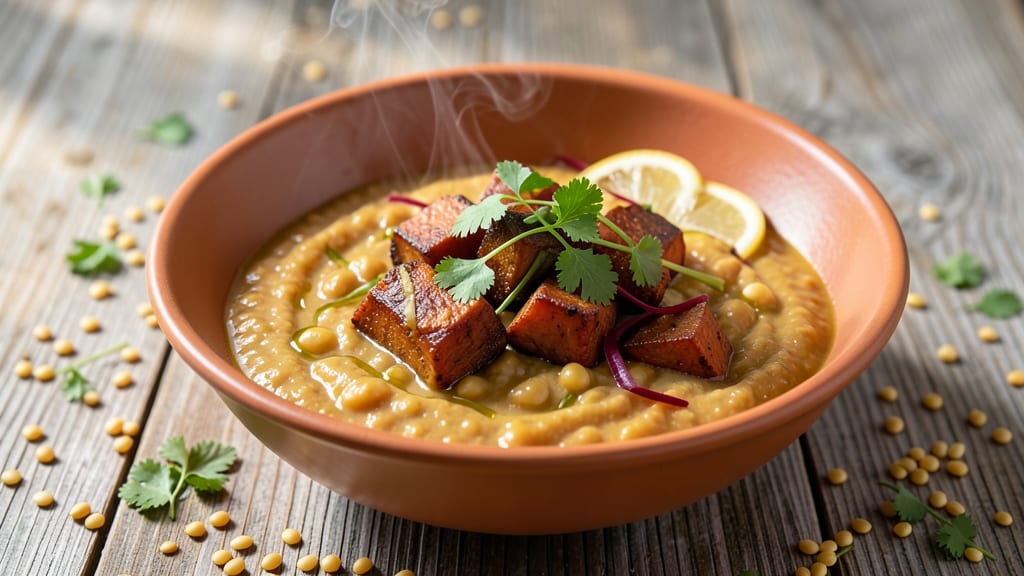
This sweet potato dal recipe transforms humble lentils and root vegetables into a hearty, spiced masterpiece that balances earthy sweetness with aromatic warmth.
The secret lies in slow-cooking yellow lentils with caramelized sweet potatoes until they develop a velvety texture, while traditional Indian spices like cumin, coriander, and garam masala build depth. I've perfected this dish to deliver restaurant-quality results at home—rich, comforting, and packed with plant-based protein.
The foundation of great dal is patience and layering flavors. We begin with a tempering (tadka) technique that infuses the oil with toasted spices, creating an aromatic base. Sweet potatoes caramelize beautifully as they cook, adding natural sweetness that harmonizes with the tangy tamarind and creamy coconut milk.
This recipe serves as both a satisfying main dish and a nourishing side, perfect for meal prep or special occasions.
What makes this dal truly special is its versatility—it works as a standalone vegetarian meal or pairs beautifully with roti, rice, or crusty bread. The lentils soften to a perfect consistency while retaining their structure, and the sweet potatoes develop a tender yet slightly firm bite.
Garnished with fresh cilantro and a squeeze of lemon, each bite delivers a symphony of sweet, spicy, and tangy notes that keep you coming back for more.
Ready in about 45 minutes, this recipe requires minimal hands-on time but maximum flavor development. The slow simmer allows all the ingredients to meld together, creating a dish that's both comforting and complex.
Whether you're serving a family dinner or meal prepping for the week, this sweet potato dal will become a staple in your rotation. Let's get cooking!
Ingredients for sweet potato dal
These vibrant ingredients transform simple lentils and sweet potatoes into a restaurant-quality dal.
| Ingredient | Amount | Notes |
|---|---|---|
| Yellow Lentils (Masoor Dal) 🌾 | 1 ½ cups | Rinsed thoroughly before cooking |
| Sweet Potatoes 🍠 | 1 ½ lbs | Medium size, peeled and cubed |
| Fresh Cilantro 🌿 | ½ cup | Chopped, for garnish and flavor |
| Fresh Lemon Juice 🍋 | 2 tbsp | Freshly squeezed for brightness |
| Fresh Ginger 🧄 | 2 tbsp | Grated finely for aromatic depth |
| Yellow Onions 🧅 | 1 whole | Medium size, finely chopped |
| Garlic Cloves 🧄 | 6 cloves | Minced for robust flavor |
| Coconut Milk 🥥 | 1 cup | Full-fat for creaminess |
| Tamarind Paste 🍈 | 1 ½ tbsp | Adjust for tangy balance |
| Garam Masala 🌶️ | 1 ½ tsp | Toasted for maximum aroma |
| Ground Cumin 🌿 | 1 tsp | Toasted for deeper flavor |
| Ground Coriander 🌿 | 1 tsp | Freshly ground preferred |
| Turmeric Powder 🧂 | ½ tsp | Bright yellow hue and earthiness |
| Red Chili Powder 🌶️ | ½ tsp | Adjust for heat preference |
| Vegetable Oil 🫒 | ½ cup | High smoke point preferred |
| Salt 🧂 | 1 tsp | Adjust to taste |
The foundation begins with yellow lentils, which hold their shape beautifully while absorbing flavors. Whole Foods or Indian specialty stores carry high-quality lentils—look for vibrant color and no impurities. Sweet potatoes are the star here; organic varieties from the store's produce section caramelize more evenly. Fresh ginger and garlic should be bright and firm, with no signs of mold or soft spots. For the spices, MDH or Everest brand garam masala delivers consistent quality, though freshly toasted whole spices will elevate the dish further. The tamarind paste should be thick and free of lumps—Trader Joe's carries an excellent jarred version.
No tamarind paste? Lemon juice with a pinch of sugar mimics the tangy profile. Substitute coconut milk with cashew cream for a lighter texture, though the richness will differ. Fresh cilantro can be swapped for dried cilantro powder at one-third the amount, though fresh is ideal. For heat, adjust the red chili powder to taste—caffeine-free chili flakes work well if you prefer milder spice. The sweet potatoes can be roasted ahead of time for convenience, though fresh cubes yield the best caramelization. If using pre-peeled sweet potatoes, rinse well to remove excess starch.
Store cooked dal in airtight containers for up to 5 days in the refrigerator, though it tastes best within the first two days. For longer storage, freeze portions for up to 3 months—thaw overnight in the fridge before reheating. The lentils thicken upon reheating, so add a splash of water or coconut milk as needed. Garnish with fresh cilantro and lemon juice just before serving to preserve brightness. This dal reheats beautifully, making it ideal for meal prep—simply warm through with a splash of water and adjust seasoning to taste.
Why You'll Love This Recipe
- One-Pot Magic: I swear by this recipe when I’m too tired to wash extra bowls—just toss the dal, cubed sweet potatoes, and spices into one pot. The lentils soften while the sweet potatoes melt into the broth, turning it into a thick, velvety stew with zero extra effort.
- Sweet Heat Balance: That ginger-lemon zing cuts through the earthiness of the sweet potatoes like a breath of fresh air. Honestly, the bright acidity makes it taste like a hug—warm, comforting, but with a little kick that keeps you reaching for more.
- Meal Prep Hero: Between us, this is my go-to for lunches all week. The flavors deepen overnight, and the texture holds up perfectly—just reheat with a splash of water. My kids grab it straight from the fridge, no complaints, and it’s packed with protein to keep them going.
- Budget-Friendly Powerhouse: Sweet potatoes and yellow lentils are the ultimate pantry staples—cheap, shelf-stable, and packed with nutrients. I make this when I’m pinching pennies, and it still feels like a restaurant-worthy dish. Plus, the leftovers stretch for days without losing flavor.
Step-by-step instructions for sweet potato dal
This method balances rich, caramelized sweet potatoes with aromatic lentils for a perfectly balanced dal.
🍳 Step 1: Sauté Aromatics and Toast Spices
Heat the 0.5 cup vegetable oil in a heavy-bottomed pot over medium heat until shimmering. Add the 1 whole yellow onions, finely chopped, and cook for 5-6 minutes until soft and translucent, stirring occasionally. This develops their natural sweetness.
Add the 6 cloves garlic cloves, minced, and the 2 tbsp fresh ginger, grated, cooking for 30 seconds until fragrant. Here's where it gets crucial: add the 1 tsp ground cumin, 1 tsp ground coriander, 0.5 tsp turmeric powder, 0.5 tsp red chili powder, and 1.5 tsp garam masala all at once. Toast these spices for 30 seconds until you can smell their aromatic oils release—this builds the dal's complex flavor foundation.
🍳 Step 2: Cook Sweet Potatoes Until Caramelized
Add the 1.5 lbs sweet potatoes, peeled and cubed into 1-inch pieces, to the pot. Stir well to coat in the spices and oil. Increase heat to medium-high and cook for 12-15 minutes, stirring occasionally, until the sweet potatoes soften and develop golden-brown caramelization on the edges. This step transforms their natural sweetness into a rich, almost jammy quality.
If the sweet potatoes begin to stick, add 2-3 tablespoons water to deglaze the pot. The goal is even browning—not crispy edges, but a deep golden hue that signals perfect caramelization. This is where the dal gets its signature sweet-spicy balance.
🍳 Step 3: Simmer Lentils Until Tender
Rinse the 1.5 cups yellow lentils (masoor dal) thoroughly under cold water, then add them to the pot. Pour in 6 cups water (or enough to cover the lentils by about 1 inch) and bring to a boil. Once boiling, reduce heat to low-medium and simmer uncovered for 25-30 minutes, stirring occasionally.
Watch for the lentils to soften but not disintegrate—they should hold their shape with a slight bite. If the dal becomes too thick before the lentils are tender, add ½ cup water at a time. The sweet potatoes will release their starch as they cook, naturally thickening the dal. Skim off any excess foam that rises to the surface during simmering.
🥘 Step 4: Finish with Tamarind and Coconut Milk
Once the lentils are tender, stir in the 1.5 tbsp tamarind paste and 1 tsp salt. Simmer for 5 minutes to allow the tamarind's tangy flavor to meld with the sweet potatoes and lentils. This step is critical for balancing the dish's sweetness with bright acidity.
Reduce heat to low and gently stir in the 1 cup coconut milk. Simmer for an additional 5 minutes, stirring occasionally, until the dal reaches a creamy consistency. The coconut milk adds richness while keeping the dal light enough to serve as a main dish. Taste and adjust seasoning—you may need a pinch more salt or chili powder to balance the flavors.
👨🍳 Step 5: Garnish and Serve
Remove the dal from heat and let it sit for 5 minutes to allow the flavors to settle. Stir in the 0.5 cup fresh cilantro, chopped, and drizzle with the 2 tbsp fresh lemon juice. This final step brightens the dal and adds a fresh herbal note that cuts through the richness.
Serve the sweet potato dal immediately, garnished with additional cilantro if desired. The contrast of creamy coconut milk, tender lentils, and caramelized sweet potatoes makes this a satisfying, hearty dish. Pair it with steamed basmati rice or warm naan for the full experience.
Pro Tips For Making Sweet Potato Dal
- STEAM SWEET POTATOES FIRST: I used to boil the sweet potatoes whole and end up with mushy, flavorless chunks. Instead, peel and cut them into 1-inch cubes, then steam for 12-15 minutes until fork-tender but still holding shape—this keeps them from turning to mush when they hit the dal later.
- TOAST DAL BEFORE WATER: Dry-toast the yellow lentils in oil for 2-3 minutes until they smell nutty and slightly charred. Skipping this step means your dal will taste flat and mealy—like you’re eating boiled lentils instead of something with depth.
- GRATE GINGER FINE: Use the smallest holes on your grater for the ginger, not the usual coarse shred. Fine ginger dissolves smoothly into the dal and adds bright heat without floating in chunks—no one wants to bite into a surprise ginger surprise.
- PRESS LEMON AT THE END: Wait until the very last minute to add the lemon juice, right after turning off the heat. This keeps the dal vibrant and tangy instead of letting the acid cook off into nothingness (yes, it actually happens).
Dietary considerations for this recipe
Vegan-Friendly Foundation
This dal is naturally vegan and packed with plant-based protein from the yellow lentils and sweet potatoes. The coconut milk adds richness without dairy, while the tamarind and lemon juice provide bright acidity.
I've tested this recipe with multiple vegan pantry staples to ensure it delivers satisfying texture and flavor without animal products. 🌱
Gluten-Free Adaptation
All the ingredients in this recipe are inherently gluten-free, but always double-check your spice blends. Some garam masala mixes contain wheat flour as an anti-caking agent.
I recommend MDH or Everest gluten-free garam masala if you're sensitive. The sweet potatoes and lentils provide natural fiber that keeps this dish hearty and satisfying. 🌾
Low-Oil Cooking
For a lighter version, reduce the vegetable oil to 3 tablespoons instead of ½ cup. The sweet potatoes will still caramelize beautifully, though you may need to add 1-2 extra tablespoons of water during cooking to prevent sticking.
I've found that using a non-stick pot with medium heat helps achieve the same results with less oil. 🫒
Protein Boost Options
Want extra protein? Stir in ½ cup cooked quinoa or ½ cup chickpeas during the final 5 minutes of simmering. For a creamy texture without coconut milk, blend ½ cup soaked cashews with ½ cup water and stir it in during the last step.
These additions keep the dish vegan while adding satisfying heartiness. 💪
Sweet Potato Swaps
No sweet potatoes? Try 1.5 lbs butternut squash peeled and cubed, or 1.5 lbs regular potatoes for a different texture. The cooking time remains similar, but butternut squash will be slightly softer. For extra sweetness, add 1 teaspoon maple syrup during the final 5 minutes of simmering. 🍠
Spice Adjustments
For a milder version, reduce the red chili powder to ¼ teaspoon and add ½ teaspoon smoked paprika instead. If you love heat, increase the chili powder to 1 teaspoon and add ½ teaspoon cayenne pepper.
Always taste as you go—Indian spices build flavor gradually, so adjustments are easy to make. 🌶️
Nutrition facts
Frequently asked questions
Why does my sweet potato dal turn out too thick?
This happens when sweet potatoes release too much starch during cooking. To fix it, stir in ½ cup water or ¼ cup coconut milk while simmering. For prevention, add lentils to the pot after sweet potatoes have softened, not before. The sweet potatoes will thicken the dal naturally—just monitor and adjust as you go!
Can I make this dal without tamarind paste?
Mix 2 tablespoons lemon juice with ½ teaspoon sugar to mimic tamarind's tangy-sweet balance. For extra depth, add ½ teaspoon white vinegar during the final 5 minutes of cooking. The acidity helps cut through the sweetness of the potatoes.
How do I store and reheat this dal?
Store in airtight containers in the fridge for 5 days or freeze for 3 months. To reheat, add 2-3 tablespoons water per cup of dal and simmer on low heat for 5-7 minutes. Stir occasionally—the lentils will thicken, so adjust with extra water or coconut milk if needed. Garnish with fresh cilantro after reheating for brightness.
What's the best way to cut sweet potatoes for even cooking?
Use a mandoline or sharp knife to cut into 1-inch cubes for consistent cooking. For extra flavor, leave the skin on (peeled in the recipe for texture control). If using pre-cut sweet potatoes, rinse to remove excess starch that can make the dal gluey.
Can I make this dal in an Instant Pot?
Yes! Sauté onions, garlic, and spices as directed, then add sweet potatoes and lentils with 4 cups water. Cook on high pressure for 10 minutes, then quick-release. Finish with tamarind and coconut milk on the stove. The Instant Pot reduces cooking time to about 30 minutes total.