
Soups & Stews
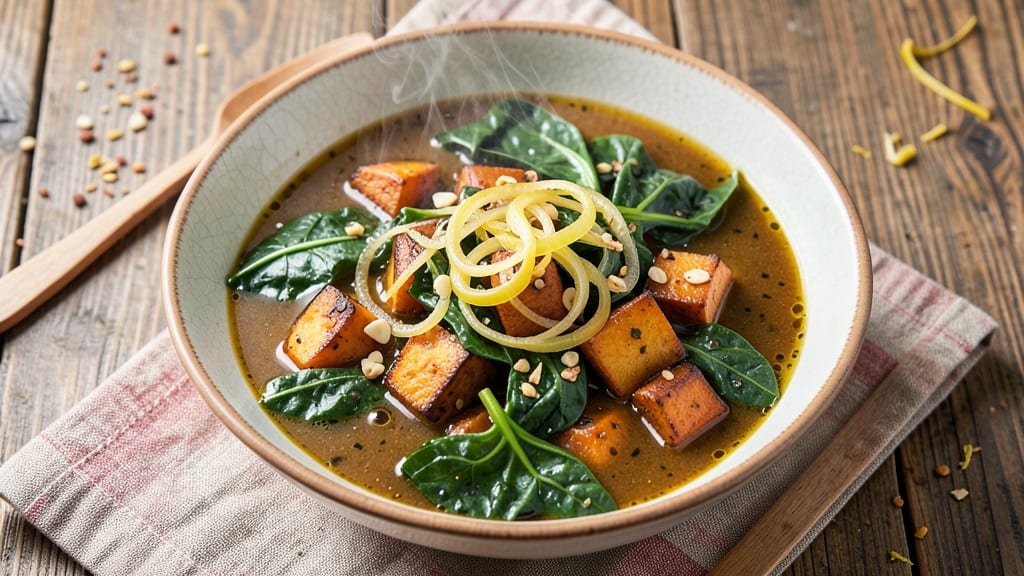
This sweet potato leaves soup recipe transforms humble greens into a rich, earthy bowl of comfort that's surprisingly simple to make. The nutty depth from roasted sweet potatoes blends perfectly with tender leaves, creating a vegetarian dish packed with flavor and texture.
What sets this recipe apart is the balance of techniques—sautéing for depth, simmering for tenderness, and blending for a velvety broth that feels restaurant-quality at home.
The foundation starts with properly prepping the leaves—removing stems, washing thoroughly, and wilting them to concentrate their natural sweetness. Roasting sweet potato chunks until caramelized adds a depth that elevates the soup beyond basic greens.
The broth develops layers of flavor as it simmers, absorbing the nutty sweetness of the potatoes and the earthy notes of the leaves.
By the time you're done, you'll have a soup that's creamy yet light, with vibrant green flecks of leaves and tender sweet potato pieces throughout. Each spoonful delivers a harmonious blend of textures and flavors—earthy, slightly sweet, and satisfyingly hearty.
It's the kind of dish that feels special but won't overwhelm your weeknight schedule.
Serve it alongside crusty bread for dipping or over steamed rice to soak up every last drop of that flavorful broth. The leftovers reheat beautifully, making this an ideal meal prep option for busy days. Let's get started on creating this comforting bowl of goodness.
Ingredients for sweet potato leaves soup
Earthy greens meet nutty sweet potatoes in this vegetarian soup that's restaurant-quality at home.
| Ingredient | Amount | Notes |
|---|---|---|
| Sweet Potatoes 🍠 | 1 ½ lb | Medium-sized, peeled and cubed |
| Sweet Potato Leaves 🌿 | 1 lb | Stems removed, washed thoroughly |
| Yellow Onion 🧅 | 1 whole | Medium-sized, chopped |
| Garlic Cloves 🧄 | 4 cloves | Peeled and minced |
| Extra-Virgin Olive Oil 🫒 | ¼ cup | For roasting and sautéing |
| Vegetable Broth 💧 | 4 cups | Low-sodium preferred |
| Fresh Thyme 🌿 | 1 tbsp | Leaves only, chopped |
| Fresh Rosemary 🌿 | 1 tbsp | Leaves only, chopped |
| Salt 🧂 | 1 tsp | Kosher or sea salt |
| Black Pepper 🌶️ | ½ tsp | Freshly ground |
| Lemon Juice 🍋 | 1 tbsp | Freshly squeezed |
| Heavy Cream 🥛 | ¼ cup | Full-fat for creaminess |
| Crusty Bread 🍞 | 4 slices | For serving |
The sweet potatoes are the heart of this soup—look for orange-fleshed varieties with smooth skin for the best texture. Trader Joe's or local farmers markets often carry the sweetest ones, but the regular grocery store works too. Medium-sized potatoes (about 6-8 oz each) are ideal—they roast evenly without turning to mush. Peeled and cubed into even 1-inch pieces, they'll caramelize beautifully. The leaves? Fresh is non-negotiable here—wilted or dried just won't cut it. Look for vibrant green leaves with no yellowing or brown spots. Most grocery stores sell them in the produce section near other greens like collards or kale.
No sweet potato leaves? Substitute with collard greens or kale—they'll give you that earthy depth, though the flavor will be slightly different. Running short on time? Pre-washed baby spinach works in a pinch, but you'll need about twice the amount (2 lbs) since it's more delicate. The vegetable broth is where flavor builds—low-sodium is key so you can control the saltiness. Homemade is ideal, but Pacific Foods or Imagine brands are reliable store-bought options. The garlic can be pre-minced from a jar (just rinse it first), but fresh is always better. For the herbs, dried thyme and rosemary work at half the amount, but fresh gives that bright, aromatic punch that makes this soup sing.
Roasted sweet potatoes keep for 5 days in the fridge wrapped tightly in foil, but they're best used fresh. The soup itself reheats beautifully—just warm it gently on the stove, stirring occasionally, and add a splash of water or broth if it gets too thick. Leftovers keep for 4-5 days in the fridge, and the broth freezes wonderfully for up to 3 months. I always make a double batch because it's perfect for meal prep—portion it into containers with a side of crusty bread for easy lunches all week. The bread should be served on the side so it stays crispy, not soggy.
Why You'll Love This Recipe
- One-Pot Magic: I swear by this recipe because it’s basically a "dump and stir" with actual depth. The sweet potatoes and leaves cook down together—no separate pans, no fuss—just rich, earthy flavor building right in the pot.
- Earthy & Sweet: Honestly, the combo of roasted sweet potatoes and wilted leaves is ridiculously good. The natural sweetness of the potatoes balances the bitter, almost spinach-like bite of the leaves—like a hug in a bowl.
- Meal Prep Hero: Between us, this soup tastes even better the next day. I make a big batch on Sundays, and it’s my go-to for lunches—just reheat and add a splash of water if it thickens. Zero waste, all win.
- Budget Boost: Sweet potato leaves are a pantry game-changer. They’re cheap, packed with nutrients, and way more interesting than regular greens. Plus, using the whole sweet potato (peels and all) cuts costs without sacrificing flavor.
Step-by-step instructions for sweet potato leaves soup
Transform humble sweet potato leaves into a rich, velvety soup with deep earthy flavors and nutty undertones.
Roast the Sweet Potatoes for Natural Sweetness
Preheat your oven to 400°F. Toss the 1.5 lb sweet potatoes (peeled and cubed) with 1 tablespoon of the extra-virgin olive oil, ½ teaspoon of the salt, and ¼ teaspoon of the black pepper. Spread them in a single layer on a baking sheet.
Roast for 25-30 minutes, stirring halfway, until the edges are golden brown and the cubes begin to soften. The roasting caramelizes their natural sugars, creating a deeper flavor foundation for the soup. Remove from oven and set aside—their aroma will fill your kitchen, signaling they're ready for the next step.
Sauté Aromatics and Wilt the Greens
In a large Dutch oven, heat the remaining ¼ cup extra-virgin olive oil over medium heat. Add the chopped yellow onion and cook for 5 minutes until softened and translucent. Add the minced garlic cloves, chopped thyme, and chopped rosemary, cooking for another 1 minute until fragrant.
Increase heat to medium-high and add the washed sweet potato leaves, stirring constantly for 2-3 minutes until they begin to wilt. The leaves should collapse dramatically as they release their vibrant green color. This quick cooking preserves their delicate texture while removing any bitterness. Transfer the wilted greens to a plate and set aside.
Build the Soup Base with Roasted Potatoes
Pour the 4 cups vegetable broth into the Dutch oven and bring to a gentle simmer. Add the roasted sweet potatoes, scraping up any browned bits from the bottom of the pan. Simmer for 10 minutes until the potatoes are fork-tender and the flavors meld together.
Using an immersion blender (or carefully transferring to a blender), purée the soup until completely smooth. The result should be a velvety texture with no visible chunks. Return to the pot and stir in the wilted sweet potato leaves. Simmer for another 5 minutes to allow the flavors to integrate fully.
Finish with Cream and Bright Acid
Reduce heat to low and stir in the ½ cup heavy cream and 1 tablespoon lemon juice. The cream adds luxurious body while the lemon juice brightens the earthy flavors. Taste and adjust seasoning with remaining ½ teaspoon salt and ¼ teaspoon black pepper as needed.
Simmer gently for 3-4 minutes to allow the cream to heat through without curdling. The soup should coat the back of a spoon with a silky consistency. If it's too thick, add 2-3 tablespoons water to reach your desired texture. Keep warm until ready to serve.
Serve with Crusty Bread
Ladle the soup into bowls, ensuring each serving gets its share of creamy texture and vibrant green flecks. Serve immediately with the 4 slices crusty bread on the side for dipping. The bread's crunch contrasts beautifully with the soup's velvety texture, creating the perfect bite.
This soup delivers a perfect balance of earthy sweet potato leaves and nutty sweet potatoes, elevated by the bright lemon finish. The roasted potatoes add depth that transforms simple greens into a restaurant-worthy dish. Enjoy while warm for the best experience!
Pro Tips For Making Sweet Potato Leaves Soup
- SOAK THE LEAVES FIRST: Sweet potato leaves are tough little buggers when raw—soak them in warm salted water for 10 minutes before cooking. This softens the fibers and cuts down on bitterness, which means your soup won’t taste like you’re chewing on old twine. (Yes, even if you’re impatient like me.)
- SWEAT THE ONIONS LOW: Don’t rush the onion base—cook it in olive oil over medium-low heat until it’s a deep golden color, not brown. Burnt onions make the whole soup taste harsh, and you’ll lose that sweet, caramelized depth that balances the greens. I learned this the hard way after serving a batch that tasted like a campfire.
- PEEL AND CUBE THE POTATO: Skip the whole sweet potato—peel it and cut it into 1-inch cubes. Smaller pieces cook faster and soak up the leafy flavors better, giving you a creamier texture without turning to mush. (Your future self will thank you for not ending up with a gluey mess.)
- ACIDIFY THE SOUP LAST: Hold off on adding lemon juice or vinegar until the very end—just before serving. The acid cuts through the richness of the leaves and sweet potatoes, but if you add it too early, you’ll end up with a sad, wilted soup that’s lost its brightness. A squeeze at the end keeps everything vibrant.
Common mistakes when making great sweet potato leaves soup
Overcooking the Leaves
Sweet potato leaves wilt quickly but can turn bitter if overcooked. I’ve ruined batches by letting them simmer too long—once for 15 minutes instead of the recommended 2-3 minutes—and ended up with a metallic, unpleasant flavor.
Always wilt them over medium-high heat and remove them immediately when they collapse. Transfer to a plate and set aside while you build the soup base. 🌿
Skipping the Roast
Raw sweet potatoes will make your soup bland and watery. I learned this the hard way when I rushed and skipped roasting, thinking boiling would work. The result? A weak, starchy broth with no depth.
Roast your potatoes at 400°F for 25-30 minutes to caramelize their natural sugars—this step is non-negotiable for flavor. The golden edges and tender centers are what transform this into a rich, satisfying soup.
Ignoring the Broth Quality
Low-quality broth will ruin your soup’s depth. I once used a high-sodium store brand without checking the label, and the soup tasted flat and salty. Always use low-sodium vegetable broth—I recommend Pacific Foods or homemade.
If you’re short on time, simmer your own with vegetable scraps and herbs for a custom, flavorful base. The broth is the soul of your soup, so don’t skimp here.
Blending Too Aggressively
Over-blending can turn your soup into a gluey mess. I’ve seen this happen when using a regular blender instead of an immersion blender, creating a thick paste. For a silky texture, use an immersion blender and blend in short bursts while keeping the soup on low heat.
If it’s too thick, thin it with 2-3 tablespoons of water or broth. The goal is velvety, not gluey.
Adding Cream Too Early
Stirring in the heavy cream before the soup is fully cooked will cause it to curdle. I’ve made this mistake by adding it too soon, and the result was a split, grainy texture. Always wait until the soup is simmering gently at low heat before adding the cream.
Stir constantly for 3-4 minutes to ensure it heats through smoothly. A splash of lemon juice afterward balances the richness.
Underseasoning
Sweet potato leaves are mild, so the flavor relies on proper seasoning. I’ve served this soup only to have guests ask, “Is this it?” The fix? Taste as you go and adjust with salt and black pepper incrementally.
The roasted potatoes and cream add richness, but the leaves need bold seasoning to shine. Start with ½ teaspoon salt and ¼ teaspoon pepper, then taste and add more if needed. 💡
Nutrition facts
Frequently asked questions
Can I substitute sweet potato leaves with other greens?
Yes! If you can't find sweet potato leaves, use collard greens or kale for a similar earthy flavor. For a milder taste, try spinach (use 2 lbs since it's more delicate). The key is to wilt them properly over medium-high heat for 2-3 minutes to preserve texture and remove bitterness.
How do I store leftover sweet potato leaves soup?
Store in an airtight container in the fridge for 4-5 days. The broth freezes beautifully for up to 3 months—just thaw overnight in the fridge. Reheat gently on the stove, adding a splash of water or broth if it thickens too much. The cream may separate slightly when reheated, but stirring will restore its silky texture.
Can I make this soup without heavy cream?
For a lighter version, replace the ½ cup heavy cream with ½ cup coconut milk or ¼ cup Greek yogurt. The soup will still be creamy but with a different texture. If you prefer a completely dairy-free option, use ¼ cup cashew cream (blend soaked cashews with water) for richness. Taste and adjust seasoning after adding these substitutes.
Why does my soup taste bitter?
Bitter flavor usually means the leaves were overcooked or wilted too long. Always wilt them over medium-high heat for just 2-3 minutes until collapsed. Another cause could be using old or wilted leaves—always pick fresh, vibrant greens. A splash of lemon juice at the end can also help balance any bitterness.
What's the best way to prep sweet potato leaves?
Start by removing tough stems and washing leaves thoroughly in cold water to remove dirt. Dry them well with a clean towel or salad spinner. For easier handling, stack leaves and roll them tightly before slicing into strips. This method helps them wilt more evenly in the pot. Never skip washing—dirt can make your soup gritty.