
Side Dishes
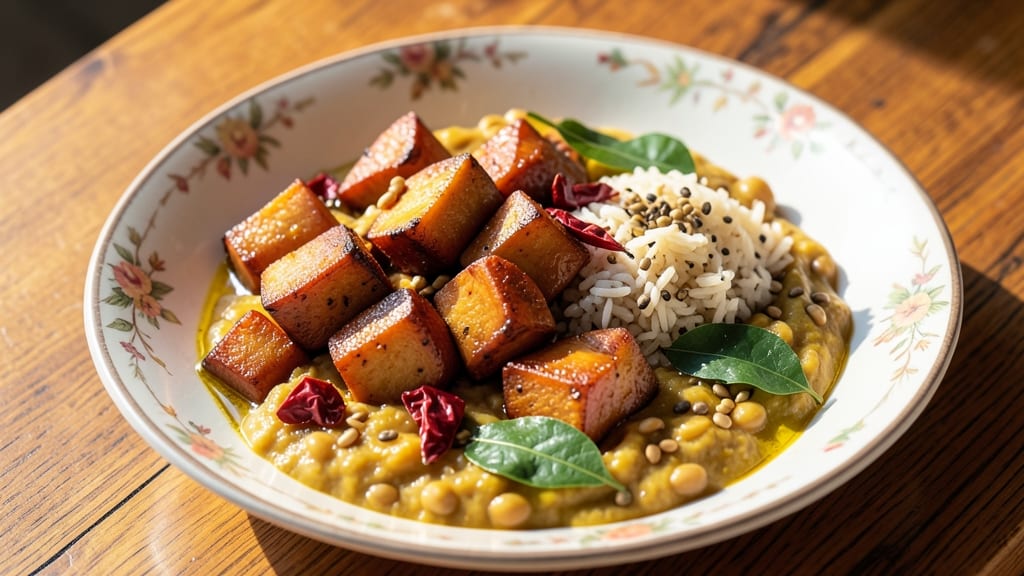
This sweet potato pulusu recipe brings the heart of South Indian home cooking to your table with its fragrant blend of lentils, rice, and earthy sweet potatoes. 🌟 The dish is traditionally served during festivals and special occasions, offering a comforting balance of textures and flavors that make it a staple in Tamil cuisine.
What sets this recipe apart is how the sweet potatoes absorb the aromatic spices, creating a dish that's both hearty and subtly sweet.
The beauty of making sweet potato pulusu lies in its simplicity—just a handful of ingredients come together to create something deeply satisfying. You'll start with soaked rice and toor dal, pressure-cooked until tender, then combined with diced sweet potatoes and a tempering of mustard seeds, curry leaves, and spices.
The result is a dish that's naturally vegetarian, packed with protein, and perfect for meal prep.
By the time you're done, you'll have a steaming bowl of pulusu with tender rice, creamy lentils, and sweet potatoes infused with warm spices like cumin, fennel, and cardamom. The dish pairs beautifully with coconut chutney or a side of sambar, making it a complete meal.
It's the kind of dish that tastes even better the next day as the flavors meld together.
This recipe is not just about the food—it's about the tradition and the love poured into every bite. Whether you're serving it at a family gathering or enjoying a quiet meal at home, sweet potato pulusu delivers comfort and warmth in every spoonful.
Let's get started on creating this South Indian classic.
Ingredients for sweet potato pulusu
Simple ingredients that transform into a fragrant South Indian classic.
| Ingredient | Amount | Notes |
|---|---|---|
| Sweet Potatoes 🍠 | 2 lb | Medium-sized, peeled and cubed |
| Toor Dal (Split Pigeon Peas) 🌾 | 1 ½ cups | Rinsed thoroughly |
| Short-Grain Rice 🍚 | 1 cup | Uncooked, washed |
| Mustard Seeds 🌿 | 1 tbsp | For tempering |
| Curry Leaves 🌿 | ¼ cup | Fresh, whole |
| Dried Red Chilies 🌶️ | 4 whole | Broken into pieces |
| Cumin Seeds 🌿 | 1 tsp | Toasted lightly |
| Asafoetida (Hing) 🌿 | ¼ tsp | Pinch for aroma |
| Ginger 🧄 | 1 inch | Fresh, grated |
| Green Chilies 🌶️ | 2 whole | Slit lengthwise |
| Turmeric Powder 🧂 | ½ tsp | Freshly ground preferred |
| Coconut Oil 🫒 | ¼ cup | For tempering |
| Salt 🧂 | 1 tsp | Adjust to taste |
| Fennel Seeds 🌿 | ½ tsp | Toasted lightly |
| Cardamom Pods 🌿 | 4 whole | Lightly crushed |
The sweet potatoes are the star here—look for vibrant orange ones at the grocery store, not the pale, dry kind. Trader Joe's or Indian specialty markets often have the best selection. If you can't find toor dal, yellow moong dal works too. The rice should be short-grain like jeera sona or ponni—long-grain won't give that creamy texture. For the spices, Penzeys or bulk bins at Indian markets are your best bets. Fresh curry leaves make all the difference—if you can't find them, dried works at half the amount. Toast your whole spices (cumin, fennel) in a dry pan for 30 seconds before adding water—this brings out their aroma.
No mustard seeds? Skip them entirely—this dish still shines without. Fresh ginger is ideal, but powdered works in a pinch (0.5 tsp). Want more heat? Add an extra green chili. The asafoetida (hing) is non-negotiable—it's the secret behind that authentic South Indian flavor. Indian grocery stores sell it in tiny packets, or you can find it online. If you're short on time, pre-soak the rice and dal together overnight—it cuts cooking time in half. The green chilies should be fresh, not dried, for that bright kick.
This tastes even better the next day, so make extra. Store in an airtight container in the fridge for 4-5 days. For meal prep, portion into containers with a side of coconut chutney. The dal and rice keep for 3 months frozen—just thaw and reheat with a splash of water. If you're serving at a gathering, double the spices—they'll mingle with the crowd's plates beautifully.
Why You'll Love This Recipe
- No-Fuss One-Pot: I swear by this trick—just toss everything into one pot. The dal softens while the sweet potatoes caramelize, and the rice absorbs the flavors without sticking. Honestly, I’ve made it while scrolling through my phone.
- Sweet & Savory Magic: That first bite? The natural sweetness of the potatoes meets the earthy dal, then the mustard seeds sizzle like tiny fireworks. Between us, it’s the kind of dish that makes you pause mid-chew just to savor it.
- Lunchbox Hero: Pack it for work or school—it reheats beautifully and keeps kids happy. My daughter actually asks for seconds, and that’s saying something after my failed attempt at homemade cookies last week.
- Pantry Staple Savior: Toor dal and rice are cheap, sweet potatoes stay fresh forever, and you’ll use up those leftover spices. I’ve fed six people for under $10 with this—no guilt, just good food. (Yes, even on a Tuesday night.)
Step-by-step instructions for sweet potato pulusu
This South Indian lentil delight comes together beautifully with these straightforward steps.
🍳 Step 1: Cook the Sweet Potatoes and Lentils Separately
Start by boiling the 2 lb sweet potatoes in salted water until they're fork-tender, about 15-20 minutes. Drain well and set aside. In a separate pot, cook the 1.5 cups toor dal with 1 cup short-grain rice (both already washed), ½ tsp turmeric powder, and 1 tsp salt in 3 cups water until the dal is soft and the rice is cooked through—around 20-25 minutes.
I like to keep the dal slightly undercooked at this stage so it absorbs the flavors better later. You'll know it's ready when the dal breaks down but still has a slight bite. Drain any excess water and mash the dal mixture lightly with a fork—just enough to break up the larger pieces while keeping some texture.
🍳 Step 2: Prepare the Flavorful Tempering
Heat ¼ cup coconut oil in a large pan over medium heat. Add the ½ tsp fennel seeds and 1 tsp cumin seeds and let them sizzle for 30 seconds until fragrant. Add the 4 whole cardamom pods and 4 whole dried red chilies (broken into pieces) and toast for another 30 seconds.
Here's where the magic happens: Add the 1 tbsp mustard seeds and let them pop audibly. Then stir in the ¼ cup curry leaves and 1 inch grated ginger. Cook for 1 minute until the curry leaves turn dark green and the spices are well combined. This tempering forms the aromatic base of your pulusu.
🥘 Step 3: Combine Everything and Simmer
Add the cooked dal-rice mixture to the tempered oil and stir well to combine. Let it cook for 2-3 minutes on medium heat to let all the flavors meld together. Now add the 2 whole slit green chilies and ¼ tsp asafoetida (hing)—this last spice adds that unmistakable South Indian aroma.
Finally, fold in the cooked sweet potatoes and mix gently. The sweetness of the potatoes balances beautifully with the savory lentils. Let the entire mixture simmer for another 5 minutes on low heat, stirring occasionally. The dish should be thick but not dry—if it gets too thick, add a splash of water.
🍽️ Step 4: Finish and Serve Warm
Taste and adjust the seasoning with more salt if needed. The dish should be flavorful but not overwhelmingly spicy. I like to serve this pulusu immediately while it's still warm, as the flavors develop best when enjoyed fresh.
For the perfect presentation, garnish with a few extra curry leaves and serve with steamed rice or a side of raita. The combination of sweet potatoes, lentils, and aromatic spices creates a hearty, satisfying meal that's perfect for any occasion.
Pro Tips For Making Sweet Potato Pulusu
- Boil Sweet Potatoes Until Tender: Cut them into even 1-inch chunks and drop them into boiling water—don’t crowd the pot. They’ll cook faster and absorb less water if you give them space. I learned this the hard way after ending up with mushy potatoes that turned my pulusu into a gluey mess.
- Temper Mustard Seeds Low: Start with medium heat, then drop the mustard seeds after the oil is shimmering. If you crank the heat too high, they’ll burn before the curry leaves get a chance to sing. Trust me, your nose will thank you when the kitchen doesn’t smell like smoke.
- Rinse Toor Dal Twice: Give those split pigeon peas a thorough rinse—first to remove debris, then again to wash off excess starch. Skimping here means your dal will turn slimy instead of creamy. (Yes, even if the package says "pre-washed.")
- Cook Rice Separately: Pulusu isn’t a rice dish—it’s a dal-sweet potato stew. Cook the rice separately and fluff it just before serving. Mixing them together turns your perfectly balanced flavors into a bland, watery porridge. Save the effort and keep them distinct.
Common mistakes when making this dish
Overcooking Sweet Potatoes
Sweet potatoes are delicate when cooked—overdoing it turns them mushy and watery, ruining the dish's texture. I've learned the hard way that 15-20 minutes in boiling water is perfect for 2 lb medium-sized sweet potatoes.
Test with a fork: they should be tender but still hold their shape. If they're falling apart, you've gone too far. 🍠
Skipping the Tempering
The tempering is where the magic happens, so don't skip it! I once made pulusu without toasting the spices, and it lacked that deep, aromatic flavor. Always toast your cumin seeds, fennel seeds, and mustard seeds until they sizzle—this releases their oils and flavors.
The curry leaves should turn dark green and fragrant too.
Using Wrong Rice Type
Long-grain rice like basmati won't give you that creamy texture pulusu needs. Stick to short-grain rice like jeera sona or ponni. I tried basmati once, and the final dish was dry and grainy. Short-grain rice absorbs the spices and sweet potato flavors beautifully, creating that signature pulusu consistency.
Not Soaking the Dal
Soaking your toor dal for at least 1 hour (or overnight) reduces cooking time and prevents the lentils from becoming mushy. I've made pulusu with unsoaked dal, and it took 45 minutes to cook properly instead of the usual 20-25 minutes. Plus, soaked dal absorbs flavors better during cooking.
Adding Sweet Potatoes Too Early
Never add the sweet potatoes to the dal while it's cooking—they'll turn to mush. Cook them separately first, then fold them in at the very end. I once added them too early, and the dish became a thick, gloopy mess.
Wait until the dal is cooked and tempered before combining with the sweet potatoes.
Ignoring the Asafoetida
That tiny pinch of asafoetida (hing) makes all the difference! Without it, your pulusu will lack that authentic South Indian aroma. I've made versions without it, and while it was still tasty, it didn't have that same depth of flavor. Just ¼ tsp is all you need—it's potent stuff! 🌿
Nutrition facts
Frequently asked questions
Can I make sweet potato pulusu without toor dal?
Yes, but the texture and flavor will change. Try substituting with yellow moong dal or masoor dal (red lentils), though toor dal gives that signature creamy consistency. If using moong dal, reduce cooking time by 5 minutes—it softens faster. For a vegan option, skip ghee and use coconut oil.
How do I adjust the sweetness level?
The recipe balances naturally, but if you prefer less sweetness, reduce the sweet potatoes to 1.5 lb or add ½ tsp black pepper to enhance savory notes. For extra sweetness, roast the sweet potatoes before adding them to deepen their caramelized flavor. The key is the tempering spices—don't overpower them with sugar.
Can I prepare this for meal prep?
This dish tastes even better the next day. Store in an airtight container in the fridge for 4-5 days or freeze for 3 months. Reheat with a splash of water to restore moisture. For meal prep, portion with coconut chutney or sambar in separate containers to keep flavors vibrant.
What's the difference between pulusu and dal?
Pulusu is a South Indian specialty made with a mix of rice and lentils (typically toor dal), while traditional dal is just cooked lentils. The rice in pulusu gives it a creamier texture, and the sweet potatoes add natural sweetness. Think of it as a cross between dal and rice pudding—heartier and more aromatic.
Can I make this vegan?
Yes! Simply replace coconut oil with vegan ghee or extra coconut oil, and ensure all ingredients (like ghee in the original recipe) are plant-based. The dish remains fully vegan while keeping its rich, spiced profile. For extra creaminess, stir in 1 tbsp coconut milk at the end.