
Side Dishes
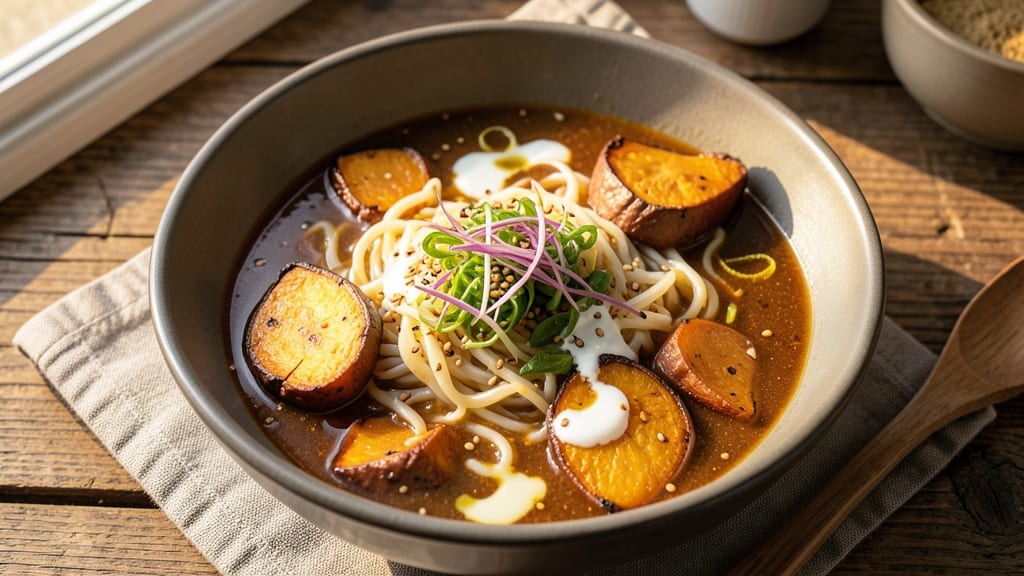
This sweet potato ramen recipe transforms a classic comfort dish into something richly layered with caramelized sweetness and deep umami.
The secret lies in roasting sweet potatoes until they're tender and caramelized, then blending them into the broth for a velvety, naturally sweet base that balances perfectly with traditional ramen flavors. No shortcuts here—just slow-simmered depth and restaurant-quality results in one bowl.
What sets this recipe apart is the harmony between traditional techniques and modern adaptability. We start with a foolproof dashi broth foundation, then build complexity with miso paste, soy sauce, and a touch of sesame oil for that signature ramen richness.
The roasted sweet potatoes add a caramelized sweetness that cuts through the savory broth, while the noodles cook to perfect al dente texture in just 3 minutes. Every element comes together for a bowl that's both comforting and sophisticated.
By the time you're done, you'll have a velvety broth infused with sweet potato depth, silky ramen noodles, and all the classic toppings you love—green onions, soft-boiled eggs, or crispy tofu for vegetarians.
The aroma alone will have everyone gathering around the table, and the first bite delivers that perfect balance of sweet, savory, and umami that makes ramen irresistible. This is the kind of recipe that transforms an ordinary weeknight into a special occasion.
Whether you're serving a family dinner or treating yourself to a solo indulgence, this ramen delivers restaurant-quality results with simple techniques. The best part? You can customize it with your favorite toppings while keeping the broth preparation streamlined. Let's get cooking—your taste buds will thank you.
Ingredients for sweet potato ramen
Roasted sweet potatoes meet umami depth in this restaurant-quality ramen transformation.
| Ingredient | Amount | Notes |
|---|---|---|
| Medium Sweet Potatoes 🍠 | 2 lb | Organic preferred, peeled and cubed |
| Dashi Broth Powder 🍜 | 2 tbsp | High-quality for umami depth |
| White Miso Paste 🧈 | ½ cup | Rich, fermented flavor base |
| Light Soy Sauce 🥢 | ¼ cup | For authentic ramen balance |
| Sesame Oil 🫒 | 1 tbsp | Toasted for nutty aroma |
| Ramen Noodles 🍜 | 2 packages | Fresh or dried, 8 oz each |
| Fresh Ginger Root 🧅 | ½ inch | Fixed: Peel and slice thinly |
| Garlic Cloves 🧄 | 6 cloves | Freshly minced for aroma |
| Vegetable Oil 🫒 | 2 tbsp | High smoke point for roasting |
| Green Onions 🧅 | ¼ cup | Sliced for garnish |
| Sesame Seeds 🌾 | 1 tbsp | Toasted for crunch |
| Nori Sheets 🍣 | 4 sheets | For traditional garnish |
| Crispy Tofu 🍱 | 1 cup | Vegan protein topping |
| Water 💧 | 6 cups | For broth base |
| Salt 🧂 | 1 tsp | Diamond Crystal preferred |
The sweet potatoes are the heart of this dish—organic, vibrant orange ones work best, packed with natural sweetness that caramelizes beautifully. Trader Joe's and Whole Foods carry excellent options, or grab the pre-peeled ones to save time. For the dashi, Marukyu brand is my go-to—it dissolves perfectly and delivers that signature umami punch. The miso? White miso from Hokkaido adds creaminess, while red miso brings heat. Don't skimp on the ginger and garlic—freshly grated and minced, respectively, for maximum flavor impact. Pro tip: Toast your sesame oil in a dry pan for 30 seconds before adding to the broth—this deepens its nutty aroma exponentially.
No dashi powder? Instant miso soup mix works in a pinch, though it lacks depth. Substituting soy sauce? Tamari for gluten-free, but traditional light soy gives that authentic ramen tang. Running low on sesame oil? Toasted peanut oil mimics the nutty profile. The crispy tofu can be store-bought or homemade—firm tofu baked with cornstarch gives the best texture. For the noodles, fresh ramen cooks in 3 minutes, but dried takes 4-5. Nongshim or Maruchan are reliable brands. And if you're feeling adventurous, swap the green onions for chives or scallions—they all bring that fresh bite.
This broth tastes even better the next day—make a double batch and freeze half. Store it in airtight containers for up to 3 months. The roasted sweet potatoes keep in the fridge for 5 days if wrapped tightly, though they're best used fresh. For meal prep, cook the noodles al dente, shock them in ice water, and store separately. Assemble bowls fresh for maximum crunch from the toppings. Nori sheets stay crisp for weeks if kept in a dry place, while sesame seeds last 6 months in your pantry. The crispy tofu? Eat it within 3 days for best texture.
Why You'll Love This Recipe
- Sweet Potato Magic: The sweet potatoes roast until caramelized—no peeling, no fuss—just slice, toss, and bake. Honestly, I’ve made ramen that took all day; this takes 20 minutes.
- Umami Bomb: That miso and dashi combo? It’s the secret weapon. Rich, savory, with just a hint of sweetness from the potatoes—every spoonful feels like a hug.
- Leftover Hero: Doubles easily for lunch the next day. The broth thickens beautifully when reheated, and the potatoes stay tender. (Yes, even on a Tuesday night.)
- Budget Flex: Sweet potatoes are cheap, and this recipe stretches a little miso and soy sauce into a full bowl. I’ll be real: it’s my go-to when I’m broke but still want to feel fancy.
Step-by-step instructions for sweet potato ramen with umami depth
Here's how to transform simple ingredients into a rich, caramelized ramen that balances sweet and savory perfectly.
🍳 Step 1: Roast Sweet Potatoes Until Caramelized
Preheat your oven to 400°F and line a baking sheet with parchment paper. Toss the 2 lb medium sweet potatoes (peeled and cubed) with 2 tbsp vegetable oil and 1 tsp salt until evenly coated. Spread them in a single layer—they need room to caramelize.
Roast for 30-35 minutes, stirring halfway through, until edges are deep golden brown and the cubes are tender when pierced with a fork. The sweet potatoes should smell toasty and develop a rich caramelized crust. If they stick to the pan, you're doing it right—this means they're releasing natural sugars that will deepen your broth's flavor.
🍳 Step 2: Build the Umami-Packed Broth
While the sweet potatoes roast, heat 1 tbsp sesame oil in a large pot over medium heat. Add the 6 cloves minced garlic and 0.5 inch sliced fresh ginger root, cooking for 1-2 minutes until fragrant but not browned. Add the roasted sweet potatoes directly from the pan to the pot.
Pour in 6 cups water, scraping up any browned bits from the bottom. Bring to a boil, then reduce heat to medium-low and simmer for 15 minutes, partially covered. Stir in the 2 tbsp dashi broth powder and 0.5 cup white miso paste, letting it dissolve completely. The broth should develop a rich, earthy aroma—this is your umami foundation.
🍳 Step 3: Season and Simmer the Broth
Add the 0.25 cup light soy sauce and simmer uncovered for another 10 minutes until the flavors meld. Taste and adjust seasoning—you want a balance of sweetness from the potatoes and savory depth from the miso and dashi. Strain the broth through a fine-mesh sieve into a clean pot, pressing gently on the solids to extract maximum flavor. Discard the solids.
Return the strained broth to the stove and keep it warm at a gentle simmer. Here's the thing—this broth is the heart of your ramen. If it tastes underseasoned now, it will be bland later. Trust your palate and add more soy sauce or miso if needed. The sweet potatoes should contribute natural sweetness, but the umami from the miso and dashi should dominate.
🍳 Step 4: Cook the Noodles and Assemble
Bring a separate pot of water to a rolling boil and cook the 2 packages ramen noodles according to package instructions until al dente. Drain and divide among four bowls. Ladle the hot broth over the noodles until each bowl is ¾ full, leaving room for toppings. The broth should be steaming hot—this is crucial for the next step.
Here's where it gets exciting: top each bowl with ¼ cup crispy tofu, 1 sheet nori sheet (cut into strips), and 1 tbsp toasted sesame seeds. Drizzle with an extra ½ teaspoon sesame oil per bowl and garnish with 1 tablespoon sliced green onions. The contrast between the silky broth, chewy noodles, crispy tofu, and delicate nori creates the perfect texture symphony.
🍽️ Step 5: Serve Immediately with Confidence
This ramen is best served immediately while the broth is steaming and the noodles are perfectly al dente. Stir each bowl vigorously before serving to distribute the flavors evenly. The aroma alone should make your mouth water—smoky from the roasted sweet potatoes, umami-rich from the miso, with a subtle sweetness that balances everything.
Real talk: the first bite might surprise you. The sweet potatoes add an unexpected depth that elevates this beyond basic ramen. If you're serving others, let them know to slurp the noodles—the noise actually helps release more flavor! And don't forget to save any leftover broth for next time—it makes an incredible soup base.
Pro Tips For Making Sweet Potato Ramen
- CUT SWEET POTATO IN HALF: I learned this the hard way—whole sweet potatoes steam unevenly, leaving you with a pale, uncooked center. Halve them lengthwise first, then slice into ½-inch rounds for even cooking and faster absorption of the broth’s rich flavors.
- ROAST SWEET POTATO FIRST: Skip the raw potato in broth—it turns mushy and dulls the dish. Toss slices with a pinch of salt and roast at 400°F (200°C) for 15 minutes before simmering. The caramelized edges add depth, and they hold shape like a dream.
- DILUTE MISO PASTE: White miso is potent—too much makes broth taste like miso soup. Mix 1 tablespoon paste with ¼ cup warm broth first, then stir into the pot. This balances the umami without overpowering the sweet potato’s natural sweetness.
- SAVE SESAME OIL FOR END: Add sesame oil at the very last second—it burns fast and turns bitter. A single teaspoon drizzled over hot ramen just before serving unlocks its nutty aroma without turning the broth into a sad, charred mess. (Yes, I’ve done that.)
Best sauces and condiments for this sweet potato ramen
Sweet Potato Miso Sauce
Blend ½ cup roasted sweet potatoes (strained from the broth) with 2 tbsp white miso paste, 1 tbsp sesame oil, and 1 tsp grated ginger until smooth.
Thin with 2 tbsp warm broth for a silky, naturally sweet glaze. Drizzle over noodles or use as a dipping sauce for extra depth. 🍠
Spicy Sesame Dressing
Mix 1 tbsp toasted sesame oil, 1 tbsp soy sauce, 1 tsp gochujang, and ½ tsp honey for a fiery-sweet topping. Swirl into the broth or serve on the side for heat lovers. The gochujang adds fermented depth while balancing the sweet potatoes. 🌶️
Creamy Avocado Swirl
Blend ½ ripe avocado, 2 tbsp Greek yogurt, 1 tsp lime juice, and ½ tsp salt until creamy. Dollop onto bowls before adding broth for a cool, velvety contrast that cuts through the richness. Garnish with cilantro for freshness. 🥑
Garlic-Chili Oil
Infuse ½ cup neutral oil with 3 minced garlic cloves and 1 tsp red pepper flakes in a small saucepan over low heat for 5 minutes. Strain and drizzle over finished ramen for a nutty, spicy kick. Store leftovers in the fridge for up to 2 weeks. 🔥
Miso-Butter Finish
Mix 2 tbsp softened butter with 1 tsp white miso paste and ½ tsp garlic powder. Dot onto noodles just before serving for a luxurious, umami-rich finish. The butter melts into the hot broth, creating a creamy, savory blanket. 🧈
Pickled Vegetable Toppings
Quick-pickle ½ cup thinly sliced cucumber and ¼ cup shredded carrot in 2 tbsp rice vinegar, 1 tsp sugar, and ½ tsp salt for 15 minutes. Drain and scatter over ramen for a refreshing crunch. The acidity brightens the sweet, savory flavors. 🥒
Nutrition facts
Frequently asked questions
Can I make this sweet potato ramen vegetarian?
This recipe is already vegetarian-friendly. Simply swap the soft-boiled eggs for crispy tofu or marinated mushrooms to keep the protein-rich texture. The miso and dashi broth provide ample umami depth without any animal products. For extra heartiness, add tempeh or edamame as toppings.
How do I adjust the sweetness level in the broth?
If you prefer less sweetness, reduce the roasting time for the sweet potatoes by 5-10 minutes to prevent deep caramelization. For more sweetness, roast them 5-10 minutes longer or add ½ teaspoon honey or 1 teaspoon maple syrup to the broth while simmering. Taste as you go—balance is key!
Can I use regular potatoes instead of sweet potatoes?
While you can technically use regular potatoes, they won't provide the same natural sweetness and caramelization. Sweet potatoes develop a deeper, more complex flavor when roasted. If you're out of sweet potatoes, try purple potatoes or yams for a slightly different but still delicious result. The texture will be different, but the technique remains the same.
How long can I store leftover sweet potato broth?
Leftover broth stays fresh in the refrigerator for 3-4 days when stored in an airtight container. For longer storage, freeze it in 1-cup portions for up to 3 months. Thaw overnight in the fridge before reheating—never microwave directly from frozen. The flavor actually improves after 24 hours as the ingredients meld further.
What's the best way to reheat sweet potato ramen?
Reheat broth separately on the stovetop over medium-low heat until steaming. Add noodles back to the broth and warm through for 2-3 minutes. Avoid microwaving—it makes noodles mushy. For best results, store components separately: broth, noodles, and toppings. Reassemble with fresh toppings for maximum crunch and flavor.