
Soups & Stews
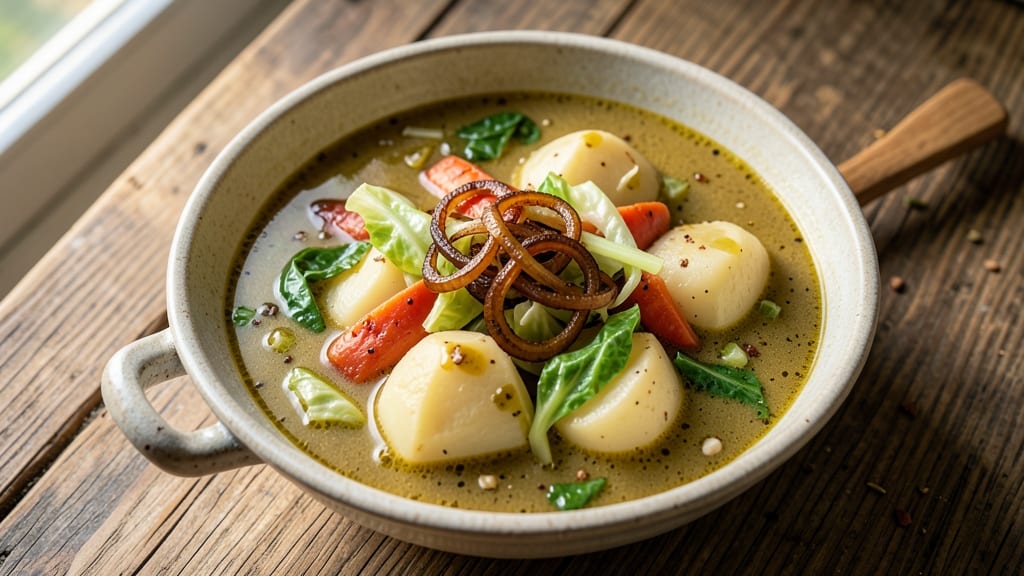
This vegan cabbage potato soup recipe delivers all the comforting flavors of a classic winter soup without a single animal product. The secret lies in using a rich, umami-packed plant-based broth and a blend of smoked paprika and mustard to create depth that rivals traditional versions.
What makes this recipe stand out is how it transforms simple ingredients into a hearty, satisfying meal that's perfect for chilly evenings or cozy gatherings.
With just one pot and 30 minutes of active time, you'll create a soup that's creamy without dairy, packed with flavor, and full of the satisfying textures of tender potatoes and cabbage. The key is slow simmering, which allows the vegetables to soften just enough while preserving their natural sweetness.
This isn't just a vegan substitute—it's a flavorful, nourishing dish that everyone will love, regardless of dietary preferences.
The result is a velvety soup with tender chunks of potato and cabbage, all swimming in a broth that's rich and aromatic. The addition of smoked paprika and a touch of mustard creates a subtle smokiness that elevates the dish beyond basic vegetable soup.
Topped with fresh herbs and a drizzle of vegan cream, this soup becomes a complete meal that's both comforting and impressive.
Perfect for meal prep or serving immediately, this recipe scales easily to feed a crowd or make enough for leftovers.
The beauty of this vegan version is that it doesn't compromise on flavor—it delivers the same hearty, warming qualities you'd expect from a traditional cabbage potato soup, but with a plant-based twist that's just as satisfying. Let's get started!
Ingredients for vegan cabbage potato soup
Six simple ingredients create a velvety vegan soup that rivals classic versions.
| Ingredient | Amount | Notes |
|---|---|---|
| Yellow Onions 🧅 | 2 whole | Diced, medium size preferred |
| Garlic Cloves 🧄 | 4 cloves | Minced, fresh preferred |
| Russet Potatoes 🥔 | 3 lbs | Peeled, cubed evenly |
| Green Cabbage 🥬 | 1 small | Cored, shredded thinly |
| Carrots 🥕 | 4 medium | Peeled, sliced into rounds |
| Celery Stalks 🧅 | 4 whole | Diced, including leaves |
| Smoked Paprika 🌶️ | 2 tsp | Sweet or hot variety |
| Dijon Mustard 🍯 | 1 tbsp | High-quality brand preferred |
| Vegetable Broth 💧 | 6 cups | Low-sodium, homemade or store-bought |
| Extra-Virgin Olive Oil 🫒 | ½ cup | For richness and depth |
| Coconut Milk 🥥 | 1 can | Full-fat for creaminess |
| Fresh Thyme Leaves 🌿 | ¼ cup | Chopped finely, stems removed |
| Fresh Parsley 🌿 | 0.1 cup | Chopped, for garnish |
| Salt 🧂 | 1 ½ tsp | Diamond Crystal preferred |
| Black Pepper 🌶️ | ½ tsp | Freshly ground preferred |
| Nutritional Yeast 🧀 | ¼ cup | For cheesy flavor |
The vegetable broth is the foundation—homemade or high-quality store-bought makes all the difference. Pacific Foods or Imagine brands are excellent choices for low-sodium options. Fresh thyme and parsley should be bright green with no wilting, indicating peak flavor. For the potatoes, Russet varieties hold their shape best during cooking, while Yukon Golds add creaminess. The cabbage should be firm with crisp leaves—avoid any with yellowing or soft spots. Smoked paprika adds depth, so Penzeys or McCormick are reliable brands for consistent quality.
No fresh thyme? Dried thyme at one-third the amount works, but fresh is ideal. Substitute carrots with sweet potatoes for natural sweetness. For extra richness, cashew cream (blend soaked cashews with water) replaces coconut milk. The Dijon mustard can be swapped for whole-grain mustard if preferred. If you're short on time, pre-cut vegetables from the grocery store save prep work—just ensure they're fresh. The nutritional yeast adds that umami kick, so Bob's Red Mill is a trusted brand for consistent flavor.
Store leftovers in airtight containers for up to 5 days in the refrigerator. For longer storage, freeze portions for 3 months. Reheat gently on the stove with a splash of broth to restore creaminess. This soup reheats beautifully—often tastes even better the next day as flavors meld. Double the batch and freeze half for quick meals later. Garnish with fresh parsley just before serving to maintain vibrant color and freshness.
Why You'll Love This Recipe
- That’s the secret: slow-cooked onions and garlic until they’re sticky sweet, then crisped cabbage edges. The carrots add a subtle bite, but the real star is the way the flavors meld—like a hug in a bowl. (Between us, it’s the only soup I’ll fight for seconds on.)
- One-Pot Magic: I swear by this—just chop, simmer, and forget. No fancy techniques, no extra bowls. The onions caramelize right in the pot while the potatoes soften, and by the time the cabbage wilts, dinner’s ready. (Yes, even on a Tuesday night.)
- Caramelized Crunch: That’s the secret: slow-cooked onions and garlic until they’re sticky sweet, then crisped cabbage edges. The carrots add a subtle bite, but the real star is the way the flavors meld—like a hug in a bowl. (Between us, it’s the only soup I’ll fight for seconds on.)
- Pantry Staples Only: Honestly, you’re probably already missing ingredients. Russets, carrots, onions—basic stuff that won’t break the bank. And since it’s vegan, it’s automatically budget-friendly without sacrificing that rich, satisfying depth. (My wallet thanks me every time.)
Step-by-step instructions for vegan cabbage potato soup
This recipe delivers rich, comforting flavors without dairy or meat—perfect for hearty winter meals.
Sauté Aromatics Until Fragrant
Heat the 0.5 cup extra-virgin olive oil in a large Dutch oven over medium heat. Add the 2 whole diced yellow onions and cook for 5 minutes until soft and translucent. Stir occasionally to prevent browning.
Add the 4 cloves minced garlic, 4 diced celery stalks, and 4 sliced carrots. Cook for another 6-8 minutes until the vegetables begin to soften and release their natural sweetness. This foundational step builds the soup's depth of flavor.
Real talk: If the onions start to brown too quickly, reduce the heat slightly. You want them tender, not crispy. This ensures a smooth base for the rest of the ingredients.
Add Spices and Mustard for Depth
Stir in the 2 tsp smoked paprika and 1 tbsp Dijon mustard, mixing well to coat the vegetables. Cook for 1 minute until the spices are fragrant and the mustard melts into the oil. This step adds complexity that elevates the soup from basic to extraordinary.
Next, add the 1 small shredded green cabbage and cook for 3-4 minutes until it begins to wilt slightly. The cabbage should soften but retain some texture—overcooking will make it mushy. This is where the soup starts to take shape.
Don't skip this step. The smoked paprika adds warmth, while the Dijon mustard provides a subtle tang that balances the earthy vegetables. This is the moment that matters: let the spices bloom fully before adding liquids.
Build the Soup Base
Pour in the 6 cups vegetable broth and bring the mixture to a gentle boil. Once boiling, reduce heat to low and add the 3 lbs cubed russet potatoes. Simmer for 15-20 minutes until the potatoes are fork-tender and the edges begin to break down.
I like to stir occasionally during this time to ensure even cooking. The potatoes should be soft enough to pierce with a fork but not falling apart. This is the heart of the soup—where the starches release and create that velvety texture we all crave.
If the soup starts to look too thick, add a splash of water to maintain the proper consistency. You want it rich but still able to coat a spoon easily.
Finish with Creamy Elements
Stir in the 1 can coconut milk and 0.25 cup nutritional yeast, mixing until fully incorporated. The coconut milk adds richness without dairy, while the nutritional yeast provides that cheesy depth that makes this soup truly satisfying.
Simmer for another 5-7 minutes until the soup reaches your desired consistency. Taste and adjust seasoning with the 1.5 tsp salt and 0.5 tsp black pepper as needed. This is where you fine-tune the balance of flavors.
Here's the thing—nutritional yeast can be potent, so start with a smaller amount if you're unsure about its flavor. You can always add more later, but you can't take it out.
Garnish and Serve Warm
Remove the soup from heat and stir in the 0.25 cup chopped fresh thyme leaves. Let it steep for 2-3 minutes to infuse the flavors. Ladle into bowls and garnish each serving with 0.1 cup chopped fresh parsley for a pop of color and freshness.
Serve immediately while hot. The soup should be thick enough to coat the back of a spoon but still easy to ladle. Each spoonful should deliver a perfect balance of creamy coconut milk, hearty vegetables, and that unmistakable cheesy note from the nutritional yeast.
This soup tastes even better the next day as the flavors meld together. Store leftovers in an airtight container in the refrigerator for up to 4 days, or freeze for 3 months for quick meals on cold days.
Pro Tips For Making Vegan Cabbage Potato Soup
- CHAR THE ONIONS LOW: I used to rush this step and end up with bitter onions. Simmer them in a splash of water or veggie broth for 8–10 minutes at a gentle boil until they’re translucent and sweet—not golden. That extra time lets the flavors meld into the soup instead of fighting for attention.
- PEEL POTATOES AFTER COOKING: Russets hold their shape better if you leave the skins on during cooking, then peel them right before serving. The skins soften into the broth, adding creaminess, and peeling last keeps the texture of the potatoes intact. (Yes, even if you’re impatient like me.)
- SAVE THE CABBAGE CORES: Don’t toss those tough outer cabbage leaves—they’re perfect for stock. Toss them in a pot with a carrot peel or two, cover with water, and simmer for 20 minutes. Strain and use that liquid instead of plain water for richer flavor. (Your future self will notice the difference.)
- DICE POTATOES UNIFORM: Cut them into 1-inch cubes—no smaller, no larger. This ensures they cook evenly without turning to mush or staying rock-hard. I learned this the hard way after serving a bowl with both textures. (Your soup should be consistent, not a game of chance.)
Storing and reheating this recipe
Refrigerator Storage
Let your vegan cabbage potato soup cool for no more than 2 hours before transferring to airtight glass containers—I prefer Pyrex with snap-on lids for easy reheating.
Store at 40°F or below for up to 4 days, though I’ve found the flavors actually deepen overnight as the spices meld. The coconut milk stays creamy when properly sealed, and the potatoes hold their texture beautifully. ❄️
For best results, press plastic wrap directly onto the surface before sealing the lid to minimize oxidation. This prevents a skin from forming on top, which can make reheating less smooth. I like to portion into quart-sized containers for easy grab-and-go meals during the week.
Freezer Storage
This soup freezes exceptionally well for up to 3 months without losing its velvety texture. Use quart-sized freezer bags or silicone molds to portion individual servings—this makes thawing and reheating a breeze.
Leave 1 inch of headspace in containers to account for expansion, and squeeze out excess air to prevent freezer burn.
For even better results, freeze the soup before adding fresh herbs like parsley. Simply thaw overnight in the fridge, then stir in the garnishes when ready to reheat. The nutritional yeast and coconut milk maintain their integrity through freezing, so you won’t lose that rich, cheesy depth. 💡
Stovetop Reheating
My preferred method is reheating on the stovetop over medium-low heat—this preserves the soup’s creaminess far better than microwaving. Pour the soup into a heavy-bottomed pot (I use my All-Clad Stainless Steel) and add ¼ cup vegetable broth to restore moisture and prevent sticking.
Heat gently for 8-10 minutes, stirring occasionally, until steaming hot.
Taste and adjust seasoning after reheating—soup often needs a pinch of salt or a splash of lemon juice to brighten flavors. If the soup seems too thick after reheating, thin it with a little more broth.
The slow, gentle heat ensures the potatoes stay tender and the coconut milk doesn’t separate. 🔥
Microwave Reheating
For quick meals, transfer a portion to a microwave-safe bowl and cover loosely with a microwave-safe lid or damp paper towel. Heat on 70% power for 2-3 minutes, then stir and continue in 30-second intervals until reaching 165°F.
The key is avoiding high power, which can make the soup watery or cause the coconut milk to separate.
If the soup looks dry after microwaving, add 1-2 tablespoons of water or broth and stir well. For extra creaminess, top with a dollop of cashew cream (blend soaked cashews with water) before serving. This method works best for single servings and saves time on busy days. ✨
Garnish Refresh
Always add fresh garnishes after reheating to maintain vibrant color and flavor. A sprinkle of chopped parsley or fresh thyme adds brightness, while a drizzle of extra-virgin olive oil or vegan sour cream enhances richness.
For a smoky touch, top with crushed smoked paprika or toasted pumpkin seeds—these add texture and depth that reheating alone can’t provide.
Pro tip: If you’re reheating from the freezer, let the soup sit at room temperature for 10-15 minutes before microwaving or stovetop reheating. This gradual thawing helps prevent temperature shocks that can alter the texture. The result? A soup that tastes almost as good as fresh. 💛
Nutrition facts
Frequently asked questions
Can I make this vegan soup without coconut milk?
Coconut milk adds richness, but you can substitute with ½ cup cashew cream (blend soaked cashews with water) or ¼ cup silken tofu pureed for a lighter option. For extra creaminess, blend ½ cup cooked potatoes directly into the soup after simmering—this works surprisingly well!
How do I adjust the soup's thickness?
If the soup is too thick after simmering, stir in ½ cup vegetable broth and cook for another 5 minutes. For a thicker texture, mash 1-2 extra potatoes with a fork and stir back in. The key is consistency—aim for a soup that coats the back of a spoon but isn't gluey.
What's the best way to make this soup gluten-free?
Check your vegetable broth for gluten—opt for certified gluten-free brands like Imagine or Pacific Foods. Ensure your smoked paprika and mustard are also gluten-free. The recipe as written is naturally gluten-free, but always verify labels since cross-contamination can occur in shared facilities.
Can I use sweet potatoes instead of russet potatoes?
Yes! Sweet potatoes add natural sweetness and work beautifully in this soup. Use the same amount (3 lbs) and note they'll take slightly longer to soften (20-25 minutes). For extra depth, add ½ tsp cinnamon when sautéing the aromatics. The flavor profile becomes more complex and satisfying.
How do I prevent the cabbage from getting mushy?
Add the cabbage last (after potatoes) and cook it for only 3-4 minutes—just until wilted. For extra texture, stir in ½ cup chopped kale or spinach at the very end and remove from heat immediately. The key is timing: cabbage should soften but retain some bite.