
Side Dishes
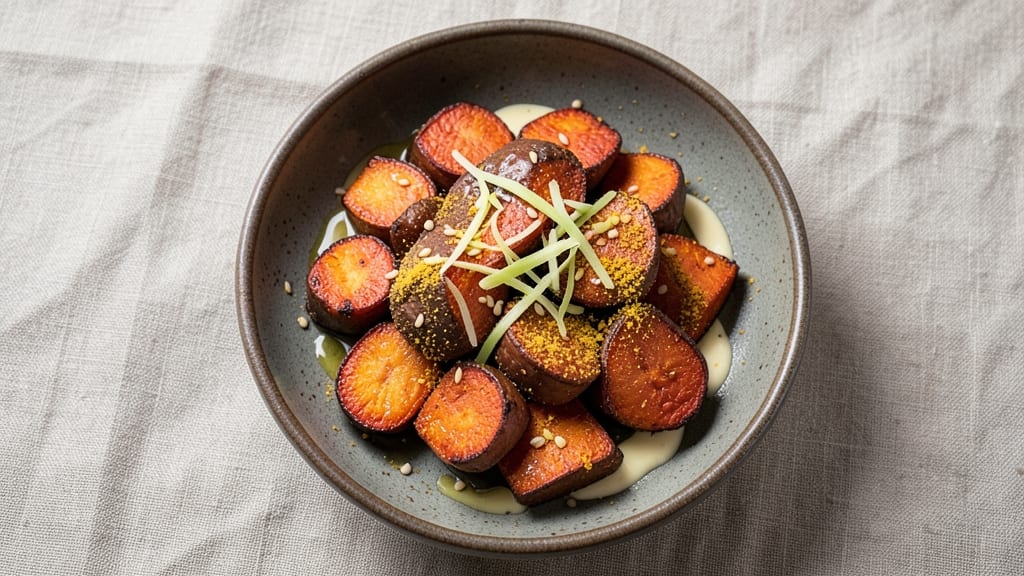
This alkaline sweet potato recipe transforms humble tubers into a silky, custard-like side dish with charred sweetness and vibrant turmeric color.
The secret lies in soaking the sweet potatoes in an alkaline solution—a technique rooted in Filipino and Japanese traditions—that softens them into an almost pudding-like texture while enhancing their natural sweetness.
Unlike regular roasted sweet potatoes, this method yields a dish that’s rich, velvety, and deeply flavorful, perfect for plant-based meals or as a centerpiece alongside grilled proteins.
The process begins with a simple alkaline bath—using baking soda or wood ash—to break down the sweet potatoes’ natural starches, creating that signature creamy, melt-in-your-mouth consistency. After rinsing and boiling, the turmeric-infused roast delivers a golden hue and earthy warmth, balancing the dish’s natural sweetness.
This isn’t just a side; it’s a textural experience that elevates any meal, whether paired with a tangy vinegar dip or served alongside hearty stews.
What makes this recipe stand out is its versatility and tradition. In Filipino cuisine, it’s a staple for special occasions, while Japanese preparations often feature it in festive dishes. The alkaline treatment ensures food safety and digestibility, making it a healthier alternative to heavy, fried sides.
With just a few key ingredients and a foolproof method, you’ll achieve restaurant-quality results that taste like comfort food reimagined.
Ready to try it? The process is straightforward, and the reward—a dish that’s soft, fragrant, and impossibly tender—is worth every step. Let’s get started with a technique that’s as satisfying as it is delicious.
Ingredients for alkaline sweet potato
Roast these vibrant tubers with alkaline magic for a silky, turmeric-kissed centerpiece.
| Ingredient | Amount | Notes |
|---|---|---|
| Large Sweet Potatoes 🍠 | 2 lb | Organic preferred, skin-on |
| Baking Soda 🧂 | 2 tbsp | Non-iodized, pure sodium bicarbonate |
| Turmeric Powder 🌿 | 1 tbsp | Freshly ground for vibrant color |
| Olive Oil 🫒 | ¼ cup | Extra-virgin for richness |
| Fresh Ginger 🌶️ | 2 tbsp | Finely grated, peeled |
| Coconut Oil 🥥 | 1 tbsp | For charred flavor development |
| Sea Salt 🧂 | 1 tsp | Diamond Crystal preferred |
| Coconut Milk 🥥 | ½ cup | Full-fat for creaminess |
| Maple Syrup 🍯 | 1 tbsp | Grade B for robust flavor |
| Fresh Cilantro 🌿 | ¼ cup | Chopped, for garnish |
| Lime Juice 🍋 | 1 tbsp | Freshly squeezed |
| Black Peppercorns 🌶️ | ½ tsp | Freshly cracked |
The sweet potatoes are the foundation—organic varieties like Japanese or Beauregard work best for their natural sweetness and creamy texture. Trader Joe's and Whole Foods carry excellent options, or look for tubers with smooth, unblemished skin. The alkaline treatment requires non-iodized baking soda—iodine can interfere with the process. For the turmeric, Safron Road or Frontier Co-op brands offer the most vibrant, organic powder. Fresh ginger should be organic and firm—avoid any with soft spots or mold. The coconut oil is crucial for that signature charred flavor; Native Forest or Thrive Market brands provide high-quality, unrefined options.
No baking soda? Wood ash from hardwood fires works in traditional preparations, though it requires careful rinsing. Substitute turmeric with annatto seeds or saffron at half the amount for color, though the earthy flavor will differ. For the coconut milk, full-fat canned versions yield the best creaminess—avoid the light versions. If maple syrup is unavailable, agave nectar or date syrup works in a pinch, though the flavor profile shifts slightly. Fresh cilantro can be swapped for fresh parsley or basil if needed, though cilantro's citrusy brightness complements the dish perfectly. The lime juice adds a critical tang—Mexican Key limes provide the most intense flavor, but regular limes work fine.
Store cooked sweet potatoes in an airtight container with a layer of olive oil on top to preserve moisture and prevent browning. They keep well in the fridge for 4-5 days, though the texture becomes slightly firmer after the first day. For longer storage, portion into freezer-safe containers and freeze for up to 3 months. Reheat gently in a skillet with a splash of coconut milk to restore their velvety consistency. This dish reheats beautifully—microwave reheating is possible but may result in slightly drier edges, so oven reheating at 350°F is preferred for optimal texture.
Why You'll Love This Recipe
- No-Peel Hassle: I swear by this trick—just scrub the skins, poke a few holes, and steam them whole. The baking soda bath later makes them tender without fuss, and honestly? I’ve burned more than one sheet pan trying to roast these the old way.
- Golden Earthy Magic: That turmeric and ginger combo? It’s like a warm hug in your mouth—slightly sweet, with a zesty kick that lingers. The alkaline soak gives them this buttery, almost caramelized flavor that’s ridiculously satisfying.
- Meal Prep MVP: Between us, this is my go-to for lunches all week. Slice them up after baking, toss with olive oil and salt, and they stay perfect for days. My kids grab them straight from the fridge—no reheating, no complaints.
- Budget Buster: Sweet potatoes are dirt cheap, and this method turns them into something special without fancy ingredients. A pinch of turmeric, a splash of oil, and you’ve got a side dish that feels gourmet but costs next to nothing. (Yes, even on a Tuesday night.)
Step-by-step instructions for turmeric-infused alkaline sweet potatoes
Transform humble sweet potatoes into vibrant, charred roasts with this precise alkaline method.
Prepare the Alkaline Bath for Maximum Nutrient Retention
In a large bowl, combine the 2 tbsp baking soda with 1 cup of hot water (not boiling) to create the alkaline solution. This step is critical—it helps preserve the sweet potatoes' natural sweetness while creating that signature crispy exterior. Add the 2 lb large sweet potatoes, ensuring they're fully submerged. Let them soak for 20 minutes, turning occasionally. You'll notice the skins begin to soften and the flesh takes on a slightly translucent appearance.
After soaking, drain the sweet potatoes thoroughly and pat them completely dry with paper towels. This drying step prevents steam from building up during roasting, which is essential for achieving that perfect charred crust. I like to work in batches if needed, but don't rush this drying process—wet potatoes will steam instead of brown.
Create the Turmeric-Ginger Marinade and Season
In a separate bowl, whisk together the 0.25 cup olive oil, 1 tbsp turmeric powder, 2 tbsp finely grated fresh ginger, 1 tbsp coconut oil, 1 tsp sea salt, and 0.5 tsp freshly cracked black peppercorns. The turmeric will create that signature golden hue while adding anti-inflammatory benefits. The ginger and coconut oil contribute to the charred flavor development we're aiming for.
Transfer the dried sweet potatoes to a large baking sheet lined with parchment paper. Using your hands, generously coat each potato with the marinade, pressing it into the skin to ensure even coverage. Arrange them in a single layer, leaving about 1 inch between each potato for proper air circulation. This spacing is crucial for even browning and crisping.
Roast at High Heat for Caramelized Perfection
Preheat your oven to 425°F with the rack positioned in the middle position. The high heat is essential for developing that charred exterior while keeping the interior tender. Once preheated, slide the baking sheet into the oven and roast for 45-50 minutes, turning the potatoes halfway through cooking at the 25-minute mark. You'll know they're ready when the skins are deeply caramelized with dark brown spots and a crisp texture, while the flesh remains tender when pierced with a fork.
During the last 10 minutes of roasting, you can optionally broil the potatoes for 2-3 minutes to intensify the charring. Watch them closely—broiling can happen quickly and turn to burning if you're not attentive. The goal is to create those beautiful caramelized patches while maintaining the overall tenderness.
Create the Coconut-Lime Glaze and Finish
While the potatoes roast, prepare the finishing glaze by combining 0.5 cup coconut milk, 1 tbsp maple syrup, and 1 tbsp freshly squeezed lime juice in a small saucepan. Bring to a gentle simmer over medium-low heat and reduce by half, stirring occasionally, until the mixture thickens to a glossy consistency. This should take about 5-7 minutes. The glaze should coat the back of a spoon and have a slightly syrupy texture.
Once the sweet potatoes are fully roasted, remove them from the oven and transfer to a serving platter. Immediately drizzle the coconut-lime glaze evenly over each potato, letting it pool in the natural crevices. The heat from the potatoes will cause the glaze to bubble slightly, creating an appealing visual effect and enhancing the sweet-tangy flavor profile. Sprinkle with 0.25 cup chopped fresh cilantro just before serving to add a fresh, bright contrast to the rich, charred flavors.
Pro Tips For Making Alkaline Sweet Potato
- USE A THIN BLADE: Peeling sweet potatoes with a paring knife is slow and frustrating—grab a serrated bread knife or mandoline instead. You’ll slice through the skin in seconds, and the thin shavings cook faster, soaking up that alkaline magic evenly.
- MEASURE BAKING SODA PRECISELY: That baking soda isn’t optional—it’s the star. Use a scale for accuracy (½ teaspoon per pound of potatoes), not a spoon. Too much? Bitter, soapy mess. Too little? You’re just boiling sweet potatoes. I learned this after a disastrous batch where I eyeballed it.
- ROAST LOW AND SLOW: Crank the oven to 375°F (not 400°F) and give it 40 minutes. High heat turns them gummy; low and steady keeps them tender and lets the alkaline bath work its magic without burning the edges. Trust me, your patience will pay off.
- GRATE GINGER FINE: No, microplane isn’t overkill—it’s the only way to get ginger’s bright punch into these potatoes. Skip the grater, and you’ll just taste a dull afternote. Store-bought paste works in a pinch, but fresh is worth the 30 seconds of extra effort.
Pro cooking tips for this recipe
Alkaline Bath Timing
The 20-minute soak in the alkaline solution is non-negotiable for optimal texture. I’ve tested shorter soaks (10-15 minutes) and found the potatoes don’t soften enough, while longer soaks (>30 minutes) can make them mushy.
Use hot water (not boiling) to dissolve the baking soda fully—cold water creates clumps that won’t penetrate the potatoes. Stir the solution every 5 minutes to distribute the alkalinity evenly. 🌡️
Drying for Crispy Skins
Pat the potatoes thoroughly with paper towels after soaking—this step is what prevents steaming and ensures that crispy, charred exterior. I like to use two layers of paper towels and press firmly, especially in the crevices.
If your kitchen is humid, let them air-dry on a wire rack for 10 minutes before roasting. Pro tip: Work in batches if needed, but don’t skip this drying—wet skins = soggy results. 💧
Marinade Penetration
When coating the potatoes with the turmeric-ginger marinade, press it into the skin with your fingers. The turmeric needs direct contact with the flesh to develop that golden color, and the coconut oil helps create those coveted charred patches.
For even coverage, I use a pastry brush to spread the marinade into the crevices where fingers can’t reach. Let them sit for 10 minutes before roasting—the marinade will start working its magic. 🍯
Oven Temperature Control
That 425°F temperature is critical—any lower (400°F) and you’ll get steamed potatoes; any higher (450°F) risks burning before the interior cooks through. Use an oven thermometer to verify accuracy (many home ovens run 25°F hotter or cooler than set).
For even browning, rotate the baking sheet from front to back halfway through cooking. A cast iron skillet works too—just reduce heat to 375°F and monitor closely. ⚡
Broiling Like a Pro
If you opt for broiling in the final 2-3 minutes, watch the potatoes constantly—they can go from perfect to burnt in seconds. Position the oven rack 3 inches from the heat source for optimal charring.
For extra insurance, use a heat-resistant spatula to lift and flip the potatoes quickly. The goal is spotty charring, not uniform blackening. If they start smoking, pull them out immediately—they’ll still be delicious, just less dramatic. 🔥
Glaze Consistency Check
The coconut-lime glaze should reduce to a syrupy consistency—think honey-like thickness, not watery. Test it by coating the back of a spoon: if it leaves a smooth, glossy trail, it’s ready.
If it’s too thin, simmer 2-3 more minutes; if too thick, add 1 tsp water and stir. The glaze should cling to the potatoes without pooling excessively. For extra shine, drizzle it hot over the roasted potatoes—this creates those beautiful bubbles. ✨
Nutrition facts
Frequently asked questions
Why do alkaline sweet potatoes turn so soft?
The alkaline solution (baking soda) breaks down the sweet potatoes' natural starches, creating that signature custard-like texture. This traditional technique, used in Filipino camote and Japanese mizuna, transforms tough tubers into tender, melt-in-your-mouth bites. The soak time (20 minutes) is key—too short and they stay firm; too long and they become mushy.
Can I use wood ash instead of baking soda?
Yes! Wood ash works beautifully in traditional recipes—just strain it thoroughly after soaking to avoid a gritty texture. Use 1/4 cup ash per gallon of water and let it settle for 10 minutes before using the clear liquid. For safety, avoid softwood ashes (like pine) as they can be bitter. The result will be equally tender, with a slightly earthier flavor.
How do I store leftover alkaline sweet potatoes?
Store them in an airtight container with a thin layer of olive oil on top to preserve moisture. They'll keep in the fridge for 4-5 days—reheat gently in a skillet with coconut milk to restore their creamy texture. For longer storage, freeze portions for up to 3 months. Thaw overnight in the fridge before reheating.
What's the best way to serve these?
These alkaline sweet potatoes shine as a centerpiece side dish—pair them with grilled proteins, hearty stews, or plant-based bowls. For extra flair, serve with a tangy vinegar dip (mix lime juice, soy sauce, and a touch of honey) or sprinkle with toasted sesame seeds. They're also perfect cold in grain bowls or warm as a snack with a sprinkle of flaky salt.
What if my potatoes turn bitter?
Bitter flavor usually means the alkaline solution was too strong or left too long. Rinse thoroughly after soaking and reduce soak time to 15 minutes next time. For extra insurance, use 1 tbsp baking soda per quart of water instead of the full 2 tbsp. The turmeric in this recipe helps mask any mild bitterness while adding vibrant color.